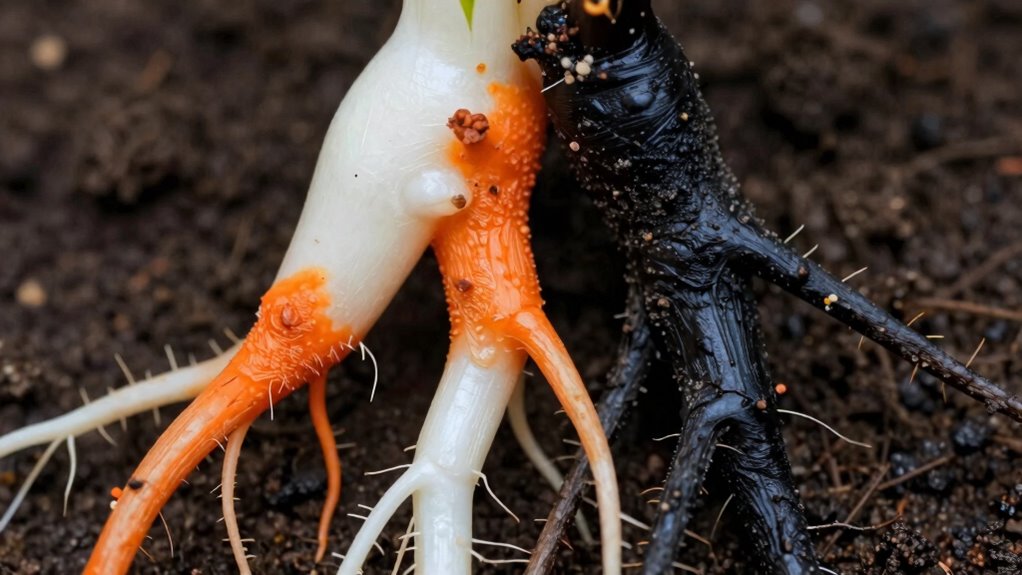

If your plant roots are white, it usually means they’re healthy and growing well, with good soil and nutrient absorption. Orange or reddish roots often point to high iron levels or stress from environmental factors. Black roots typically indicate rot caused by excess moisture or fungal infections. By understanding these color changes, you can spot issues early and improve your plant’s health. Keep exploring to learn more about what root colors reveal about your plants.

Get the little things that make your day delivered free — and shop member deals
- Fast, free delivery on millions of items
- Access to Prime Big Deal Days deals on October 6–7
- Prime Video, Amazon Music and more included
Key Takeaways
- White roots typically indicate healthy, nutrient-absorbing roots with good soil conditions and active growth.
- Orange or reddish roots often result from high iron content or soil stress but are usually not harmful.
- Black roots usually signal root rot caused by fungal infection in overly moist, poorly drained soils.
- Pale or white roots can also suggest nutrient deficiencies, despite indicating overall plant health.
- Root color changes serve as early signs for diagnosing environmental stress or soil-related problems.

Have you ever wondered why plant roots come in different colors? The hues you see aren’t just for show—they tell you a lot about the plant’s health and the environment it’s growing in. Root color variations can be influenced by soil composition, nutrient levels, and even biological factors. For example, some roots are white because they’re healthy and actively growing, with a fresh, clean appearance that indicates good soil conditions. When soil is rich in organic matter and nutrients, roots tend to be pale or white, signaling that the plant is effectively absorbing what it needs. But if roots turn orange or reddish, it could be a sign of stress or a response to specific soil elements, such as high iron content. Iron-rich soils often stain roots with an orange hue, but this isn’t necessarily a problem unless it’s accompanied by other signs of poor health.
Conversely, dark-colored roots, like black or deep brown, might point to more serious issues. Sometimes, roots turn black due to root rot, which occurs when overly wet or poorly drained soil promotes fungal growth. Root rot is a common consequence of nutrient deficiencies, particularly in nitrogen or phosphorus, which weaken the plant’s defenses and make roots more susceptible to disease. These dark roots can also be a sign of necrosis, where parts of the root tissue are dying off because of disease or poor soil conditions. If you notice blackened roots, it’s a clear indicator that the plant’s environment isn’t ideal and needs attention. Improving soil drainage, adjusting nutrient levels, or removing infected roots can help restore health. Additionally, understanding soil conditions can help prevent such issues from occurring in the first place. Proper management of soil nutrients plays a vital role in maintaining healthy root systems and avoiding problems like root rot. Recognizing the significance of root color is also crucial for diagnosing and managing plant health effectively. Being aware of the role of soil nutrients helps you tailor your care and prevent common root problems before they escalate. Regularly testing soil can also provide insights into soil chemistry, allowing for more precise adjustments to promote healthy root growth.
Understanding root color isn’t just about spotting problems; it also helps you better manage plant care. For instance, if roots are unusually pale or white, you might check if the soil provides enough nutrients, especially nitrogen. If roots are red or orange, consider whether certain elements like iron are overly abundant or if the plant is under stress from drought or pests. When roots turn black, it’s essential to inspect soil moisture levels and nutrient balance and possibly treat fungal infections. Recognizing these color cues allows you to intervene early, ensuring your plants stay healthy and thrive. So, next time you’re digging around your plants, pay close attention to root colors—they’re a key clue to understanding what’s happening beneath the surface.
As an affiliate, we earn on qualifying purchases.
Frequently Asked Questions
Do Root Colors Indicate Plant Health?
Root colors can indicate plant health, but they don’t tell the whole story. White roots usually mean healthy, well-oxygenated roots, while orange or black roots often signal root discoloration caused by nutrient deficiencies, disease, or rot. If you notice unusual root colors, it’s a sign to check for underlying problems like poor soil conditions or overwatering. Addressing these issues promptly helps restore your plant’s health and encourages strong, vibrant growth.
Can Root Color Change Over Time Naturally?
Your plant roots can undergo astonishing color evolution over time, turning from white to vibrant orange or even deep black. This natural change in root pigmentation happens as roots respond to soil conditions, nutrient levels, or stress. So, yes, root color can change naturally over time, reflecting the dynamic life of your plant. Keep an eye on these color shifts—they reveal the fascinating story of your plant’s health and adaptation.
Are Certain Root Colors Specific to Plant Species?
Yes, certain root colors are specific to plant species due to genetic variations that influence root pigmentation. These genetic differences determine whether roots appear white, orange, black, or other colors. You’ll notice that some plants naturally develop distinct root hues, which can help identify their species. Environmental factors may also cause slight variations, but genetics primarily drive these characteristic colors, making them consistent within each plant type.
How Do Soil Conditions Influence Root Color?
Imagine your roots as painted by soil’s mood. Soil pH and nutrient deficiencies act like an artist’s palette, coloring roots in hues of white, orange, or black. Acidic soil might turn roots dark, like midnight, while nutrient shortages can bleach them pale or give them an orange glow. These colors tell stories of the soil’s health, revealing how pH balance and nutrients shape your plant’s underground world.
Is Black Root Color Harmful to the Plant?
Black root color can be harmful, signaling issues like root toxicity or fungal infections. If you notice black roots, it’s essential to address the problem promptly, as these conditions can weaken your plant or lead to decline. Fungal infections often cause blackening, and root toxicity from over-fertilizing or pollutants can also damage roots. Take action by inspecting, cleaning, and adjusting care to protect your plant’s health.
As an affiliate, we earn on qualifying purchases.
Conclusion
So, next time you see vibrant orange or stark black roots, remember—they’re not just random colors. You might think they’re unhealthy or strange, but often, they’re just nature’s way of showing off or protecting itself. Ironically, what seems like a flaw could be a sign of strength or adaptation. So, don’t judge those colorful roots too quickly—sometimes, they’re just nature’s way of saying, “I’ve got this under control.”
plant root rot treatment products
As an affiliate, we earn on qualifying purchases.
As an affiliate, we earn on qualifying purchases.
As an affiliate, we earn on qualifying purchases.
Fall Picks
fall essentials
As an affiliate, we earn on qualifying purchases.