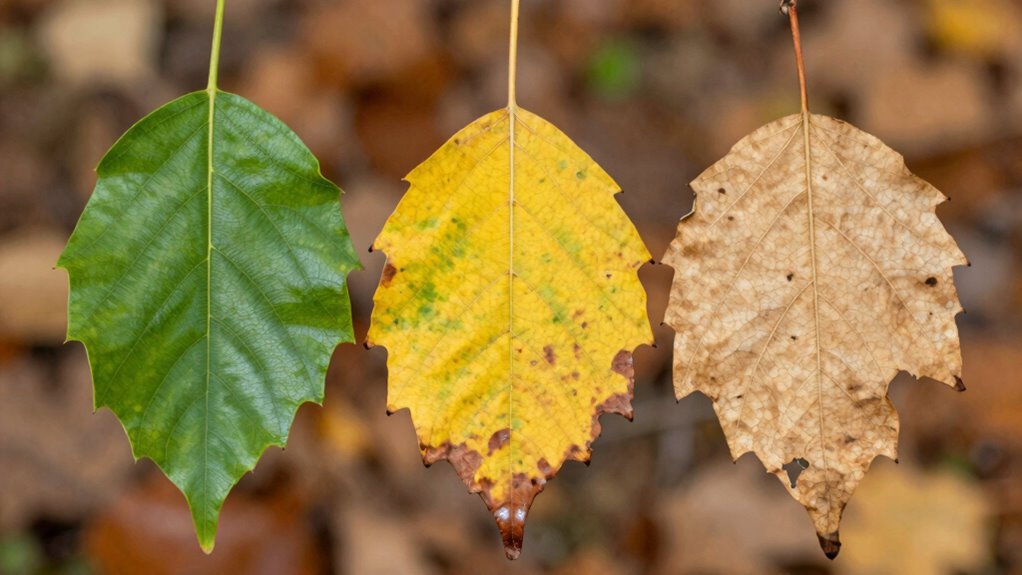

As your leaf grows and gets plenty of sunlight, chlorophyll produces a vibrant green color, making the leaf look healthy and active. When days shorten and temperatures drop, chlorophyll breaks down, revealing yellow and orange pigments like carotenoids. In some leaves, small amounts of red and purple pigments, called anthocyanins, form in response to the season. Soon, chlorophyll disappears completely, and the leaf begins to decay. To understand how these changes happen, keep exploring more details.

Get the little things that make your day delivered free with Prime
- Fast, free delivery on millions of items
- Prime Video, Amazon Music and more included
- Member-only deals all year
Key Takeaways
- During active growth, abundant chlorophyll gives leaves their vibrant green color and drives photosynthesis.
- As seasons change, chlorophyll production decreases, revealing carotenoids’ yellow and orange pigments.
- In fall, some leaves produce anthocyanins, creating red and purple hues as chlorophyll degrades.
- Chlorophyll is broken down and reabsorbed by the plant during leaf deterioration, leading to color fading.
- The decline of chlorophyll signals the leaf’s end of life, culminating in leaf fall and dormancy.
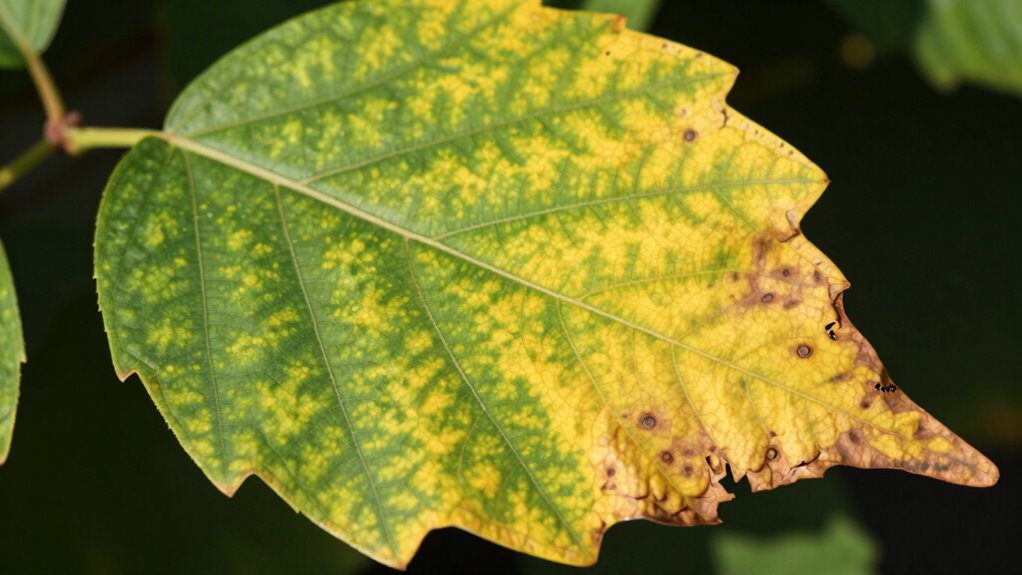
Have you ever wondered how a leaf’s color changes throughout the seasons? It all begins with the essential process of photosynthesis, which relies heavily on chlorophyll. During the leaf’s active growing period, chlorophyll is abundant, giving the leaf its vibrant green hue. This pigment plays a vital role in the photosynthesis process, allowing the leaf to absorb sunlight and convert carbon dioxide and water into glucose and oxygen. As long as the leaf is healthy and receiving adequate sunlight, chlorophyll remains dominant, masking other pigments within the leaf.
During active growth, abundant chlorophyll makes leaves vibrant green, masking other hidden pigments.
However, as the seasons shift and environmental conditions change, so does the pigment transformation within the leaf. When days shorten and temperatures drop, the production of chlorophyll slows down and eventually stops. Without this pigment, the green color fades, revealing other pigments that were always present but hidden. Carotenoids, responsible for yellow and orange shades, become visible during this stage. These pigments are more stable than chlorophyll and remain in the leaf even after the green pigment degrades. This is why, in autumn, leaves turn a striking mix of yellows and oranges before falling.
In addition to carotenoids, some leaves develop anthocyanins, which give rise to reds and purples. Unlike carotenoids, anthocyanins are produced in response to the changing conditions of fall, such as increased sunlight and cooler temperatures, which can protect the leaf’s cells from damage during the nutrient withdrawal process. This pigment transformation is an adaptive response that helps the leaf conserve resources and prepare for the upcoming dormancy period. Interestingly, the process of pigment breakdown and synthesis is also influenced by the seasonal environmental changes, which directly affect the chemical processes within the leaf. These changes are part of the leaf’s natural metabolic processes, which adapt to the shifting seasons and ensure the plant’s survival. Additionally, the production of anthocyanins may also serve to reduce light damage during the colder months by acting as a protective shield. Furthermore, the decline of chlorophyll is closely connected to the leaf’s overall nutrient recycling process, allowing the plant to reabsorb valuable nutrients before the leaf falls.
As winter approaches and the leaf deteriorates, chlorophyll is completely broken down and reabsorbed into the plant, leaving behind the other pigments. The leaf’s color shifts from bright yellows, oranges, and reds to a dull brown as the remaining organic compounds decompose. This process signals the leaf’s final stage before it falls off, completing its life cycle.
In essence, the changing colors of a leaf are a visual story of pigment transformation driven by environmental cues and the leaf’s internal chemical processes. The delicate balance of chlorophyll production and breakdown highlights the intricate relationship between plants and their surroundings, showing how nature’s seasons influence even the simplest elements like leaf color. So, next time you see a leaf changing color, remember it’s not just a pretty sight — it’s a vivid display of the ongoing biological transformations happening within.
leaf color change educational kit
As an affiliate, we earn on qualifying purchases.
As an affiliate, we earn on qualifying purchases.
Frequently Asked Questions
How Does Chlorophyll Production Vary Across Different Plant Species?
You’ll notice that chlorophyll synthesis varies among plant species, affecting leaf pigmentation. Some plants produce abundant chlorophyll, resulting in deep green leaves, while others have less, displaying yellow or reddish hues. Factors like genetics, environment, and adaptation influence this variation. You can observe these differences in how vibrant or subdued the leaf colors are, revealing how each species manages chlorophyll production to optimize photosynthesis and survival in their specific habitats.
What Role Do Environmental Factors Play in Chlorophyll Degradation?
Think of chlorophyll as a delicate painter’s brush, easily worn down by harsh conditions. You’ll find that high light intensity can accelerate chlorophyll degradation, causing leaves to fade like a sunset. Poor soil nutrients also weaken this pigment, leaving leaves pale and fragile. Together, these environmental factors act as the stormy weather that erodes the vibrant green, reminding you how external conditions shape the life and color of a leaf.
Can Chlorophyll Levels Indicate a Leaf’s Age or Health?
Yes, chlorophyll levels can serve as indicators of leaf aging and health. As a leaf ages or experiences stress, chlorophyll degrades, causing color changes from green to yellow or brown. By observing these chlorophyll indicators, you can assess the leaf’s condition, noting that declining chlorophyll suggests aging or poor health. This makes chlorophyll a useful natural marker for understanding a leaf’s developmental stage and overall significance.
How Quickly Does Chlorophyll Change During Seasonal Shifts?
During seasonal shifts, chlorophyll levels change quite rapidly, often within weeks. You’ll see this through chlorophyll synthesis slowing down in fall, which leads to the seasonal color change in leaves. As temperatures drop and daylight decreases, chlorophyll breaks down, revealing other pigments. This quick shift causes the vibrant reds, oranges, and yellows you notice, signaling the leaf’s response to changing environmental conditions.
Are There Any Plants That Do Not Rely on Chlorophyll?
Some plants, called non-photosynthetic plants, don’t rely on chlorophyll for energy. Instead, they use alternative pigments like anthocyanins or carotenoids to absorb light or parasitize other plants for nutrients. You might notice these plants lack the green color typical of chlorophyll-dependent plants and often appear red, purple, or yellow. They’re fascinating examples of how plants adapt to environments where photosynthesis isn’t their primary energy source.
As an affiliate, we earn on qualifying purchases.
Conclusion
As the seasons shift, you watch the vibrant green of a leaf fade into warm amber and fiery red hues. The chlorophyll slowly breaks down, revealing the leaf’s hidden colors like a secret being uncovered. You can almost feel the gentle fall breeze whispering through the branches, carrying away the remnants of summer’s lushness. In this quiet transformation, nature reminds you that change is beautiful, revealing new colors and life with every passing moment.
As an affiliate, we earn on qualifying purchases.
As an affiliate, we earn on qualifying purchases.
Fall Picks
fall essentials
As an affiliate, we earn on qualifying purchases.