If your indoor plant soil stays wet too long, it’s often due to poor drainage or overwatering. Using pots without drainage holes traps excess water, while soil that retains too much moisture prevents it from drying out properly. Environmental factors like humidity and temperature also slow drying. Choosing well-draining soil and adjusting your watering habits can help. Keep exploring to discover more tips for healthier indoor plants and preventing soggy soil.
Key Takeaways
- The soil may have poor drainage or be too dense, preventing excess water from escaping.
- Using pots without drainage holes causes water to accumulate and stay wet.
- Overwatering or watering on a fixed schedule can lead to soil saturation regardless of plant needs.
- Environmental factors like high humidity and low temperature slow soil drying.
- Soil composition with high water retention materials retains moisture longer than well-draining mixes.
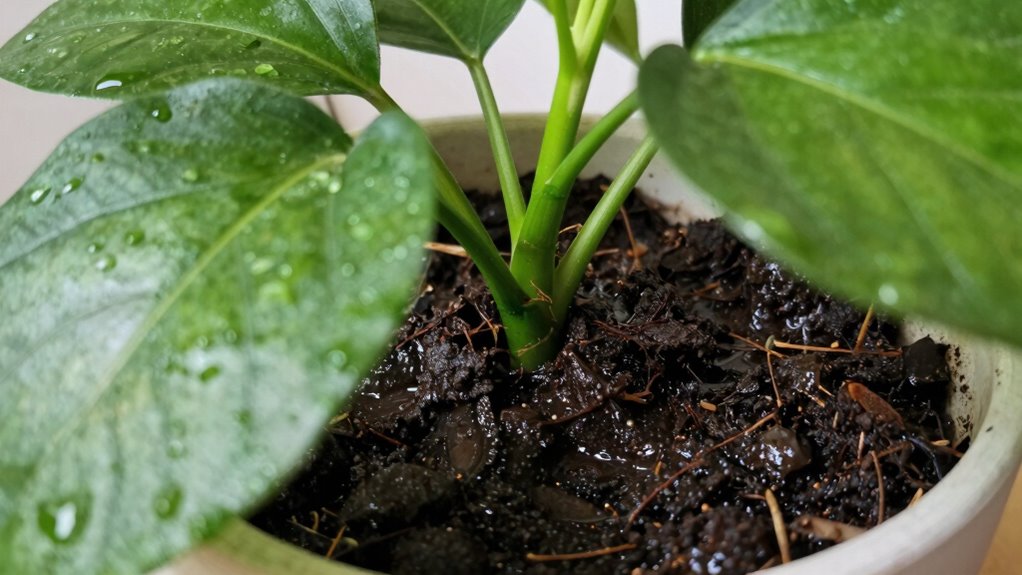
If your indoor plant soil stays wet for too long, it can lead to root rot and other health issues for your plants. Overwatering is one of the most common mistakes plant owners make, and it often results from a misunderstanding of how much water your plants actually need. When you water your plants, you might think you’re helping them thrive, but if the soil doesn’t drain properly, excess water just sits there, suffocating the roots and creating a perfect environment for bacteria and fungi to develop. The key to healthy indoor plants lies in proper plant watering techniques and ensuring good soil drainage.
Avoid overwatering; proper drainage is essential for healthy, thriving indoor plants.
Plant watering isn’t just about pouring water until the soil feels moist. It’s about understanding your specific plant’s needs and adjusting your watering schedule accordingly. Some plants prefer consistently moist soil, while others only want water when the top inch of soil feels dry. If you water on a fixed schedule without considering the soil’s moisture level, you risk overwatering. Remember that factors like pot size, type of soil, and the environment—humidity, light, and temperature—all influence how quickly soil dries out. Always check the soil moisture before watering again, and avoid watering on a set timetable if it doesn’t align with your plant’s needs. Ensuring proper soil drainage is essential for preventing water from lingering in the soil. Additionally, understanding how soil composition affects water retention can help you select the best soil mix for your indoor plants. Proper long-term financial planning for soil and plant care supplies can also contribute to maintaining healthy indoor gardening practices.
Soil drainage plays a crucial role in preventing your plant’s soil from staying wet too long. When the soil retains water and drains poorly, it creates persistent sogginess that can lead to root rot. To improve drainage, choose pots with drainage holes that allow excess water to escape freely. Use a well-draining soil mix designed for indoor plants, which typically includes components like perlite, vermiculite, or coarse sand to increase aeration and drainage. If your current soil is too dense or retains too much water, consider repotting with a better mix. Adding a layer of gravel or small stones at the bottom of the pot can also help facilitate drainage, but it shouldn’t replace a proper soil mixture.
In essence, maintaining appropriate plant watering habits and ensuring your pots have good soil drainage are essential to keep the soil from staying wet too long. By paying attention to these factors, you give your indoor plants a healthier environment to grow, preventing problems like root rot and promoting vigorous, thriving growth. Remember, your goal is to mimic natural watering conditions as closely as possible—watering deeply but infrequently, and allowing the excess water to escape freely. This approach keeps your plants happy, healthy, and resilient against common indoor gardening issues.

Plant Pots Indoor with Drainage, 5 Pack Multi-Size Planters Set, White
- Set of 5 White Plastic Pots: Indoor and outdoor use
- Multiple Sizes Included: 5 different sizes for versatility
- Drainage Holes and Saucers: Prevents overwatering and spills
As an affiliate, we earn on qualifying purchases.
As an affiliate, we earn on qualifying purchases.
Frequently Asked Questions
Can Overwatering Damage My Plant’s Roots?
Yes, overwatering can damage your plant’s roots. When you water too often, it reduces soil aeration, depriving roots of oxygen and causing them to rot. To prevent this, adjust your watering frequency to match your plant’s needs, ensuring the soil dries out slightly between waterings. Proper soil aeration helps roots breathe and stay healthy, avoiding issues caused by excess moisture.
What Are the Signs of Root Rot?
You’ll notice root rot signs when your plant’s soil remains overly moist, and its roots turn brown, mushy, or emit a foul smell—imagine how well your plant’s soil is doing at moisture retention! Ironically, poor soil aeration causes this, trapping excess moisture and suffocating roots. Keep an eye out for wilting, yellowing leaves, and a slimy texture on roots, indicating that your plant’s roots are drowning in their own environment.
How Often Should I Water My Indoor Plants?
You should water your indoor plants when the soil moisture drops to about 50%, typically once a week, but it varies with plant type and environment. Check the top inch of soil—if it feels dry, it’s time to water. Avoid overwatering, as it leads to soggy soil and root rot. Adjust your watering frequency based on how quickly your soil dries out to keep your plants healthy.
Does the Type of Pot Affect Soil Dryness?
Imagine your plant’s roots craving fresh air and dry soil; the pot material plays a big role here. Clay pots, with their porous surface, boost drainage efficiency, preventing water from pooling. Plastic or glazed ceramic pots trap moisture, keeping soil wet longer. So, yes, the type of pot affects soil dryness—choosing the right material helps you maintain ideal moisture levels and keeps your plant healthy.
Are Some Plants More Prone to Wet Soil?
Yes, some plants are more prone to wet soil because they prefer specific plant moisture levels and require excellent soil drainage. For example, ferns and peace lilies thrive in consistently moist soil, making them more susceptible to overwatering issues. To prevent this, guarantee your pots have proper drainage and avoid overwatering. Understanding each plant’s moisture needs helps maintain healthy soil drainage and prevents water from lingering too long.

Craft Organic Houseplant Potting Mix, Elite House Plant Soil, Chunky, Well Draining Potting Soil for All Indoor Plants, Tropical Plants & Flowers, Sustainable & Peat Free, Less Prone to Gnats, 2QT
- Complete Indoor Potting Soil: Supports healthy root development and airflow
- Pre-Moistened to Reduce Shock: Settles roots quickly, minimizes transplant stress
- Enriched with Organic Worm Castings: Promotes vibrant, lush foliage growth
As an affiliate, we earn on qualifying purchases.
As an affiliate, we earn on qualifying purchases.
Conclusion
So, next time your indoor plant’s soil refuses to dry out, don’t assume it’s just normal. There’s more lurking beneath the surface—hidden causes that could threaten your plant’s health. Will you catch the signs early enough to turn things around? Keep a close eye, stay curious, and be ready to act before it’s too late. Your plant’s well-being depends on what you uncover in those wet, stubborn soils. The truth might surprise you.
perlite vermiculite soil for houseplants
As an affiliate, we earn on qualifying purchases.
As an affiliate, we earn on qualifying purchases.
As an affiliate, we earn on qualifying purchases.