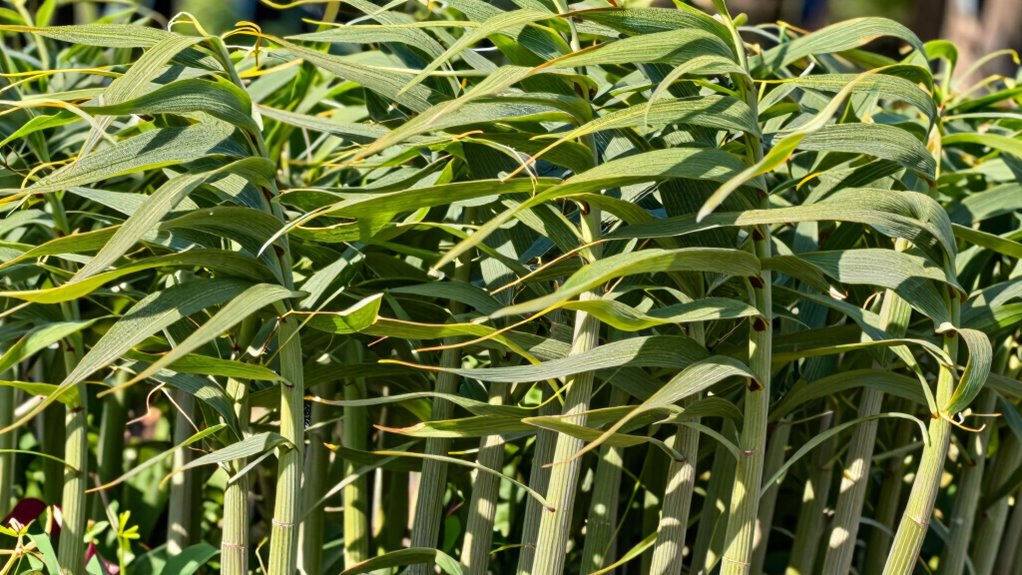

To build stronger stems in windy conditions, plants develop sturdier and more flexible structures that bend without breaking. They grow deeper, extensive root systems to anchor themselves firmly and distribute stress effectively. Their stems produce internal supportive fibers and structural compounds like lignin to increase rigidity. They also adjust growth patterns, spreading wider or growing lower to reduce wind impact. By strengthening roots and internal frameworks, plants stay resilient—if you want to learn how these adaptations work together, keep exploring.

Get the little things that make your day delivered free — and shop member deals
- Fast, free delivery on millions of items
- Access to Prime Big Deal Days deals on October 6–7
- Prime Video, Amazon Music and more included
Key Takeaways
- Develop thicker, fibrous stems that are flexible yet sturdy to bend without breaking.
- Reinforce internal stem framework with supportive fibers for increased rigidity.
- Grow extensive, deeper root systems to anchor plants firmly and distribute mechanical stress.
- Synthesize structural compounds like lignin and cellulose for stronger stem tissue.
- Adjust growth patterns, such as spreading wider or growing lower, to reduce wind resistance.

Plants build sturdier stems to support their growth and withstand environmental stresses. When wind picks up, your plants face the challenge of remaining upright against forceful gusts. To do this effectively, they develop structural adaptations that make their stems more resilient. One key aspect is root reinforcement. As wind pressure increases, plants invest in a more extensive and deeper root system to anchor themselves firmly in the soil. This reinforcement stabilizes the entire plant, preventing it from toppling over. Strong roots also help distribute mechanical stress evenly, reducing the likelihood of stem breakage. You might notice that in windy conditions, plants often grow thicker, more fibrous roots, which act as a sturdy foundation. These roots not only prevent toppling but also enhance nutrient transport—another essential factor in building stronger stems. A well-developed root system ensures that vital nutrients and water are efficiently transported from the soil to the above-ground parts of the plant. This improved nutrient transport supports the synthesis of structural compounds like lignin and cellulose, which fortify the stem tissue. As a result, the plant’s stem becomes tougher and more capable of resisting bending or snapping under wind pressure. Additionally, some plants produce flexible yet sturdy stems that bend without breaking, a trait that increases resilience in windy environments.
Furthermore, plants adapt their internal structure to withstand environmental stresses. They increase their production of supportive fibers within the stem, making it more rigid and less prone to damage. The reinforcement of the stem’s internal framework, combined with a robust root system, creates a resilient plant capable of enduring windy conditions. Your plant also responds by adjusting its growth pattern—sometimes growing lower or spreading wider—to minimize wind resistance and reduce stress on the stem. This way, the plant balances both growth and stability. The process of root reinforcement and enhanced nutrient transport is dynamic, and plants continuously modify these features as wind conditions change. Over time, this results in stronger, more wind-resistant stems that support healthy growth even in challenging weather. By focusing energy on developing stronger roots and improving nutrient transport pathways, your plants can better withstand environmental stresses, guaranteeing their survival and sustained growth. These adaptations demonstrate nature’s incredible ability to modify structure and function, giving your plants the resilience they need to thrive despite the wind’s force.
As an affiliate, we earn on qualifying purchases.
Frequently Asked Questions
How Do Soil Nutrients Affect Stem Strength in Windy Conditions?
Soil nutrients play a vital role in strengthening your plant stems in windy conditions. When the soil composition supports efficient nutrient absorption, your plants get the essential minerals and vitamins needed for robust cell growth. This process encourages thicker, more flexible stems that resist breaking. Without proper nutrients, your plants may develop weak stems, making them more vulnerable to wind damage. Ensuring rich, well-balanced soil boosts stem strength and resilience.
Can Genetic Modification Enhance a Plant’s Wind Resistance?
Yes, genetic modification can enhance a plant’s wind resistance by altering genetic traits that influence stem strength and flexibility. You can introduce genes that promote thicker, more resilient stems or improve cell wall composition, making plants better suited to withstand strong winds. By targeting these traits, you actively improve wind resistance, helping your plants stay upright and healthy even in challenging windy conditions.
What Role Do Roots Play in Strengthening Stems Against Wind?
Like a steadfast anchor in a storm, your roots play an essential role in reinforcing stems against wind. Through root anchorage, they stabilize the plant, preventing toppling. Root reinforcement strengthens the connection between roots and soil, providing additional support. This dual role ensures your plant remains resilient, absorbing the force of gusts and reducing stem damage, much like a ship’s sturdy hull withstands turbulent seas.
Are There Specific Plant Species Naturally Adapted to Windy Environments?
Yes, some plant species are naturally adapted to windy environments through specific adaptation mechanisms. You’ll find plants with flexible stems that sway with the wind, reducing breakage. Many utilize wind dispersal for seed spread, helping them colonize open, windy areas. These adaptations help them survive harsh conditions, ensuring their growth and reproduction. Recognizing these species reveals how evolution shapes plants to thrive where wind is a constant force.
How Does Plant Age Influence Its Ability to Withstand Strong Winds?
As a plant matures, its age-related resilience generally improves, helping it withstand strong winds better. Younger plants often have more flexible, less developed stems, making them more vulnerable to damage. With age, plants develop thicker, sturdier stems and stronger root systems, boosting their ability to resist wind stress. So, plant maturity plays a vital role; the older the plant, the more likely it is to endure and recover from windy conditions.
deep root watering system for plants
As an affiliate, we earn on qualifying purchases.
As an affiliate, we earn on qualifying purchases.
Conclusion
Just like a seasoned sailor braces against stormy seas, your plants learn to stand tall amidst gusts and gales. Their sturdy stems are nature’s armor, woven with resilience and strength. By adapting to the wind’s relentless dance, they become symbols of endurance, rooted in the earth yet reaching for the sky. So, next time the wind howls, remember—your plants are not just surviving, they’re forging a quiet, unbreakable spirit, standing firm against life’s fiercest storms.
As an affiliate, we earn on qualifying purchases.
As an affiliate, we earn on qualifying purchases.
Halloween Picks
halloween
As an affiliate, we earn on qualifying purchases.