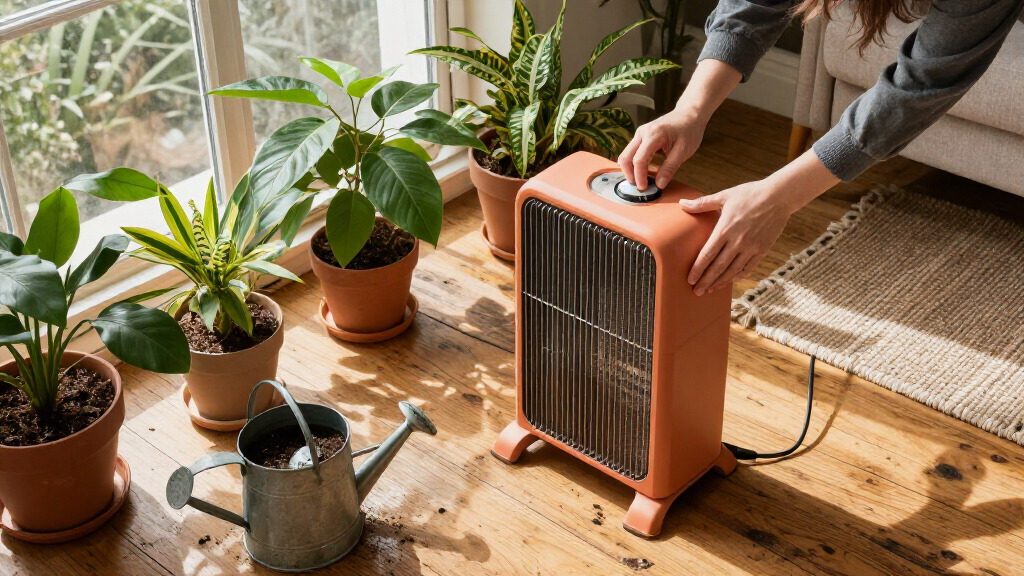

The best indoor plant heaters balance steady, controllable warmth with a setup that fits your growing space. I rank the Spider Farmer 530W PTC Grow Tent Heater first for its extension hose, which directs heat into a tent, while the Kiroto Smart Greenhouse Heater stands out for app control and the Air Choice Greenhouse Heater for a digital thermostat. The main tradeoffs are targeted versus room-wide heating, basic versus connected controls, and how much attention the heater needs when conditions change. A 1500W heater may suit a small, enclosed growing area but can be excessive or insufficient depending on insulation, ventilation, and local conditions. Read on for the full breakdown, buying advice, and picks by growing setup.

Get the little things that make your day delivered free with Prime
- Fast, free delivery on millions of items
- Prime Video, Amazon Music and more included
- Member-only deals all year
Key Takeaways
- Directed heat sets the Spider Farmer apart: its extension hose gives grow-tent owners a way to route warmth toward their growing area instead of relying only on room-wide airflow.
- Control style is a meaningful divider: Kiroto adds Wi-Fi app control, while Air Choice, SmterCon, and ZIZIWIN emphasize digital thermostat controls without the same stated app feature.
- Many greenhouse picks share a 1500W rating: that makes thermostat design, airflow, installation, and space fit more useful comparison points than wattage alone.
- A heater is not a substitute for checking conditions: changing outdoor temperatures, drafts, and ventilation can affect results even when a thermostat is present.
- Choose by growing space, not product label: a grow tent, greenhouse, and multipurpose indoor area can call for different heat direction and control features, so the most specialized model may be a poor fit elsewhere.
| Air Choice 1500W Portable PTC Ceramic Space Heater |  | Best for Quick, Directed Warmth | Heating element: PTC ceramic | Power: 1500 watts | Voltage and amperage: 120 volts; 12.5 A | VIEW LATEST PRICE | See Our Full Breakdown |
| Spider Farmer 530W PTC Grow Tent Heater with Extension Hose |  | Best for Grow Tents and Precise Scheduling | Heating method: PTC | Power: 530 watts | Voltage and amperage: 110 volts AC; 3 A | VIEW LATEST PRICE | See Our Full Breakdown |
| Air Choice Greenhouse Heater with Digital Thermostat |  | Best for Beginners | Heating element: PTC ceramic | Heat output: High: 1500W; Low: 750W | Additional mode: Fan-only | VIEW LATEST PRICE | See Our Full Breakdown |
| Kiroto Smart Greenhouse Heater, 1500W, Wi-Fi App Control and Thermostat |  | Best for Remote Monitoring | Power: 1500 watts | Heating coverage: 150 square feet | Temperature settings: 41°F–113°F | VIEW LATEST PRICE | See Our Full Breakdown |
| Noarixa Greenhouse Heater with Thermostat, 1500W |  | Best for Damp Planting Areas | Heating element and method: PTC ceramic; forced air | Power settings: 20W, 750W, 1500W | Heat output: 5120 BTU | VIEW LATEST PRICE | See Our Full Breakdown |
| VEVOR 1500W Greenhouse Heater with Fan |  | Best for Directed Airflow | Power: 1500 W | Heating method: Forced air | Modes: Low heat, high heat, fan | VIEW LATEST PRICE | See Our Full Breakdown |
| Joanolga 1500W Electric Patio and Greenhouse Heater |  | Best for Flexible Heat Settings | Power settings: 20 W, 750 W, and 1500 W | Maximum heat output: 1500 W | Heating method: Forced air | VIEW LATEST PRICE | See Our Full Breakdown |
| SmterCon Greenhouse Heater with Digital Thermostat |  | Best for Automatic Temperature Control | Power: 1500 W | Heating method: Convection | Heating area: Up to 120 sq. ft. | VIEW LATEST PRICE | See Our Full Breakdown |
| LHUKSGF Greenhouse Heater with Thermostat, 1500W, Black |  | Best for Humid Growing Spaces | Power settings: 750 W and 1500 W | Heating output: 5120 BTU | Heating method: Forced air | VIEW LATEST PRICE | See Our Full Breakdown |
| ZIZIWIN 1500W Greenhouse Heater with Digital Thermostat |  | Best for Adjustable Airflow | Power: 1500 W | Heating method: Convection | Coverage: Up to 120 sq. ft. | VIEW LATEST PRICE | See Our Full Breakdown |
| indoor plant heater | Power | Heating method | Dimensions |
|---|---|---|---|
| Air Choice 1500W Portable PTC | 1500 watts | — | — |
| Spider Farmer 530W PTC Grow Te | 530 watts | PTC | — |
| Air Choice Greenhouse Heater w | — | — | — |
| Kiroto Smart Greenhouse Heater | 1500 watts | — | — |
| Noarixa Greenhouse Heater with | — | — | 8.8 × 12 × 6.5 in (D × W × H) |
| VEVOR 1500W Greenhouse Heater | 1500 W | Forced air | 7.09 × 6.3 × 8.46 in |
| Joanolga 1500W Electric Patio | — | Forced air | 8 × 9 × 7 in (D × W × H) |
| SmterCon Greenhouse Heater wit | 1500 W | Convection | 9.5 × 7.5 × 8.6 in |
| LHUKSGF Greenhouse Heater with | — | Forced air | 6.3 × 9.8 × 12.2 in |
| ZIZIWIN 1500W Greenhouse Heate | 1500 W | Convection | 9.45 × 7.48 × 8.66 in |
More Details on Our Top Picks
Air Choice 1500W Portable PTC Ceramic Space Heater
The Air Choice 1500W is a straightforward pick for a small plant area that needs a quick boost rather than close temperature management. Its PTC ceramic element is described as producing heat in about three seconds, and the 90-degree tilt lets you aim airflow toward a chilly corner or away from delicate foliage. The three modes include fan-only circulation, which gives it more seasonal flexibility than a heat-only unit. Compared with the Air Choice Greenhouse Heater with Digital Thermostat, this model lacks automatic temperature cycling, so you’ll need to manage its operation yourself. The light, handled body is easy to reposition, but the stated 150-square-foot coverage and need for an AC outlet make it a small-space tool, not a solution for a large greenhouse.
Pros:- PTC ceramic heat is described as starting in approximately three seconds.
- 90-degree tilt helps direct warmth toward a specific area.
- Low, High, and Fan modes allow heat output to be adjusted or switched to circulation.
- Carry handle and 3.1-pound weight make it easy to reposition.
Cons:- No thermostat is listed, so it cannot automatically maintain a target temperature.
- The 150-square-foot coverage is better suited to small or medium spaces than a large growing area.
- Requires an AC power source, limiting placement to areas with an outlet.
Best for: Plant owners warming a compact greenhouse, grow area, or drafty room who want a portable heater with manually directed airflow.
Not ideal for: Growers who need unattended temperature control or even heat across a large greenhouse; this model has no listed thermostat and is rated for 150 square feet.
- Heating element:PTC ceramic
- Power:1500 watts
- Voltage and amperage:120 volts; 12.5 A
- Heating coverage:150 sq. ft.
- Modes:Low, High, Fan
- Adjustable tilt:90 degrees
- Weight:3.1 lbs
- Safety:Overheat protection; ETL certified
Our verdict“Choose this Air Choice model for fast, manually aimed warmth in a compact plant space, not for automatic temperature control.”
Spider Farmer 530W PTC Grow Tent Heater with Extension Hose
Where the 1500W Air Choice heaters focus on portable, high-output warmth, the Spider Farmer 530W is built around controlled airflow and scheduling for a grow tent. Ten heat and fan settings, an adjustable temperature deadband, and a sensor support more tailored operation than the manual controls on the Air Choice Portable PTC Ceramic Space Heater. Its included 160 cm extension hose can direct warm air away from foliage, addressing a common concern when heating a planted enclosure. Daytime and nighttime modes also suit growers who want different temperature behavior across a light cycle. The tradeoff is lower stated power than the 1500W options, plus floor-only mounting and a 5.4-pound body that offers less placement flexibility than a small tabletop heater.
Pros:- Ten heat and fan settings provide more adjustment than the basic three-mode Air Choice models.
- Temperature sensor, adjustable deadband, and day/night modes support scheduled climate control.
- The 160 cm extension hose helps route airflow away from plants.
- Includes a 24-hour timer and over-temperature protection.
Cons:- At 530 watts, it has lower listed power than the 1500W heaters in this group.
- Floor mounting limits placement options in crowded grow tents.
- The listed 110V AC supply may not fit every setup without checking electrical compatibility.
Best for: Grow-tent growers who want sensor-based temperature scheduling, adjustable airflow, and a way to route warm air away from plants.
Not ideal for: Owners of larger or poorly insulated greenhouses seeking a higher-output heater, or anyone who needs a wall- or tabletop-mounted unit.
- Heating method:PTC
- Power:530 watts
- Voltage and amperage:110 volts AC; 3 A
- Temperature range:32°F–140°F
- Heat and fan settings:10
- Operating modes:Always-On, All-Day, Daytime, Nighttime
- Extension hose length:160 cm
- Timer:24 hours
- Dimensions and weight:12 × 12 × 6.3 in; 5.4 pounds
Our verdict“Pick the Spider Farmer for a grow tent where timed, sensor-guided heat and routed airflow matter more than maximum heater wattage.”
Air Choice Greenhouse Heater with Digital Thermostat
The Air Choice Greenhouse Heater with Digital Thermostat is the clearest choice here for plant owners who want a simple setpoint instead of frequent manual adjustments. Its thermostat cycles the 1500W PTC ceramic heater to maintain a selected temperature between 40°F and 108°F, giving it an advantage over the Air Choice Portable PTC Ceramic Space Heater, which lists no thermostat. High, Low, and Fan-only modes cover basic heating and circulation needs, while the 90-degree tilt allows targeted airflow. At 2.5 pounds, it is also lighter than the portable Air Choice version. The limits are a stated 150-square-foot coverage and a maximum output of 1500 watts; it is a compact-space heater, not a way to regulate a broad greenhouse with uneven temperatures.
Pros:- Digital thermostat cycles heat to maintain a selected temperature.
- Temperature range of 40°F–108°F suits a range of plant-space settings.
- High, Low, and Fan-only modes offer basic heat and circulation control.
- Light 2.5-pound tabletop design and 90-degree tilt aid placement.
Cons:- Coverage is limited to a stated 150 square feet.
- Maximum heat output is 1500 watts, which may not meet the needs of a larger or poorly insulated space.
- Unlike the Kiroto Smart Greenhouse Heater, it has no listed app control or remote temperature alerts.
Best for: New greenhouse or grow-room owners who want thermostat cycling and uncomplicated controls for a small plant area.
Not ideal for: Growers managing a large greenhouse or seeking remote app monitoring; the listed coverage is 150 square feet and no app control is specified.
- Heating element:PTC ceramic
- Heat output:High: 1500W; Low: 750W
- Additional mode:Fan-only
- Thermostat range:40°F–108°F
- Coverage:150 sq. ft.
- Voltage:120 volts
- Tilt:90 degrees
- Weight and mounting:2.5 lbs; tabletop
- Safety:Overheat protection; cool-touch housing
Our verdict“Choose this model if you want straightforward thermostat-controlled heat for a small greenhouse without app-based features.”
Kiroto Smart Greenhouse Heater, 1500W, Wi-Fi App Control and Thermostat
The Kiroto’s defining advantage is not raw output but remote monitoring: the Smart Life app supports temperature checks, heater control, and high- and low-temperature alerts. That gives it a different role from the Air Choice Greenhouse Heater with Digital Thermostat, which offers local thermostat cycling but no listed app access. Its 1500W rating and 70-degree oscillation are suited to a small greenhouse where spreading warmth matters more than aiming it in one fixed direction. Heating and fan modes add basic seasonal use, while tip-over and overheat protection address common heater risks. The tradeoff is setup work: alerts require thresholds to be set in advance, and the stated 150-square-foot coverage does not make this a large-space solution. It also depends on app-based control for its standout features.
Pros:- Smart Life app provides remote operation and real-time temperature checks.
- High- and low-temperature alerts can flag conditions that pass set thresholds.
- 70-degree oscillation spreads warmth across a wider area than fixed-direction airflow.
- Overheat and tip-over protection are included.
Cons:- Coverage is listed at 150 square feet, limiting its fit for larger greenhouses.
- Temperature alerts require high and low thresholds to be configured in advance.
- App control adds setup and connectivity dependence compared with the simpler Air Choice thermostat model.
Best for: Plant owners who cannot check a small greenhouse in person often and want app control, temperature readings, and threshold alerts.
Not ideal for: Buyers who prefer simple, local controls or need heat across more than 150 square feet; its remote features also depend on app setup.
- Power:1500 watts
- Heating coverage:150 square feet
- Temperature settings:41°F–113°F
- Alert ranges:Low: 0°F–68°F; high: 70°F–113°F
- Oscillation:70 degrees
- Modes:Heating and fan
- Controls:Smart Life app
- Safety:Overheat and tip-over protection
- Form and mounting:Silver pedestal; tabletop mounting
Our verdict“Choose the Kiroto if remote checks and alerts are priorities for a compact greenhouse, and skip it if you want uncomplicated local controls.”
Noarixa Greenhouse Heater with Thermostat, 1500W
The Noarixa is the most adaptable pick for a utility greenhouse where splash resistance and multiple power levels matter. Its 20W setting is listed alongside 750W and 1500W heat outputs, and the adjustable thermostat spans 41°F–108°F. That gives buyers more control over output than the basic Low/High/Fan modes on the Air Choice Portable PTC Ceramic Space Heater, while the IPX4 splash-resistant housing is a useful distinction for damp spaces. Heating and circulation modes also let it move air without using its higher heat settings. It remains a floor-mounted, forced-air unit, so it needs a suitable outlet and floor space; its stated 160-square-foot coverage is still a limit for larger greenhouses. The supplied data lists overheat protection but no tip-over protection.
Pros:- 20W, 750W, and 1500W settings provide a wider listed output range than basic two-level heaters.
- Adjustable thermostat covers 41°F–108°F.
- IPX4 splash resistance suits damp utility spaces better than models without a listed water-resistance rating.
- Heating and circulation modes support both warming and air movement.
Cons:- The stated 160-square-foot coverage may not suit a larger greenhouse.
- Floor mounting requires an available, level spot near a power source.
- Only overheat protection is listed; tip-over protection is not specified.
Best for: Growers with a compact greenhouse or patio planting area who want adjustable output and splash resistance for a damp environment.
Not ideal for: Owners of large greenhouses or anyone who needs a tabletop heater, remote monitoring, or listed tip-over protection.
- Heating element and method:PTC ceramic; forced air
- Power settings:20W, 750W, 1500W
- Heat output:5120 BTU
- Temperature range:41°F–108°F (5°C–42°C)
- Modes:Heating and circulation
- Water resistance:IPX4 splash-resistant
- Protection:Overheat protection
- Mounting:Floor
- Dimensions:8.8 × 12 × 6.5 in (D × W × H)
Our verdict“Choose the Noarixa for a compact, damp planting area where splash resistance and fine power choices outweigh remote controls or broader coverage.”
VEVOR 1500W Greenhouse Heater with Fan
The VEVOR 1500W suits plant owners who want to aim warmth at a specific bench or section of a small growing space. Its head tilts manually up to 40°, while the fan-only mode circulates air without adding heat—a useful distinction from the SmterCon Greenhouse Heater, which adds automatic thermostat control instead. Two heat settings offer a simple choice between lower and higher output, and the carry handle makes it easier to reposition as plant arrangements change. The tradeoff is that VEVOR has no listed thermostat or coverage rating, so it cannot maintain a chosen temperature automatically or guide buyers on room size. Its steel housing and overheat shutoff add practical safeguards, but this is an indoor-use pick, not a heater for exposed outdoor conditions.
Pros:- Manually adjustable angle helps direct airflow toward a chosen area.
- Fan-only mode circulates air without heat.
- Two heat settings provide a straightforward output choice.
- Carry handle, stable base, and steel housing support portable floor use.
Cons:- No thermostat is listed for maintaining a set temperature.
- No coverage area is specified, making room-size suitability harder to judge.
- Designed for indoor use, and angle changes require manual adjustment.
Best for: Indoor growers with a small greenhouse or grow tent who want to direct warm airflow toward a particular plant bench.
Not ideal for: Growers who need automatic temperature control or a stated coverage area; the SmterCon and LHUKSGF include digital thermostats.
- Power:1500 W
- Heating method:Forced air
- Modes:Low heat, high heat, fan
- Adjustable angle:Up to 40°
- Safety feature:Overheat shutoff
- Material:Cold-rolled steel
- Dimensions:7.09 × 6.3 × 8.46 in
- Weight:2.8 lb
- Mounting type:Floor
Our verdict“Choose the VEVOR if directing warm airflow matters more than automatic temperature control or a published coverage limit.”
Joanolga 1500W Electric Patio and Greenhouse Heater
The Joanolga OH2025YE gives growers three listed power settings—20W, 750W, and 1500W—rather than the two heat levels offered by the VEVOR. That range makes it easier to choose between stronger heating and a very low setting, though the listed 20W level may add little warmth to a cold greenhouse. Its PTC ceramic element is designed for quick heating, and the maker lists coverage up to 160 square feet, matching the LHUKSGF’s stated area. Unlike that model, Joanolga does not list a digital thermostat, timer, or water-resistance rating, so it offers less guidance for maintaining a stable growing temperature in humid conditions. Portability and overheat protection make it versatile for indoor spaces and covered patios, but outdoor use should stay sheltered and well ventilated.
Pros:- Three listed power settings provide more output choices than two-setting models.
- PTC ceramic heating element is designed for quick heating.
- Listed coverage reaches up to 160 sq. ft.
- Portable floor design and overheat protection support flexible placement.
Cons:- The 20W setting may provide very limited warmth.
- No digital thermostat is listed for automatic temperature maintenance.
- Outdoor use is limited to covered, well-ventilated spaces.
Best for: Plant owners who want a portable heater with multiple output choices for a greenhouse, garage, or covered patio.
Not ideal for: Growers who need a digital thermostat or water-splash protection; the LHUKSGF lists both thermostat features and an IPX4 rating.
- Power settings:20 W, 750 W, and 1500 W
- Maximum heat output:1500 W
- Heating method:Forced air
- Heating element:PTC ceramic
- Coverage:Up to 160 sq. ft.
- Amperage:12.5 A
- Dimensions:8 × 9 × 7 in (D × W × H)
- Safety feature:Overheat protection
Our verdict“Pick the Joanolga for portable heating with several output choices, but choose the LHUKSGF if temperature control and splash resistance matter more.”
SmterCon Greenhouse Heater with Digital Thermostat
The SmterCon stands out for its digital thermostat, which switches the 1500W heater on and off to maintain a selected temperature. For plants sensitive to cold swings, that automatic operation is a more direct fit than the manual heat settings on the VEVOR Greenhouse Heater. SmterCon also lists adjustable ventilation and wind speed, giving growers some control over airflow as well as heat. Its stated coverage is up to 120 sq. ft., however, which is narrower than the Joanolga and LHUKSGF ratings of up to 160 square feet. The floor-mounted design includes overheat protection and fireproof materials, but the supplied information does not give a thermostat range or timer. This is best for a compact growing room where automatic temperature cycling matters more than a larger stated coverage area.
Pros:- Digital thermostat automatically switches heating on and off.
- Adjustable ventilation and wind speed support air circulation.
- Overheat protection and fireproof materials are listed.
- Designed for spaces up to 120 sq. ft.
Cons:- Stated coverage is less than the Joanolga and LHUKSGF ratings.
- No thermostat temperature range or timer is listed.
- Requires an AC/DC power source.
Best for: Indoor plant growers with a greenhouse or grow space up to 120 sq. ft. who want a heater to cycle automatically around a chosen temperature.
Not ideal for: Owners of spaces larger than the stated coverage or buyers who need a documented thermostat range; the LHUKSGF lists both a wider area and a specific range.
- Power:1500 W
- Heating method:Convection
- Heating area:Up to 120 sq. ft.
- Amperage:15 A
- Thermostat:Digital; automatic temperature control
- Airflow:Adjustable ventilation and wind speed
- Dimensions:9.5 × 7.5 × 8.6 in
- Safety features:Overheat protection and fireproof materials
- Mounting type:Floor
Our verdict“Choose SmterCon for automatic temperature cycling in a compact plant space, not for broader coverage or detailed thermostat scheduling.”
LHUKSGF Greenhouse Heater with Thermostat, 1500W, Black
For a humid greenhouse where splashes are possible, the LHUKSGF’s IPX4 rating gives it a clear distinction from the other heaters in this group, including the thermostat-equipped SmterCon and ZIZIWIN, which list overheat protection but no water-resistance rating. It also pairs a digital thermostat with a circulation fan, an on/off timer, and two heat settings, so growers can manage temperature and airflow with more control than the simpler VEVOR. The listed thermostat range spans 41°F to 108°F, while coverage is up to 160 square feet. That rating still makes this a supplemental heater for a bounded space, not a way to heat an entire large growing room. Its 1500W maximum draw is also worth checking against the available circuit before use.
Pros:- IPX4 water-resistance rating suits humid conditions and splashes.
- Digital thermostat, circulation fan, and timer add control over operation.
- Two heat settings offer 750W and 1500W choices.
- Listed coverage reaches up to 160 sq. ft.
Cons:- Coverage is limited to spaces up to 160 sq. ft.
- Maximum power draw is 1500W, which may not suit every circuit.
- No mounting hardware or wall-mount option is listed.
Best for: Growers with a humid greenhouse or plant area up to 160 sq. ft. who want thermostat control, circulation, and splash resistance.
Not ideal for: Buyers who need a heater for a large greenhouse or a low-power setup; the unit reaches 1500W and its listed coverage is limited.
- Power settings:750 W and 1500 W
- Heating output:5120 BTU
- Heating method:Forced air
- Coverage:Up to 160 sq. ft.
- Thermostat range:41°F to 108°F (5°C to 42°C)
- Water resistance:IPX4
- Features:Digital display, circulation fan, on/off timer, overheat protection
- Amperage:12.5 A
- Dimensions:6.3 × 9.8 × 12.2 in
Our verdict“Choose the LHUKSGF for a humid plant space needing thermostat control and splash resistance, provided its 1500W draw suits your circuit.”
ZIZIWIN 1500W Greenhouse Heater with Digital Thermostat
The ZIZIWIN combines automatic digital temperature control with adjustable airflow, making it a practical choice for growers who want the heater to cycle itself while still directing circulation around a compact plant area. Its convection design and listed coverage of up to 120 sq. ft. put it in the same small-space class as the SmterCon, rather than the Joanolga or LHUKSGF models rated for up to 160 square feet. Compared with SmterCon, ZIZIWIN provides listed weight and dimensions, which help buyers plan a floor location, but neither listing supplies a thermostat range or timer. Fireproof materials and overheat protection are useful safeguards; still, a 1500W electric heater needs a suitable power source and careful placement around plants, water, and equipment.
Pros:- Digital thermostat automatically switches heating to maintain a selected temperature.
- Adjustable airflow supports circulation or cooling.
- Fireproof materials and overheat protection are listed.
- Dimensions and weight help with floor-placement planning.
Cons:- Coverage is limited to spaces up to 120 sq. ft.
- No thermostat range or timer is listed.
- Requires an electrical power source and draws up to 1500W.
Best for: Growers with a compact greenhouse, grow tent, or garage who want automatic temperature cycling plus adjustable ventilation.
Not ideal for: Owners of plant spaces larger than 120 sq. ft. or buyers who need a specified thermostat range; the LHUKSGF lists coverage up to 160 sq. ft. and a temperature range.
- Power:1500 W
- Heating method:Convection
- Coverage:Up to 120 sq. ft.
- Thermostat:Digital, automatic temperature control
- Airflow:Adjustable speed and ventilation
- Safety features:Fireproof materials and overheat protection
- Amperage:12.5 A
- Dimensions:9.45 × 7.48 × 8.66 in
- Weight:3.5 lb
Our verdict“Pick the ZIZIWIN for automatic heating and adjustable airflow in a compact space; choose the LHUKSGF for wider stated coverage and a documented thermostat range.”
How We Picked
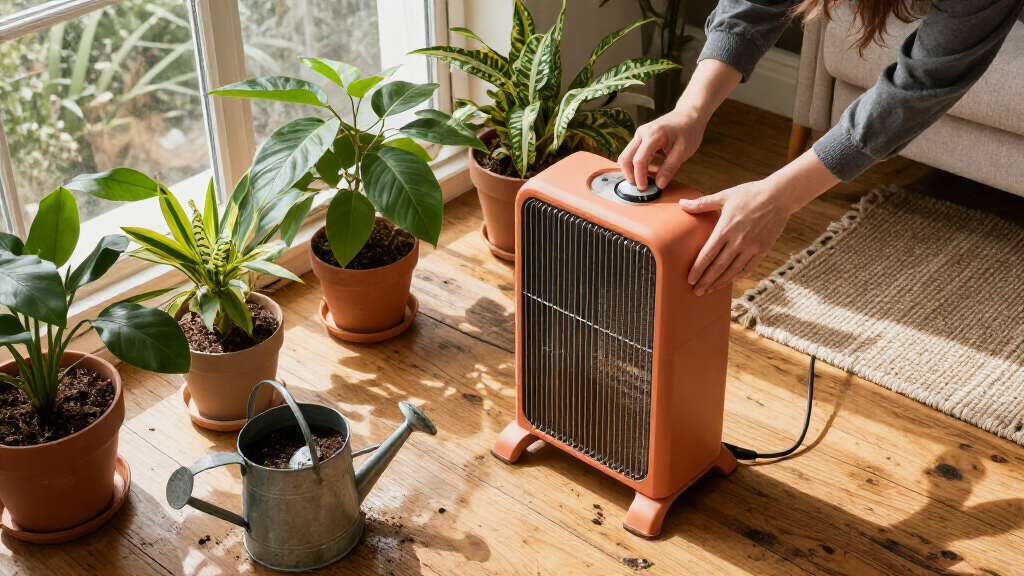
I compared these heaters by how well their stated features match common plant-growing setups: a grow tent, a greenhouse, or a multipurpose indoor space. I gave weight to heat delivery and control, including the Spider Farmer’s extension hose, digital thermostat options, and Kiroto’s Wi-Fi app control. I also considered ease of setup, the usefulness of the design for a plant area, and how clearly each model’s features support a buyer’s needs. A 1500W label alone did not earn a higher place because it does not tell a buyer how well a heater suits a particular space.
The ranking favors a clear use-case advantage over a feature list that looks similar to several alternatives. Spider Farmer leads for directed grow-tent heating; Kiroto ranks highly for remote control; and Air Choice’s greenhouse model offers a straightforward digital-control alternative. Other 1500W greenhouse heaters remain useful candidates, but their relative fit depends on a buyer’s preference for thermostat style, fan-based heating, or patio versatility. I avoid claims about coverage, plant safety, or running costs that are not established by the product details.
| indoor plant heater | Heating method |
|---|---|
| Air Choice 1500W Portable PTC | — |
| Spider Farmer 530W PTC Grow Te | PTC |
| Air Choice Greenhouse Heater w | — |
| Kiroto Smart Greenhouse Heater | — |
| Noarixa Greenhouse Heater with | — |
| VEVOR 1500W Greenhouse Heater | Forced air |
| Joanolga 1500W Electric Patio | Forced air |
| SmterCon Greenhouse Heater wit | Convection |
| LHUKSGF Greenhouse Heater with | Forced air |
| ZIZIWIN 1500W Greenhouse Heate | Convection |
Factors to Consider When Choosing Best Indoor Plant Heaters
Before choosing a heater, I would start with the growing environment rather than the wattage printed on the listing. The points below help separate a heater that suits your plants and routine from one that adds controls or features you may not use.
Match Heat Delivery to the Space
A grow tent, enclosed greenhouse, and open indoor room lose heat in different ways, so the same heater may behave differently in each. A directed option, such as a heater with an extension hose, may help route warmth into a tent, while a fan-equipped heater is designed to move heated air around its immediate space. Neither design tells you by itself how large an area it can heat; insulation, drafts, ceiling height, and outside temperatures all matter. A common mistake is to choose by advertised wattage alone and overlook air leaks or a large volume of space. Measure the growing area and think about where air can circulate before picking a format. If your setup is open or poorly insulated, a portable heater may struggle to maintain steady conditions regardless of its controls.
Choose Controls You Will Actually Use
A thermostat can reduce the need to switch a heater on and off manually, but control styles vary. Digital controls offer a direct way to set or read a target, while app control can be useful if you want to check or adjust settings remotely. Remote access does not replace checking that the heater and its sensor are positioned appropriately for the plants. If you are usually nearby, a simpler thermostat may be easier to operate and may avoid features you do not need. Before buying, check how temperature settings are entered and whether the product information explains sensor placement and control behavior. Do not assume that every thermostat or app maintains identical conditions throughout a greenhouse or tent.
Plan for Plant-Level Temperature Differences
The temperature near a heater can differ from the temperature at the canopy, on a shelf, or near a cold wall. This matters because a thermostat can respond to its own sensor location rather than the conditions around every plant. Put an independent thermometer near the plants to check for hot or cold spots, especially after changing heater placement. Avoid directing hot airflow straight at delicate foliage unless the product instructions and your setup support that placement. Larger or divided growing areas may need attention to air movement and more than one temperature reading. A heater can provide warmth, but it cannot correct every uneven condition caused by layout or poor circulation.
Treat Electrical Setup as Part of the Choice
Space heaters draw substantial power, so check the model’s electrical requirements and the capacity of the circuit you plan to use. A 1500W rating is common across several greenhouse picks in this roundup, but shared outlets and other equipment can add to the load. Follow the manufacturer’s instructions for placement, clearance, and use, and keep water and damp surfaces in mind when arranging greenhouse equipment. Do not use an extension cord or power strip unless the heater’s instructions explicitly permit it. A heater intended for a greenhouse or patio is not automatically suitable for every wet or exposed location. If your growing space has persistent moisture or unusual wiring, address that setup before running a heater unattended.
Decide Whether Remote Control Is Worth the Extra Complexity
Wi-Fi control can be helpful when a greenhouse is away from your living space or you want to check settings without entering the growing area. It also adds setup steps and depends on compatible connectivity and app support, so confirm those requirements before making it your deciding feature. For a small space you visit often, a digital thermostat may offer enough control with less to configure. App access should not be treated as a safety monitor or as proof that plants are receiving even heat. Think about who will manage the heater and how often settings need to change. If several people care for the plants, simple controls that everyone can understand may be a better fit than a feature-rich interface.
Compare the Whole Setup, Not Just the Heater
A heater is only one part of temperature management; insulation, airflow, and monitoring can make a major difference to the conditions plants experience. Before spending more on extra controls, check whether a draft, thin greenhouse covering, or poorly positioned thermometer is the real source of temperature swings. Paying for a specialized design makes sense when it solves a clear problem, such as directing heat into a tent or checking settings remotely. It makes less sense if the feature will not change your routine or the heater’s placement. Read the operating and maintenance instructions, and confirm that the controls and intended setting match your needs. A modest heater in a well-managed small space may serve better than a more feature-heavy model in an unsuitable location.
Frequently Asked Questions
Is a 1500W indoor plant heater enough for my greenhouse?
Wattage alone cannot answer that, because the result depends on greenhouse size, insulation, drafts, outside temperatures, and how much heat escapes through the covering. Several greenhouse heaters in this roundup are rated at 1500W, so their differences may matter more in controls and intended setup than in stated power. Check the heater’s specifications and guidance for the space you plan to heat rather than assuming one rating fits all. Monitor temperatures where the plants sit, not only beside the heater or its thermostat. If the greenhouse is large or poorly insulated, improving heat retention may matter as much as choosing a more powerful unit.
Should I choose a heater with Wi-Fi app control?
App control is most useful when you need to check or adjust settings from another room or when the growing area is not easy to reach. Kiroto is the standout in this roundup for stated Wi-Fi app control; several other picks focus on digital thermostat controls instead. Remote access adds setup requirements and does not guarantee even temperatures around the plants. Check what connectivity and phone support the product requires before relying on the feature. If you regularly visit the growing space, a simpler thermostat may be easier to manage.
Is an extension-hose heater better for a grow tent?
A hose can give you more control over where warm air is directed, which is why the Spider Farmer is the most specialized option here for grow tents. That does not automatically make it better for every tent: placement, airflow, and the heater’s instructions still determine whether the arrangement suits your setup. Check that the hose can be positioned as intended and does not direct heat at sensitive plants or materials. For a greenhouse where you want air moved through the space, a fan-based design may be a closer match. Choose based on how you need heat delivered, not on the hose feature alone.
Can I leave an indoor plant heater running overnight?
Follow the product’s instructions and safety requirements rather than assuming a thermostat makes overnight operation risk-free. Check the heater’s intended setting, required clearance, electrical setup, and any rules about unattended use. A thermostat can control heating around its sensor, but plants elsewhere in the space may experience different temperatures. Use a separate thermometer near the plants and watch how the space behaves before relying on a regular overnight routine. Keep the heater away from water, leaves, and anything that could block airflow, and do not bypass the manufacturer’s operating guidance.
Do greenhouse heaters work safely in a humid growing space?
Do not assume that a greenhouse label means a heater can be used in every damp location. Check the manufacturer’s instructions and any stated protection or placement requirements for the exact model. Humidity, condensation, watering, and wet floors can change the risks around electrical equipment. Keep the heater and connections positioned as directed, and avoid placing them where water can splash or collect. If the product information does not clearly support your conditions, contact the manufacturer before use rather than guessing.
Conclusion
For most buyers, I would choose the Spider Farmer 530W PTC Grow Tent Heater as the best overall option when directed warmth is the priority, and the Kiroto Smart Greenhouse Heater as the best premium-style pick for buyers who value app control. The Air Choice Greenhouse Heater with Digital Thermostat is my best value choice for shoppers who want a named digital-control feature without needing Wi-Fi, while the Noarixa 1500W Greenhouse Heater is a straightforward candidate for beginners who prefer a basic thermostat setup. For buyers who need a fan-based format, look at the VEVOR Greenhouse Heater with Fan; for patio-and-greenhouse flexibility, compare the Joanolga. SmterCon, LHUKSGF, and ZIZIWIN also offer 1500W greenhouse options, so check their control details and fit against your space before deciding. My final pick depends on whether you need directed tent heat, remote control, or a simpler greenhouse setup; match that need to the heater’s instructions and monitor temperatures at plant level.