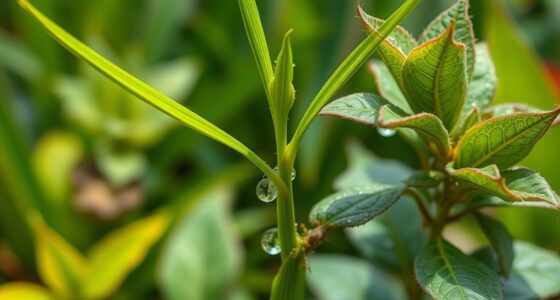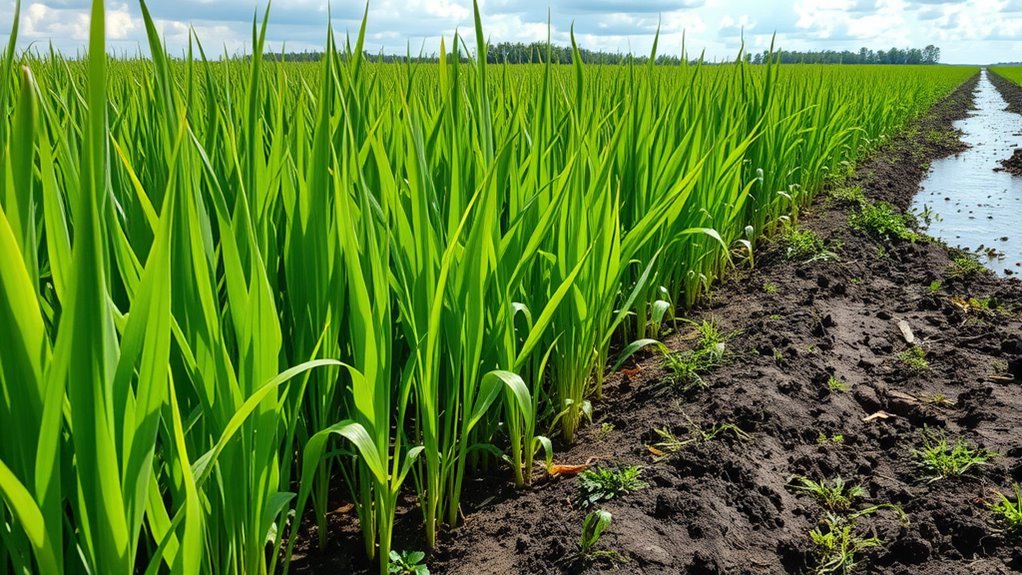

You can see how plants clean toxic soil and water through phytoremediation by absorbing, breaking down, or immobilizing harmful pollutants with their natural abilities. They act as biological filters, removing heavy metals, pesticides, and industrial chemicals from soil and water. This eco-friendly process helps restore contaminated environments while supporting biodiversity. If you keep exploring, you’ll discover even more ways plants can naturally detoxify our planet.
Key Takeaways
- Plants absorb and accumulate pollutants from soil and water through their roots, acting as natural filters.
- Certain species can degrade or transform hazardous substances into less harmful forms.
- Aquatic and wetland plants filter contaminants like nutrients and chemicals from water bodies.
- Phytoremediation is a low-cost, eco-friendly alternative to traditional cleanup methods.
- It promotes ecosystem health by restoring contaminated environments naturally and sustainably.
Have you ever wondered how plants can help clean up polluted environments? It’s fascinating to realize that certain plants have the natural ability to perform soil detoxification and water purification. This process, known as phytoremediation, uses plants as eco-friendly tools to remove, contain, or degrade hazardous substances from soil and water. Instead of relying on costly and invasive cleanup methods, you can harness nature’s own solutions to restore contaminated sites.
When it comes to soil detoxification, plants act as biological filters. They absorb pollutants like heavy metals, pesticides, and hydrocarbons through their roots. These toxins are either stored in plant tissues or broken down into less harmful compounds. For example, some species are particularly adept at extracting metals such as lead, arsenic, and cadmium from the soil. As these plants grow, they gradually reduce the concentration of harmful substances, making the soil safer for future use. This approach is not only cost-effective but also environmentally sustainable, since it minimizes soil disturbance and preserves the natural ecosystem. Understanding the refrigeration cycle helps in optimizing environmental cleanup methods that involve temperature regulation and chemical processes.
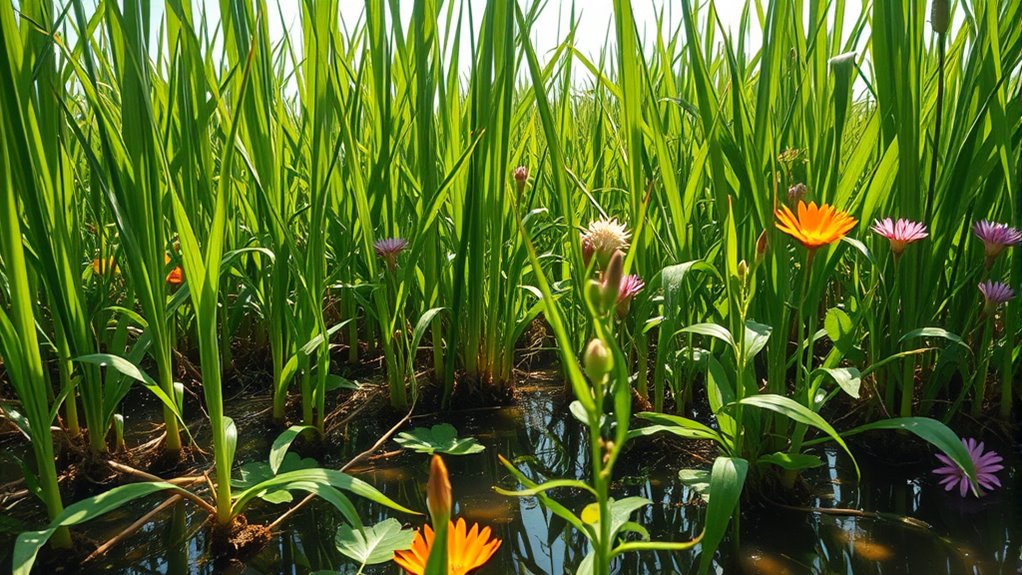
Water purification through phytoremediation works similarly. Certain aquatic and wetland plants can filter pollutants from water bodies. As water flows through or around these plants, they absorb nutrients like nitrogen and phosphorus that often cause algal blooms and water quality issues. Additionally, they can uptake toxic chemicals, such as pesticides or industrial waste, thereby improving water clarity and safety. This natural filtration process is especially useful in treating wastewater or contaminated groundwater. By planting specific species in constructed wetlands or buffer zones, you create a living filtration system that continuously cleanses water without the need for chemical treatments or expensive infrastructure.
The beauty of phytoremediation lies in its simplicity and ecological harmony. You don’t need high-tech equipment or chemicals; instead, you rely on the innate abilities of plants to restore environmental health. Plus, these plants can support local biodiversity, providing habitat for wildlife and improving overall ecosystem resilience. As part of a sustainable cleanup strategy, phytoremediation offers a low-impact, visually pleasing solution that can be scaled up or down depending on the severity of contamination.
In essence, by understanding and utilizing the natural processes of plants, you can make significant strides in cleaning polluted soil and water. Whether through soil detoxification or water purification, plants serve as powerful allies in restoring environmental balance, turning degraded landscapes into healthier, thriving habitats.

Ahopegarden Indoor Garden Hydroponics Growing System: 10 Pods Plant Germination Kit Herb Vegetable Growth Lamp Countertop with LED Grow Light - Hydrophonic Planter Grower Harvest Lettuce
High planting efficiency: Start an indoor herb garden with the Ahopegarden hydroponic growing system, which includes a water...
As an affiliate, we earn on qualifying purchases.
Frequently Asked Questions
Can Phytoremediation Degrade All Types of Pollutants Effectively?
You can’t rely on phytoremediation to degrade all types of pollutants effectively because it depends on plant species and their pollutant specificity. Some plants excel at removing heavy metals, while others target organic contaminants. However, many pollutants, especially complex chemicals, may not be fully broken down by plants alone. As a result, combining phytoremediation with other cleanup methods often offers the best chance to address diverse pollutants thoroughly.
How Long Does Phytoremediation Typically Take to Clean Contaminated Sites?
The timeframe for phytoremediation varies widely depending on site conditions and pollutant types. You might see clean-up in a few months for minor contamination, but complex sites could take several years. Factors like soil type, pollutant concentration, plant species, and climate influence how quickly plants can stabilize or remove toxins. You should regularly monitor progress and adjust strategies to optimize cleanup efficiency over time.
Are There Risks of Toxins Entering the Food Chain Through Phytoremediation?
You should be aware that toxins can sneak into the food chain through bioaccumulation risks during phytoremediation, raising food safety concerns. If contaminated plants are consumed by animals or humans, harmful substances can build up, like hidden treasures turning into dangerous traps. To prevent this, careful monitoring and proper disposal of contaminated biomass are essential, ensuring that cleanup efforts don’t become a new source of harm.
What Are the Costs Associated With Large-Scale Phytoremediation Projects?
You should consider that large-scale phytoremediation projects can be costly, requiring a thorough financial analysis to estimate expenses like plant procurement, land preparation, and ongoing maintenance. While the environmental impact is generally positive, initial investments might be high. Additionally, you need to account for potential risks, such as long-term monitoring and possible toxin transfer, which could increase overall costs and affect project feasibility.
Can Phytoremediation Be Combined With Other Environmental Cleanup Methods?
Think of phytoremediation as a piece of a larger puzzle—you can definitely combine it with other methods. Integrated approaches and complementary techniques enhance cleanup efficiency, like blending biological, chemical, and physical methods. By working together, they target different pollutants simultaneously, speeding up recovery and reducing costs. You leverage the strengths of each method, creating a more all-encompassing, effective cleanup plan that restores soil and water more thoroughly.

URUQ Hydroponics Growing System Garden: 8 Pods Indoor Herb Garden with Grow Light Plants Germination Kit Quiet Automatic Hydroponic Height Adjustable - Gardening Gifts for Women Kitchen
5 TIMES FASTER GROW: Hydroponics growing system with a 24-watt LED light that simulates the effects of sunlight...
As an affiliate, we earn on qualifying purchases.
Conclusion
Now that you see how plants can clean up toxic soil and water, it’s clear they’re a natural solution worth harnessing. With their ability to absorb, break down, and contain pollutants, they’re truly the tip of the iceberg in environmental cleanup. Don’t overlook the power of green thumbs—sometimes, saving the planet is just a matter of planting the right seeds. So, roll up your sleeves and let nature do the heavy lifting; it’s a win-win situation.

Ahopegarden Hydroponics Growing System Kit Indoor Herb Garden with Grow Light 12 Pods, with LCD Touch Panel Hydroponic Planter, Planting Height Up to 17", Grower Harvest Fresh Veggie Lettuce, Black
Avant-garde and modern design: Our smart hydroponics growing system kit merges urban farming innovation with minimalist aesthetics. Crafted...
As an affiliate, we earn on qualifying purchases.
AeroGarden Harvest Lite in Cream, Soil-Free Indoor Hydroponic Garden with LED Grow Light for Year-Round Gardening of up to 6 Herbs and Vegetables
WARM, INVITING STYLE: The soft Cream finish of the AeroGarden Harvest Lite brings a natural feel to your...
As an affiliate, we earn on qualifying purchases.