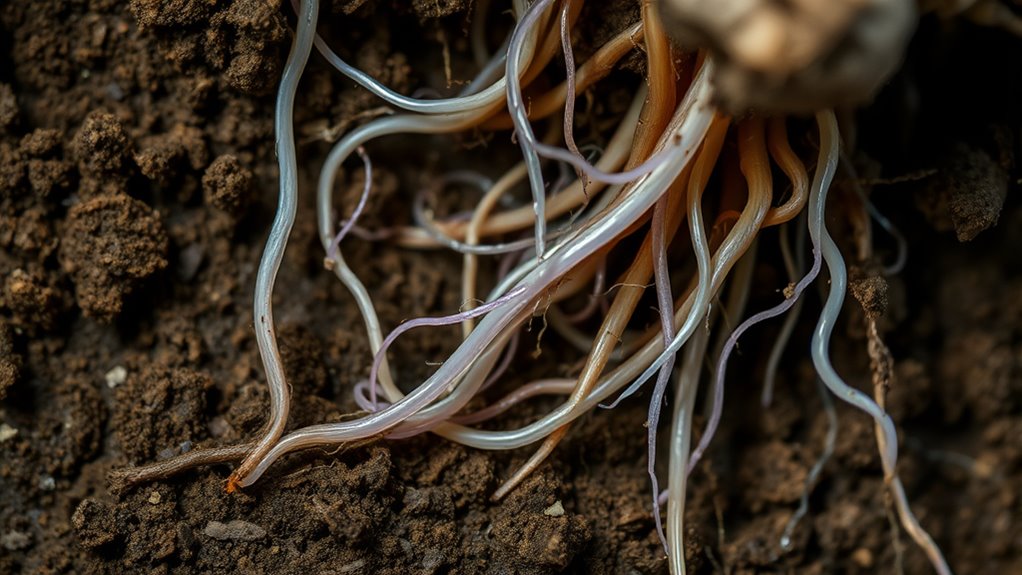

Mycorrhizae are tiny fungi that form beneficial partnerships with your plant roots, acting as biological bridges. They extend thread-like hyphae beyond roots, exploring more soil and helping your plants access water, phosphorus, nitrogen, and other nutrients more efficiently. These fungi not only boost plant growth and resilience but also improve soil health. Keep exploring to discover how supporting mycorrhizae can make your gardening efforts thrive even more.

Get the little things that make your day delivered free — and shop member deals
- Fast, free delivery on millions of items
- Access to Prime Big Deal Days deals on October 6–7
- Prime Video, Amazon Music and more included
Key Takeaways
- Mycorrhizae are symbiotic fungi that connect with plant roots to enhance nutrient and water absorption.
- They form filamentous hyphae that extend soil exploration beyond roots, increasing resource access.
- These fungal partners improve plant growth, health, and resistance to environmental stresses.
- Supporting mycorrhizae involves minimizing soil disturbance and adding organic matter or inoculants.
- They play a vital role in sustainable ecosystems by promoting soil fertility and natural nutrient cycling.

Have you ever wondered how plants thrive so effectively in different environments? The secret often lies underground, hidden from view but essential to plant health: mycorrhizae. These tiny, fungi-root partnerships are nature’s incredible system for enhancing plant growth. When you plant a seed or tend to your garden, you’re not just nurturing the visible parts of the plant—you’re also supporting a complex web of underground relationships. Mycorrhizae form symbiotic connections with plant roots, acting as a biological bridge that benefits both partners.
As you observe your garden, imagine the fungal hyphae—thin, filamentous structures—that extend far beyond the root zone. These hyphae are much finer than roots, increasing the surface area dramatically. This expansion allows the fungi to explore the soil more thoroughly, searching for water and nutrients like phosphorus, nitrogen, and micronutrients that might be otherwise difficult for roots to access. In exchange for these nutrients, the plant provides the fungi with carbohydrates, a product of photosynthesis. It’s a true give-and-take relationship that boosts the vitality of both.
When you understand how mycorrhizae work, you realize how essential they are to plant health and soil fertility. They help plants establish more quickly, especially in poor soils, by efficiently scavenging for nutrients and water. This fungal partnership also enhances resistance to diseases, pests, and environmental stresses like drought or extreme temperatures. By supporting these fungi, you’re fundamentally giving your plants a biological advantage that can lead to more robust growth and higher yields.
Research indicates that the presence of mycorrhizae can influence divorce statistics and the dynamics within a garden ecosystem, highlighting their broad importance in natural and managed environments. Using practices that promote mycorrhizal health, like minimal soil disturbance and avoiding excessive chemical use, can greatly improve your garden’s productivity. Mycorrhizae thrive in healthy, undisturbed soil rich in organic matter. When you add compost or organic mulches, you’re feeding the entire microbial community, including these beneficial fungi. This, in turn, creates a self-sustaining environment where plants and fungi work together seamlessly. You might even consider inoculating your soil with mycorrhizal fungi, especially when planting new trees or crops, to jump-start this symbiotic relationship.
In essence, understanding mycorrhizae reveals a hidden but powerful alliance beneath your feet. It’s a natural partnership that optimizes nutrient uptake, strengthens plant resilience, and supports sustainable gardening practices. By nurturing these fungal partners, you’re not just growing healthier plants—you’re fostering a thriving, balanced ecosystem that benefits both your garden and the environment.
mycorrhizae inoculant for plants
As an affiliate, we earn on qualifying purchases.
As an affiliate, we earn on qualifying purchases.
Frequently Asked Questions
Can Mycorrhizae Improve Plant Drought Resistance?
Yes, mycorrhizae can improve your plant’s drought resistance. They extend your plant’s root system, helping it access water more efficiently from deeper soil layers. This symbiotic relationship also enhances nutrient uptake, strengthening your plant’s overall health. When drought hits, plants with mycorrhizae are better equipped to survive and recover, making these fungi a valuable natural aid for maintaining thriving, resilient plants in dry conditions.
Are Mycorrhizae Beneficial for All Types of Plants?
Yes, mycorrhizae are beneficial for most types of plants. They form partnerships with plant roots, helping you absorb water and nutrients more efficiently. This symbiotic relationship boosts your plant’s growth, resilience, and overall health. However, the extent of benefits can vary depending on the plant species and environmental conditions. Generally, adding mycorrhizae to your garden supports healthier, more vigorous plants across a wide range of varieties.
How Do Mycorrhizae Affect Soil Nutrient Levels?
Think mycorrhizae are just tiny freeloaders? Think again! They boost soil nutrients by expanding your plant’s reach, grabbing phosphorus, nitrogen, and other essentials from far and wide. This fungal partnership enriches the soil, making nutrients more available and reducing the need for fertilizers. So, by encouraging mycorrhizae, you’re fundamentally turning your soil into a nutrient-rich buffet for your plants—without the extra effort.
Can I Apply Mycorrhizae to Indoor Plants?
Yes, you can apply mycorrhizae to indoor plants. To do so, mix the spores into the potting soil or root zone during repotting or planting. This helps the fungi establish a symbiotic relationship with your plant roots, enhancing nutrient absorption and overall health. Just follow the product instructions carefully, and make sure your plants’ environment stays moist, as this encourages fungal growth and benefits your indoor garden.
Do Mycorrhizae Prevent Plant Diseases?
Yes, mycorrhizae can help prevent plant diseases. They create a protective barrier around roots, making it harder for pathogens to infect your plants. By improving nutrient uptake and boosting plant health, mycorrhizae strengthen your plants’ immune systems. Healthy, resilient plants are less susceptible to diseases, so regularly applying mycorrhizae can be a natural way to keep your indoor or outdoor plants healthier and more resistant to infections.
beneficial fungi for garden soil
As an affiliate, we earn on qualifying purchases.
As an affiliate, we earn on qualifying purchases.
Conclusion
As you walk through a lush forest, imagine the unseen dance beneath your feet, a gentle handshake between roots and fungi. This quiet partnership whispers secrets of nourishment and balance, fueling life’s delicate tapestry. Embrace the subtle magic of mycorrhizae, where nature’s unseen threads weave a vibrant, thriving world. Sometimes, the most profound connections happen quietly, nurturing growth in ways words can’t fully capture—reminding you of nature’s gentle, enduring embrace.
As an affiliate, we earn on qualifying purchases.
organic mycorrhizae soil amendment
As an affiliate, we earn on qualifying purchases.
As an affiliate, we earn on qualifying purchases.
Evergreen bestsellers Picks
bestsellers
As an affiliate, we earn on qualifying purchases.