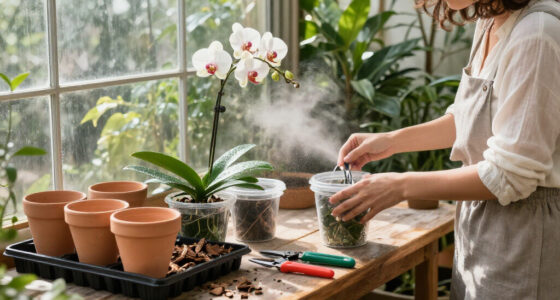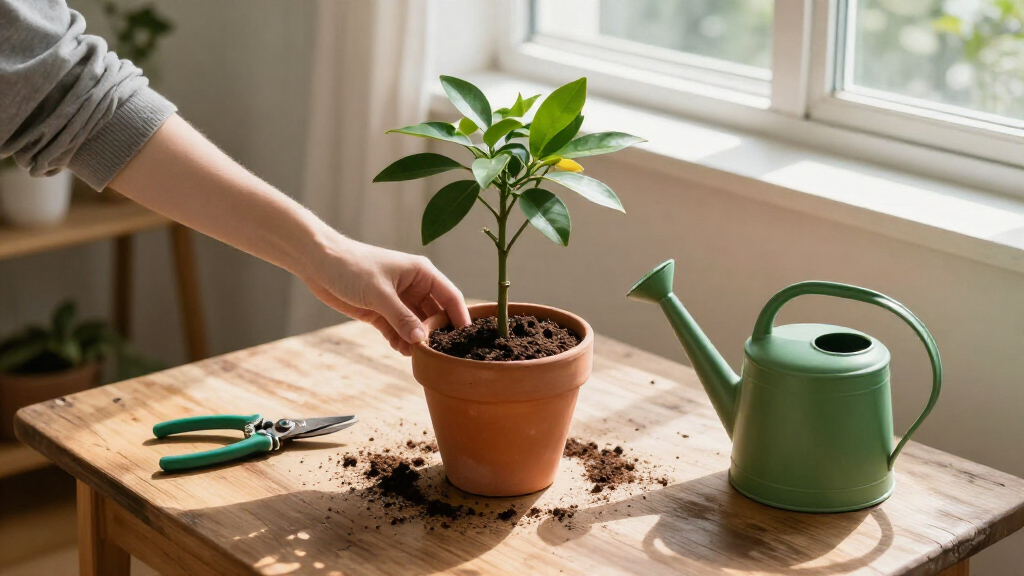
The best indoor citrus tree supplies depend on whether your main need is steady feeding, a better potting mix, or an easier care routine. I’d choose GrowScripts Citrus Fertilizer Kit as the best overall pick for its bundled approach, while Duspro 4-in-1 Citrus Potting Mix stands out for repotting and Miracle-Gro Shake ’N Feed for straightforward granular feeding. The main tradeoff is convenience versus control: spikes and ready-to-use mixes simplify care, while liquids and separate soil amendments offer more flexibility. Indoor trees also have limited root space, so matching the product to your pot and watering habits matters as much as the label. Read on for the full breakdown and a guide to choosing supplies that fit your citrus tree.

Get the little things that make your day delivered free with Prime
- Fast, free delivery on millions of items
- Prime Video, Amazon Music and more included
- Member-only deals all year
Key Takeaways
- GrowScripts Citrus Fertilizer Kit earns the best-overall role because a kit can simplify supply selection, while single-format products suit shoppers who already know what their tree needs.
- Duspro’s 10-quart mix offers the largest listed soil quantity, making it a stronger repotting candidate than the smaller one- and three-quart options.
- Jobe’s spikes, granules, and liquid feeds serve different routines: spikes reduce measuring, granules suit scheduled application, and liquids allow more adjustable feeding.
- Organic-labeled choices are not automatically interchangeable; Jobe’s Organics appears in both spike and granular forms, so application format remains a key distinction.
- Several liquid products list different NPK ratios, including Leaves & Soul at 6-4-6 and Gardenera at 3-1-2, but a ratio alone does not establish which is right for every indoor tree.
| Jobe’s Fruit & Citrus Fertilizer Spikes, 15 Count |  | Best for Low-Mess Seasonal Feeding | Brand: Jobe’s | Form: Fertilizer spikes | NPK ratio: 9-12-12 | VIEW LATEST PRICE | See Our Full Breakdown |
| Miracle-Gro Shake ‘N Feed Citrus, Avocado & Mango Plant Food, 4.5 lb |  | Best for Extended, Multi-Plant Feeding | Brand: Miracle-Gro | Model number: 1048291 | Weight: 4.5 lb (72 oz) | VIEW LATEST PRICE | See Our Full Breakdown |
| Gardenera Citrus Tree Potting Soil Mix (1 Quart) |  | Best for Small Citrus Repotting Jobs | Brand: Gardenera | Volume: 1 quart | Type: Organic citrus potting soil | VIEW LATEST PRICE | See Our Full Breakdown |
| GrowScripts Citrus Fertilizer Kit for Potted Citrus Trees |  | Best for Guided Feeding of One Small Tree | Brand: GrowScripts | Model: CIK4 | Suitable plants: Lemon, lime, orange, mandarin, and similar citrus trees | VIEW LATEST PRICE | See Our Full Breakdown |
| Jobe’s Organics Fruit & Citrus Fertilizer Spikes, 9 Count |  | Best for Organics-Focused, Small Collections | Brand: Jobe’s Organics | Model number: 01312 | Form: Fertilizer sticks | VIEW LATEST PRICE | See Our Full Breakdown |
| Jobe’s Organics Fruit & Citrus Tree Fertilizer Spikes, 3-5-5 Time Release, 6 Spikes per Package |  | Best Organic Root-Feeding Pick | NPK ratio: 3-5-5 | Package quantity: 6 spikes | Release type: Time release | VIEW LATEST PRICE | See Our Full Breakdown |
| Duspro Pre-Mixed 4-in-1 Citrus Tree Potting Soil Mix, 10 Quart |  | Best for Larger Repotting Jobs | Brand: Duspro | Volume: 10 quarts | Composition: Coco coir, coco fiber, perlite, and vermiculite | VIEW LATEST PRICE | See Our Full Breakdown |
| Citrus Tree Fertilizer Spray, 16 oz |  | Best for Convenient Foliar Feeding | Brand: TPS Nutrients | Form: Liquid | Volume: 16 fluid ounces | VIEW LATEST PRICE | See Our Full Breakdown |
| GARDENWISE Organic Lemon Tree Soil, Citrus Potting Mix, 3 Quarts |  | Best Nutrient-Ready Soil for a Small Pot | Brand: GARDENWISE | Volume: 3 quarts (96 fluid ounces) | pH range: 5.5–6.5 | VIEW LATEST PRICE | See Our Full Breakdown |
| GardenWise Citrus Tree Fertilizer with Micronutrients, 1 lb |  | Best Balanced Granular Feed | Brand: GARDENWISE | Form: Granules | NPK ratio: 6-4-6 | VIEW LATEST PRICE | See Our Full Breakdown |
| Jobe’s Organics Fruit & Citrus Granular Fertilizer, 4 lbs |  | Best Organic Granular Pick | Brand: Jobe’s Organics | Weight: 4 lbs | NPK ratio: 3-5-5 | VIEW LATEST PRICE | See Our Full Breakdown |
| TPS Nutrients Lemon Tree Liquid Fertilizer, 8 fl oz |  | Best for Flexible Application | Brand: TPS Nutrients | Form: Liquid | Unit count: 8 fluid ounces | VIEW LATEST PRICE | See Our Full Breakdown |
| Farmer’s Secret Citrus Tree Booster Fertilizer, 8 fl oz |  | Best for Concentrated Feeding | Brand: Farmer’s Secret | Form: Liquid | Unit count: 8 fluid ounces | VIEW LATEST PRICE | See Our Full Breakdown |
| Leaves & Soul Lemon Tree Fertilizer Liquid, 6-4-6 NPK, 8 oz |  | Best Multi-Plant Liquid Feed | Brand: Leaves & Soul | Form: Liquid | NPK ratio: 6-4-6 | VIEW LATEST PRICE | See Our Full Breakdown |
| Gardenera Liquid Citrus Tree Fertilizer Concentrate, 3-1-2, 8 fl oz |  | Best for Indoor Citrus | Brand: Gardenera | Formula: 3-1-2 | Form: Liquid concentrate | VIEW LATEST PRICE | See Our Full Breakdown |
| indoor citrus tree supplie | Brand | Form |
|---|---|---|
| Jobe’s Fruit & Citrus Fertiliz | Jobe’s | Fertilizer spikes |
| Miracle-Gro Shake ‘N Feed Citr | Miracle-Gro | Granules |
| Gardenera Citrus Tree Potting | Gardenera | — |
| GrowScripts Citrus Fertilizer | GrowScripts | — |
| Jobe’s Organics Fruit & Citrus | Jobe’s Organics | Fertilizer sticks |
| Jobe’s Organics Fruit & Citrus | — | — |
| Duspro Pre-Mixed 4-in-1 Citrus | Duspro | — |
| Citrus Tree Fertilizer Spray | TPS Nutrients | Liquid |
| GARDENWISE Organic Lemon Tree | GARDENWISE | — |
| GardenWise Citrus Tree Fertili | GARDENWISE | Granules |
| Jobe’s Organics Fruit & Citrus | Jobe’s Organics | Granules |
| TPS Nutrients Lemon Tree Liqui | TPS Nutrients | Liquid |
| Farmer’s Secret Citrus Tree Bo | Farmer’s Secret | Liquid |
| Leaves & Soul Lemon Tree Ferti | Leaves & Soul | Liquid |
| Gardenera Liquid Citrus Tree F | Gardenera | Liquid concentrate |
More Details on Our Top Picks
Jobe’s Fruit & Citrus Fertilizer Spikes, 15 Count
For indoor citrus keepers who want to feed on a set seasonal schedule, these slow-release spikes offer a tidier alternative to loose granules. Their 9-12-12 formula is aimed at fruit, citrus, and nut trees, and nutrients are placed near active roots rather than spread across the soil surface. Compared with Miracle-Gro Shake ‘N Feed Citrus, Avocado & Mango, the spikes avoid measuring and working fertilizer into the topsoil, but they require individually pressing spikes into the soil around each tree’s dripline.
The 15-count package suits a small collection better than Jobe’s Organics Fruit & Citrus Fertilizer Spikes, 9 Count, though both depend on correct seasonal timing. I’d choose these for a simple spring-and-fall routine, not for someone who wants frequent, adjustable feeding or a formula usable across many houseplants.
Pros:- Slow-release nutrients feed near active roots.
- Spikes reduce loose fertilizer on indoor soil surfaces.
- Designed for fruit, citrus, and nut trees.
- 15 spikes provide more units than the 9-count Jobe’s Organics option.
Cons:- Each spike must be inserted manually around the dripline.
- Limited to the listed tree types rather than general-purpose indoor plants.
- Seasonal application timing may not suit growers who prefer a more frequent feeding routine.
Best for: Indoor citrus owners who want two seasonal feedings with less surface mess and have a pot where spikes can be placed around the root zone.
Not ideal for: People feeding several large trees, growers who prefer adjustable or monthly dosing, and households whose citrus pots are too small or crowded for spike placement.
- Brand:Jobe’s
- Form:Fertilizer spikes
- NPK ratio:9-12-12
- Unit count:15
- Target plants:Fruit, citrus, and nut trees
- Application frequency:Twice a year: early spring and late fall
Our verdict“Choose this pack for a low-mess, twice-yearly feeding routine if your indoor citrus pot can accommodate individually placed spikes.”
Miracle-Gro Shake ‘N Feed Citrus, Avocado & Mango Plant Food, 4.5 lb
This granular food makes sense for indoor growers who have citrus alongside avocado or mango and want one product to cover all three. Its feeding period of up to three months reduces how often you need to reapply, while potassium, magnesium, sulfur, and iron address several common nutrient needs. Unlike Jobe’s Fruit & Citrus Fertilizer Spikes, it can be spread across the soil rather than placed spike by spike, but the tradeoff is more hands-on application: keep granules away from trunks and foliage, work them into the topsoil, then water.
The larger container suits repeated use or multiple plants better than GrowScripts Citrus Fertilizer Kit, which is sized for one small tree. For a single small citrus pot, though, this pack may be more product than needed, and it is less tidy to apply than spikes.
Pros:- Feeds for up to three months between applications.
- Includes potassium, magnesium, sulfur, and iron.
- Suitable for citrus, avocado, and mango.
- Can be used in containers as well as in-ground beds.
Cons:- Granules must be kept away from the trunk and foliage.
- Requires working into the top 1–3 inches of soil and watering afterward.
- The 4.5-pound package may be excessive for a single small indoor tree.
Best for: Indoor gardeners feeding multiple container-grown citrus, avocado, or mango plants who want a granular product on a roughly three-month schedule.
Not ideal for: Owners of one small citrus tree who want a compact, low-mess kit, or anyone unwilling to work granules into the soil and water after application.
- Brand:Miracle-Gro
- Model number:1048291
- Weight:4.5 lb (72 oz)
- Form:Granules
- Application method:Spread evenly, work into the top 1–3 inches of soil, and water
- Feeding duration:Up to 3 months
- Suitable plants:Citrus, avocado, and mango
- Micronutrients:Potassium, magnesium, sulfur, and iron
Our verdict“Pick this granular food if you have several compatible plants and prefer quarterly soil feeding over individually placed spikes.”
Gardenera Citrus Tree Potting Soil Mix (1 Quart)
Soil choice affects drainage and root health, making this a useful pick for a small repotting job or topping up a citrus container. The blend combines Canadian peat moss and perlite for moisture retention and aeration, with worm castings and lime in the mix. Compared with the larger Duspro Pre-Mixed 4-in-1 Citrus Tree Potting Soil Mix, this one is easier to store and buy for a limited task, but its one-quart volume is unlikely to fill a typical tree pot.
It is specifically formulated for citrus rather than serving as a broad potting mix, so it fits a grower focused on lemons, limes, or oranges. I’d skip it for a full repot unless the tree is very small or you already have a compatible mix to supplement it. Unlike the fertilizer options in this roundup, it addresses the growing medium, not ongoing feeding.
Pros:- Formulated specifically for indoor and outdoor citrus trees.
- Perlite supports aeration and drainage.
- Peat moss helps retain moisture while the blend includes worm castings and lime.
- Made in the USA and described as organic.
Cons:- One quart is a small quantity for most full-tree repotting jobs.
- Specialized citrus formulation is less versatile for other plants.
- Does not replace a separate fertilizer for ongoing nutrient supply.
Best for: Citrus growers making a small soil refresh, potting a young seedling, or adding a citrus-specific mix to an existing container.
Not ideal for: Anyone repotting a mature indoor citrus tree who needs enough soil for a full pot, or buyers seeking a general-purpose mix for varied houseplants.
- Brand:Gardenera
- Volume:1 quart
- Type:Organic citrus potting soil
- Ingredients:Canadian peat moss, perlite, worm castings, and lime
- Origin:Made in USA
- Model number:CITRUS-TREE-1QT-FBA
Our verdict“Choose this mix for a small citrus soil task, but buy a larger-volume option for repotting an established tree.”
GrowScripts Citrus Fertilizer Kit for Potted Citrus Trees
GrowScripts stands apart from the single-form fertilizers here by pairing controlled-release granules with trace elements and a calcium concentrate. The included application calendar gives a new citrus owner a plan for soil feeding and foliar sprays instead of leaving every step to guesswork. Its sizing is precise: the kit is intended for one potted tree in a container up to three gallons, so it is a closer fit for a young indoor lemon or lime than the larger-volume Miracle-Gro Shake ‘N Feed.
That tailored approach comes with limits. A mature tree in a bigger pot will outgrow the kit’s scope, and the sprayer needed for foliar application is not included. The liquid concentrates also require preparation. I’d pick this over Jobe’s spikes when a guided, multi-part routine is the priority, but choose spikes for simpler seasonal placement.
Pros:- Combines controlled-release fertilizer, trace elements, and calcium concentrate.
- Application calendar provides guidance on timing and amounts.
- Offers both soil application and foliar spraying.
- Sized around the needs of one small container-grown citrus tree.
Cons:- Intended only for pots up to three gallons.
- Sprayer is not included for foliar application.
- Concentrates must be prepared into solutions before use.
Best for: A first-time indoor citrus grower with one small tree in a pot up to three gallons who wants a written feeding schedule and more than basic NPK.
Not ideal for: Owners of mature or larger potted trees, or buyers who want a ready-to-apply fertilizer and do not want to mix foliar solutions.
- Brand:GrowScripts
- Model:CIK4
- Suitable plants:Lemon, lime, orange, mandarin, and similar citrus trees
- Pot size:Up to 3 gallons
- Fertilizer formula:18-6-12 NPK
- Fertilizer amount:2 oz (56.6 g)
- Liquid concentrates:8 mL trace elements and 8 mL calcium nutrient concentrate
- Prepared solution:Each 8 mL concentrate makes 32 fl oz
- Included:Application calendar; sprayer not included
Our verdict“Choose this kit for a small potted citrus tree if you want a guided multi-part routine and have the equipment to apply foliar spray.”
Jobe’s Organics Fruit & Citrus Fertilizer Spikes, 9 Count
For growers who prefer an organic-labeled option in a compact spike format, Jobe’s Organics delivers targeted root-zone feeding without loose granules to measure or work into indoor potting soil. Its 8-11-11 NPK ratio is intended for fruit and citrus trees, and the dripline placement suits a seasonal feeding approach. Compared with the 15-count Jobe’s Fruit & Citrus Fertilizer Spikes, this pack contains fewer spikes, so it is better matched to one or a few small trees than a larger collection.
The convenience is not the same as a fully hands-off system: each spike still needs to be placed correctly, and the product description calls for seasonal timing. Unlike GrowScripts Citrus Fertilizer Kit, it does not include a calendar, trace-element concentrate, or foliar-feeding step. I’d choose it for straightforward placement and skip it if you want a broader, guided nutrient program.
Pros:- 8-11-11 NPK ratio formulated for fruit and citrus trees.
- Slow-release spikes deliver nutrients near the root zone.
- Avoids loose fertilizer spread across indoor soil.
- Compact option compared with the 15-count Jobe’s spike pack.
Cons:- Nine spikes may not cover a larger collection of trees.
- Spikes require manual placement around the dripline.
- Seasonal timing requires the grower to track application dates.
Best for: Indoor citrus owners seeking an organic-labeled, low-mess spike fertilizer for one or a few small trees.
Not ideal for: Growers with several trees who need more spikes per package, or buyers seeking a detailed feeding calendar and additional nutrient concentrates.
- Brand:Jobe’s Organics
- Model number:01312
- Form:Fertilizer sticks
- NPK ratio:8-11-11
- Unit count:9 spikes
- Item weight:3.68 oz
- Application method:Insert spikes into soil around the dripline
- Target plants:Fruit and citrus trees
Our verdict“Pick this pack for simple, low-mess seasonal feeding of a small citrus collection, but choose the 15-count Jobe’s pack for more trees.”
Jobe’s Organics Fruit & Citrus Tree Fertilizer Spikes, 3-5-5 Time Release, 6 Spikes per Package
For citrus growers who want a measured organic feed without mixing liquid concentrate, Jobe’s Organics spikes offer a direct-to-soil approach. The 3-5-5 formula comes in six pre-measured spikes, and time-release feeding can reduce the need for frequent fertilizer applications. The OMRI listing and Jobe’s Biozome microorganism set these apart from GardenWise Citrus Tree Fertilizer, which uses coated granules and supplies listed micronutrients such as iron and magnesium. The tradeoff is less flexibility: spikes must be pressed into the soil, and their fixed nutrient ratio may not suit every tree or growing schedule. Compared with a foliar spray, this is a root-zone feed, not a quick way to treat leaves. I’d choose it for a small number of container citrus trees when organic certification and low-mess dosing matter most.
Pros:- OMRI-listed for organic gardening
- Six pre-measured spikes simplify dosing and help limit fertilizer runoff
- Time-release formula feeds through the root zone
- Jobe’s Biozome is included to support soil conditions
Cons:- The fixed 3-5-5 ratio may not match every citrus tree’s needs
- Each spike must be physically inserted into the soil
- Six spikes may be limiting for several trees or repeated applications
Best for: Indoor citrus growers who want OMRI-listed, pre-measured root feeding for a small number of container trees.
Not ideal for: Growers who want to adjust nutrient ratios, avoid inserting products into potting mix, or feed many trees with one package.
- NPK ratio:3-5-5
- Package quantity:6 spikes
- Release type:Time release
- Certification:OMRI Listed for Organic Gardening
- Active ingredient:Jobe’s Biozome (Archaea)
- Application:In-ground and container trees
Our verdict“Choose these spikes for a low-mess organic root feed, but pick GardenWise granules if you want listed micronutrients and a sprinkle-and-water application.”
Duspro Pre-Mixed 4-in-1 Citrus Tree Potting Soil Mix, 10 Quart
Among these soil options, Duspro’s 10-quart mix is the more practical choice when repotting a larger indoor citrus tree or refreshing several smaller containers. Its ready-to-use blend combines coco coir, coco fiber, perlite, and vermiculite, balancing moisture retention with drainage without asking the buyer to source and measure ingredients. The double-screened texture also supports more even filling around roots. Compared with GARDENWISE Organic Lemon Tree Soil, Duspro supplies substantially more mix, but GARDENWISE provides a stated citrus-friendly pH range and organic fertilizer intended to last up to six months. Duspro’s description does not list a pH or built-in fertilizer, so growers may need to manage nutrition separately. The 10-quart bag can still fall short for multiple mature trees, and dry mix may settle after watering.
Pros:- Ready-to-use blend needs no ingredient measuring or premixing
- 10-quart volume suits larger repotting tasks better than small soil bags
- Perlite and vermiculite support drainage while coir ingredients retain moisture
- Double-screened texture is designed for consistent filling
Cons:- No pH range or included fertilizer is specified
- Dry mix may settle after watering and need topping up
- May not cover several large or mature trees
Best for: Indoor citrus owners repotting one larger container tree or several smaller lemon, lime, or orange plants.
Not ideal for: Growers who want potting mix with a stated pH and included long-lasting fertilizer, or who need enough soil for multiple mature trees.
- Brand:Duspro
- Volume:10 quarts
- Composition:Coco coir, coco fiber, perlite, and vermiculite
- Target plants:Citrus trees, palms, aloe, jade, olive, and avocado
- Texture:Double-screened
- Model number:DR1000
Our verdict“Pick Duspro when you need a larger, ready-mixed volume; choose GARDENWISE Organic Lemon Tree Soil if built-in fertilizer and a stated pH matter more.”
Citrus Tree Fertilizer Spray, 16 oz
This 16-ounce spray fills a different role from granular feeds: it applies fertilizer as a mist to citrus foliage rather than asking growers to work nutrients into the potting mix. That can suit someone tending an indoor lemon, lime, or orange tree who prefers a ready-to-apply spray for foliage care. The product is also listed for indoor and outdoor use and is intended to support fruit set. Compared with GardenWise Citrus Tree Fertilizer, which is sprinkled around the base and watered in, this spray offers a different application route but less clearly documented feeding detail: the supplied data gives no NPK ratio or nutrient breakdown. Its listed coverage is low, a real drawback when treating more than one tree or a broad canopy. I’d treat it as a targeted convenience option, not a replacement for a clearly specified root-zone feeding plan.
Pros:- Mist application offers a straightforward foliar-feeding method
- Listed for lemon, lime, and orange trees
- Can be used on indoor and outdoor citrus plants
- Intended to support foliage and encourage fruit set
Cons:- Coverage is listed as low, limiting its practicality for multiple trees
- No NPK ratio or specific nutrient breakdown is provided
- Spraying foliage does not replace a clearly specified root-zone fertilizer
Best for: Indoor citrus owners who want a simple foliar spray for a single small lemon, lime, or orange tree.
Not ideal for: Growers with several trees or broad canopies, and buyers who want a stated NPK ratio or clear coverage information.
- Brand:TPS Nutrients
- Form:Liquid
- Volume:16 fluid ounces
- Weight:1.1 pounds
- Application method:Spray
- Target plants:Citrus trees
- Use:Indoor or outdoor
- Country of manufacture:USA
Our verdict“Choose this spray for convenient foliar application on one small citrus tree, but use a granular feed such as GardenWise when you want a specified nutrient formula for the root zone.”
GARDENWISE Organic Lemon Tree Soil, Citrus Potting Mix, 3 Quarts
GARDENWISE Organic Lemon Tree Soil is the focused pick for a small repotting job when a citrus-specific mix with included nutrition matters more than bag size. Its formula pairs perlite and coarse sand for aeration and drainage with coir, compost, and other amendments for moisture retention. A stated pH range of 5.5–6.5 gives lemon and other citrus growers a useful point of reference, while the included organic fertilizer is intended to last up to six months. That makes it more nutrient-ready than Duspro’s 10-quart mix, whose listed formula has no stated fertilizer or pH. The difference is capacity: three quarts may only cover a small pot or partial soil refresh. Its citrus-specific formulation also offers less versatility if you are buying one mix for unrelated houseplants.
Pros:- Citrus-oriented pH range of 5.5–6.5 is stated
- Organic fertilizer is intended to provide nutrients for up to six months
- Perlite and coarse sand support drainage and aeration
- Includes iron, magnesium, and manganese
Cons:- Three-quart volume may be too small for a large pot or multiple trees
- Citrus-specific formulation may not suit every plant in a mixed collection
- Included fertilizer means less control over the initial soil nutrient blend
Best for: Indoor lemon and Meyer lemon owners refreshing a small container who want citrus-oriented soil with included organic fertilizer.
Not ideal for: Growers repotting large trees, filling multiple pots, or seeking a general-purpose mix for a varied houseplant collection.
- Brand:GARDENWISE
- Volume:3 quarts (96 fluid ounces)
- pH range:5.5–6.5
- Fertilizer duration:Up to 6 months
- Included components:Perlite, coarse sand, coconut coir, vermiculite, garden compost, organic acidic compost, peat moss, dolomite, and organic fertilizer
- Suitable plants:Potted lemon, Meyer lemon, and other citrus plants
- Made in:USA
Our verdict“Choose GARDENWISE for a small citrus repot with included organic nutrition; opt for Duspro when you need a larger volume and plan to manage feeding separately.”
GardenWise Citrus Tree Fertilizer with Micronutrients, 1 lb
For growers who want a measured, soil-applied feed with more detail than the citrus spray provides, GardenWise Citrus Tree Fertilizer is the stronger all-round fertilizer option in this group. Its 6-4-6 NPK formula includes magnesium, zinc, copper, iron, and boron, while coated granules are designed to release nutrients gradually with watering for up to two months. The sprinkle-and-water routine is simpler than inserting Jobe’s Organics spikes, and the listed micronutrients give buyers a clearer picture of what the formula supplies. The tradeoff is that application amounts depend on soil and plant conditions, so it is not as pre-measured as spikes. It is also a citrus-focused product rather than a general houseplant feed. I’d pick it for routine indoor tree care when a balanced granular formula and listed micronutrients take priority.
Pros:- 6-4-6 NPK ratio is clearly specified
- Includes magnesium, zinc, copper, iron, and boron
- Coated granules are designed for gradual release with watering
- Sprinkle-and-water application avoids mixing liquid fertilizer
Cons:- Application coverage depends on soil and plant conditions
- Citrus-focused formula is less suited to feeding a varied plant collection
- Granules require the grower to determine and apply the appropriate amount
Best for: Indoor citrus owners who want a granular root-zone feed with a stated NPK ratio and listed micronutrients.
Not ideal for: Growers who need an organic-certified product, pre-measured doses, or fertilizer for a broad range of unrelated plants.
- Brand:GARDENWISE
- Form:Granules
- NPK ratio:6-4-6
- Target plants:Citrus trees, including orange, lime, avocado, and lemon
- Application:Sprinkle around the base of the trees and water
- Nutrient release:Coated granules; gradual release with watering for up to two months
- Item weight:16 ounces
- Model number:GRN-06-04-06-CTR
Our verdict“Choose GardenWise for a specified, gradual-release granular feed with micronutrients, while Jobe’s spikes make more sense if pre-measured organic dosing is your priority.”
Jobe’s Organics Fruit & Citrus Granular Fertilizer, 4 lbs
For indoor citrus growers who prefer dry feeding, Jobe’s Organics pairs an OMRI-listed formula with a 3-5-5 NPK ratio made for fruit and citrus plants. The granules are spread around the plant’s base every 4–8 weeks during the growing season, so feeding does not require measuring a liquid concentrate each time. Compared with TPS Nutrients Lemon Tree Liquid Fertilizer, this is the less flexible choice for application methods, but it avoids a dilution step. Its organic formulation is described as free of synthetic chemicals and suitable for use around children and pets. The tradeoff is the recurring application schedule, plus its citrus-and-fruit focus: it is a less versatile pantry option than a general-purpose plant food. For indoor pots, follow the product directions and avoid leaving granules piled against the trunk.
Pros:- OMRI-listed organic formula without synthetic chemicals
- 3-5-5 ratio formulated for fruit and citrus plants
- Granular application avoids mixing a solution before feeding
- Product information describes it as safe for use around children and pets
Cons:- Needs reapplication every 4–8 weeks during the growing season
- Citrus-and-fruit focus limits use across a mixed houseplant collection
Best for: Indoor citrus owners seeking an OMRI-listed granular fertilizer and a feeding routine that does not involve mixing liquid concentrate.
Not ideal for: Growers who want one fertilizer for many houseplants or prefer to feed through a watering can; this formula is targeted to fruit and citrus plants and needs periodic reapplication.
- Brand:Jobe’s Organics
- Weight:4 lbs
- NPK ratio:3-5-5
- Form:Granules
- Target plants:Fruit and citrus trees/plants
- Certification:OMRI Listed
- Application frequency:Every 4–8 weeks during the growing season
- Model number:09226NA
Our verdict“Choose this if you want an organic granular feed for indoor citrus and are comfortable repeating applications through the growing season.”
TPS Nutrients Lemon Tree Liquid Fertilizer, 8 fl oz
TPS Nutrients Lemon Tree Liquid Fertilizer suits growers who want to feed citrus through different routines: the concentrate can be applied with a watering can, hose-end sprayer, or as a leaf mist. Its directions specify a 1:200 mixing ratio, and it is described for Meyer and dwarf citrus as well as in-ground trees. That flexibility sets it apart from Jobe’s Organics Fruit & Citrus Granular Fertilizer, which is spread around the base rather than mixed or sprayed. The liquid format can fit a regular watering routine, but the dilution step calls for careful measuring; this is not a ready-to-use bottle. Its citrus-focused purpose also makes it a narrower choice than Leaves & Soul Lemon Tree Fertilizer Liquid, which is described for houseplants and other plant types too. Pick TPS when multiple application methods matter more than broad garden use.
Pros:- Formulated for lemon and citrus trees, including Meyer and dwarf varieties
- Can be applied by watering can, hose-end sprayer, or leaf misting
- Suitable for potted and in-ground citrus
- Supports leaves, roots, tree strength, and fruit development
Cons:- Requires dilution at a 1:200 ratio before use
- Citrus-focused formula has limited usefulness for unrelated plants
Best for: Indoor citrus owners with Meyer or dwarf lemon trees who want the option to feed by watering can or misting.
Not ideal for: People seeking a ready-to-use fertilizer or one concentrate for a broad mix of houseplants, vegetables, and flowers.
- Brand:TPS Nutrients
- Form:Liquid
- Unit count:8 fluid ounces
- Item weight:8 ounces
- Target species:Lemon trees
- Application methods:Watering can, hose-end sprayer, or leaf misting
- Mixing ratio:1:200
- Suitable for:In-ground and potted citrus
Our verdict“Choose TPS if you want a citrus-specific liquid feed with several application options and do not mind measuring a dilute solution.”
Farmer’s Secret Citrus Tree Booster Fertilizer, 8 fl oz
For growers who want a measured liquid concentrate and clear indoor adjustments, Farmer’s Secret Citrus Tree Booster gives a standard mix of one teaspoon per gallon, with directions to use half the dose or feed every other week for indoor and container trees. That guidance is useful for potted citrus, where outdoor feeding instructions may not fit. Compared with TPS Nutrients Lemon Tree Liquid Fertilizer, its stated mix is more direct to measure, though TPS offers more application methods. Farmer’s Secret covers lemons, limes, and oranges, and it can also be used on avocado trees, giving it a little more reach than a lemon-focused product. The compromise is still a dilution routine, and growers must remember to reduce the dose or frequency indoors. Its weekly schedule for outdoor plants is not the indoor schedule to follow.
Pros:- Concentrated liquid uses one teaspoon per gallon
- Instructions specify a reduced dose or less frequent feeding for indoor and container trees
- Suitable for lemons, limes, oranges, and avocado trees
- Made in Kentucky
Cons:- Must be diluted before each application
- Indoor growers need to follow the reduced-dose or every-other-week guidance rather than the outdoor weekly schedule
Best for: Indoor citrus growers who want explicit reduced-dose guidance for container trees and also care for avocado plants.
Not ideal for: Buyers who want a ready-to-use feed or do not want to track dilution and a separate indoor application schedule.
- Brand:Farmer’s Secret
- Form:Liquid
- Unit count:8 fluid ounces
- Item weight:11.2 ounces
- Target species:Citrus trees, including lemons, limes, and oranges
- Mixing ratio:1 teaspoon per gallon of water (1:128)
- Application frequency:Weekly; indoors or in containers, use half dosage or apply every other week
- Made in:Kentucky
Our verdict“Pick Farmer’s Secret if you want a concentrated citrus feed with clear container-plant adjustments and possible use on avocado.”
Leaves & Soul Lemon Tree Fertilizer Liquid, 6-4-6 NPK, 8 oz
Leaves & Soul Lemon Tree Fertilizer is the broadest-use option in this group: its 6-4-6 NPK formula is aimed at citrus but is also described for houseplants, vegetables, and flowers. That makes it a practical fit for someone feeding an indoor lemon tree alongside other plants, unlike the citrus-only focus of Gardenera Liquid Citrus Tree Fertilizer Concentrate. The liquid concentrate mixes with water and can be delivered by watering can, sprinkler, or drip irrigation, so it can slot into different setups. The wider target list is its main distinction, not a reason to assume every plant needs the same feeding routine; follow the product directions for each use. The bottle holds eight fluid ounces, which may be limiting for larger collections, and the required mixing adds a step compared with Jobe’s granular option.
Pros:- 6-4-6 NPK ratio
- Described for citrus, houseplants, vegetables, and flowers
- Can be applied by watering can, sprinkler, or drip irrigation
- Made in the USA
Cons:- Eight-fluid-ounce bottle may be limiting for larger plant collections
- Concentrate must be mixed with water before use
- Broad plant suitability may require separate attention to the directions for each plant type
Best for: Indoor gardeners who feed a lemon tree along with houseplants, vegetables, or flowers and want one liquid concentrate for several plant types.
Not ideal for: Citrus growers who want an organic-certified or citrus-only formula, or anyone who prefers dry fertilizer without a mixing step.
- Brand:Leaves & Soul
- Form:Liquid
- NPK ratio:6-4-6
- Volume:8 fluid ounces
- Target species:Citrus (lemon trees), houseplants, vegetables, and flowers
- Origin:Made in the USA
- Application methods:Watering can, sprinkler, or drip irrigation
Our verdict“Choose Leaves & Soul when you want a liquid feed that can serve indoor citrus and several other kinds of plants.”
Gardenera Liquid Citrus Tree Fertilizer Concentrate, 3-1-2, 8 fl oz
Indoor citrus is the clear focus of Gardenera Liquid Citrus Tree Fertilizer, an organic 3-1-2 liquid concentrate with a simple stated mix of one teaspoon per gallon of water. That targeted positioning makes it a natural match for a potted citrus owner who does not need a fertilizer for flowers or vegetables. Compared with Leaves & Soul Lemon Tree Fertilizer Liquid, Gardenera gives up broad multi-plant use in favor of an indoor-citrus-specific formula; compared with Farmer’s Secret, its supplied directions do not give a separate reduced indoor schedule. The concentrated format keeps the feeding routine compact, but growers still need to measure and dilute it before watering. Its citrus-only scope is also a drawback for mixed collections. This is the most focused pick here, not the most versatile one.
Pros:- Formulated specifically for indoor citrus trees
- Organic formula
- Concentrated liquid with a clear one-teaspoon-per-gallon mixing instruction
- Designed to support growth, fruit production, and resilience to indoor stressors
Cons:- Citrus-only target limits use on other plants
- Must be diluted before watering
- Product data does not specify an application frequency
Best for: Indoor citrus owners who want an organic concentrate specifically positioned for citrus trees and can measure a teaspoon per gallon.
Not ideal for: Houseplant keepers looking for one fertilizer across citrus, flowers, and vegetables, or anyone who prefers a ready-to-use formula.
- Brand:Gardenera
- Formula:3-1-2
- Form:Liquid concentrate
- Volume:8 fluid ounces
- Target plants:Citrus trees
- Application method:Watering
- Mixing ratio:1 teaspoon per gallon of water
- Formula type:Organic
Our verdict“Choose Gardenera if your priority is an organic fertilizer focused on indoor citrus rather than a multi-plant feed.”
How We Picked
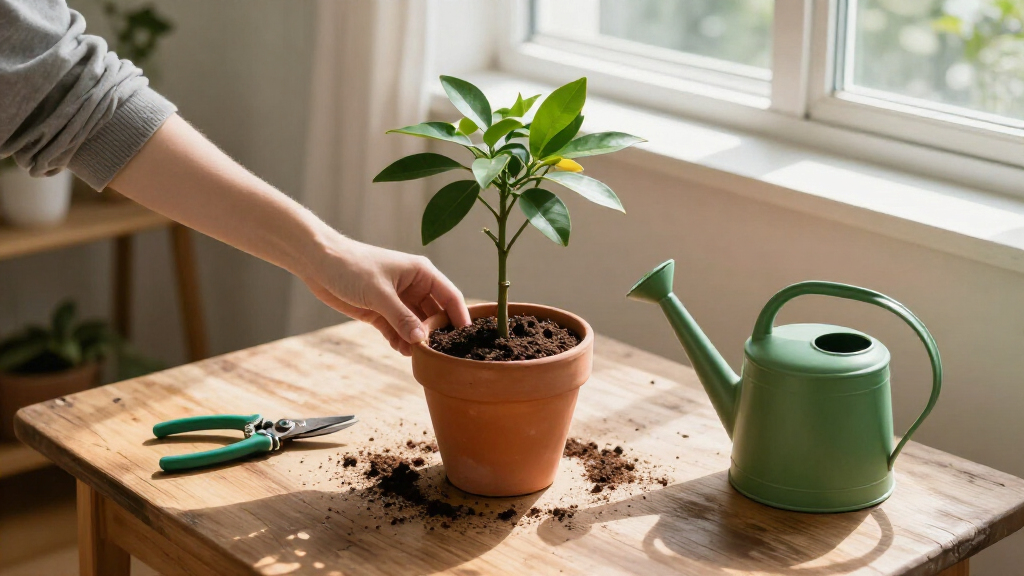
I ranked these 15 supplies by how directly they address common indoor citrus needs: nutrition, potting medium, or a more coordinated care routine. I compared product format, listed quantity, stated formulation details, and the likely effort involved in applying each option. Where a product title does not provide enough detail to confirm a specific performance claim, I avoid treating that claim as established.
The order favors picks that can serve a clear use case and make a practical difference to a typical potted citrus grower, followed by more specialized or narrower-format options. A larger soil bag ranks well for repotting needs, while a liquid concentrate or spray may suit targeted feeding but will not replace an appropriate potting mix. I also weighed tradeoffs: pre-portioned spikes simplify application, yet give less control than measured liquid products. The ranking is a guide to fit and usability, not a claim that one supply can solve every indoor growing problem.
| indoor citrus tree supplie | Form |
|---|---|
| Jobe’s Fruit & Citrus Fertiliz | Fertilizer spikes |
| Miracle-Gro Shake ‘N Feed Citr | Granules |
| Gardenera Citrus Tree Potting | — |
| GrowScripts Citrus Fertilizer | — |
| Jobe’s Organics Fruit & Citrus | Fertilizer sticks |
| Jobe’s Organics Fruit & Citrus | — |
| Duspro Pre-Mixed 4-in-1 Citrus | — |
| Citrus Tree Fertilizer Spray | Liquid |
| GARDENWISE Organic Lemon Tree | — |
| GardenWise Citrus Tree Fertili | Granules |
| Jobe’s Organics Fruit & Citrus | Granules |
| TPS Nutrients Lemon Tree Liqui | Liquid |
| Farmer’s Secret Citrus Tree Bo | Liquid |
| Leaves & Soul Lemon Tree Ferti | Liquid |
| Gardenera Liquid Citrus Tree F | Liquid concentrate |
Factors to Consider When Choosing Best Indoor Citrus Tree Supplies
Indoor citrus care is a system, not a single-product choice. I’d first identify the problem you are trying to solve, then check whether the product fits your tree’s container, watering routine, and current care plan.
Match the supply to the problem
Before buying fertilizer, check whether the issue is actually nutrition. Yellowing leaves, slow growth, and poor fruiting can have different causes, including light, watering, root crowding, or a need for repotting. A fertilizer cannot correct a potting mix that stays soggy or a tree placed far from adequate light. If the tree has outgrown its pot or the medium has broken down, soil may matter more than another feed. Choose a spray only when its use matches your specific care plan, rather than treating foliar application as a substitute for root-zone care. I’d avoid adding several new products at once, since that makes it harder to tell what helped or caused stress.
Choose a feeding format you can use consistently
Spikes, granules, and liquids differ most in control and effort. Spikes reduce measuring and suit growers who prefer a simple application routine, but they are less adjustable than a measured liquid feed. Granules can work for scheduled feeding, though you still need to follow the product label for application and watering. Liquids allow measured doses and can fit a more hands-on routine, but require mixing and regular attention. A spray adds another application method, not necessarily a replacement for soil-applied fertilizer. Pick the format you can apply correctly over time, rather than buying several formats because their labels sound complementary.
Treat potting mix volume as a practical constraint
The listed sizes in this roundup range from one quart to ten quarts, so the right bag depends on the job, not simply on which package is largest. A small quantity may suit a limited top-up or a smaller container, while a full repot can require substantially more medium. Measure the container and estimate how much mix you need before ordering; opening multiple small bags can be inconvenient and may cost more effort to manage. Check the product directions and ingredients for the drainage and texture your container setup needs. Do not assume that a product labeled for citrus will suit every pot or watering style. If you are changing the soil, avoid changing fertilizer routines at the same time unless the instructions call for it.
Read NPK and micronutrient details in context
NPK numbers describe the relative amounts of nitrogen, phosphorus, and potassium, but they do not tell the whole story about a fertilizer. In this lineup, Leaves & Soul lists 6-4-6 and Gardenera lists 3-1-2, while GardenWise identifies micronutrients in its product name. Those details can help distinguish formulations, but they do not prove that one is universally better for an indoor lemon or other citrus tree. Check the full label for directions, dilution, feeding frequency, and any micronutrient information before choosing. Avoid stacking products with overlapping nutrients unless you have a clear reason and can track the combined application. Following the label is safer than increasing a dose to chase faster growth.
Pay for coordination only when it reduces guesswork
A kit can make supply selection easier for a new grower, but a bundle is useful only if its components fit the tree’s current needs. An experienced grower may get more value from replacing one specific supply, such as a suitable potting mix or a preferred fertilizer format. Compare the product’s listed contents and instructions rather than assuming a kit contains everything required for indoor citrus care. Even a coordinated set cannot replace appropriate light, drainage, and watering. If you already have a routine that works, buying a single targeted product may prevent unnecessary overlap. If you are starting from scratch, a kit can reduce shopping decisions, but check that you understand how and when to use each part.
Frequently Asked Questions
Should I buy a fertilizer kit or choose separate supplies?
I’d choose a kit when you are building a routine and its listed components match needs you actually have. A kit may reduce the work of selecting compatible products, but it does not automatically include a suitable potting mix, enough light, or every tool an indoor tree needs. Separate supplies make more sense if you already know your tree needs a particular feed or a repot. Check directions and ingredients before combining products, since multiple fertilizers can overlap. For a tree that is already growing well, replacing only the supply you have run out of is often the simpler choice.
Are fertilizer spikes easier to manage than liquid citrus fertilizer indoors?
Spikes can make application simpler because they avoid measuring and mixing, which may suit a grower who wants a set routine. Liquids offer more control over the amount applied, but they require careful dilution and regular attention to instructions. Neither format is automatically safer or more effective for every potted tree. Container size, label directions, and the tree’s current condition should guide the choice. If you are prone to overfeeding, follow the product instructions closely rather than assuming that a convenient format prevents mistakes.
Do I need citrus potting mix when repotting an indoor tree?
A citrus-labeled mix can be a convenient starting point, but the label alone does not confirm that it fits your pot, watering habits, or indoor conditions. Check the mix’s listed contents and directions, and make sure your container has drainage. The amount matters too: the roundup includes packages from one to ten quarts, so a small bag may not cover a full repot. If your current medium drains and the tree is not root-bound, changing soil without a clear reason may add stress. Repot when the tree’s condition and root space call for it, not solely because a new mix is available.
Can I use a citrus fertilizer and a citrus spray at the same time?
Do not assume that two citrus-labeled products should be applied together. Their nutrient contents and directions may overlap, and using both without checking can make it harder to track what the tree receives. Read each label for application method, frequency, and cautions, then follow a single clear plan. A spray should be used for its stated purpose, not as an automatic add-on to a soil fertilizer. If the tree is showing symptoms, first check light, watering, and root conditions before increasing the number of treatments.
Which details matter most when comparing liquid fertilizers with different NPK ratios?
Start with the full label, not just the three numbers. In this roundup, Leaves & Soul lists 6-4-6 and Gardenera lists 3-1-2, but those ratios alone do not establish which product suits your tree or how often it should be applied. Compare dilution instructions, feeding frequency, and any listed micronutrients, then match them to your care routine. Avoid combining feeds with similar nutrients unless the directions support that plan. When choosing between two liquids, ease of accurate dosing and clarity of instructions can matter more than a ratio viewed on its own.
Conclusion
For most shoppers seeking one starting point, I’d pick GrowScripts Citrus Fertilizer Kit as the best overall option because its kit format can simplify supply choices. For best value by use case, Jobe’s Organics Fruit & Citrus Granular Fertilizer is a practical route for growers who prefer a larger granular supply, while Duspro is the stronger pick when the job is repotting and you need a larger listed quantity. Beginners may prefer a coordinated kit or Jobe’s fertilizer spikes for a less hands-on application routine, provided they follow the label. For a premium-style, more adjustable feeding approach, I’d look at a liquid concentrate such as Gardenera; for a specific soil need, compare the citrus mixes by volume and listed contents. Choose the product that solves your tree’s current problem, rather than buying a full set of supplies before checking its light, watering, and root space.