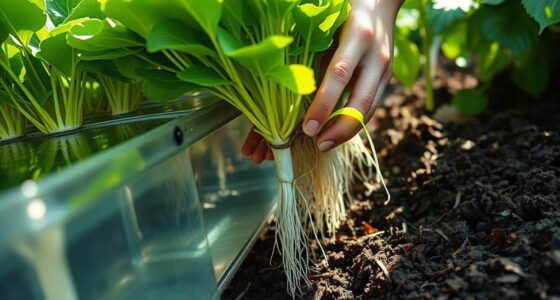
In hydroponics, common plant diseases include root rot, powdery mildew, and fungal infections, which thrive in high humidity and poor sanitation. To prevent them, keep your system clean, guarantee proper aeration, and monitor nutrient levels closely. Managing pH and humidity helps avoid mold and fungi. Start with healthy plants and isolate new additions. Staying vigilant and proactive keeps disease risks low, and exploring further can help you develop a resilient hydroponic setup.
Key Takeaways
- Maintain optimal pH and nutrient levels to prevent deficiencies that weaken plants and make them susceptible to diseases.
- Ensure proper system aeration and cleanliness to inhibit bacterial and fungal growth.
- Monitor plants regularly for early signs of diseases like spots, discoloration, or wilting for prompt intervention.
- Control humidity and airflow to reduce mold and fungal infection risks.
- Use healthy, disease-free seedlings and quarantine new plants to prevent introducing pathogens.

Hydroponic systems offer many advantages for growing healthy plants, but they also come with unique challenges, including the risk of plant diseases. One of the most common issues you’ll face is nutrient deficiency, which can weaken your plants and make them more vulnerable to diseases. When plants don’t receive the right balance of nutrients, their growth slows, leaves may yellow, and overall health declines. This makes it easier for pests and pathogens to take hold, creating a cycle of problems that can be tough to break. To prevent nutrient deficiency, you need to closely monitor your nutrient solution’s composition and pH levels, guaranteeing they stay within ideal ranges. Regular testing and adjustments help keep your plants vigorous and less susceptible to disease.
Pest infestation is another major concern in hydroponic setups. Unlike soil-grown plants, pests in hydroponic systems can reproduce quickly and spread with ease, especially if your environment isn’t tightly controlled. Common pests like aphids, fungus gnats, or spider mites can damage leaves, stems, and roots, weakening your plants and providing entry points for diseases. To prevent pests, maintain cleanliness around your system, keep humidity levels in check, and inspect your plants regularly. Introducing natural predators or using organic pest controls can also help manage infestations without risking chemical buildup that could harm your plants or contaminate your nutrient solution.
Preventing disease in hydroponics isn’t just about reacting to problems; it’s about establishing a proactive approach. Good sanitation is critical—clean all equipment, containers, and tools before use to reduce the chances of pathogen transfer. Additionally, proper airflow and spacing between plants promote healthy growth and reduce humidity, which can harbor mold and fungi. Always start with healthy, disease-free seedlings or cuttings, and quarantine new plants before adding them to your system. Consistent monitoring of your plants is crucial; look out for early signs like discolored leaves, spots, or wilting, and address issues immediately. Proper oxygenation of your nutrient solution also plays a key role—stagnant water can become a breeding ground for bacteria and fungi, so ensure your system’s aeration is adequate. Incorporating spiritual energy awareness into your gardening routine can also promote a more harmonious and resilient system, as a balanced environment encourages plant vitality and health.
In essence, maintaining a healthy hydroponic garden requires vigilance and care. Address nutrient deficiencies promptly, keep pests at bay through cleanliness and natural controls, and create an environment that discourages disease. By staying proactive, you’ll give your plants the best chance to thrive and produce a bountiful harvest free from the setbacks of common diseases.
Frequently Asked Questions
Can Hydroponic Plants Recover From Severe Disease Infections?
Yes, hydroponic plants can recover from severe disease infections if you focus on plant resilience and apply effective recovery techniques. You should promptly identify the disease, remove affected plants or parts, and improve your system’s hygiene. Adjusting nutrient levels and ensuring proper airflow help boost plant resilience. Continuous monitoring and timely interventions increase the chances of recovery, allowing your hydroponic setup to bounce back healthier and more resistant to future issues.
Are Organic Treatments Effective Against Hydroponic Plant Diseases?
Organic remedies can be effective against hydroponic plant diseases, especially when you use natural alternatives like neem oil, hydrogen peroxide, or beneficial microbes. These treatments target pathogens without harming your plants or environment. While they may not always work for severe infections, combining organic remedies with good hygiene and proper monitoring increases your chances of controlling diseases naturally, keeping your hydroponic system healthy and productive.
How Often Should I Inspect My Hydroponic System for Diseases?
You should inspect your hydroponic system at least twice a week to guarantee early disease detection. Monitoring frequency helps you spot any signs of infections or issues promptly, preventing them from spreading. During each check, look for discoloration, mold, or unusual plant behavior. Regular inspections allow you to take swift action, keeping your system healthy and maximizing plant growth. Consistent monitoring is key to maintaining a disease-free hydroponic environment.
Do Certain Hydroponic Crops Have Higher Disease Risks?
Yes, some hydroponic crops have higher disease susceptibility, increasing the risk of disease prevalence. Leafy greens like lettuce and spinach are more prone to fungal infections, while tomatoes can attract bacterial issues. Your vigilance in monitoring these crops is essential, especially since their susceptibility makes them more vulnerable. By understanding crop susceptibility, you can tailor your preventative measures, reducing the chances of disease outbreaks in your hydroponic system.
What Are Early Signs of Disease in Hydroponic Setups?
You’ll notice early signs of disease in your hydroponic setup through visual cues like discolored, wilting, or spotted leaves. Keep an eye out for unusual growth patterns or mold. Pest infiltration can also be an early warning, as pests often carry diseases or cause stress that weakens plants. Regular inspection helps you catch issues early, so you can act quickly and prevent widespread problems.
Conclusion
To keep your hydroponic garden healthy, stay vigilant, stay proactive, and stay informed. Regularly inspect your plants, promptly address issues, and implement preventive measures. By doing so, you protect your crops from diseases, guarantee ideal growth, and enjoy a bountiful harvest. Remember, prevention is your best tool, awareness is your strongest defense, and consistent care is your key to success. Keep these principles in mind, and your hydroponic garden will thrive now and in the future.