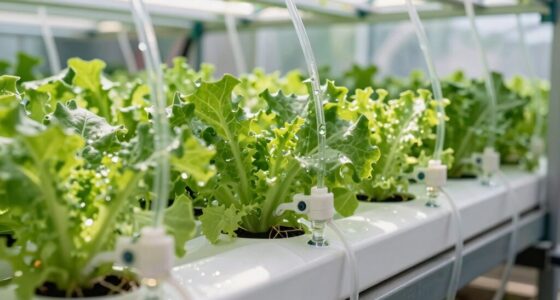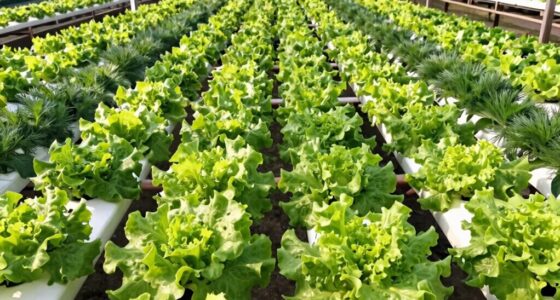
To prevent algae blooms in your summer hydroponic system, focus on combining UV sterilization, proper nutrient control, and effective water circulation. Use UV light to kill algae spores without chemicals, monitor and adjust nutrient levels to avoid excess food for algae, and make sure water is constantly moving to prevent stagnation. Limiting light exposure by shading reservoirs also helps. Keeping these elements in balance can considerably reduce algae growth — explore more strategies that can keep your system clear and healthy.

Get the little things that make your day delivered free with Prime
- Fast, free delivery on millions of items
- Prime Video, Amazon Music and more included
- Member-only deals all year
Key Takeaways
- Implement UV sterilization within water recirculation systems to eliminate algae spores and microorganisms effectively.
- Regulate nutrient levels carefully by testing water regularly and avoiding over-fertilization.
- Ensure consistent water movement using pumps or aerators to prevent stagnation.
- Cover or shade reservoirs with opaque materials to limit light exposure and inhibit algae growth.
- Combine multiple strategies—UV sterilization, nutrient control, circulation, and light management—for comprehensive algae prevention.
Algae blooms can quickly degrade water quality and harm aquatic ecosystems, but you can take proactive steps to prevent them. When managing a summer hydroponic system, controlling algae growth is essential for maintaining healthy plants and clean water. One effective method is implementing UV sterilization, which uses ultraviolet light to kill algae spores and other harmful microorganisms. By installing UV sterilizers in your water recirculation loop, you reduce the chances of algae establishing themselves, especially during warmer months when algae growth accelerates. UV sterilization is a chemical-free solution that guarantees your system stays clear without introducing potentially harmful substances into your nutrient solution.
Alongside UV sterilization, nutrient management plays a vital role in preventing algae blooms. Algae thrive when excess nutrients, particularly nitrogen and phosphorus, are present in the water. To keep these nutrients in check, you should regularly test your water and adjust the nutrient concentrations accordingly. Avoid over-fertilizing, as this provides algae with the food they need to flourish. Instead, follow precise feeding schedules tailored for your crop type, and guarantee your nutrient solutions are balanced and not overly enriched. By maintaining excellent nutrient levels, you make the environment less inviting for algae while guaranteeing your plants receive the nutrients they require.
You also want to pay attention to water circulation. Stagnant water offers a perfect breeding ground for algae. Using pumps or aerators to keep the water moving prevents algae from settling and multiplying. Regularly cleaning your system components, such as tanks, pipes, and reservoirs, helps remove any algae spores that might be lurking. When cleaning, use non-chemical methods whenever possible, and guarantee you rinse thoroughly to avoid residual nutrients or algae fragments that could reintroduce growth.
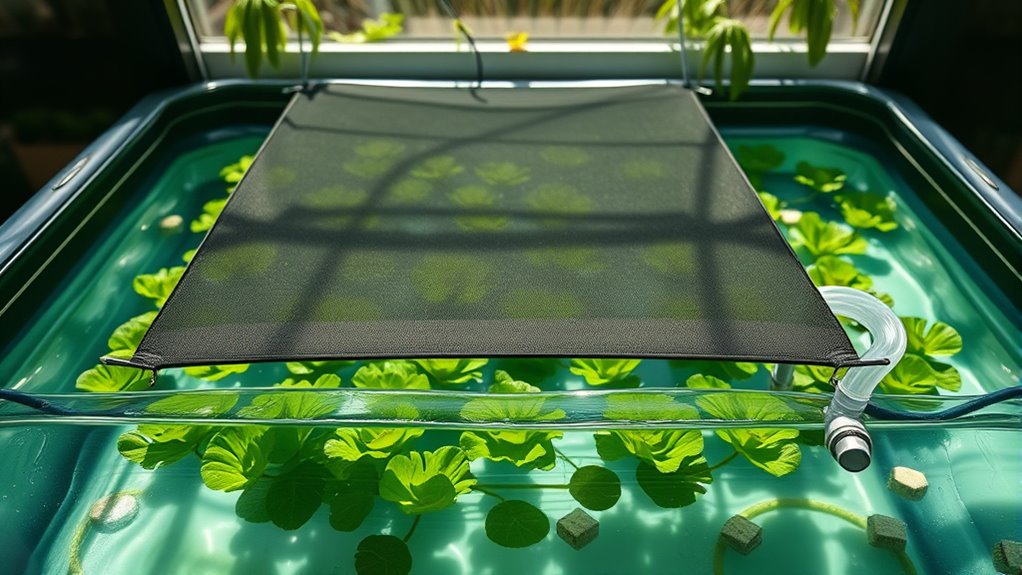
Another important aspect is controlling light exposure. Since algae need light to photosynthesize, covering or shading your reservoirs can considerably reduce their growth. Keep your water containers out of direct sunlight, or use opaque materials to block UV rays. If your system is indoors, ensure the grow area is well-managed with controlled lighting schedules to limit unwanted algae development. Proper light management can significantly decrease algae proliferation and enhance overall water quality.
Combining these strategies—UV sterilization, vigilant nutrient management, proper water circulation, and light control—creates a robust defense against algae blooms. Staying proactive and attentive to your system’s conditions helps you maintain clean water, healthy plants, and an efficient hydroponic setup throughout the summer months.
UV sterilizer for hydroponic systems
As an affiliate, we earn on qualifying purchases.
As an affiliate, we earn on qualifying purchases.
Frequently Asked Questions
Can Algae Blooms Harm My Hydroponic Plants?
Algae blooms can harm your hydroponic plants by competing for nutrients and oxygen, which are essential for healthy growth. Different algae species can quickly spread if water filtration isn’t effective, leading to clogged systems and poor plant health. To prevent this, you should regularly clean your system, maintain proper water filtration, and limit light exposure to the water, reducing algae growth and protecting your plants.
How Do Algae Blooms Affect Nutrient Levels?
Algae blooms can considerably impact your hydroponic system by causing nutrient competition, where algae absorb essential nutrients your plants need to grow. They also lead to oxygen depletion in the water, creating a stressful environment for your roots and beneficial microbes. This imbalance can stunt plant growth, reduce yields, and increase disease risk. Managing algae early prevents these issues, ensuring your system maintains ideal nutrient levels for healthy, vigorous plants.
Are Algae Blooms Safe for Edible Plants?
Did you know that algae blooms can produce toxins harmful to both plants and humans? Algae toxin contamination can lead to plant damage and potential health risks if consumed. So, algae blooms aren’t safe for edible plants, as they can cause plant contamination and introduce toxins into your harvest. It’s vital to control algae growth to protect your crops and guarantee safe, healthy produce.
What Equipment Prevents Algae Growth Effectively?
To prevent algae growth, you should use equipment like UV sterilizers, which effectively kill algae spores in your system. Additionally, storing your nutrient solution in opaque containers blocks light that algae need to thrive. Keep your system clean and avoid exposing nutrient-rich water to direct sunlight. These methods work together to inhibit algae development, ensuring healthier plants and a more productive hydroponic setup during summer.
How Often Should I Check for Algae?
You should check for algae regularly, ideally once a week, to catch any early signs of growth. Incorporate algae detection methods during your water testing, focusing on discoloration or slimy surfaces. Consistent water testing helps you identify issues before they escalate, allowing you to take prompt action. By staying vigilant and monitoring your system frequently, you can maintain a healthy, algae-free hydroponic environment, especially during summer months.
As an affiliate, we earn on qualifying purchases.
Conclusion
To keep your hydroponic system algae-free this summer, stay vigilant and maintain proper nutrient levels. Regular cleaning and shading can markedly reduce algae growth. Did you know that algae can double in number every 24 hours under ideal conditions? By taking these simple steps, you can enjoy a healthier, more productive system and avoid losing valuable crops. Keep your system clean and your plants thriving—algae doesn’t stand a chance!
water circulation pumps for hydroponics
As an affiliate, we earn on qualifying purchases.
As an affiliate, we earn on qualifying purchases.
opaque reservoir covers for hydroponics
As an affiliate, we earn on qualifying purchases.
As an affiliate, we earn on qualifying purchases.
Columbus Day / Indigenous Peoples' Day Picks
long weekend sales
As an affiliate, we earn on qualifying purchases.