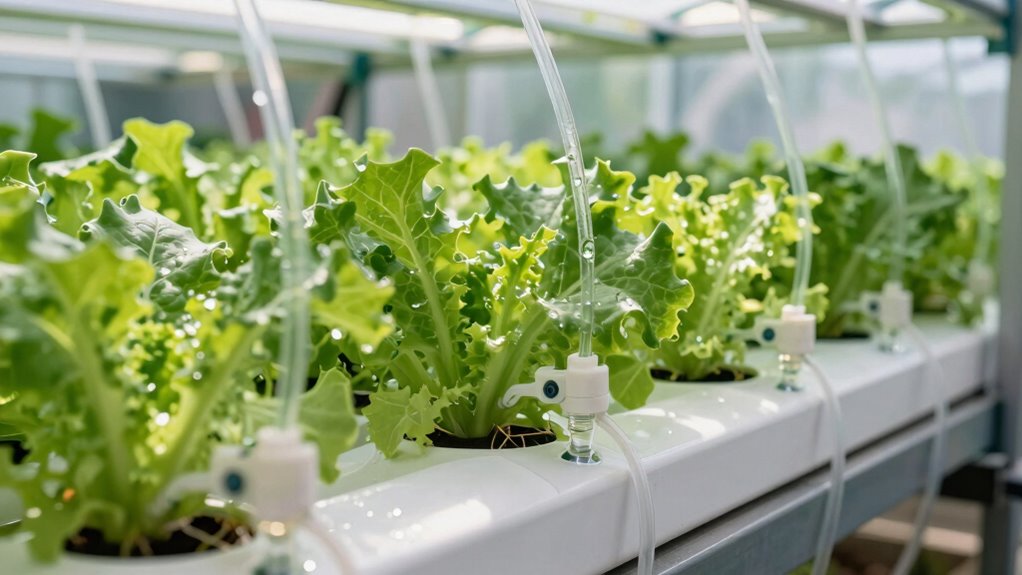

As a hydroponic grower, you need to understand that water top-offs are essential for maintaining system stability and nutrient balance. Top-offs compensate for evaporation and plant uptake, preventing water and nutrient imbalances that can harm your plants. Regularly testing pH and EC levels helps you keep nutrients in check, avoiding deficiencies or root burns. Managing water quality effectively supports healthy growth, and if you keep these practices in mind, you’ll guarantee your system thrives. There’s more to discover on how to optimize this process.
Listen free for 30 days with Audible
Thousands of audiobooks and originals — cancel anytime.
As an affiliate, we earn on qualifying purchases.
Key Takeaways
- Regularly top off with clean water to compensate for evaporation and plant uptake, maintaining system stability.
- Monitor nutrient concentration (EC/TDS) to prevent imbalances caused by water evaporation or dilution.
- Check and adjust water pH before topping to ensure optimal nutrient absorption.
- Use accurate testing methods to detect early signs of pH or nutrient issues.
- Maintain consistent water quality and routine testing for healthy, vigorous plant growth.

Have you ever wondered how to keep your hydroponic system properly balanced without constant monitoring? The key lies in understanding water top-offs and how they influence your system’s overall health. When you add water to compensate for evaporation and plant uptake, it’s essential to focus on maintaining proper nutrient concentration and water pH balance. If you overlook these factors, your plants might suffer from nutrient deficiencies or toxicities, hampering growth and yield.
Nutrient concentration is critical because, as water evaporates, the remaining solution becomes more concentrated, increasing the levels of nutrients. This can lead to nutrient lockout or root burn if not managed properly. Conversely, when you top off with plain water, you dilute the nutrient solution, lowering nutrient levels and potentially depriving your plants of essential elements. To keep everything in check, regularly test your nutrient solution’s electrical conductivity (EC) or total dissolved solids (TDS). This helps you understand if your plants are getting enough nutrients or if you need to add more. The goal is to maintain a steady nutrient concentration that promotes healthy, vigorous growth without risking overload.
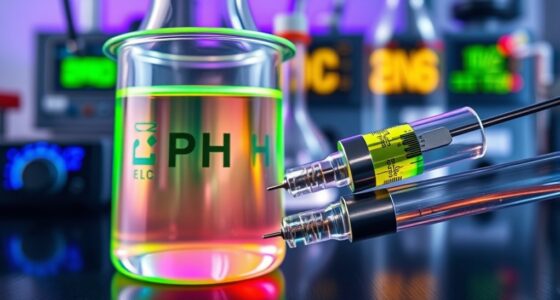
Another crucial aspect is water pH balance. The pH level influences how well plants can absorb nutrients. If the pH drifts too high or too low, your plants won’t effectively uptake essential nutrients, regardless of their concentration. When topping off, it’s vital to check and adjust the pH of your water before adding it to the system. Generally, hydroponic systems thrive within a pH range of 5.5 to 6.5. Small deviations can cause significant nutrient lockout or deficiencies. Using pH meters or test strips makes this process straightforward, and adding pH adjusters ensures your solution stays within the optimal range. Regularly monitoring water parameters helps prevent issues caused by nutrient imbalances, and incorporating water quality management practices can further enhance plant health. Understanding the importance of proper water testing techniques and implementing them consistently helps you catch potential problems early. Incorporating best practices for water quality into your routine allows for more precise adjustments, leading to healthier plants. Being proactive about water quality ensures your plants receive the best environment possible, supporting their overall development. This proactive approach helps you maintain a stable environment for your plants to thrive.
As an affiliate, we earn on qualifying purchases.
Frequently Asked Questions
How Often Should Water Top-Offs Be Performed in Hydroponic Systems?
You should perform water top-offs daily or as needed, especially due to reservoir evaporation. Regular top-offs maintain water levels and prevent nutrient imbalance, which can harm plant growth. Check your system frequently, and top off with filtered water when levels drop, ensuring consistent nutrient concentration. This daily attention helps keep your hydroponic system stable, healthy, and productive, minimizing risks related to nutrient imbalance caused by fluctuating water levels.
What Are the Signs of Overfilling the Nutrient Reservoir?
You’ll notice signs of overfilling your nutrient reservoir, like reservoir overflow, which can cause messy spills and waterlogging. It may also lead to a pH imbalance, making it harder for your plants to absorb nutrients properly. Keep an eye on water levels and avoid overfilling to prevent these issues. Regularly monitor your system, and top off carefully to maintain the best conditions for healthy plant growth.
Can Tap Water Be Used for Hydroponic Top-Offs?
Yes, you can use tap water for hydroponic top-offs, but you need to take into account water quality first. Tap water often contains minerals and chemicals that can affect your nutrient balance. Always test your water for pH and adjust it as needed to prevent stressing your plants. Regularly monitor the water quality, and consider using filtration if your tap water has high levels of contaminants or chlorine, ensuring healthy plant growth.
How Does Water Top-Off Affect Nutrient Concentration Levels?
Water top-offs can cause nutrient dilution, which reduces the concentration of nutrients in your hydroponic system. This may lead to weaker plant growth if nutrients become too diluted. Additionally, top-offs often cause pH fluctuation, making it necessary to regularly monitor and adjust pH levels. Properly managing water top-offs guarantees ideal nutrient levels and pH stability, promoting healthy, vigorous plant growth and preventing deficiencies.
Are There Risks of Contaminating the System During Top-Offs?
It’s easy to accidentally introduce contaminants during water top-offs if you’re not careful. To prevent this, always focus on contamination prevention by using water with high purity standards and sterilized tools. Coincidentally, maintaining water purity isn’t just about avoiding disease; it also ensures your plants stay healthy. Keep your system sealed and handle water carefully, reducing risks of system contamination and safeguarding your hydroponic crop’s success.
As an affiliate, we earn on qualifying purchases.
Conclusion
Think of water top-offs as the steady hand guiding a ship through calm and stormy seas alike. Just like a skilled captain keeps the vessel on course, you need to regularly top off your hydroponic system to maintain the perfect balance of nutrients and pH. Neglecting this essential task can send your plants off course, risking their health and growth. Stay vigilant, and your hydroponic journey will sail smoothly toward a bountiful harvest.
As an affiliate, we earn on qualifying purchases.
water top-off system for hydroponics
As an affiliate, we earn on qualifying purchases.
As an affiliate, we earn on qualifying purchases.
Fall Picks
fall essentials
As an affiliate, we earn on qualifying purchases.