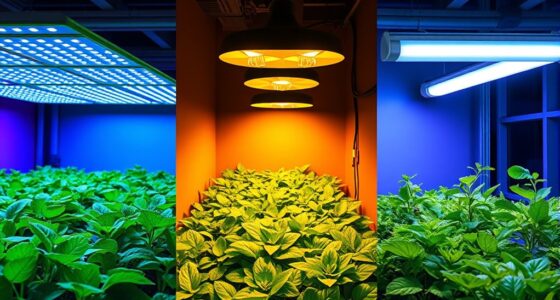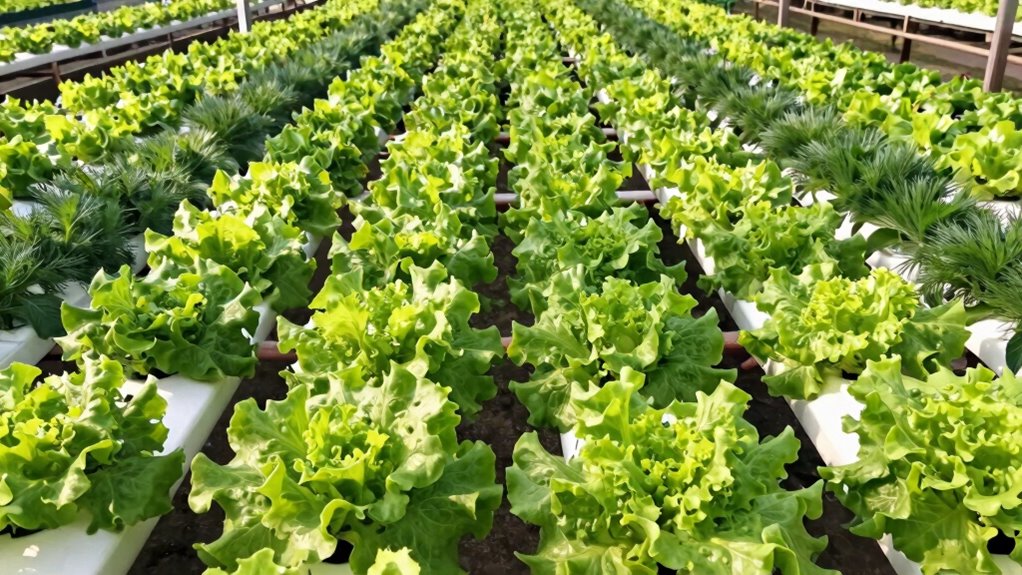

Proper spacing in your hydroponic system is key to maintaining good airflow around your plants. When plants are too close, airflow gets restricted, raising humidity, increasing disease risk, and limiting nutrient access. Adequate spacing guarantees fresh air circulates, cools roots, and enhances CO₂ exchange, which boosts growth and yields. If you want to learn more about how spacing impacts plant health and productivity, keep going for useful tips and insights.

Get the little things that make your day delivered free — and shop member deals
- Fast, free delivery on millions of items
- Access to Prime Big Deal Days deals on October 6–7
- Prime Video, Amazon Music and more included
Key Takeaways
- Proper spacing ensures adequate airflow, reducing mold, pests, and disease risks in hydroponic systems.
- Increased airflow stabilizes root zone temperature, enhancing nutrient absorption and plant growth.
- Adequate spacing minimizes humidity buildup, preventing fungal issues and promoting healthy root development.
- Optimal spacing improves light and nutrient access, boosting photosynthesis and overall plant yields.
- Proper plant distribution supports better environmental control, leading to healthier plants and higher productivity.
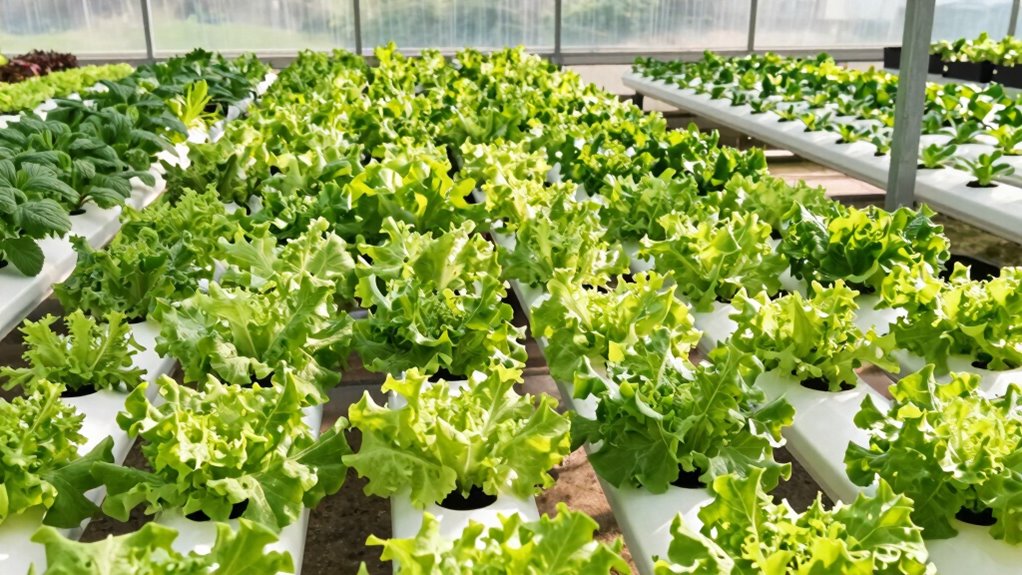
Have you ever wondered how proper spacing and airflow can boost your hydroponic crop yields? It’s a crucial aspect that often gets overlooked but can significantly influence plant health and productivity. When plants are spaced too closely, airflow becomes restricted, leading to stagnant conditions around the roots and leaves. This stagnation can cause issues like mold, pests, and diseases, all of which reduce overall yield. Conversely, giving your plants enough room allows fresh air to circulate, preventing these problems and creating an environment where roots and foliage stay healthier.
One key factor affected by spacing is the root zone temperature. Proper airflow helps regulate the temperature around the roots, preventing overheating or excessive cooling. When airflow is restricted, the root zone can heat up, especially under grow lights or in warm environments. Elevated root zone temperatures decrease nutrient absorption efficiency because roots become less effective at uptaking vital nutrients from the nutrient solution. Adequate spacing ensures that cooler, oxygen-rich air reaches the roots, keeping the temperature stable and optimizing their function. This stability directly translates into healthier plants that grow faster and produce more.
Proper airflow stabilizes root zone temperature, boosting nutrient uptake and promoting faster, healthier plant growth.
Airflow isn’t just about temperature regulation; it also impacts nutrient absorption efficiency. When plants are too crowded, humidity levels rise, and the air around the plants becomes damp and stagnant. This environment can lead to fungal growth and root rot, both of which impair nutrient uptake. Good airflow helps keep the environment dry and well-ventilated, allowing roots to absorb nutrients more efficiently. Additionally, proper spacing can help prevent airborne pests from establishing themselves on your plants. Maintaining adequate airflow also supports the oxygen exchange necessary for healthy root development. Proper ventilation techniques are essential to sustain this environment and enhance plant growth. Furthermore, understanding the importance of market reputation can guide you in optimizing your setup for better yields and plant health.
Spacing your plants appropriately ensures that each one gets the right amount of light, air, and nutrients. It reduces competition for resources, giving each plant a better chance to thrive. When airflow is optimized, you also improve CO₂ exchange, which enhances photosynthesis and overall growth. It’s a simple adjustment with profound effects: better airflow means a more stable root zone temperature, improved nutrient absorption efficiency, healthier plants, and ultimately, higher yields. Proper plant spacing also minimizes stress on your crops, leading to more uniform growth and quality. So, take the time to plan your hydroponic setup carefully, ensuring your plants aren’t overcrowded. Your crops will thank you with healthier growth, better quality, and bigger harvests.
As an affiliate, we earn on qualifying purchases.
Frequently Asked Questions
How Does Spacing Influence Nutrient Absorption Efficiency?
Spacing directly impacts nutrient uptake efficiency by allowing roots to access nutrients more effectively. When plants are spaced properly, roots develop better, creating a larger surface area for nutrient absorption. Conversely, tight spacing hinders root growth, limiting nutrient uptake and reducing overall plant health. You should optimize spacing to promote healthy root development, ensuring your plants absorb nutrients efficiently, leading to stronger growth and higher yields.
What Is the Ideal Airflow Rate for Different Crop Types?
For ideal airflow, aim for a rate of about 0.1 to 0.2 cubic meters per second per square meter of plant canopy, adjusting for crop type. Higher plant densities require increased air circulation to prevent mold and pests, while lower densities allow for slower airflow. Monitor your plants closely and adjust airflow as needed to maintain healthy growth, ensuring each plant gets enough fresh air without causing excessive drying.
Can Improper Spacing Lead to Disease Outbreaks?
Improper spacing can definitely lead to disease outbreaks because it hampers airflow and creates damp, crowded conditions. When plants are too dense, moisture lingers, promoting fungal and bacterial growth. To prevent diseases, focus on maintaining ideal plant density and guarantee good air circulation. Proper spacing enhances disease prevention by reducing humidity and airflow restrictions, helping your hydroponic system stay healthy and productive.
How Does Airflow Affect Root Oxygenation?
Airflow plays a vital role in root oxygenation by promoting root zone aeration, which prevents oxygen deprivation. You should use air circulation techniques, like fans or air stones, to make certain oxygen reaches the roots effectively. Proper spacing allows air to circulate freely, reducing stagnant zones. When airflow is optimized, roots stay healthy, grow vigorously, and yields improve because plants can efficiently absorb nutrients and oxygen, supporting overall growth.
What Are Signs of Poor Airflow in Hydroponic Systems?
You’ll notice signs of poor airflow in your hydroponic system through excess humidity, which promotes mold growth and plant diseases. Stagnant air can cause temperature fluctuations and reduced oxygen levels around roots. To prevent this, guarantee good air circulation with proper ventilation strategies, like fans or vents. Regularly monitor airflow, keep the environment well-ventilated, and adjust your ventilation strategies to maintain healthy, thriving plants.
airflow fans for hydroponic systems
As an affiliate, we earn on qualifying purchases.
As an affiliate, we earn on qualifying purchases.
Conclusion
By adjusting your hydroponic spacing, you control airflow and influence plant health, but don’t forget—too much space can leave your plants isolated, while too little can suffocate them. It’s a delicate balance, like finding harmony between growth and airflow. When you strike the right spacing, your plants thrive in both space and air, reminding you that peak yields come from understanding the dance between openness and closeness. Balance, after all, is the key.
hydroponic nutrient delivery system
As an affiliate, we earn on qualifying purchases.
As an affiliate, we earn on qualifying purchases.
hydroponic grow light with ventilation
As an affiliate, we earn on qualifying purchases.
As an affiliate, we earn on qualifying purchases.
NFL season / tailgating Picks
team gear
As an affiliate, we earn on qualifying purchases.