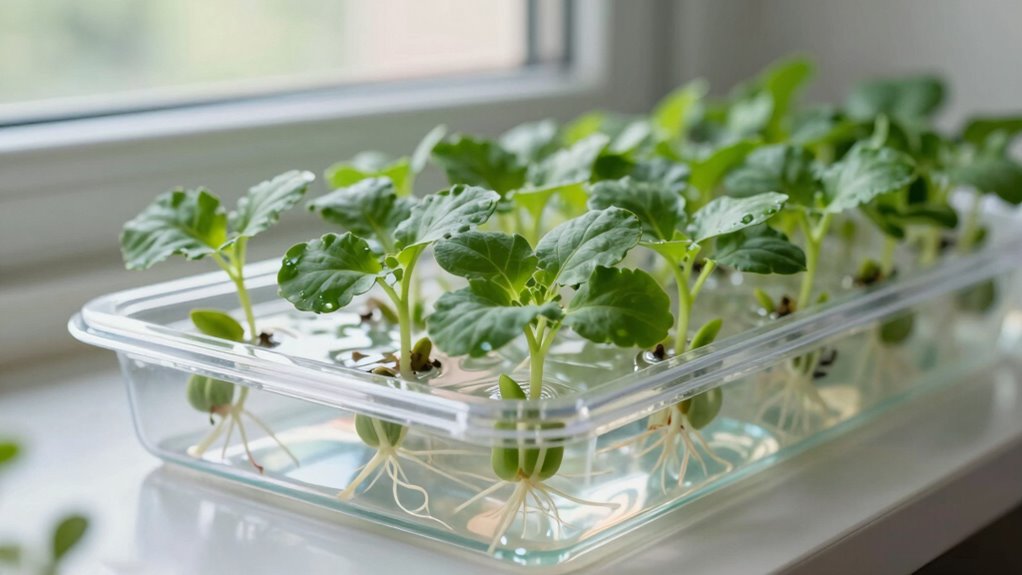

To shift seedlings into a hydroponic system, start by preparing a mild, balanced nutrient solution and make certain the system is clean and functioning properly. Gently submerge the seedlings, making sure roots are immersed but leaves stay above water. Monitor and adjust pH levels regularly, and gradually increase nutrient strength as plants grow. Keep conditions stable and maintain the system to avoid issues. If you want to learn more, you’ll find helpful tips below.

Get the little things that make your day delivered free with Prime
- Fast, free delivery on millions of items
- Prime Video, Amazon Music and more included
- Member-only deals all year
Key Takeaways
- Gradually introduce seedlings to nutrient solution by starting with diluted solutions to prevent shock.
- Ensure roots are fully submerged while keeping leaves above water to avoid damage.
- Maintain proper environmental conditions—temperature, humidity, and light—for stress-free adaptation.
- Monitor pH and nutrient levels regularly to promote healthy root development during transition.
- Gently support seedlings and avoid abrupt changes to reduce stress and encourage steady growth.
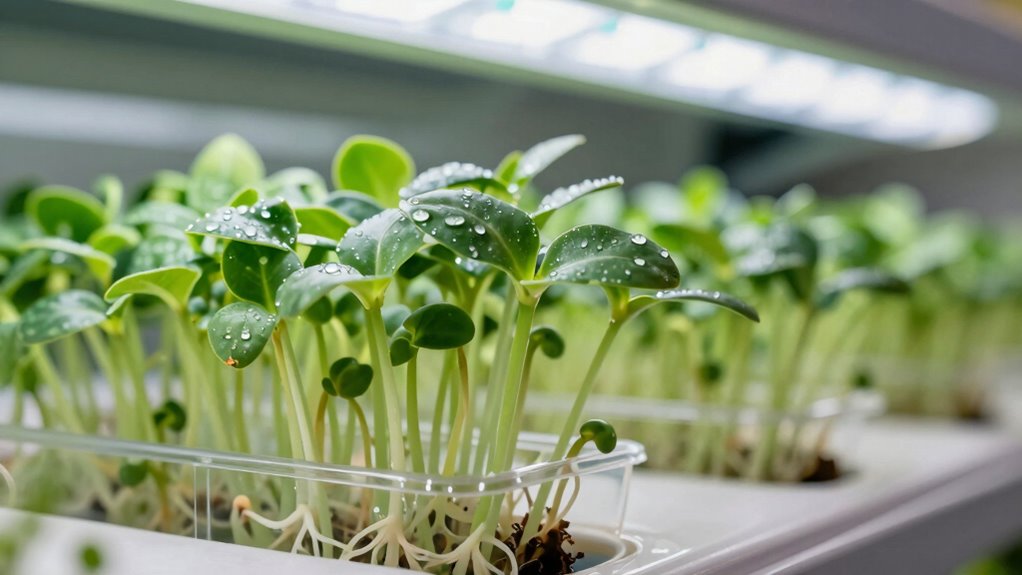
Have you ever wondered how tiny seedlings transform into thriving plants within a hydroponic system? It’s a fascinating process that requires careful planning and attention to detail. When you’re shifting seedlings into your hydroponic setup, the first thing to focus on is guaranteeing they receive proper plant nutrition. Unlike traditional soil methods, hydroponics delivers nutrients directly to the roots through a nutrient solution. To make this changeover smooth, you need to prepare a balanced nutrient mix tailored to the specific plants you’re growing. Start by diluting the nutrient solution to a mild concentration, especially if your seedlings are still young and tender. As they grow, gradually increase the strength to match their evolving nutritional needs. Providing the right nutrients helps prevent stress and promotes healthy root development, which is essential for plants to thrive in a soilless environment. Additionally, understanding the hydroponic systems you use can help optimize growth conditions and troubleshoot potential issues more effectively. Properly managing nutrient delivery is also crucial to ensure plants receive consistent nourishment and avoid deficiencies. Incorporating a monitoring system can further improve nutrient management by providing real-time data on system conditions.
In addition to nutrition, system maintenance is crucial during this changeover. Before introducing your seedlings, thoroughly clean and sterilize your hydroponic system to prevent any disease or algae buildup. Check all components—pumps, tubing, and reservoirs—to verify they’re functioning properly and free of debris. Proper maintenance also involves monitoring pH levels regularly; most plants prefer a pH between 5.5 and 6.5. Keeping the pH stable guarantees that your plants can absorb nutrients efficiently. Making timely adjustments with pH up or down solutions is vital for maintaining optimal conditions. Consistent system checks help you catch potential issues early, such as clogs or leaks, which could stress your seedlings or disrupt nutrient flow. When you’re ready to introduce the seedlings, do so gently to avoid damaging their delicate roots. Submerge them carefully into the nutrient-rich water, ensuring their roots are fully immersed but the leaves stay above the solution to prevent rot. Keep the environment stable—maintain appropriate temperature, humidity, and light levels—to support healthy growth. As your plants adapt to the hydroponic system, continue to monitor their health closely. Regularly check the nutrient concentration and pH, and top off the water reservoir to compensate for evaporation. Remember, consistent system upkeep not only keeps your plants healthy but also extends the lifespan of your equipment, making your hydroponic setup more sustainable and productive in the long run. With patience and careful attention to plant nutrition and system upkeep, your seedlings will flourish into strong, healthy plants.
hydroponic nutrient solution kit
As an affiliate, we earn on qualifying purchases.
As an affiliate, we earn on qualifying purchases.
Frequently Asked Questions
What Is the Best Time of Day to Transplant Seedlings?
You should transplant seedlings when they reach seedling maturity, typically when they have at least two sets of true leaves. The best time of day for transplanting is early morning or late afternoon, avoiding the heat of midday. During these times, temperatures are cooler, and plants experience less stress. Proper transplant timing guarantees your seedlings adapt well to their new environment, promoting healthy growth and minimizing shock.
How Do I Prevent Root Rot During Transfer?
To prevent root rot during transfer, facilitate proper root zone aeration by gently loosening roots and avoiding overwatering. Use clean, sterilized tools and containers to minimize fungus risk. Maintain a balanced nutrient solution and good airflow around your seedlings. Regularly check for signs of fungal growth or discoloration. These steps promote healthy roots, prevent fungus, and keep your plants thriving during the changeover.
Can Seedlings Be Directly Seeded Into Hydroponic Systems?
You can directly seed into hydroponic systems, but it’s best to take into account seedling hardening and transplant timing first. Research shows seedlings often thrive better when gradually acclimated, reducing transplant shock. If you’re keen to seed directly, make sure your system supports the seedlings’ root development and provides stable conditions. Proper timing and gentle handling help seedlings adapt faster, increasing their chances of flourishing in the hydroponic environment.
What Lighting Is Optimal During Initial Transfer?
During the initial transfer, you should use a grow light like LED or fluorescent to provide ideal lighting. Keep the lighting schedule around 16-18 hours per day to promote healthy growth. These grow light types emit the right spectrum for seedlings, ensuring they develop strong roots and leaves. Avoid harsh or intense lighting initially, and gradually increase intensity to prevent stress, helping your seedlings thrive in their new hydroponic environment.
How Do I Monitor Nutrient Levels After Transplant?
Ever wondered how to keep your plants thriving after transplant? You should regularly monitor nutrient levels by testing your solution’s pH and adjusting it as needed, since improper pH can lead to nutrient deficiency. Use a reliable pH meter and check your nutrient concentration. Consistent testing guarantees your plants receive balanced nutrients, preventing deficiencies and promoting healthy growth in your hydroponic system.
As an affiliate, we earn on qualifying purchases.
Conclusion
Now that you’ve learned how to shift your seedlings into a hydroponic system, you’re well on your way to a thriving garden. Remember, patience is key—giving your plants time to adapt will pay off in the long run. Keep monitoring and adjusting as needed, and don’t rush the process. With a steady hand and a little perseverance, you’ll turn this challenge into a blooming success, proving that every cloud has a silver lining.
hydroponic system cleaning supplies
As an affiliate, we earn on qualifying purchases.
As an affiliate, we earn on qualifying purchases.
As an affiliate, we earn on qualifying purchases.
Halloween Picks
halloween
As an affiliate, we earn on qualifying purchases.