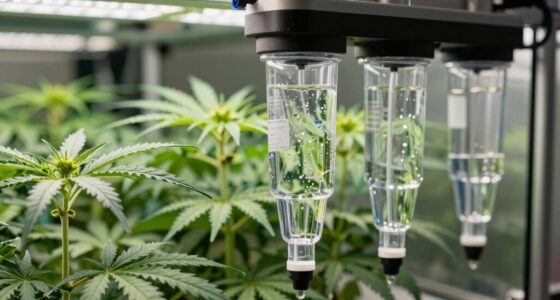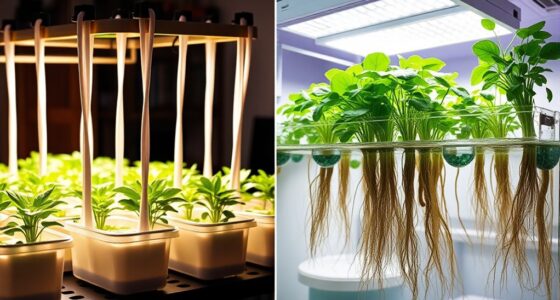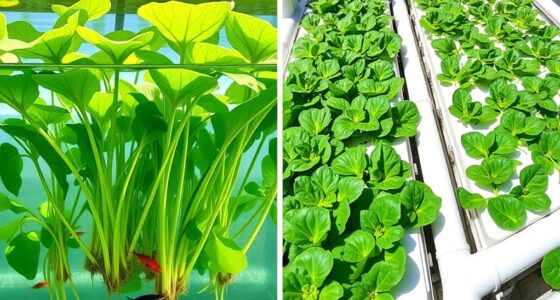
If your hydroponic plants wilt despite water being available, it’s likely due to issues like nutrient imbalances, poor oxygen levels in the root zone, or incorrect pH that lock out essential nutrients. Temperature fluctuations can also decrease oxygen in the water, stressing your plants. These problems prevent roots from absorbing water properly, causing wilting. To keep your plants healthy and vibrant, it’s important to address these common causes and guarantee ideal conditions. Keep exploring to learn more solutions.
Key Takeaways
- Nutrient imbalances or deficiencies can weaken plant cells, causing wilting despite water availability.
- Poor oxygenation in the root zone leads to root suffocation and plant stress.
- pH levels outside the optimal range cause nutrient lockout, preventing proper absorption.
- Temperature fluctuations reduce oxygen solubility and can stress plants, leading to wilting.
- Inadequate system maintenance or environmental controls exacerbate plant health issues even with water.
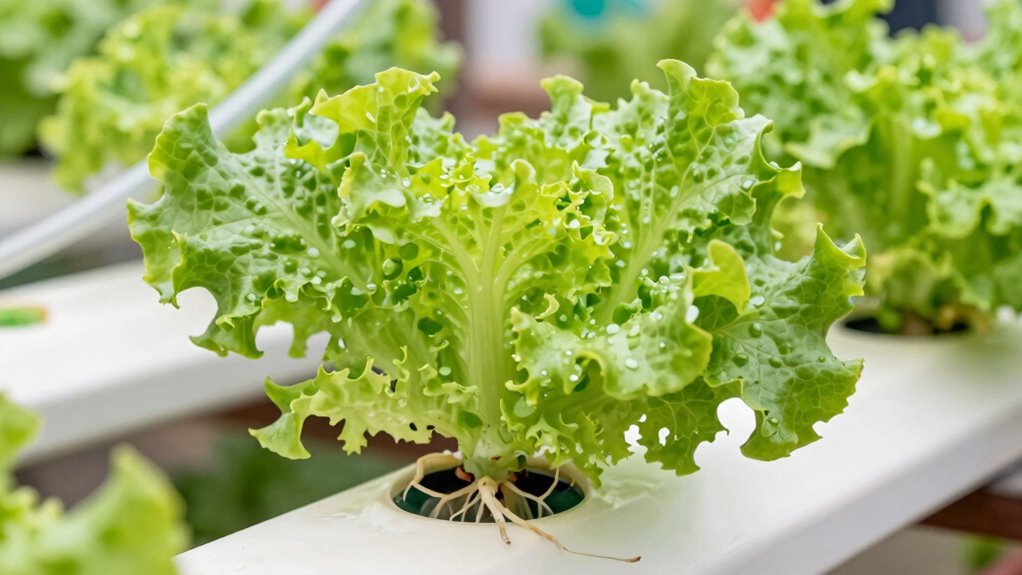
Hydroponic plant wilt can occur unexpectedly, often signaling underlying issues that need prompt attention. Even when water appears to be readily available, your plants may still droop or look distressed. One common culprit is a nutrient imbalance. When the nutrients in your hydroponic system are out of sync, plants struggle to absorb what they need for healthy growth, leading to symptoms like wilting. Over-fertilization can cause salt buildup, which hampers water uptake, while deficiencies in essential nutrients such as potassium or calcium weaken cell structure, making plants more prone to wilting. Regularly monitoring and adjusting your nutrient solution is vital to maintaining the right balance and preventing stress-related wilting.
Nutrient imbalances in hydroponics can cause wilting despite water availability—monitor and adjust regularly for healthy plants.
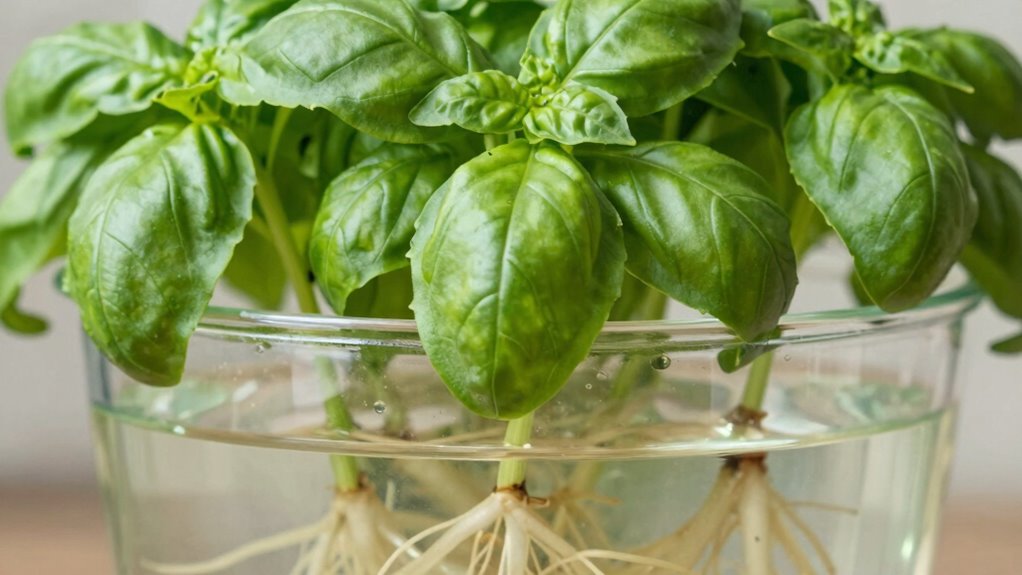
Another key factor that can cause hydroponic plants to wilt despite water presence is inadequate root zone oxygen. Roots require oxygen to efficiently absorb nutrients and produce energy through respiration. If the root zone isn’t sufficiently oxygenated, roots can become suffocated or develop root rot, especially in dense or poorly aerated systems. This results in poor nutrient uptake and water transport, leading to wilting even though water is present in the system. Ensuring proper aeration through air stones, pumps, or increased water circulation can markedly improve oxygen levels around the roots. Proper oxygenation not only supports healthy root function but also helps prevent anaerobic conditions that foster disease.
Furthermore, other factors can exacerbate issues related to nutrient imbalance or low oxygen. For instance, pH levels that are too high or low can lock out essential nutrients, making them unavailable to your plants. If your pH drifts outside the ideal range, plants won’t absorb nutrients effectively, leading to deficiencies and weakening their overall health. Additionally, temperature fluctuations can influence root zone oxygen levels and nutrient availability, with too much heat reducing oxygen solubility in water.
In essence, even if your system appears to have sufficient water, symptoms of wilting point to deeper problems. You need to look beyond just water supply and consider the health of your nutrient solution, root oxygen levels, and environmental conditions. Addressing nutrient imbalances, improving aeration, and maintaining proper pH and temperature are key steps to prevent wilting and promote vigorous, healthy growth. By staying vigilant and troubleshooting these core issues, you’ll keep your hydroponic plants thriving, avoiding the surprise of unexpected wilting.

EZTOCH Hydroponic pH EC Meter, Water pH TDS PPM Meter with Simultaneous Display for Reservoir Nutrient Solution, pH EC Meter for Water Hydroponic DWC System Setup, Measure Conductivity for Aquaponics
Simultaneously display pH EC Temp or pH ppm Temp: This pH tester can display the measured values of…
As an affiliate, we earn on qualifying purchases.
As an affiliate, we earn on qualifying purchases.
Frequently Asked Questions
Can Over-Fertilization Cause Hydroponic Plant Wilting?
Yes, over-fertilization can cause hydroponic plants to wilt. Excess nutrients lead to nutrient toxicity, which stresses the plants and disrupts their water uptake. Additionally, salt buildup from too many fertilizers increases the osmotic pressure around roots, making it harder for water to enter. This combination causes wilting even when water is present, so it’s essential to monitor and balance nutrient levels carefully.
How Does Light Intensity Affect Hydroponic Plant Health?
While bright light can energize your hydroponic plants, too much intensity might overwhelm them, reducing their photosynthesis efficiency. Light spectrum plays a crucial role, as specific wavelengths foster healthy growth. When light is just right, plants thrive, but excessive or poorly balanced light can cause stress, leading to wilting despite water availability. Striking a harmonious balance guarantees ideal photosynthesis efficiency and vibrant plant health.
Do Humidity Levels Influence Hydroponic Plant Wilting?
Yes, humidity levels influence hydroponic plant wilting. When humidity is too low, your plants lose vapor pressure, causing them to dry out and wilt despite having water available. Proper humidity control guarantees the vapor pressure stays balanced, preventing moisture loss. Maintaining ideal humidity helps your plants retain moisture, supports healthy transpiration, and reduces stress, ultimately keeping them turgid and thriving in your hydroponic system.
Can Root Diseases Lead to Plant Wilting in Hydroponics?
Did you know that root diseases like root rot cause up to 60% of plant failures in hydroponics? Yes, root diseases such as fungal infections and root rot can definitely lead to plant wilting, even when water is present. These issues damage roots, impairing nutrient uptake and causing stress. If you notice wilting despite adequate watering, inspect roots for rot or infection to prevent further plant decline.
Is Water pH Imbalance a Common Cause of Wilting?
Yes, water pH imbalance is a common cause of wilting in hydroponic plants. When pH levels are off, nutrient absorption becomes difficult, leading to nutrient deficiency, which causes plants to wilt despite water presence. Additionally, pest infestation can stress plants, exacerbating wilting issues. Ensuring proper pH levels and monitoring for pests helps maintain healthy plants and prevents wilting, even in a hydroponic setup.

VIVOSUN Air Stone 2PCS 4 x 2 Inch Large Air Stone for Aquarium, Fish Tank and Hydroponics Air Pump
Fine Bubbles: The air stone produces lots of dense fine bubbles; A great way to oxygenate your hydroponic…
As an affiliate, we earn on qualifying purchases.
As an affiliate, we earn on qualifying purchases.
Conclusion
If your hydroponic plants are wilting despite having water, don’t give up hope just yet. Sometimes, the cause is as simple as a clogged pump or imbalanced nutrients, but it can also be a sign of a serious underlying issue. Think of your plants’ health as the lifeblood of your garden—neglect it, and it’s like trying to hold back a tidal wave with a paper cup. Stay vigilant, troubleshoot diligently, and your plants will bounce back stronger than ever!
EZTOCH Hydroponic pH EC Meter, Water pH TDS PPM Meter with Simultaneous Display for Reservoir Nutrient Solution, pH EC Meter for Water Hydroponic DWC System Setup, Measure Conductivity for Aquaponics
Simultaneously display pH EC Temp or pH ppm Temp: This pH tester can display the measured values of…
As an affiliate, we earn on qualifying purchases.
As an affiliate, we earn on qualifying purchases.

AQUANEAT Aquarium Air Pump, 100gal Fish Tank Air Bubbler, Adjustable Dual-Outlet Hydroponic Oxygen Aerator with Stones, Airline Tubing, Check Valves
This air pump fits for up to 100gal fish tank; Dimension: 4×2.25×1.75 inches (L x W x H)
As an affiliate, we earn on qualifying purchases.
As an affiliate, we earn on qualifying purchases.