Vertical hydroponic systems appeal to apartment gardeners because they maximize limited space by growing plants upward, making it easy to cultivate herbs, greens, and small vegetables indoors. These systems are simple to use, with features like automated watering and LED lighting, reducing maintenance. They also promote sustainability by recycling water and cutting down on store-bought produce. If you keep exploring, you’ll discover even more ways to turn small spaces into lush, productive gardens.

Get the little things that make your day delivered free with Prime
- Fast, free delivery on millions of items
- Prime Video, Amazon Music and more included
- Member-only deals all year
Key Takeaways
- Maximizes limited indoor or balcony space through upward growing, ideal for small apartments.
- Promotes sustainable living by reducing reliance on store-bought produce and minimizing food miles.
- Features automated systems and LED lighting, making maintenance simple and suitable for busy urban dwellers.
- Recycles water efficiently, lowering resource use and environmental impact.
- Enhances urban aesthetics and encourages homegrown herbs and vegetables in compact environments.
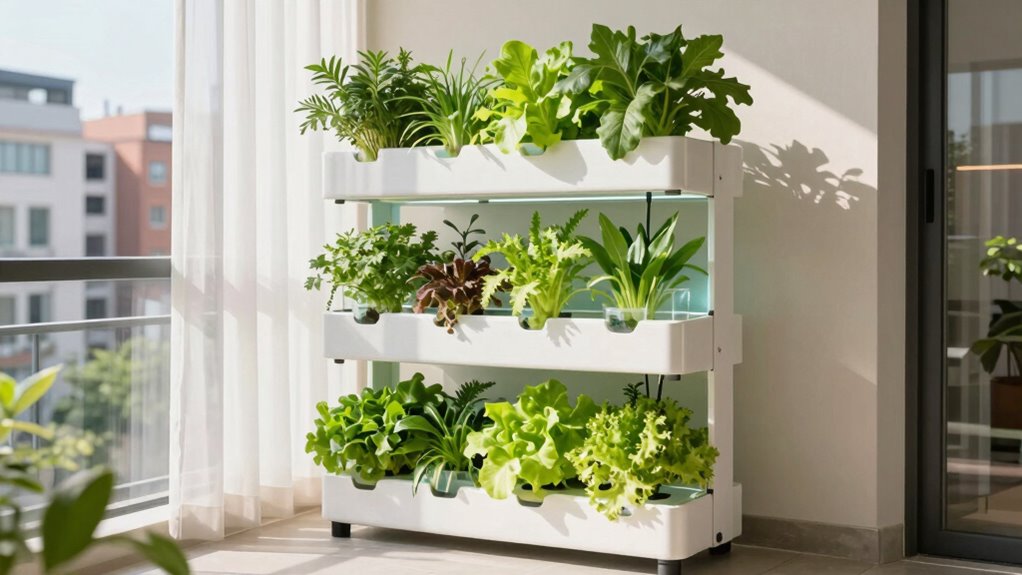
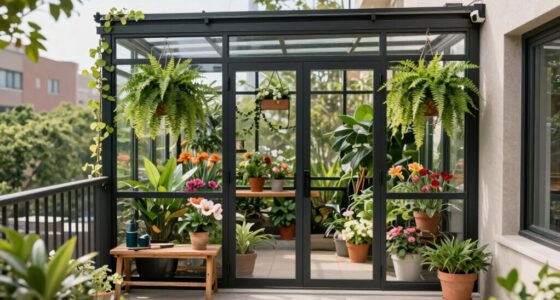
Growing fresh herbs and vegetables in an apartment is easier than you might think, thanks to hydroponic systems. Vertical hydroponic setups are especially appealing because they maximize limited space while allowing you to cultivate a variety of plants. If you’re living in an urban environment where space is at a premium, these systems help you make the most of every inch, turning even a small balcony or corner into a thriving garden. They also support urban sustainability by reducing your carbon footprint—no need for soil transportation or excessive water use, since hydroponics recycles water efficiently. With vertical systems, you’re not just growing food; you’re contributing to a greener cityscape and promoting responsible resource use.
Vertical hydroponic systems maximize limited space and promote urban sustainability for fresh, homegrown herbs and vegetables.
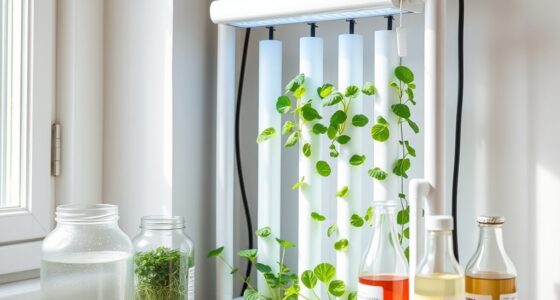
One of the main advantages of vertical hydroponic systems is space optimization. Instead of spreading out across a countertop or windowsill, plants grow upward, stacking efficiently to free up valuable horizontal surface area. This design allows you to produce a surprising amount of produce in tight quarters, making it ideal for apartment dwellers who want fresh herbs, greens, or even small vegetables without sacrificing precious living space. Plus, many vertical systems are modular, meaning you can expand or rearrange them as your garden grows or your needs change. This flexibility guarantees your gardening efforts remain manageable, even as your collection of plants expands. Innovations in urban agriculture have made these systems more accessible, encouraging city residents to grow their own food. Additionally, embracing sustainable gardening practices with these systems can further reduce your environmental impact.
Beyond just saving space, vertical hydroponic systems promote urban sustainability by reducing reliance on store-bought produce, which often involves lengthy transportation and packaging. With your own setup, you can harvest fresh, nutritious herbs and vegetables whenever you want, cutting down on plastic waste and food miles. These systems often use less water than traditional gardening because they recycle and precisely deliver nutrients directly to the roots, making them environmentally friendly and cost-effective. As the liquidity of the market increases, these systems become even more accessible and affordable for city residents. Additionally, advances in hydroponic technology continue to improve efficiency and ease of use, making these systems more appealing to a broader audience. For apartment gardeners, this means you can enjoy fresh food while minimizing your environmental impact, aligning your hobby with a commitment to sustainability.
Furthermore, vertical hydroponic systems are low-maintenance and user-friendly, making them perfect for busy city residents. Automated watering, LED grow lights, and easy-to-replace nutrient solutions mean you can focus more on enjoying your garden rather than constantly tending to it. Whether you’re a beginner or an experienced gardener, these systems provide a clean, efficient, and productive way to cultivate plants indoors. Overall, their combination of space efficiency, sustainability benefits, and ease of use makes vertical hydroponic systems a smart choice for anyone looking to bring nature into their urban home.
vertical hydroponic garden system
As an affiliate, we earn on qualifying purchases.
As an affiliate, we earn on qualifying purchases.
Frequently Asked Questions
How Much Does a Typical Vertical Hydroponic System Cost?
A typical vertical hydroponic system costs between $200 and $1,000, depending on size and features. You won’t need to worry about soil compatibility, as these systems use nutrient solutions instead. They’re designed for easy setup and maintenance, making them ideal for apartment gardeners. Keep in mind, higher-end models often have better circulation and customizable options, which can enhance your growing experience and yield.
Can These Systems Be Used Outdoors or Only Indoors?
Sure, your vertical hydroponic system can brave the outdoors, turning your balcony into a lush jungle. With outdoor adaptation, you just need to shield it from pests and harsh weather—think of it as giving your plants a tiny fortress. Pest control becomes your new best friend, keeping bugs at bay while your plants thrive. So yes, you can enjoy fresh greens outdoors, just prepare to play gardener and pest warrior simultaneously.
What Is the Maintenance Required for Vertical Hydroponic Gardens?
You need to regularly check your vertical hydroponic garden’s plant nutrient requirements and adjust nutrient solutions accordingly. Keep the system clean to prevent pest issues and implement pest management strategies, like introducing beneficial insects or using organic treatments. Monitoring water levels and ensuring proper lighting also help reduce maintenance. With consistent care, your garden stays healthy, productive, and pest-free, making it easy to enjoy fresh produce indoors.
Are There Specific Plant Types That Thrive Best in Vertical Hydroponics?
You’ll find that leafy greens like lettuce, spinach, and herbs such as basil and cilantro thrive best in vertical hydroponic systems. These plant varieties love the controlled growing conditions, including consistent moisture, ideal light, and nutrient delivery. By choosing adaptable plants suited for vertical setups, you maximize your space and enjoy fresh harvests more often, making your apartment garden both productive and rewarding.
How Much Space Is Needed to Set up a Vertical Hydroponic System?
You’ll need surprisingly little space—just a compact corner or balcony—since vertical hydroponic systems maximize every inch. The key is a good lighting setup and easy nutrient management, which turn limited space into a lush garden. Ironically, you don’t need a backyard to grow a variety of plants; a small, well-lit area suffices. With some planning, you’ll transform your apartment into a thriving green oasis.
As an affiliate, we earn on qualifying purchases.
Conclusion
So, diving into vertical hydroponic systems is a smart move for apartment gardeners like you. They save space, boost productivity, and make gardening accessible no matter your setup. With a little effort, you’ll see your green thumb flourish right in your own home. Remember, Rome wasn’t built in a day—so be patient and enjoy the journey. Before you know it, you’ll be reaping fresh herbs and veggies that prove good things come in small, well-organized packages.
compact hydroponic vegetable growing kit
As an affiliate, we earn on qualifying purchases.
As an affiliate, we earn on qualifying purchases.
automated vertical hydroponic farm
As an affiliate, we earn on qualifying purchases.
As an affiliate, we earn on qualifying purchases.
Halloween Picks
halloween
As an affiliate, we earn on qualifying purchases.