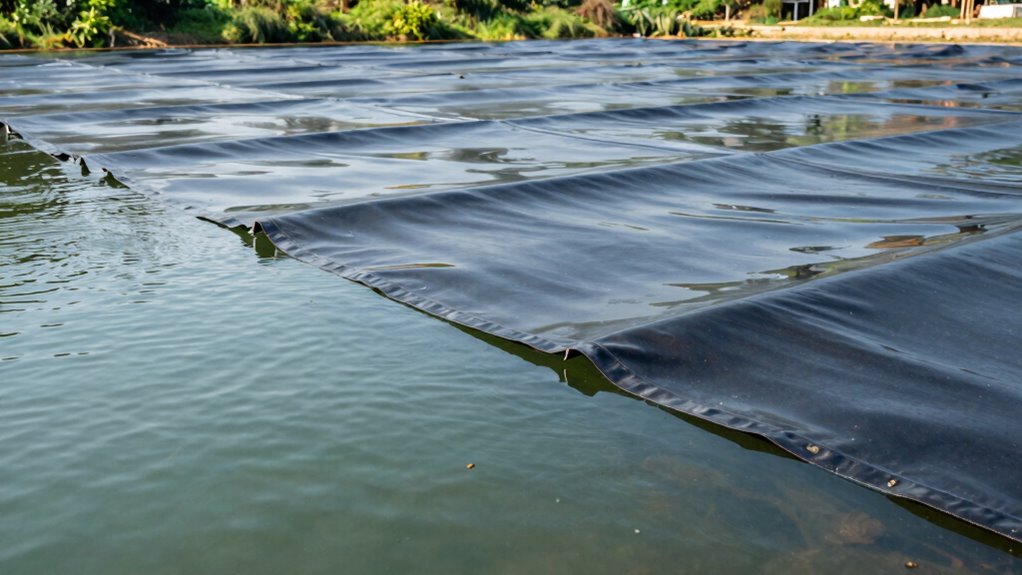

Reservoir covers help reduce algae problems by blocking sunlight from reaching the water, which slows down algae growth and prevents blooms. They also limit organic debris and nutrients like nitrogen and phosphorus from entering the reservoir, which algae need to thrive. By controlling water temperature and nutrient levels, covers create a less favorable environment for algae to flourish. Want to discover how these benefits work together to improve water quality? Keep exploring to find out more.
Key Takeaways
- Covering reservoirs limits sunlight exposure, reducing photosynthesis and algae growth.
- Reservoir covers lower water temperatures, slowing algae development cycles.
- They prevent debris and organic matter from introducing nutrients that promote algae proliferation.
- Blocking sunlight diminishes nutrient cycling, weakening algae and preventing blooms.
- Overall, covers improve water quality by physically and environmentally controlling algae growth.

Reservoir covers are an effective way to combat algae growth, especially during warmer months. When the sun beats down on your reservoir, it heats the water, raising the water temperature and creating ideal conditions for algae to thrive. By covering your reservoir, you limit direct sunlight exposure, which helps keep the water cooler and less inviting for algae proliferation. Cooler water temperatures slow down algae’s growth cycle, giving you a better chance to maintain a clean reservoir.
In addition to controlling water temperature, reservoir covers play an essential role in nutrient control. Algae need nutrients like nitrogen and phosphorus to grow, and these nutrients often come from external sources such as debris, organic matter, or runoff. When your reservoir is uncovered, sunlight promotes algae growth, which accelerates nutrient cycling and creates a feedback loop that fuels further algae development. Covering your reservoir helps prevent this process by blocking sunlight and reducing the influx of organic debris, which can carry nutrients into the water. This reduction in nutrients limits algae’s ability to multiply rapidly and helps keep the water clearer.
You might not realize how much sunlight penetrates your reservoir’s surface, but even a small amount can considerably impact algae growth. With a cover, you effectively block most of the sunlight, which is a primary driver of photosynthesis in algae. This not only hampers algae growth but also minimizes the formation of algae blooms that can turn your water green and murky. Plus, when sunlight is restricted, the algae that do manage to grow are often weaker and less likely to form large, persistent blooms. Additionally, sunlight penetration can be reduced significantly, which further diminishes algae’s ability to thrive. Understanding water quality management can help you develop more effective strategies for algae control and reservoir maintenance. Implementing proper reservoir cover techniques ensures optimal protection against algae proliferation and supports overall water health, especially when combined with other algae prevention measures.
reservoir cover for algae control
As an affiliate, we earn on qualifying purchases.
As an affiliate, we earn on qualifying purchases.
Frequently Asked Questions
Do Reservoir Covers Affect Water Temperature?
Reservoir covers do affect water temperature by providing water insulation, which helps regulate temperature. When you install a cover, it limits heat exchange with the environment, keeping water cooler in hot weather and warmer during cold periods. This temperature regulation benefits water quality, reduces evaporation, and minimizes algae growth. So, by using a reservoir cover, you actively manage water temperature, making it more stable and easier to maintain.
How Long Do Reservoir Covers Typically Last?
Did you know that reservoir covers typically last between 10 to 15 years? Their durability lifespan depends on the material used; high-quality covers made from UV-stabilized polyethylene or PVC tend to have longer material longevity. You can extend their life by regular maintenance and inspections. With proper care, your reservoir cover can effectively protect water quality and reduce algae problems for over a decade, ensuring your investment remains worthwhile.
Are Reservoir Covers Environmentally Sustainable?
Reservoir covers can be environmentally sustainable, especially when made from eco-friendly materials like recycled plastics or biodegradable fabrics. By choosing these options, you help reduce waste and pollution. Additionally, covers support biodiversity preservation by protecting water quality and aquatic habitats from contamination. You contribute to a healthier environment, lowering your carbon footprint and promoting sustainable water management practices. This makes reservoir covers a responsible choice for eco-conscious efforts.
Can Covers Prevent All Types of Algae?
Reservoir covers substantially improve algae prevention, but they can’t stop all types completely. Cover effectiveness depends on the algae species and environmental conditions. While covers block sunlight and limit nutrient entry, some algae, like certain cyanobacteria, can still develop through small gaps or nutrient inflow. To maximize algae prevention, combine covers with proper maintenance, chemical treatments, and water management practices. This integrated approach offers the best chance to control various algae types effectively.
What Maintenance Is Required for Reservoir Covers?
You’ll find that maintaining your reservoir cover involves regular inspections and cleaning, especially since the cover material can collect debris or algae over time. Follow a simple maintenance schedule, like checking weekly for damage or buildup and cleaning with a mild solution when needed. This routine keeps your cover in top shape, preventing algae growth and extending its lifespan, making your reservoir healthier and more efficient without much hassle.
pond and reservoir cover with UV protection
As an affiliate, we earn on qualifying purchases.
As an affiliate, we earn on qualifying purchases.
Conclusion
By installing reservoir covers, you’ll shield your water from the sun’s harsh rays, like a gentle canopy protecting delicate blooms. This barrier blocks the sunlight that fuels algae growth, turning your reservoir into a clear, tranquil mirror rather than a murky swamp. Imagine the peace of seeing pristine water ripple quietly beneath the cover, free from unsightly green blooms. With this simple step, you create a safer, cleaner environment that preserves your water’s natural beauty.
water reservoir cover for algae prevention
As an affiliate, we earn on qualifying purchases.
As an affiliate, we earn on qualifying purchases.
As an affiliate, we earn on qualifying purchases.