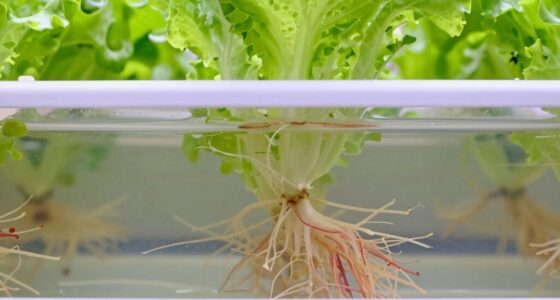
In hydroponic setups, you should hand-pollinate when flowers open, usually in the morning, and stay receptive for about 24 hours. Gently use a small brush, cotton swab, or tap flowers to transfer pollen from anthers to the stigma. Perform this carefully during the flower’s receptive window for best results. Keep your plants healthy and stress-free, and if you want to learn more about perfecting your method, there’s even more to discover.

Get the little things that make your day delivered free with Prime
- Fast, free delivery on millions of items
- Prime Video, Amazon Music and more included
- Member-only deals all year
Key Takeaways
- Pollinate early in the morning when flowers are fresh and receptive, typically within a 24-hour window.
- Use a soft brush or cotton swab to gently transfer pollen from anther to stigma inside each flower.
- Ensure flowers are open and undamaged before pollination, and perform daily during flowering.
- Cross-pollinate by transferring pollen between different plants of the same species for better yields.
- Monitor for fruit development or seed formation as indicators of successful pollination.
Have you ever wondered how plants in a hydroponic system get pollinated without soil or natural pollinators? The truth is, since you’re growing indoors and away from bees, butterflies, and wind, you’ll need to step in and manually pollinate your plants. Understanding when and how to do this is essential to guarantee your crops develop fully and yield fruit or seeds as expected. Most indoor plants that rely on pollination, like tomatoes, peppers, or certain herbs, need your intervention at specific times, typically when flowers are open and receptive.
Indoor plants require manual pollination since natural pollinators are absent.
Timing is everything when it comes to hand-pollination. You should pay close attention to your plants’ flowering schedule. Usually, flowers open in the morning and remain receptive for about 24 hours. That’s your window to act. If you wait too long, the flowers might close or drop, reducing the chances of successful pollination. Check your plants daily during flowering, and once you spot open flowers, prepare to pollinate. You’ll want to do this early in the day when the flowers are fresh and receptive.
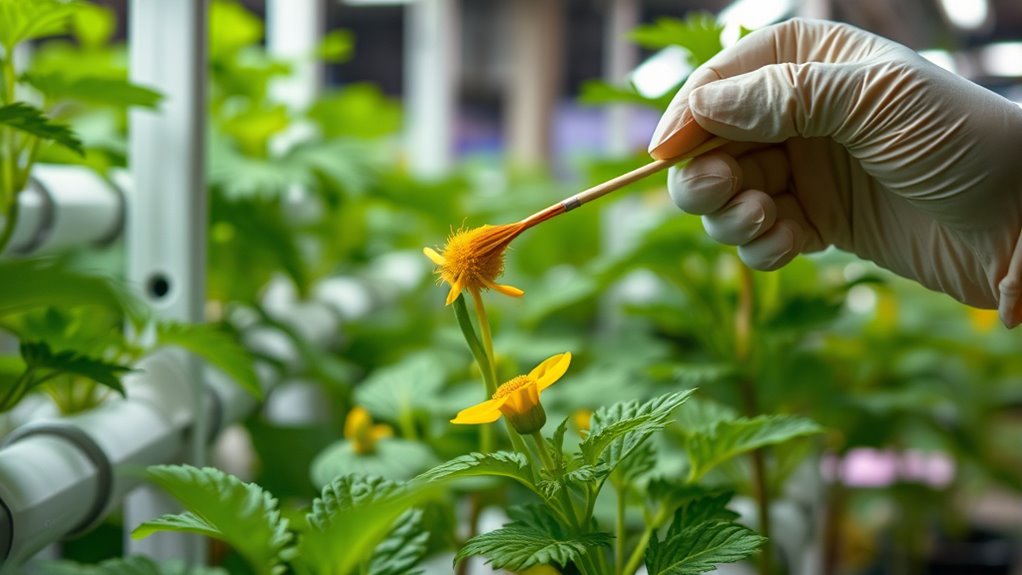
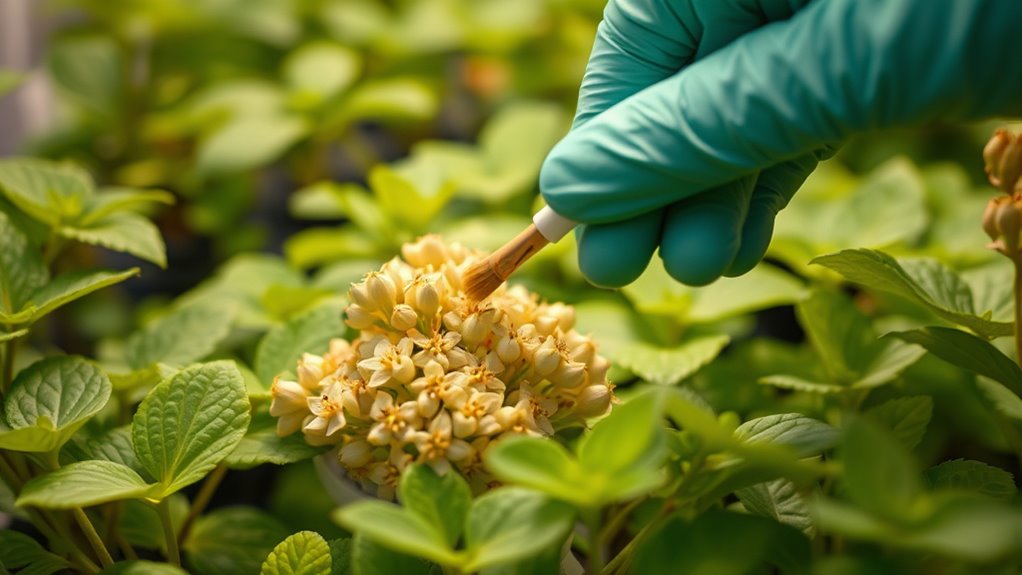
Now, how do you actually pollinate? The most common method involves using a small, clean brush, like a soft paintbrush or a cotton swab. Gently brush the inside of the flower to transfer pollen from the anthers (the pollen-producing part) to the stigma (the part that receives pollen). If you have flowers grouped closely together, you can also tap or shake the flowers gently to dislodge pollen, allowing it to fall onto the stigma naturally. Some growers prefer to use a small, handheld electric toothbrush to mimic the vibrations natural pollinators provide, which can increase pollen transfer efficiency.
It’s also worth noting that some plants require cross-pollination for maximum fruiting, meaning you might need to transfer pollen between different plants of the same species. If you’re growing multiple plants, do so during the same flowering period for the best results. Keep your plants healthy and stress-free, as plants under stress may not produce viable pollen or may not respond well to manual pollination.
After pollinating, monitor your plants closely. Successful pollination often results in visible changes, like the swelling of fruit or seed formation. If pollination is unsuccessful, you can try again the next day, ensuring the flowers are still receptive. Consistent, gentle effort combined with proper timing will help you achieve better yields and enjoy the satisfaction of growing healthy, fruiting plants indoors.
As an affiliate, we earn on qualifying purchases.
Frequently Asked Questions
Can Hydroponic Pollination Be Automated?
Yes, hydroponic pollination can be automated. You can set up devices like oscillating fans or vibrators to mimic natural pollination, or use automated pollen dispensers that release pollen at scheduled times. These methods reduce manual effort and increase efficiency, ensuring better fruit set. Just make sure to monitor and adjust the equipment regularly for ideal results, so your indoor crops stay healthy and productive.
What Are Signs of Unsuccessful Pollination?
You can spot unsuccessful pollination if your plants show few or no fruit set, and the flowers remain open or wilt without developing. Sometimes, the flowers may turn brown or dry out prematurely, signaling that pollination didn’t take root. It’s a case of “a house divided,” where the lack of fertilization causes flowers to fail to develop. Keep an eye on these signs to adjust your pollination methods early on.
How Long Does Pollination Typically Take Indoors?
Pollination indoors usually takes just a few minutes to complete once you see the pollen transfer. You should gently tap or brush the flowers to release pollen onto the stigma, and this process often takes about 10 to 15 minutes per flower. Keep an eye out for signs of successful pollination, such as swelling or the development of fruit. If nothing happens after a day, try hand-pollinating again.
Are There Specific Tools Recommended for Hand-Pollination?
For hand-pollination, you’ll want a small, soft brush, a clean paintbrush, or a cotton swab. You can also use a gentle paintbrush to transfer pollen, a spray bottle for fine misting, or even a clean toothpick to carefully pick and deposit pollen. These tools help you target flowers precisely, ensuring successful pollination without damaging delicate structures, making your indoor gardening more efficient and rewarding.
Does Indoor Humidity Affect Pollination Success?
Yes, indoor humidity can affect pollination success. If the humidity is too high, pollen may clump or stay moist, reducing its ability to fertilize effectively. Conversely, very dry air can cause pollen to become too brittle and less viable. To improve success, aim for moderate humidity levels, around 50-60%, and guarantee proper airflow. Using a dehumidifier or humidifier can help you maintain ideal conditions.
hydroponic plant pollination tools
As an affiliate, we earn on qualifying purchases.
As an affiliate, we earn on qualifying purchases.
Conclusion
Now that you know when and how to hand-pollinate indoors, you can bring your plants to life with every gentle tap and careful touch. Visualize your efforts as a dance between your hand and the delicate flowers, each movement sparking new growth and vibrant blooms. Embrace the rhythm of pollination, feel the connection with your plants, and watch as your indoor garden flourishes, thriving through your careful, consistent nurturing.
electric toothbrush for plant pollination
As an affiliate, we earn on qualifying purchases.
As an affiliate, we earn on qualifying purchases.
handheld cotton swabs for pollination
As an affiliate, we earn on qualifying purchases.
As an affiliate, we earn on qualifying purchases.
Halloween Picks
halloween
As an affiliate, we earn on qualifying purchases.