
To maintain ideal indoor hydroponics, keep temperature and humidity balanced by monitoring with reliable gauges. Use fans and exhaust systems to promote air circulation, preventing hotspots and excess moisture. Adjust humidity levels with humidifiers or dehumidifiers based on your plants’ needs, and guarantee temperature stays within ideal ranges. Proper airflow and environmental stability help your plants transpire healthily and absorb nutrients better. If you want to fine-tune your setup, there’s more to discover about keeping conditions perfectly in sync.

Get the little things that make your day delivered free with Prime
- Fast, free delivery on millions of items
- Prime Video, Amazon Music and more included
- Member-only deals all year
Key Takeaways
- Maintain optimal temperature and humidity levels to promote healthy transpiration and nutrient uptake in hydroponic plants.
- Use fans and exhaust systems to ensure proper air circulation, preventing hotspots and humidity buildup.
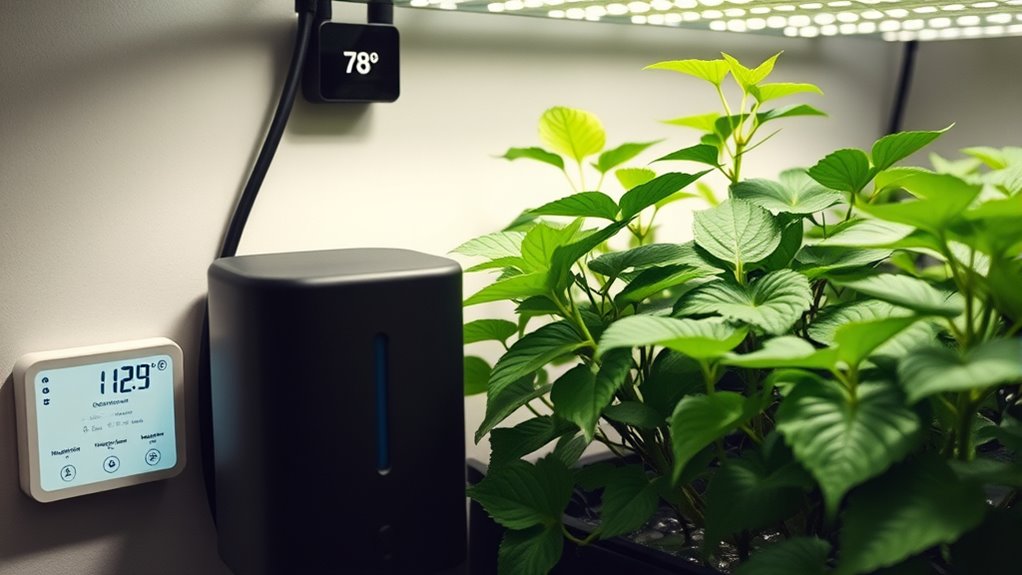
- Regularly monitor environmental conditions with reliable hygrometers and thermometers for precise adjustments.
- Adjust humidity by increasing airflow or dehumidifying in high-humidity environments; add moisture or reduce airflow if too low.
- Position ventilation equipment carefully to ensure gentle air movement, avoiding stress while maintaining consistent temperature and humidity.
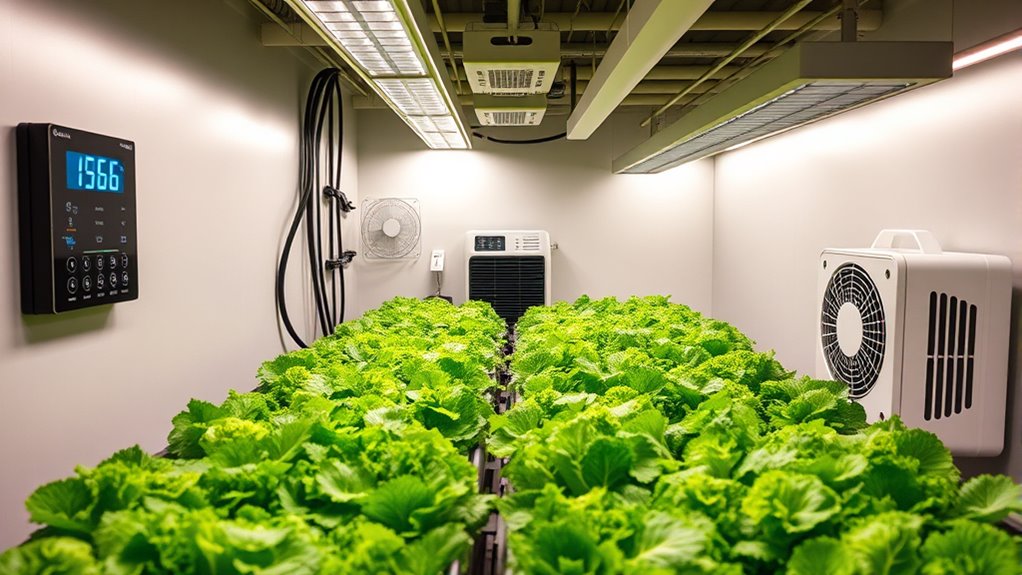
Maintaining ideal temperature and humidity levels is essential for successful indoor hydroponics. When conditions are just right, your plants can thrive, grow faster, and produce healthier yields. One of the key factors in achieving this balance is understanding how plant transpiration and air circulation interact within your grow environment. Transpiration is the process where plants release water vapor through tiny openings called stomata. This process naturally cools the plant and helps draw nutrients from the roots. However, if the humidity is too high, transpiration slows down, which can stunt growth and reduce nutrient uptake. Conversely, if the air is too dry, plants may transpire excessively, leading to stress and moisture loss. Thus, you need to monitor and control humidity levels to guarantee transpiration occurs efficiently.
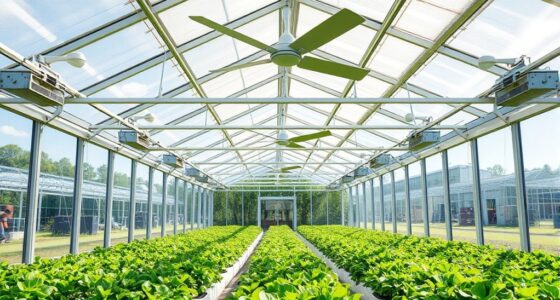
Good air circulation plays a crucial role in maintaining stable temperature and humidity. Proper airflow prevents hotspots, reduces humidity buildup, and helps distribute CO2 evenly around your plants. Without adequate circulation, moisture can linger on surfaces and in the air, creating conditions perfect for mold, mildew, and other pathogens. Installing oscillating fans or exhaust systems encourages air movement, ensuring that fresh, oxygen-rich air reaches all parts of your grow space. This also helps to regulate temperature by dispersing heat generated by grow lights or equipment, preventing overheating. When air circulates properly, it promotes a uniform environment, which is imperative for consistent plant growth.
You should also pay attention to the placement and operation of your fans and ventilation systems. Position fans to create a gentle breeze that mimics natural conditions, avoiding direct blasts that can stress plants. Use exhaust fans connected to carbon filters to remove excess humidity and heat, pulling stale air out and bringing in fresh air from outside. This continuous exchange maintains a stable environment, which is particularly important during hot or humid days. Regularly cleaning and inspecting your ventilation setup ensures it functions efficiently, preventing blockages that could compromise air circulation. Additionally, modern heat pumps incorporate noise reduction technology, which helps keep your environment quiet and undisturbed during operation.
In addition, balancing temperature and humidity involves more than just equipment. Regularly checking your environment with a reliable hygrometer and thermometer allows you to make timely adjustments. If humidity rises above the optimal levels, increase airflow or dehumidify; if it drops too low, add moisture or reduce air movement. Consistent monitoring helps you respond swiftly to fluctuations, keeping plant transpiration consistent and your indoor hydroponic system healthy. Ultimately, controlling air circulation and understanding plant transpiration are the backbone of a thriving indoor garden, making sure your plants stay happy, healthy, and productive.
indoor hydroponic temperature and humidity monitor
As an affiliate, we earn on qualifying purchases.
As an affiliate, we earn on qualifying purchases.
Frequently Asked Questions
How Often Should I Calibrate My Humidity and Temperature Sensors?
You should calibrate your humidity and temperature sensors at least once every three to six months for essential accuracy. Regular sensor maintenance helps guarantee reliable readings, which are vital for maintaining the right environment in your hydroponic system. If you notice inconsistent or unexpected data, it’s a good idea to calibrate sooner. Consistent calibration frequency keeps your sensors functioning properly and your plants thriving.
What Are the Signs of Improper Humidity Levels Affecting Plant Growth?
You might notice signs of improper humidity affecting your plants, like leaf curl symptoms or overwatering indicators. When humidity is too high, leaves may curl or become moldy, while low humidity can cause leaves to dry out or wilt. Keep an eye on these signs, as they’re your clues to adjust humidity levels. Proper control ensures healthier growth, preventing stress and promoting ideal development.
Can I Automate Temperature and Humidity Adjustments for My Hydroponic System?
Yes, you can automate temperature and humidity adjustments for your hydroponic system. Use smart thermostats to monitor and control your environment efficiently, ensuring consistent temperature levels. Pair them with automated humidifiers to maintain ideal humidity, preventing issues caused by fluctuating moisture. This setup simplifies management, saves time, and promotes healthy plant growth by keeping conditions stable without manual intervention.
How Does Air Circulation Influence Humidity Control in Indoor Setups?
Think of air circulation as the heartbeat of your hydroponic setup. It directly impacts airflow efficiency, helping distribute humidity evenly across your grow space. Good circulation prevents hot spots and stagnant air, reducing excess humidity that can cause mold or disease. By maintaining consistent airflow, you promote ideal humidity levels, ensuring your plants thrive. Proper ventilation is essential for balancing humidity and creating a healthy environment for your indoor garden.
What Are the Best Methods to Prevent Mold and Mildew in High-Humidity Environments?
To prevent mold and mildew in high-humidity environments, you should focus on fungus prevention by maintaining proper airflow and reducing excess moisture. Use moisture barriers like plastic sheeting to protect surfaces and avoid water accumulation. Regularly inspect your setup for signs of fungus growth, and verify your plants aren’t overwatered. Keeping humidity levels balanced and promoting good ventilation helps create an environment less conducive to mold and mildew development.
oscillating fan for hydroponic grow room
As an affiliate, we earn on qualifying purchases.
As an affiliate, we earn on qualifying purchases.
Conclusion
Now that you understand how vital temperature and humidity are, you’re almost ready to master your indoor hydroponics setup. But beware—if you overlook subtle changes in your environment, your crops could suffer silently. The next step? Fine-tuning your controls to create the perfect balance. Are you prepared to access the full potential of your garden? Stay alert, because the key to thriving plants is within your grasp—if you catch the signs before it’s too late.
dehumidifier for indoor hydroponics
As an affiliate, we earn on qualifying purchases.
As an affiliate, we earn on qualifying purchases.
carbon filter exhaust fan for grow room
As an affiliate, we earn on qualifying purchases.
As an affiliate, we earn on qualifying purchases.
Halloween Picks
halloween
As an affiliate, we earn on qualifying purchases.