Root oxygenation is crucial for your hydroponic plants because it guarantees your roots get the oxygen they need for healthy growth, nutrient absorption, and disease prevention. Without enough oxygen, roots can suffocate, leading to poor nutrient uptake and increased risk of root rot and harmful bacteria. Maintaining proper oxygen levels keeps roots vigorous and your plants thriving. Keep exploring how optimizing oxygenation can boost your hydroponic success even further.

Get the little things that make your day delivered free with Prime
- Fast, free delivery on millions of items
- Prime Video, Amazon Music and more included
- Member-only deals all year
Key Takeaways
- Adequate root oxygenation ensures efficient nutrient absorption and promotes healthy root development.
- Sufficient oxygen prevents anaerobic conditions that can cause root rot and disease.
- Proper oxygen levels support vigorous root growth, enhancing overall plant vigor.
- Oxygenation helps maintain microbial balance, reducing harmful pathogen proliferation.
- Improved root oxygenation leads to higher yields and more resilient hydroponic crops.

Root oxygenation plays a crucial role in hydroponic growth because plant roots need a steady supply of oxygen to thrive and develop properly. When roots receive enough oxygen, they can efficiently perform essential functions like nutrient absorption and maintaining overall root zone health. Without adequate oxygen, roots can become stressed, which hampers their ability to uptake nutrients from the solution. This can lead to stunted growth, poor yields, and increased vulnerability to diseases. Ensuring proper root oxygenation is hence fundamental to creating an ideal environment for hydroponic plants to flourish.
Proper root oxygenation is vital for healthy, vigorous hydroponic plant growth and nutrient uptake.
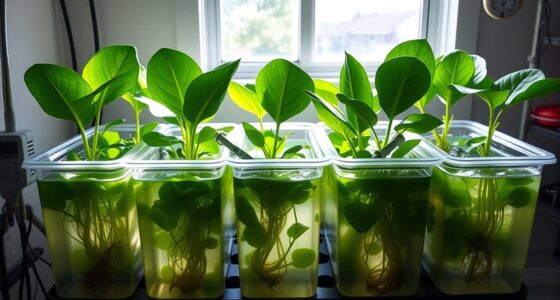
In a hydroponic system, roots are submerged in a nutrient-rich water solution, which makes oxygen supply even more critical. Unlike soil, where air pockets naturally supply oxygen, hydroponic setups require deliberate measures to increase oxygen levels around the roots. If oxygen levels drop, roots can suffocate, leading to anaerobic conditions. These conditions promote the growth of harmful bacteria and fungi, which can cause root rot and other diseases that quickly compromise plant health. To prevent this, you need to focus on maintaining high oxygen levels in your nutrient solution, often through aeration techniques like air stones, diffusers, or circulation pumps. These tools increase dissolved oxygen, ensuring your roots stay healthy and functional.
Healthy root zone conditions directly influence how well your plants absorb nutrients. When roots are well-oxygenated, they actively transport nutrients from the solution into their tissues, fueling growth and development. Conversely, oxygen-deprived roots lose their ability to absorb nutrients efficiently, leading to deficiencies and weak overall plant performance. Maintaining ideal oxygen levels supports vigorous root growth, which expands the root surface area and enhances nutrient uptake. This creates a positive feedback loop—stronger roots absorb more nutrients, leading to healthier, faster-growing plants.
Furthermore, oxygenation impacts the root zone’s overall health by preventing the buildup of harmful substances. In low-oxygen environments, plants can develop a buildup of toxic metabolites and pathogens. By consistently providing enough oxygen, you help sustain a healthy microbial balance in the root zone, which is essential for nutrient processing and disease resistance. Proper oxygenation also encourages the development of a robust root system capable of exploring the nutrient solution more effectively. This resilience makes your plants less vulnerable to environmental stresses and promotes steady, vigorous growth.
In short, prioritizing root oxygenation in your hydroponic system isn’t just about avoiding problems—it’s about actively boosting plant health and productivity. By ensuring roots have enough oxygen, you maximize nutrient absorption, improve root zone health, and set the stage for thriving, high-yield hydroponic crops. Additionally, understanding the importance of air circulation and maintaining optimal oxygen levels can greatly enhance the overall effectiveness of your hydroponic setup.
As an affiliate, we earn on qualifying purchases.
Frequently Asked Questions
How Does Oxygen Affect Nutrient Absorption in Hydroponic Systems?
Oxygen plays a crucial role in nutrient absorption because it supports root respiration, which energizes your plants’ ability to uptake nutrients efficiently. By providing oxygen supplementation, you guarantee roots stay healthy and active, preventing suffocation. When roots respire properly, they absorb nutrients more effectively, leading to better growth. So, maintaining adequate oxygen levels in your hydroponic system directly boosts your plants’ nutrient uptake and overall health.
Can Low Oxygen Levels Cause Root Diseases in Hydroponics?
Yes, low oxygen levels can cause root diseases like root rot in hydroponics. Oxygen deficiency creates an anaerobic environment, encouraging harmful bacteria that attack roots. When roots can’t access enough oxygen, they weaken and become susceptible to diseases. To prevent this, you should guarantee proper aeration and oxygenation of your nutrient solution, maintaining healthy roots and avoiding root rot, which can severely impact your plant’s growth and yield.
What Are the Signs of Poor Root Oxygenation in Plants?
You’ll notice signs of poor root oxygenation, such as root suffocation and oxygen deficiency. Your plants may show stunted growth, yellowing leaves, and wilting despite proper watering. Roots might appear brown or slimy, indicating decay. These symptoms happen because insufficient oxygen hampers nutrient uptake. To prevent this, guarantee proper aeration and avoid waterlogging. Recognizing these signs early helps you maintain healthy roots and robust hydroponic growth.
How Often Should Oxygen Levels Be Monitored in Hydroponic Setups?
A stitch in time saves nine, so you should monitor oxygen levels regularly. Check your hydroponic setup at least daily, especially during peak growth periods. Use reliable oxygen sensors to track levels accurately. Monitoring frequency helps you catch issues early, ensuring roots stay healthy and oxygenated. Consistent checks prevent problems before they affect your plants, keeping your hydroponic systems thriving and productive.
Are There Specific Oxygenation Methods Best Suited for Different Hydroponic Crops?
You should choose aeration techniques based on crop specificity to optimize root oxygenation. For leafy greens, use air stones or diffusers to guarantee consistent oxygen levels, while deep-rooted crops like tomatoes benefit from more vigorous aeration methods such as water agitation or oxygen pumps. Tailoring aeration techniques to your crop’s needs helps prevent root rot and promotes healthy growth, increasing your hydroponic success.
dissolved oxygen diffuser for hydroponics
As an affiliate, we earn on qualifying purchases.
As an affiliate, we earn on qualifying purchases.
Conclusion
So, next time you think more nutrients mean better growth, remember it’s actually oxygen your roots crave. Ironically, in hydroponics, the very water that nurtures can also drown your plants if you forget to give them enough air. Without proper oxygenation, your lush greens might just be a sad, soggy reminder that sometimes, the simplest thing—air—makes all the difference. Who knew that breathing space could be the secret to thriving hydroponic dreams?
hydroponic nutrient solution aerator
As an affiliate, we earn on qualifying purchases.
As an affiliate, we earn on qualifying purchases.
hydroponic water circulation pump
As an affiliate, we earn on qualifying purchases.
As an affiliate, we earn on qualifying purchases.
NFL season / tailgating Picks
team gear
As an affiliate, we earn on qualifying purchases.