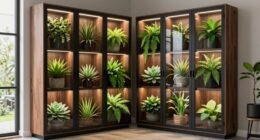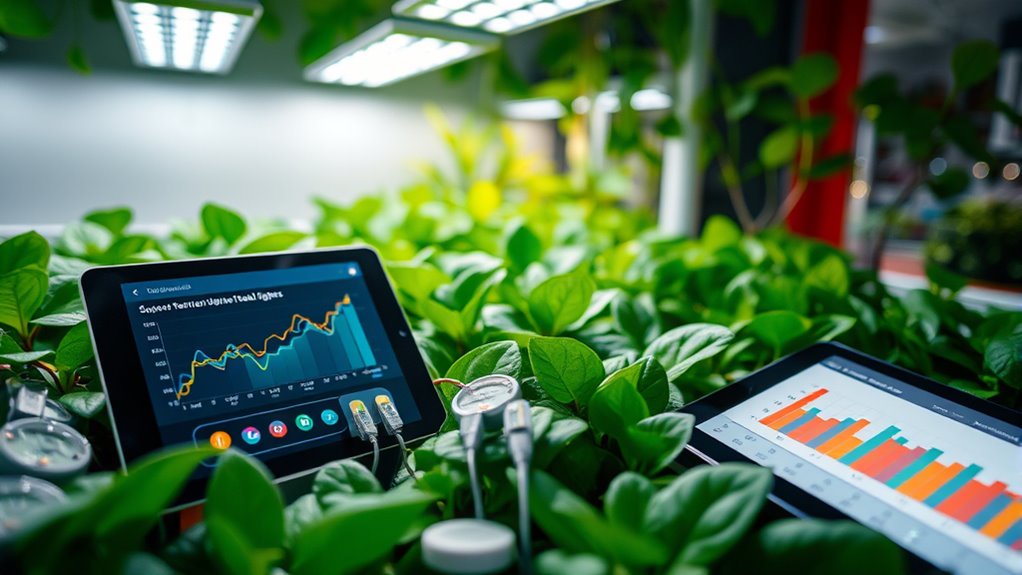
Using sensors and apps in high-tech indoor gardening allows you to monitor your plants’ health precisely. You can track soil moisture, temperature, humidity, and light levels in real time. Automated alerts and controls help prevent overwatering or under-lighting, creating an ideal environment without guesswork. With remote access, you can adjust lighting and other settings easily from your smartphone. Explore further to discover how these tools can transform your gardening efficiency and plant vitality.
Key Takeaways
- Sensors track soil moisture, temperature, humidity, and light levels to provide real-time data on plant conditions.
- Apps collect sensor data, send notifications, and enable remote adjustments to optimize plant health.
- Automated systems can trigger devices like humidifiers or LED lights based on sensor readings.
- LED grow lights can be precisely controlled via apps to adjust spectrum, intensity, and timing for ideal growth.
- Integrated technology simplifies plant care, prevents issues like overwatering, and promotes healthier, higher-yield indoor gardening.
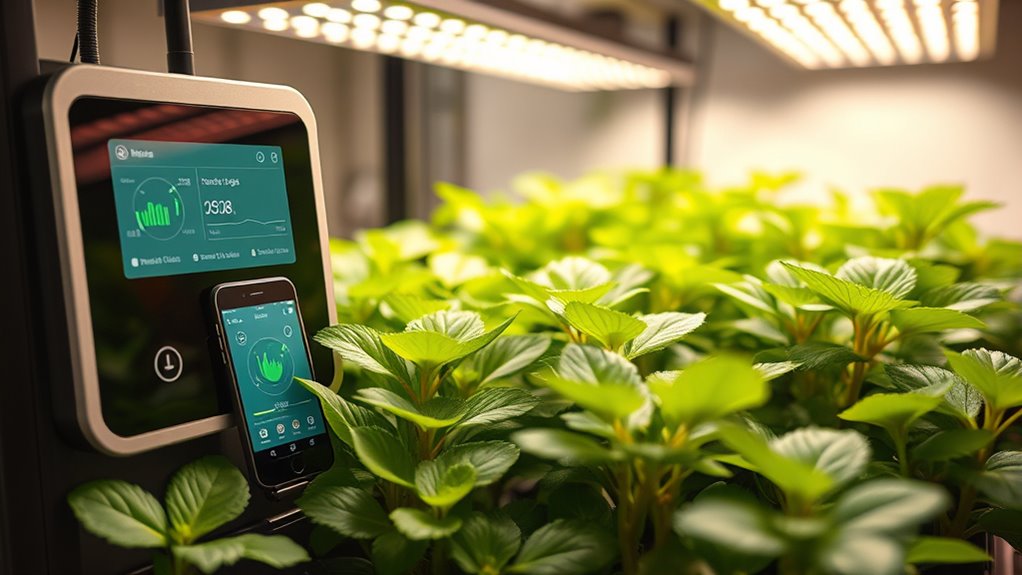
Indoor gardening technology has revolutionized how enthusiasts and beginners alike grow plants indoors. With the advent of smart sensors, apps, and advanced equipment, managing your indoor garden has become more precise and less labor-intensive. One of the key innovations is the integration of hydroponic systems, which allow you to grow plants without soil by delivering nutrients directly to the roots through water. These systems can be paired with LED grow lights, which provide the ideal spectrum and intensity of light necessary for healthy plant development. Together, hydroponic setups and LED grow lights create a controlled environment where your plants thrive, regardless of outside weather conditions.
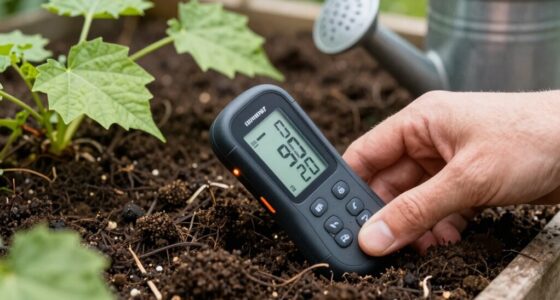
Using sensors and apps, you gain real-time insights into essential parameters such as moisture levels, temperature, humidity, and light intensity. For example, soil moisture sensors can alert you when your plants need watering, preventing over- or under-watering—a common mistake in indoor gardening. Temperature and humidity sensors monitor environment conditions, guaranteeing they stay within the perfect range for your specific plants. These sensors are often connected to smartphone apps, which compile data and send notifications or even automate adjustments. For instance, if the humidity drops below a set threshold, your app can trigger a humidifier to turn on automatically, maintaining a stable environment.
Real-time sensor data helps prevent overwatering and maintains optimal indoor plant conditions automatically.
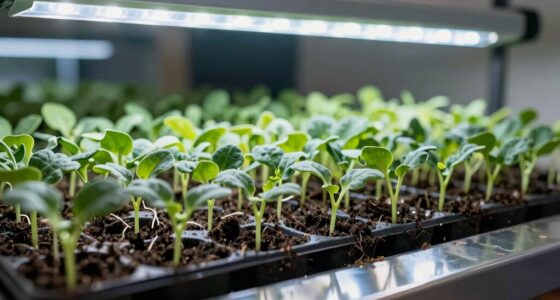
LED grow lights are a vital component in high-tech indoor gardening, especially when paired with smart sensors. These lights can be controlled remotely via apps, allowing you to adjust brightness, spectrum, and timing for your plants’ specific needs. You don’t have to guess whether your plants are getting enough light; you can fine-tune the lighting schedule and intensity based on sensor feedback. This precision ensures faster growth, healthier plants, and higher yields. Many modern LED grow lights come with spectrum controls that mimic natural sunlight, optimizing photosynthesis at every stage of plant growth.
Apps also offer detailed plant care guides and troubleshooting tips, helping you make informed decisions. Some systems even include AI-driven features that analyze sensor data to recommend specific actions—like adjusting light cycles or nutrient delivery—to improve plant health. This integration of technology reduces guesswork, making indoor gardening accessible and efficient. Whether you’re managing a small herb garden or a larger vegetable setup, these tools help you keep everything precisely monitored and controlled.

RAINPOINT Smart Digital Wireless Plant Moisture Meter Houseplant Indoor,WiFi Hub Needed,Capacitive Probe,Leave-in Soil Hygrometer Sensor,Real-time Monitor Outdoor Greenhouse Gardening(Two-Pack Set)
【🧪Auto/Manual Detection】Insert this meter into soil and it will automatically detect the soil moisture level every 3 minute….
As an affiliate, we earn on qualifying purchases.
As an affiliate, we earn on qualifying purchases.
Frequently Asked Questions
How Accurate Are Sensor Readings Over Time?
Sensor readings can be quite accurate over time if you regularly perform sensor calibration. However, environmental variability, like changes in humidity, temperature, or light, can affect their precision. You need to monitor and calibrate your sensors periodically to maintain accuracy. By staying attentive to environmental shifts and calibrating as needed, you assure your sensor data remains reliable, helping you make better decisions for your indoor garden.
Can These Systems Be Customized for Specific Plant Types?
You’re on the right track—customization options let you tailor systems to specific plant species. Think of it as hitting two birds with one stone: you get precise care and healthier plants. These systems often allow you to set parameters based on plant type, ensuring ideal watering, light, and nutrients. So yes, you can customize your indoor garden, making sure each plant gets exactly what it needs to thrive.
What Is the Cost Range for Complete Indoor Gardening Setups?
When you look at the cost comparison for complete indoor gardening setups, expect prices to vary widely based on features and size. Budget considerations are key; entry-level systems can start around $100, while advanced, tech-integrated setups might cost $500 or more. You can customize your investment based on your needs, balancing features like automation and sensor technology with what fits your budget.
Do Apps Require an Internet Connection to Function Properly?
Apps often require an internet connection for full functionality, especially for features like app synchronization and accessing online data. However, many gardening apps offer offline capability, allowing you to monitor your plants without internet. Basic functions like viewing stored data or tracking plant health can work offline, but for real-time updates or syncing across devices, a stable connection is usually necessary. Check your app’s features to know its offline capabilities.
How Secure Is My Data When Using Gardening Apps?
While gardening apps offer convenience, your data privacy and app security matter. Even if they seem harmless, your personal information and plant data could be vulnerable to breaches. You should check each app’s security measures and privacy policies before sharing sensitive info. Just like tending your plants carefully, guarantee your app’s security is strong, so your data stays safe and private amidst the digital growth.

owltron Smart Hydroponics Growing System Kit,15 Pods Indoor Herb Garden with 36W LED Grow Light & APP Control, Planting Height Up to 30", Quiet Water Pump, Ideal Gift for All Ages Dark Silver
15-Pod Smart Hydroponics Growing System Kit: Indoor gardening system with a 5.5L tank, overhead 36W full-spectrum LED grow…
As an affiliate, we earn on qualifying purchases.
As an affiliate, we earn on qualifying purchases.
Conclusion
Now that you’ve embraced high-tech indoor gardening, you’re like the modern Da Vinci of plants. With sensors and apps, you can effortlessly monitor soil moisture, light, and temperature, ensuring your greenery thrives. No more guesswork—just science and a little bit of magic. Think of it as having your own personal gardening assistant, minus the 20th-century tools. So go ahead, nurture your indoor jungle and watch it flourish like a Renaissance masterpiece—minus the Da Vinci beard.

YAMRON 4-in-1 Soil Moisture Meter, Digital Plant Temperature/Soil Moisture Test & PH Meter/Sunlight Intensity, Backlight LCD Display for Gardening, Farming and Outdoor Plants
【4 in 1 function】This is a 4-in-1 multifunctional soil tester.Our soil tester fastly to measure soil moisture, pH,…
As an affiliate, we earn on qualifying purchases.
As an affiliate, we earn on qualifying purchases.

LETPOT LPH-SE Hydroponics Growing System, 12 Pods Smart Herb Garden Kit Indoor, Indoor Garden, APP & WiFi Controlled, with 24W Growing LED, 5.5L Water Tank, Pump System, Automatic Timer
PATENTED SMART HYDROPONIC SYSTEM: Take your indoor gardening to the next level with our patented smart hydroponic system,…
As an affiliate, we earn on qualifying purchases.
As an affiliate, we earn on qualifying purchases.