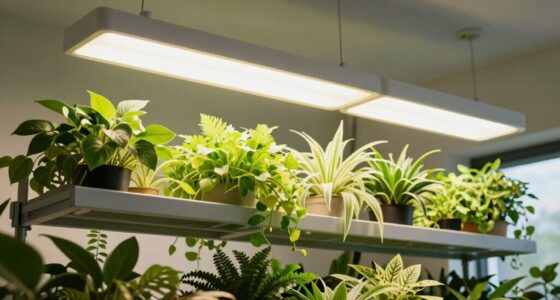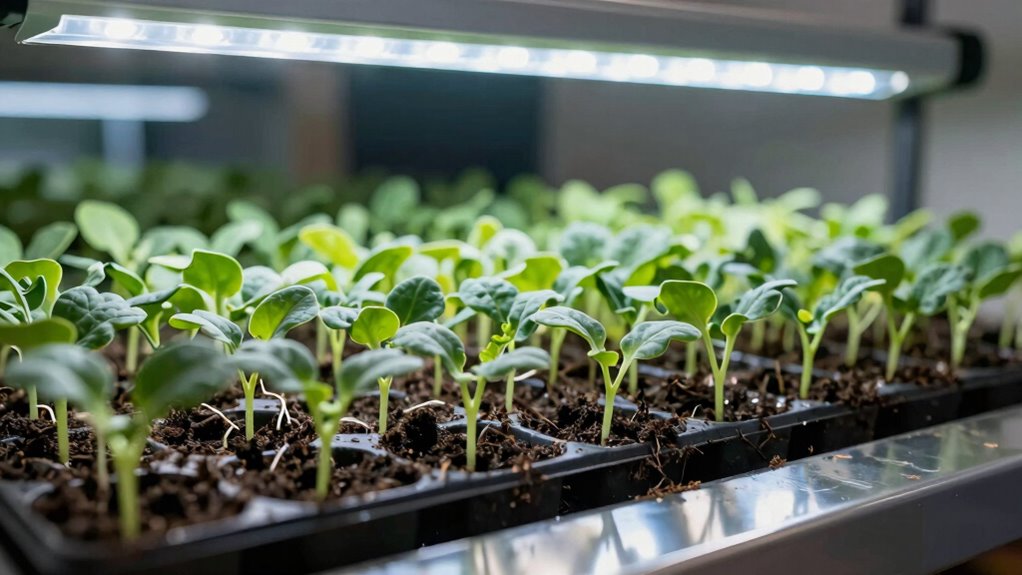

When starting seeds under LED lights, you need to focus on providing the right spectrum and intensity for healthy growth. Choose lights that promote strong photosynthesis and sturdy, stocky seedlings, preventing legginess. Adjust the light distance and duration to avoid overexposure or stress. Proper nutrition and environmental cues also play a role in healthy development. Continual adjustments and understanding these factors help guarantee successful seed starting, and you’ll discover even more tips to optimize your process.

Get the little things that make your day delivered free — and shop member deals
- Fast, free delivery on millions of items
- Access to Prime Big Deal Days deals on October 6–7
- Prime Video, Amazon Music and more included
Key Takeaways
- Choose LED lights with the right spectrum to promote healthy seedling growth and strong photosynthesis.
- Adjust light intensity to prevent stress and ensure optimal photosynthesis without overexposing seedlings.
- Provide sufficient light duration, typically 12-16 hours daily, for consistent growth and development.
- Use a growing medium rich in nutrients to support seedlings, as LED lights create ideal conditions for nutrient uptake.
- Monitor environmental cues like light quality and temperature to foster resilient, healthy seedlings ready for transplanting.
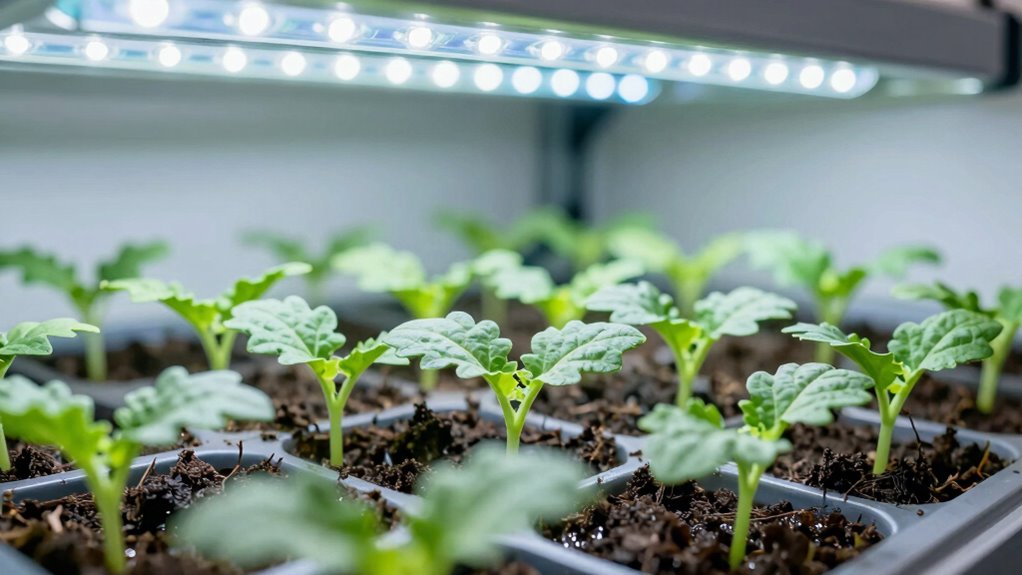
Starting seeds indoors under LED lights is an efficient way to give your plants a strong beginning before transplanting them outdoors. The key to successful seed starting lies in understanding how LED lighting influences seedling growth, especially when it comes to seedling nutrition and the effects of light spectrum. When you use LED grow lights, you’re providing your young plants with a tailored environment that encourages healthy development, but you need to pay attention to specific factors to maximize results.
Seedling nutrition is essential for strong, vigorous plants. While LEDs don’t supply nutrients directly, they create the ideal conditions for seedlings to absorb vital nutrients from the soil or seed-starting mix. Ensuring your seedlings receive enough light encourages healthy photosynthesis, which in turn supports nutrient uptake. Proper lighting helps prevent legginess—a common problem where seedlings become tall and weak—by promoting sturdy, stocky growth. Keep in mind that as your seedlings grow, they’ll need a balanced supply of nutrients, but the foundation is set by providing adequate light and a nutrient-rich medium. Additionally, understanding the light spectrum effects can help you optimize growth conditions for healthier seedlings. Using appropriate light intensity is also crucial for preventing overexposure that can stress young plants and hinder their development. Recognizing the importance of seedling nutrition can further support your efforts to grow resilient plants, especially since environmental cues such as light quality and intensity can influence overall plant health and development.
LED grow lights for seed starting
As an affiliate, we earn on qualifying purchases.
As an affiliate, we earn on qualifying purchases.
Frequently Asked Questions
Can LED Lights Replace Natural Sunlight Entirely for Seed Starting?
LED lights can replace natural sunlight for seed starting, but you need to make certain of proper soil preparation and watering techniques. Use quality soil that drains well and is rich in nutrients. Position your LED lights at the right distance to prevent stretching or leggy seedlings. Water consistently, keeping the soil moist but not soaked. With proper setup, LED lights can effectively support healthy seed growth, even without direct sunlight.
How Close Should LED Grow Lights Be Kept to Seedlings?
Ever wonder how close your LED grow lights should be to your seedlings? You should keep the lights about 2-4 inches away, depending on their intensity. Higher light intensity means you can place the lights a bit farther, while lower intensity requires closer placement. Maintaining the right light distance guarantees your seedlings get enough energy without getting scorched. Adjust the distance as your plants grow to optimize their health.
Do Different LED Light Spectra Affect Seedling Growth Differently?
Different LED light spectra do affect seedling growth, as they influence photosynthesis efficiency. Blue light promotes healthy leaf development, while red light encourages strong stem growth. Using a full-spectrum LED provides a balanced light spectrum, optimizing overall seedling health and growth. So, adjusting the light spectrum based on your seedlings’ needs can lead to better results, ensuring they develop strong, healthy in their early stages.
How Long Should LED Lights Be Kept on Each Day for Optimal Germination?
Like a maestro conducts an orchestra, you should keep LED lights on for about 14-16 hours daily during germination. This mimics natural sunlight, promoting healthy seedling nutrition and growth. Make sure you adjust light intensity as seedlings develop—too much can cause stretching, too little hampers growth. Consistent lighting schedules help seedlings establish strong roots, leading to vigorous plants. Remember, balance is key for maximum germination success.
Are There Specific LED Brands Recommended for Seed Starting?
You should look for LED brands like Mars Hydro or Roleadro, which offer full-spectrum lights ideal for seed starting. Proper soil preparation and watering techniques are vital—use well-draining soil and keep it moist but not soggy. Position your LED lights about 2-4 inches above the seedlings and adjust as they grow. Consistent light exposure and careful watering will give your seeds the best chance to thrive under your chosen LED lights.
full spectrum LED grow lights for seedlings
As an affiliate, we earn on qualifying purchases.
As an affiliate, we earn on qualifying purchases.
Conclusion
Think of your seed starting journey as tending a delicate garden of dreams. Under the gentle glow of LED lights, each seed is a tiny hope, waiting to sprout and flourish. With patience, care, and the right light, you nurture these hopes into vibrant life. Remember, every small sprout is a proof to your dedication—a shining reminder that even the tiniest beginnings can grow into something extraordinary. Keep nurturing, and watch your garden of dreams bloom.
As an affiliate, we earn on qualifying purchases.
adjustable LED plant grow lights
As an affiliate, we earn on qualifying purchases.
As an affiliate, we earn on qualifying purchases.
NFL season / tailgating Picks
team gear
As an affiliate, we earn on qualifying purchases.