Soil moisture meters help you prevent watering mistakes by giving you immediate, accurate readings of your soil’s moisture level. This way, you won’t overwater or underwater your plants, which can cause root rot or stress. They provide real-time information below the surface, so guesswork is eliminated. Consistently using a moisture meter guarantees your plants get just the right amount of water for healthy growth and soil health. Keep exploring how they can transform your gardening routine.

Get the little things that make your day delivered free with Prime
- Fast, free delivery on millions of items
- Prime Video, Amazon Music and more included
- Member-only deals all year
Key Takeaways
- They provide real-time soil moisture readings, ensuring accurate watering adjustments.
- Help differentiate between dry surface soil and adequately moist deeper layers.
- Prevent overwatering by indicating when soil has sufficient moisture, reducing water waste.
- Enable tailored watering schedules for different plants based on specific moisture needs.
- Reduce guesswork, minimizing the risk of root rot, disease, and nutrient leaching.
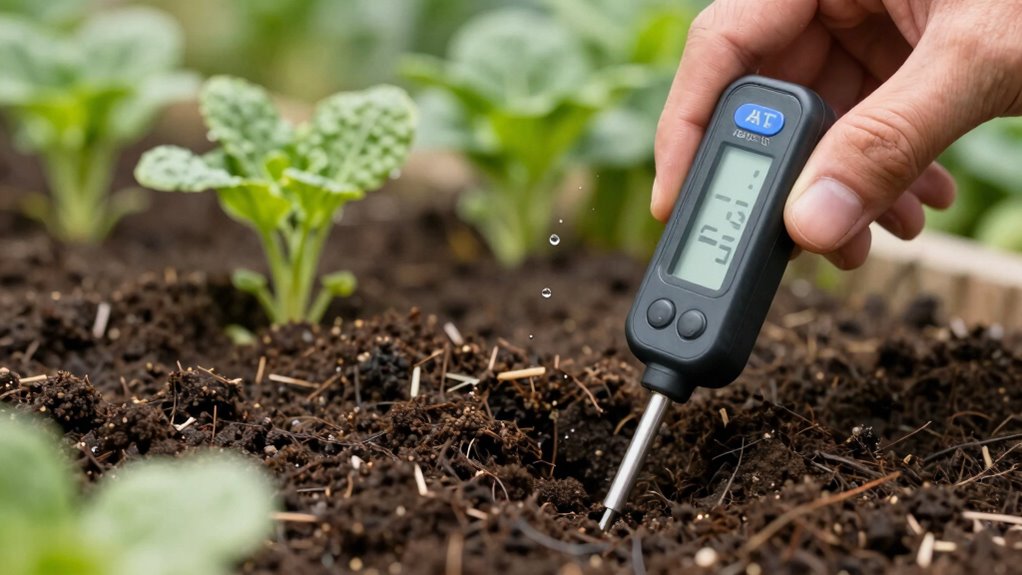
If you’re looking to keep your plants healthy and thriving, understanding when and how much to water is essential. Overwatering or underwatering can quickly compromise plant health, leading to root rot, disease, or stunted growth. That’s where soil moisture meters come in—they’re simple tools that give you a clear picture of your soil’s moisture levels before you reach for the watering can. Using a moisture meter helps you make informed decisions, ensuring your plants receive just the right amount of water and preventing waste. This is especially important when it comes to water conservation, as many gardeners tend to overwater, not realizing how much moisture the soil already holds.
Soil moisture meters help prevent overwatering and underwatering, ensuring healthy plants and water conservation.
A soil moisture meter provides immediate feedback, taking the guesswork out of watering schedules. Instead of relying on visual cues like dry soil surface or wilting leaves, which can be misleading, you can check the actual moisture level just below the surface. This precision helps you avoid unnecessary watering, reducing water runoff and conserving resources. When you know the exact moisture content, you prevent the cycle of overwatering and underwatering, which can stress your plants and impair their ability to absorb nutrients. Over time, this careful approach improves plant health, making your garden more resilient and less susceptible to pests and disease.
Using a soil moisture meter also saves you time and effort. Rather than sticking your finger into the soil repeatedly or guessing based on experience, you get a quick, reliable reading. This is especially useful if you have a variety of plants with different watering needs or if you’re managing a large garden. With the right information at your fingertips, you can customize your watering schedule precisely, giving each plant what it needs without excess. Proper soil moisture management ensures optimal conditions for plant roots, promoting healthy growth and preventing problems caused by improper watering. Additionally, understanding the electric power of tools like soil moisture meters can help you select the most efficient models for your gardening needs. Incorporating landscaping techniques to improve water retention can further optimize your watering routine and conserve resources. Being aware of soil health and how it influences moisture retention can also lead to more sustainable gardening practices. Recognizing the importance of soil composition can help you better tailor your watering strategies to specific soil types.
Overwatering not only wastes water but can wash away crucial nutrients, so a moisture meter helps you maintain ideal soil conditions for healthy root development.
In the end, soil moisture meters are priceless tools for anyone looking to improve plant health and practice water conservation. They empower you to water smarter, not harder, ensuring your plants stay healthy and your water usage stays efficient. By preventing watering mistakes, these meters help you nurture your garden sustainably, making every drop count while keeping your plants vibrant and strong.
As an affiliate, we earn on qualifying purchases.
Frequently Asked Questions
Can Soil Moisture Meters Work With All Soil Types?
Yes, soil moisture meters can work with most soil types, but soil compatibility varies. You might need to adjust calibration techniques for different soils, like sandy or clayey types, to get accurate readings. Some meters are designed to be versatile, while others require manual calibration. Always test and calibrate your device with your specific soil to guarantee precise moisture measurements, helping you avoid over- or underwatering your plants.
How Often Should I Calibrate My Soil Moisture Meter?
Think of calibration as tuning your instrument—keep it singing true. You should calibrate your soil moisture meter at least once a season, or more often if you notice inconsistent readings. Regular maintenance tips, like cleaning the probe and storing it properly, help preserve accuracy. By staying on top of calibration frequency, you guarantee your garden’s watering schedule hits the perfect note, preventing over- or underwatering.
Are Digital or Analog Meters More Accurate?
Digital soil moisture meters generally offer more measurement precision than analog ones, especially when properly calibrated. You should perform sensor calibration regularly to guarantee accuracy. Digital meters often feature advanced calibration settings, reducing errors caused by sensor drift. While analog meters can be reliable, digital options tend to provide more consistent readings, helping you avoid over- or under-watering. Focus on maintaining calibration for both types to keep measurements accurate.
Do Soil Moisture Meters Measure Nutrients Too?
Think of your soil moisture meter as a detective, but it’s only searching for clues about water, not nutrients. It doesn’t measure nutrient detection or analyze soil composition. Its job is to tell you when your plants need water, based solely on moisture levels. If you want nutrient info, you’ll need a different tool. Soil moisture meters are great for watering, but they don’t reveal the full story of your soil’s health.
Can Moisture Meters Be Used for Indoor Plants?
Yes, moisture meters work well for indoor gardening. You can use them to check soil moisture levels, helping you water your plants accurately. This prevents overwatering or underwatering, which can harm plant health. By maintaining proper moisture levels, you support healthy growth and avoid issues like root rot. Moisture meters make caring for indoor plants easier, ensuring your plants stay healthy and vibrant with less guesswork.
As an affiliate, we earn on qualifying purchases.
Conclusion
Using a soil moisture meter can markedly reduce overwatering and underwatering, ensuring your plants thrive. Studies show that gardeners who use moisture meters see a 30% improvement in plant health compared to those who rely on guesswork. With your own meter, you gain precise insights into your soil’s needs, saving water and preventing root rot. Embrace this simple tool, and you’ll enjoy healthier, happier plants with less effort and waste.
As an affiliate, we earn on qualifying purchases.
garden moisture meter with probe
As an affiliate, we earn on qualifying purchases.
As an affiliate, we earn on qualifying purchases.
NFL season / tailgating Picks
team gear
As an affiliate, we earn on qualifying purchases.