Humidity levels directly impact your indoor plants’ health, causing leaves to brown, curl, or develop fungal problems if levels are too low or too high. To keep your plants happy, monitor the moisture with sensors and adjust accordingly—use water trays, mist regularly, or employ humidifiers. Managing microclimates and observing how your plants respond helps prevent stress and promotes growth. If you want to learn how to fine-tune humidity for different varieties, keep exploring the details ahead.
Key Takeaways
- Low humidity causes leaves to brown, curl, or wilt, while excessive moisture can lead to fungal problems.
- Monitoring indoor humidity with sensors helps determine if conditions are too dry or optimal for plants.
- Adjust watering based on humidity levels: increase in dry air, decrease in humid environments.
- Create a humid environment using water trays, misting, or humidifiers to meet specific plant needs.
- Managing microclimates and using humidifiers ensures consistent humidity, promoting healthy, vibrant indoor plants.
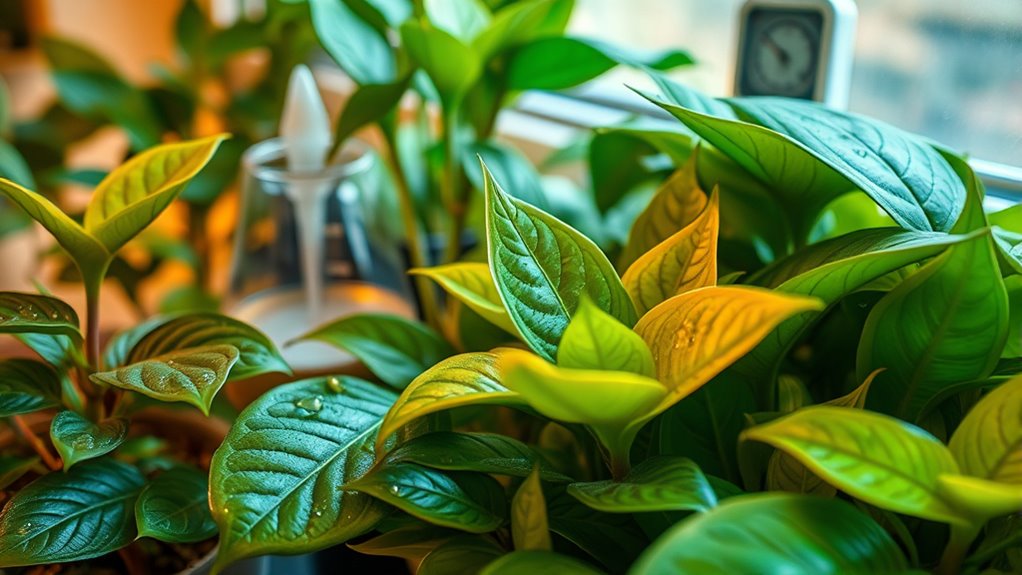
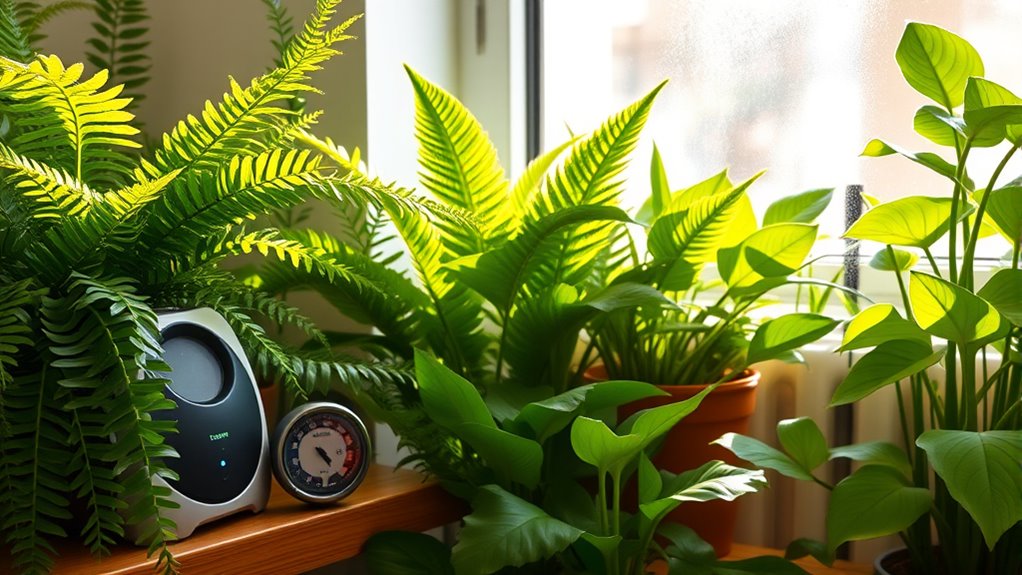
Indoor plants thrive when humidity levels are just right, but maintaining that balance can be tricky in many homes. Too little humidity can cause their leaves to brown or curl, while excessive moisture may lead to fungal issues. To keep your plants healthy, understanding how humidity affects them and how to manage it is key. One of the first steps is monitoring the environment with humidity sensors, which provide real-time data about your home’s moisture levels. These devices help you determine whether your indoor air is too dry or just right, so you can take targeted actions to improve conditions.
Adjusting your watering frequency is one of the most effective ways to influence humidity around your plants. When the air is dry, you might need to water more frequently to compensate for increased evaporation. Conversely, if the air is humid, watering less often prevents overwatering and root rot. It’s important to observe your plants closely — wilting, yellowing leaves, or crisp edges often indicate low humidity, prompting you to increase watering or add moisture to the air. Using humidity sensors can guide you in making these decisions, ensuring you’re not over- or under-watering.
Adjust watering based on humidity levels to keep your plants healthy and prevent issues.
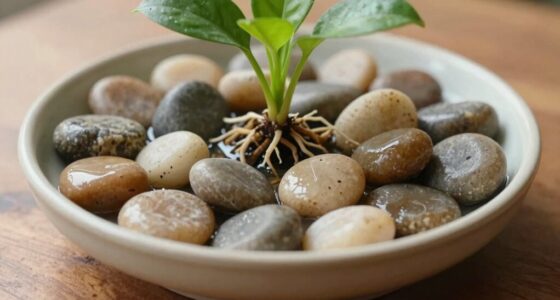
Apart from watering adjustments, you can create a more humid environment by increasing ambient moisture. Placing a tray of water with pebbles underneath your plants allows water to evaporate around them, boosting local humidity levels. Misting your plants regularly is another quick fix, especially for tropical varieties that thrive in humid conditions. However, be cautious not to overdo it, as excessive moisture on leaves can promote fungal diseases. Humidity sensors again become invaluable here—they help you determine whether your misting routine is effective or if you’re creating overly damp conditions. Additionally, understanding the lifestyle factors that influence indoor humidity, like heating and ventilation, can help you better regulate your environment.
In some cases, you might want to think about using a humidifier, particularly in dry climates or during winter months when heating systems sap moisture from the air. Humidifiers can maintain a consistent humidity level tailored to your plants’ needs, reducing the guesswork involved in manual adjustments. Pairing this with humidity sensors ensures you’re not just guessing but actively maintaining the ideal environment. Remember, different plants have different humidity requirements, so understanding these needs and adjusting your environment accordingly will lead to healthier, more vibrant indoor greenery.
Ultimately, maintaining proper humidity isn’t just about watering — it’s about creating a balanced microclimate where your plants can thrive. Using humidity sensors and adjusting your watering frequency based on real data helps you achieve that balance with confidence. By paying close attention to your plants’ signals and environment, you’ll develop a routine that keeps them happy, healthy, and lush year-round.

Antonki 2 Pack Room Thermometer Indoor Hygrometer
- Pack of Two for Monitoring: Includes two hygrometer thermometers
- Wide Temperature Range: -58°F to 158°F (-50°C to 70°C)
- High Humidity Range: 10% to 99% RH
As an affiliate, we earn on qualifying purchases.
As an affiliate, we earn on qualifying purchases.
Frequently Asked Questions
Can Humidity Levels Cause Indoor Plant Pests?
Yes, humidity levels can cause indoor plant pests. High humidity promotes humidity-related plant stress, which weakens your plants’ defenses and makes them more susceptible to pests like spider mites and aphids. To prevent plant pests, maintain ideal humidity and avoid excess moisture. Proper humidity management is key to plant pest prevention, ensuring your indoor plants stay healthy and pest-free by reducing stress and discouraging pests from settling in.
How Does Humidity Impact Different Types of Indoor Plants?
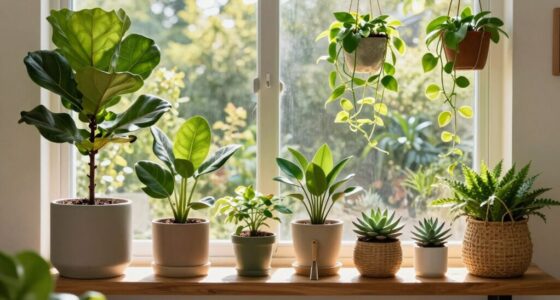
Humidity levels directly influence your indoor plants’ health by matching their specific humidity preferences. High humidity helps tropical plants stay hydrated, preventing browning and leaf drop, while low humidity suits succulents that prefer dry conditions. You need to observe plant hydration closely and adjust humidity accordingly, using humidifiers or dehumidifiers if necessary. Proper humidity ensures your plants thrive, maintaining vibrant foliage and overall well-being.
What Are the Signs of Too Low Humidity in Plants?
Signs of too low humidity show in your plants through leaf wilting and dull, dry edges. You might notice soil moisture decreasing rapidly, leaving roots parched and paralyzed. Leaves may curl, crack, or become crispy, indicating dehydration. If your plants seem to sag or sagging stems, it’s a clear call to boost humidity. Keep an eye out for these symptoms to help your plants thrive and stay healthy.
Are There Natural Ways to Increase Indoor Humidity?
Yes, you can naturally increase indoor humidity using humidifiers like bowls of water or pebble trays to boost moisture. Placing plants close together creates a microenvironment with higher humidity. You can also group plants, use natural humidifiers like terrariums, or regularly mist your plants. These humidity regulation techniques help maintain ideal moisture levels, supporting your plants’ health without relying on artificial devices.
How Often Should I Measure Indoor Humidity for Plants?
You should measure indoor humidity at least once a week, or more if you notice your plants are struggling. Rely on humidity sensors to keep track accurately, instead of guessing or relying on watering frequency alone. Ironically, checking too often can be overkill, but neglecting it might leave your plants thirsty or too damp. Find a balance, and adjust your watering schedule based on those humidity readings for happy, healthy plants.
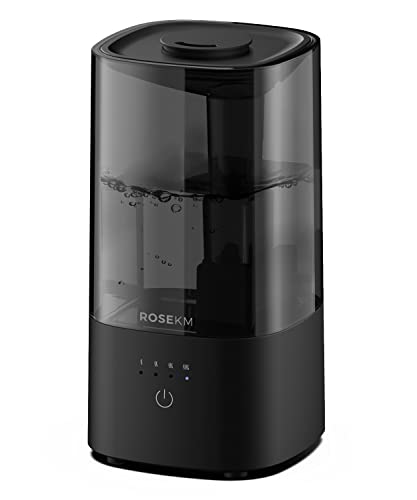
ROSEKM Humidifiers for Bedroom, 2.0L Cool Mist Humidifier for Home Plant and Baby Nursery, Quiet Ultrasonic Humidifier with 360° Nozzle, Auto Shut-Off, Filterless, Black
- Continuous Mist for All-Night Relief: 2.0L capacity, up to 24 hours of mist
- Quiet Operation for Sleep: Less than 26 decibels, no disturbing lights
- Compact and Space-Saving Design: Measures 5.1 inches, fits on nightstands
As an affiliate, we earn on qualifying purchases.
As an affiliate, we earn on qualifying purchases.
Conclusion
By understanding how humidity influences your indoor plants, you hold the key to their thriving health. Adjusting moisture levels isn’t just a simple task — it’s a dance between environment and life, a delicate balance you control. When you master this rhythm, your plants flourish as if in harmony with nature itself. Remember, a little humidity goes a long way; it’s the silent symphony that turns your home into a lush sanctuary.

Pinkunn 2 Pcs Bonsai Humidity Tray for Indoor Plants,7.8 X 5.5 Inch
- Package Includes: 2 bonsai humidity trays
- Large Compatibility: Fits most pots up to 7.8 x 5.5 inches
- Moisture Control: Maintains humidity for plants
As an affiliate, we earn on qualifying purchases.
As an affiliate, we earn on qualifying purchases.

Spray Bottle for Plants 2 Pack, 16oz – Ultra Fine Mist, Plant Mister Indoor
- Super Fine Mist: Delivers an even, gentle spray
- Ergonomic Plant Mister: Lightweight, easy to maneuver
- Premium Eco-Friendly Material: BPA-free, durable PET and PP
As an affiliate, we earn on qualifying purchases.
As an affiliate, we earn on qualifying purchases.