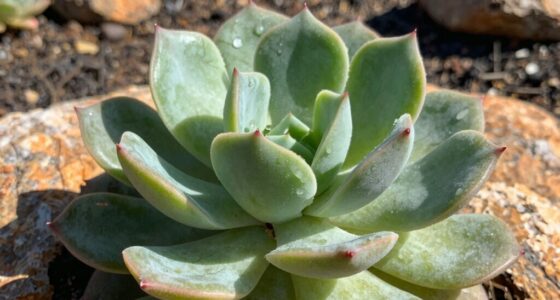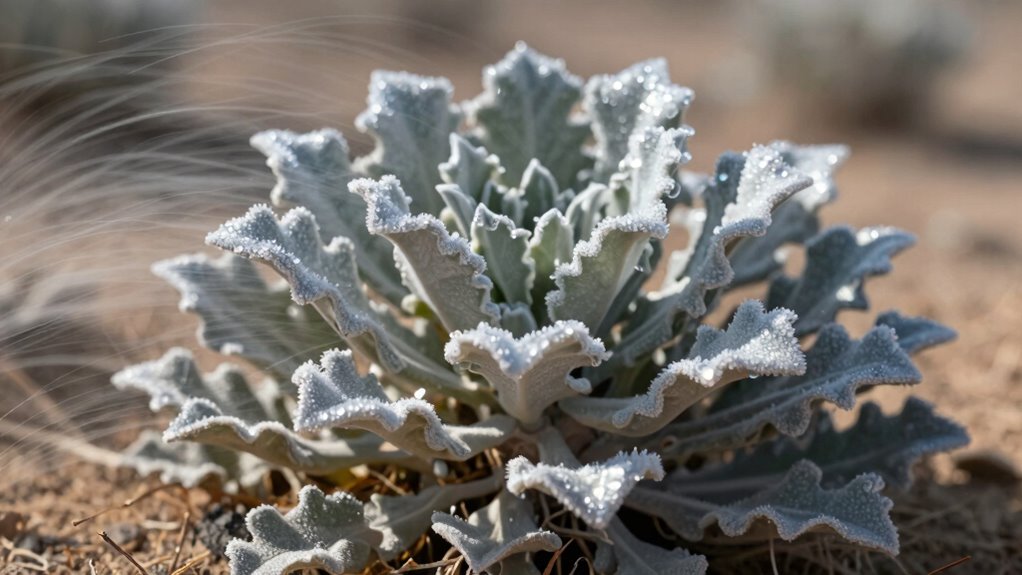

You can think of plant waxes as natural shields that help them survive harsh conditions like heat, wind, and drought. These waxes form a shiny, water-repellent coating on leaves, stems, and fruits, sealing tiny pores called stomata to prevent water loss. They also create a tough barrier against environmental damage from sun, dry air, and strong winds. To learn how nature’s chemistry enhances plant survival, keep exploring these fascinating adaptations.

Get the little things that make your day delivered free — and shop member deals
- Fast, free delivery on millions of items
- Access to Prime Big Deal Days deals on October 6–7
- Prime Video, Amazon Music and more included
Key Takeaways
- Waxy layers form a water-repellent barrier that reduces water loss during drought and heat stress.
- They seal stomata to regulate gas exchange and prevent excessive transpiration.
- The hydrophobic wax prevents water droplets from evaporating, conserving moisture.
- Thicker, more flexible waxes adapt to environmental conditions, offering enhanced protection.
- Evolved wax compositions provide resilience against wind damage and pathogen entry.
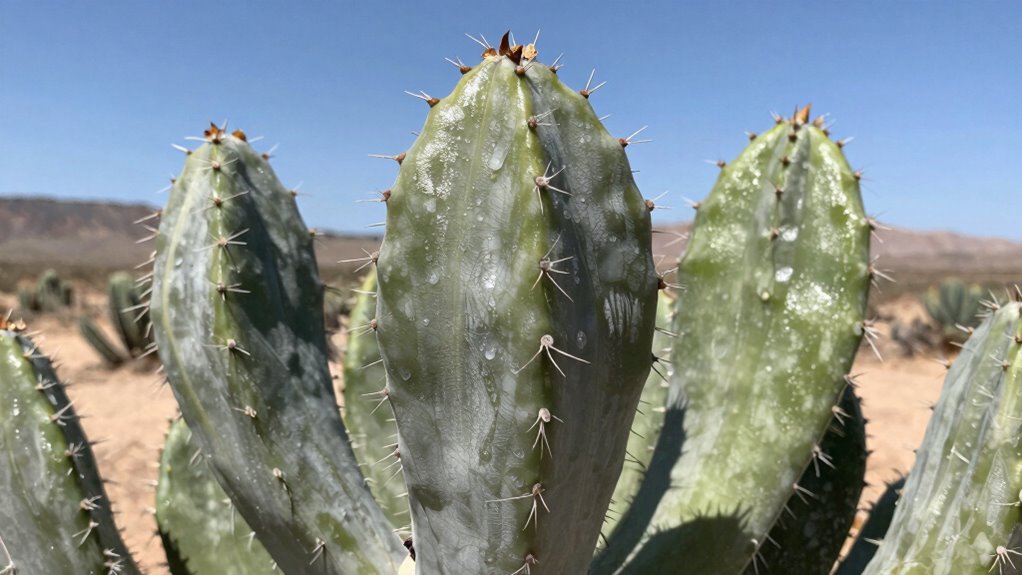
Plants have developed a remarkable defense mechanism to withstand harsh environmental conditions: a waxy coating on their surfaces. This wax layer plays a critical role in plant adaptation, especially when facing extreme heat, relentless wind, or persistent drought. When you look closely at the surface of leaves, stems, or fruits, you’ll notice this thin, shiny film—it’s not just for looks. Its primary purpose is to prevent water loss and shield the plant from damage caused by environmental stressors. The wax composition is made up of complex mixtures of lipids, primarily long-chain hydrocarbons, fatty acids, alcohols, and esters. These components are carefully arranged to create an effective barrier that is both water-repellent and resilient.
As temperatures rise and the sun beats down, the wax coating becomes even more indispensable. It minimizes transpirational water loss by sealing tiny pores called stomata, which regulate gas exchange. Without this wax, plants would lose water rapidly and struggle to survive in hot, arid conditions. When wind blows, it can increase evaporation and strip away moisture from plant surfaces, but the wax layer acts as a shield, reducing this effect. Its hydrophobic nature prevents water droplets from sticking and evaporating, helping conserve the plant’s internal moisture. The wax’s composition can vary depending on the plant species and the environmental stresses it regularly faces. Some plants produce a thicker, more durable wax to withstand extreme droughts, while others may have a more flexible, less intense coating to adapt to milder conditions. Additionally, the wax can also serve as a barrier against pathogens and pests, providing a further layer of protection. Plants with a well-developed wax layer often exhibit enhanced resilience in drought-prone areas, making this adaptation vital for survival.
In drought-prone environments, plants with a well-developed waxy coating tend to thrive better. The wax acts like a natural water-proofing armor, trapping moisture inside and preventing dehydration. This adaptation is not accidental but a result of millions of years of evolution, where plants with more effective wax layers had a better chance of survival. The structure of the wax allows it to form a continuous film, which is essential during prolonged dry spells. Additionally, the wax composition can change in response to environmental cues, becoming thicker or altering its chemical makeup to enhance protection. Overall, this plant adaptation is a remarkable example of nature’s ingenuity—using the chemistry of waxes to guarantee survival against the challenges posed by heat, wind, and drought.
As an affiliate, we earn on qualifying purchases.
Frequently Asked Questions
Can Plant Waxes Be Applied Externally to Enhance Drought Resistance?
Yes, external application of waxes can enhance drought resistance in plants. By applying a wax enhancement externally, you create a protective barrier that reduces water loss through evaporation and shields against harsh environmental conditions. This method helps plants conserve moisture, especially during droughts, and can be an effective way to boost their resilience without altering their natural physiology. Just guarantee the wax application is appropriate for the specific plant species.
Do All Plant Species Produce the Same Types of Waxes?
Not all plant species produce the same types of waxes. You’ll find a remarkable diversity in plant waxes, shaped by different wax biosynthesis pathways unique to each species. This wax diversity helps plants adapt to their environments. Some produce cuticular waxes for water retention, while others generate specialized waxes for protection against wind or pests. Understanding these variations can help you appreciate how plants survive in diverse conditions.
How Do Plant Waxes Affect Water Absorption and Retention?
Plant waxes create a water barrier, a surface protection that helps prevent water loss. They reduce evaporation by sealing in moisture, allowing plants to absorb and retain water more effectively. This waxy layer acts like a shield, guarding against drought and wind. By forming this protective barrier, waxes guarantee your plants stay hydrated, stay healthy, and resist environmental stresses, maintaining their vitality even under harsh conditions.
Are Plant Waxes Affected by Environmental Pollution?
Pollution impact can harm plant waxes, leading to wax degradation. Pollutants like ozone, sulfur dioxide, and heavy metals can break down the wax layer, making plants more vulnerable to environmental stresses. When wax degradation occurs, the plant’s ability to retain water and protect against heat and wind diminishes. As a result, pollution directly affects the protective function of plant waxes, increasing their susceptibility to damage and dehydration.
Can Plant Waxes Be Harvested for Commercial Use?
You can harvest plant waxes for commercial use, with global plant wax extraction valued at over $1 billion annually. These waxes serve multiple commercial applications, including cosmetics, food coatings, and candles. To do this, farmers and manufacturers extract waxes from plants like jojoba and carnauba, turning natural resources into valuable products. This process helps meet demand for eco-friendly, sustainable ingredients in various industries.
As an affiliate, we earn on qualifying purchases.
Conclusion
By understanding how plants use waxes to fight off heat, wind, and drought, you realize they’re like tiny superheroes, armed with an impenetrable shield. Their waxy coatings are so powerful, they could probably withstand a hurricane, scorching heat, and a desert all at once! It’s almost like nature’s secret weapon, turning plants into unstoppable warriors. So next time you see a plant thriving in harsh conditions, remember—those waxes are their ultimate survival superpower!
drought-resistant plant treatments
As an affiliate, we earn on qualifying purchases.
As an affiliate, we earn on qualifying purchases.
As an affiliate, we earn on qualifying purchases.
NFL season / tailgating Picks
team gear
As an affiliate, we earn on qualifying purchases.