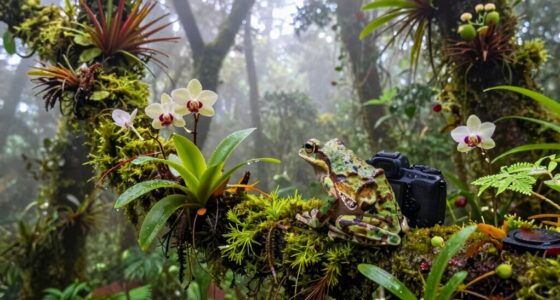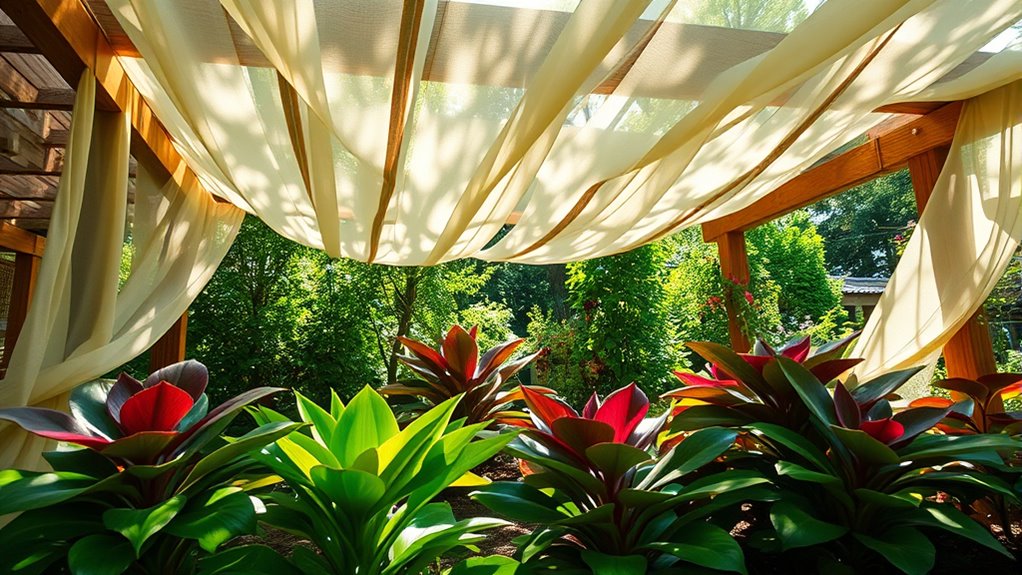

To protect rare understory plants during bright summer conditions, create dappled shade using shade cloths with appropriate density or position plants near deciduous trees for natural protection. Maintain consistent soil moisture with organic mulches and monitor levels carefully. Strategically place plants to receive morning sun and afternoon shade, reducing heat stress and maximizing diffuse light. By combining these techniques, you’ll develop a microclimate that supports healthy growth—more tips for creating the perfect shaded environment await.

Get the little things that make your day delivered free with Prime
- Fast, free delivery on millions of items
- Prime Video, Amazon Music and more included
- Member-only deals all year
Key Takeaways
- Use shade cloths with appropriate density to provide dappled, diffuse light similar to natural understory conditions.
- Position plants beneath deciduous trees to benefit from natural shade and temperature moderation.
- Incorporate organic mulches to retain soil moisture and reduce soil temperature fluctuations.
- Create microclimates by situating plants where they receive morning sun and afternoon shade.
- Adjust watering frequency to maintain consistent soil moisture, preventing stress from bright, dry summer conditions.
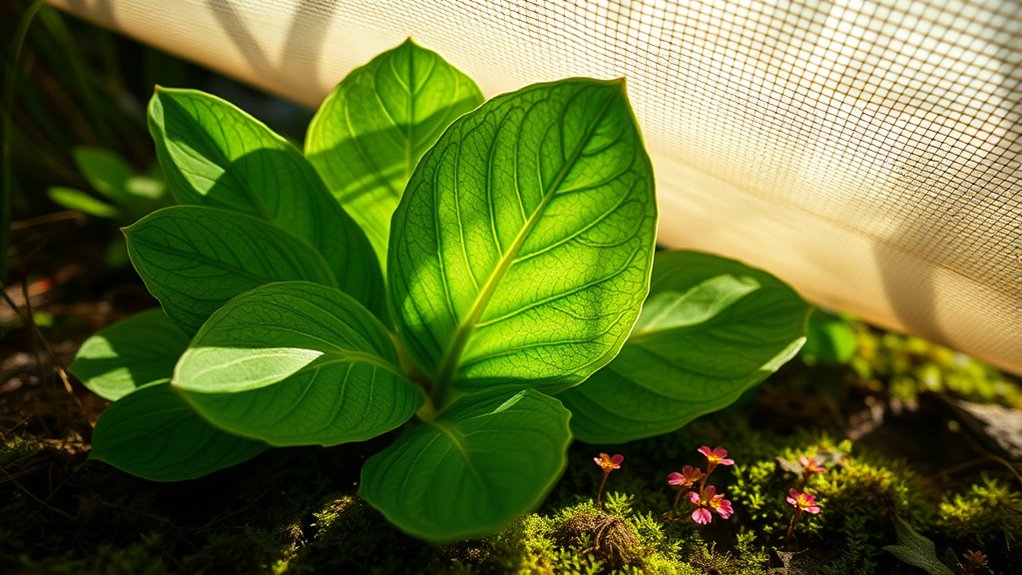
Many rare understory plants thrive in shaded environments where sunlight is limited, making it essential to provide the right conditions for their growth. In bright summer conditions, this can be challenging, but understanding how to optimize their environment can make all the difference. One key factor is ensuring their photosynthesis efficiency remains high despite reduced light levels. These plants have adapted to absorb diffuse light efficiently, so providing dappled shade or using shade cloths with the right density can help mimic their natural habitat. It’s important to strike a balance: too much shade, and photosynthesis slows considerably; too little, and the leaves may suffer from excess heat and light stress.
Providing dappled shade helps rare understory plants maintain high photosynthesis efficiency in bright summer conditions.
Soil moisture management becomes equally necessary when growing these plants in summer’s bright conditions. High temperatures and intense sunlight can quickly dry out soil, depriving roots of the moisture they need to sustain healthy growth. You should regularly monitor soil moisture levels, aiming for consistent, even moisture without waterlogging. Mulching around the base of the plants helps retain soil moisture, reducing evaporation and keeping roots cool. Organic mulches like bark or leaf litter are excellent choices because they also improve soil structure over time.
Creating a microclimate that protects your understory plants involves more than just shade and watering. You might consider planting them near larger, deciduous trees that provide natural dappled shade during the hottest parts of the day. This setup not only shields the plants from direct sunlight but also moderates temperature fluctuations. Additionally, positioning plants in areas with morning sun and afternoon shade allows them to benefit from some sunlight for photosynthesis while avoiding the peak heat that can cause stress.
Watering practices should be strategic; deep, infrequent watering encourages strong root systems that can better withstand dry spells and temperature swings. During peak summer heat, you may need to water more often, especially if the weather is dry and windy. Remember, consistent soil moisture is indispensable for maintaining ideal photosynthesis efficiency, so avoid letting the soil dry out completely between watering sessions. Using a moisture meter can help you keep track of soil conditions and prevent over- or under-watering.
As an affiliate, we earn on qualifying purchases.
Frequently Asked Questions
How Do I Identify the Specific Shade Needs of My Rare Understory Plants?
To identify your rare understory plants‘ specific shade needs, start with a microclimate assessment of your garden. Observe how much sunlight reaches each area throughout the day. Then, perform shade tolerance testing by gradually introducing shade covers or filters and noting plant responses. This hands-on approach helps you determine ideal light levels, ensuring your plants thrive without excessive sun exposure or shade.
Can Artificial Shade Fabrics Harm Native Soil and Plant Ecosystems?
Like Pandora’s box, artificial shade fabrics can pose risks, but only if you’re careless. If made from non-toxic, eco-friendly materials, they generally won’t cause soil contamination or ecosystem disruption. However, poorly made fabrics may leach chemicals, harming native soil and plants. Always choose high-quality, breathable fabrics, and monitor their impact, ensuring your efforts support, rather than harm, the delicate balance of your native ecosystem.
What Are Cost-Effective DIY Options for Creating Shade in My Garden?
You want to explore DIY shade and cost-effective solutions for your garden. Start with affordable options like shade cloths, which you can drape over supports or existing structures. Using repurposed materials, like old curtains or pallets, also creates effective shade. These DIY solutions are budget-friendly, easy to customize, and protect your plants from harsh sunlight without harming your ecosystem. Plus, they offer flexibility to adapt as your garden grows.
How Does Seasonal Sun Movement Affect Shade Planning for Understory Plants?
Understanding seasonal sun paths helps you plan effective shade for your understory plants. As the sun moves, shade needs to rotate to protect your plants from intense summer rays. By observing how sunlight shifts throughout the year, you can adjust your shade solutions accordingly. This proactive approach ensures your plants stay healthy, preventing sun damage and maintaining ideal growth conditions during different seasons.
Are There Any Legal Restrictions on Installing Permanent Shade Structures in Natural Habitats?
You should know that legal regulations often govern installing permanent shade structures, especially in natural habitats. These laws aim to protect delicate ecosystems and guarantee habitat preservation. Before proceeding, check with local authorities or environmental agencies, as unauthorized installations could violate habitat protection laws. Staying informed helps you avoid legal issues and supports conservation efforts, ensuring your shade solutions are both effective and compliant with environmental regulations.
As an affiliate, we earn on qualifying purchases.
Conclusion
By providing the perfect shade, you turn your garden into a lush, secret paradise, shielding rare understory plants from the blazing summer sun. Think of your efforts as a gentle fortress, protecting delicate leaves from fiery rays that could turn them to ash in an instant. With your care, these shy, hidden gems will thrive like emerald treasures buried in a cool, shady sanctuary—an oasis so vibrant, even the sun itself envies your shady haven.
As an affiliate, we earn on qualifying purchases.
As an affiliate, we earn on qualifying purchases.
Columbus Day / Indigenous Peoples' Day Picks
long weekend sales
As an affiliate, we earn on qualifying purchases.