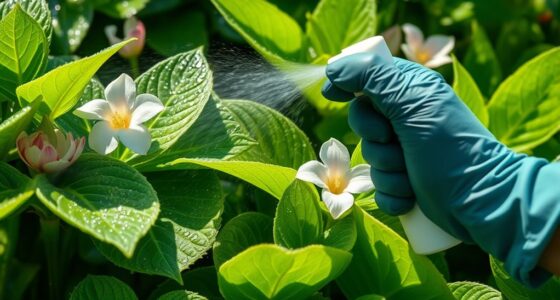
The decline of ancient Boswellia trees threatens the future of frankincense and the communities that depend on it. Overharvesting, climate change, and environmental damage weaken and kill these trees, making regeneration difficult. Unsustainable practices and droughts increase their vulnerability, risking local extinctions. If current trends continue, both ecological and cultural traditions could be lost. Understanding the full scope of these threats can help you see why protecting these trees matters so much.
Key Takeaways
- Unsustainable harvesting damages tree health, leading to scars, reduced resin production, and eventual decline or extinction of Boswellia populations.
- Climate change causes droughts and temperature stress, weakening trees and lowering resin yield.
- Lack of regulation and illegal harvesting practices exacerbate tree damage and population decline.
- Declining Boswellia trees threaten frankincense supply, impacting local economies and cultural traditions.
- Environmental and human pressures jeopardize the long-term survival of ancient Boswellia forests.
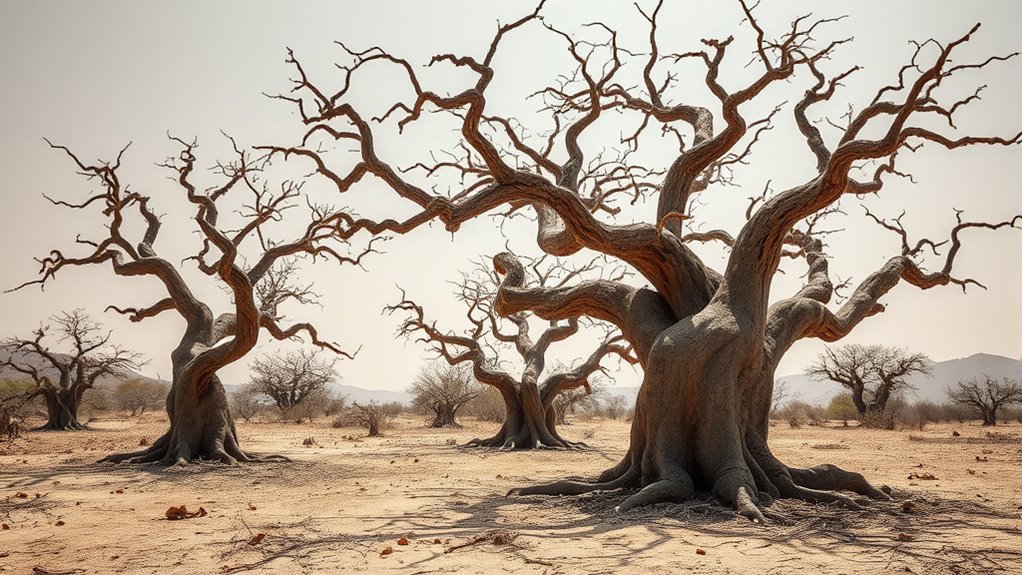
Have you ever wondered what’s endangering the Boswellia trees, the source of fragrant frankincense? These ancient trees, valued for their aromatic resin, are increasingly under threat from a combination of human activity and climate impact. One of the main concerns is unsustainable harvesting practices. When collectors cut into the trees without regard for their health, it weakens the trees and hampers their ability to produce resin naturally. Overharvesting, especially when done without proper techniques, can lead to scars that don’t heal, making the trees more vulnerable to disease and environmental stress. This cycle of damage diminishes their capacity to regenerate, pushing many populations toward decline or even local extinction. Additionally, the lack of proper monitoring and regulation exacerbates illegal and destructive harvesting methods.
Sustainable harvesting is essential if we want to preserve these critical trees. Responsible methods involve tapping the trees carefully, allowing enough time between collections for healing and regrowth. When practiced properly, sustainable harvesting balances human needs with the health of the forests, ensuring that frankincense remains available for future generations. However, such practices are not yet widespread, and many harvesters still prioritize immediate gains over long-term sustainability. This negligence accelerates the decline of Boswellia populations, especially in regions where economic pressures push communities to harvest as much resin as possible.
Adding to the problem is climate impact, which exacerbates the stress on Boswellia trees. Rising temperatures, unpredictable rainfall, and prolonged droughts weaken the trees’ resilience. These climate changes can lead to reduced resin production and increase their susceptibility to pests and diseases. In some areas, the changing climate has caused soil degradation and water shortages, making it even harder for the trees to survive. As their environment becomes less hospitable, the trees struggle to thrive, and their populations diminish further. Climate impact not only directly harms the trees but also affects the communities that depend on frankincense, threatening their livelihoods and cultural traditions.

Carno Calm Frankincense Essential Oil | USDA Certified Organic Frankincense Oil | Woody and Earthy Aroma |1.7 fl. Oz
100% Pure & Natural Frankincense Oil – Carno Calm frankincense essential oil organic is USDA Certified and steam-distilled,…
As an affiliate, we earn on qualifying purchases.
As an affiliate, we earn on qualifying purchases.
Frequently Asked Questions
How Can Consumers Support Sustainable Frankincense Harvesting?
To support sustainable frankincense harvesting, you should prioritize products with ethical sourcing labels. By choosing these, you help guarantee that harvesters follow sustainable practices that protect Boswellia trees. Increase your consumer awareness by researching brands committed to environmental conservation and fair trade. Your choices can promote responsible harvesting, reduce overexploitation, and contribute to the preservation of these ancient trees for future generations.
Are There Efforts to Cultivate Boswellia Trees Commercially?
Did you know that some cultivation initiatives have successfully grown Boswellia trees commercially? These programs aim to lessen pressure on wild populations and guarantee sustainability. You can support conservation efforts by choosing products from brands involved in such initiatives. Many organizations are working on conservation programs that promote responsible harvesting and tree cultivation, making it easier for you to enjoy frankincense while helping preserve these ancient trees for future generations.
What Are Alternative Sources of Frankincense Besides Boswellia Trees?
You can find alternative sources of frankincense through synthetic substitutes and plant-based resins. These options mimic the aroma and properties of natural frankincense, offering a sustainable alternative to Boswellia trees. By choosing products made from synthetic or plant-based resins, you help reduce pressure on endangered trees and support environmentally friendly practices. This way, you can enjoy frankincense’s benefits without contributing to the decline of ancient Boswellia populations.
How Does Climate Change Specifically Impact Boswellia Populations?
Climate change impacts boswellia populations by increasing drought frequency and severity, making it harder for these trees to survive. You’ll see reduced drought resilience, leading to weakened trees and lower frankincense yields. To support these trees, climate adaptation strategies like water conservation and habitat restoration are essential. By helping boswellia adapt, you can guarantee their drought resilience improves, ensuring the survival of these valuable trees for future generations.
Can Genetic Research Help Preserve Boswellia Species?
Imagine discovering a rare Boswellia tree with unique genetic traits that could save its species. Genetic research can indeed help preserve Boswellia by identifying genetic diversity essential for resilience. It enables conservation strategies like selective breeding and habitat protection. By understanding its genetic makeup, you can develop targeted efforts to boost populations and guarantee the long-term survival of these crucial trees, safeguarding their ecological and cultural importance.

Organic Frankincense Resin (Boswellia Carterii), 4 oz – USDA Certified Chruch Incense, Premium Grade, 100% Pure & Wild-Harvested Luban Frankincense for Aromatherapy, Meditation & Air Purification
USDA Certified Organic & 100% Pure: Enjoy certified organic Boswellia Carterii resin—free from additives, chemicals, and fillers—for a…
As an affiliate, we earn on qualifying purchases.
As an affiliate, we earn on qualifying purchases.
Conclusion
Imagine the Boswellia trees as ancient guardians of tradition, their branches reaching out like wise old hands shielding centuries of culture. But now, these guardians are fading, their strength waning under modern threats. If you don’t act to safeguard them, their silent withdrawal will leave a void, like a book missing its final pages. You hold the power to turn the tide—preserve these sacred trees, and ensure their story continues for generations to come.

New Fresh 25pcs Boswellia Serrata Tree Seeds Generic
✅ ABOUT PRODUCT- This package contains , SEEDS ONLY, no live plants.The photos show are the mature plant…
As an affiliate, we earn on qualifying purchases.
As an affiliate, we earn on qualifying purchases.
Carno Calm Frankincense Essential Oil | USDA Certified Organic Frankincense Oil | Woody and Earthy Aroma |1.7 fl. Oz
100% Pure & Natural Frankincense Oil – Carno Calm frankincense essential oil organic is USDA Certified and steam-distilled,…
As an affiliate, we earn on qualifying purchases.
As an affiliate, we earn on qualifying purchases.