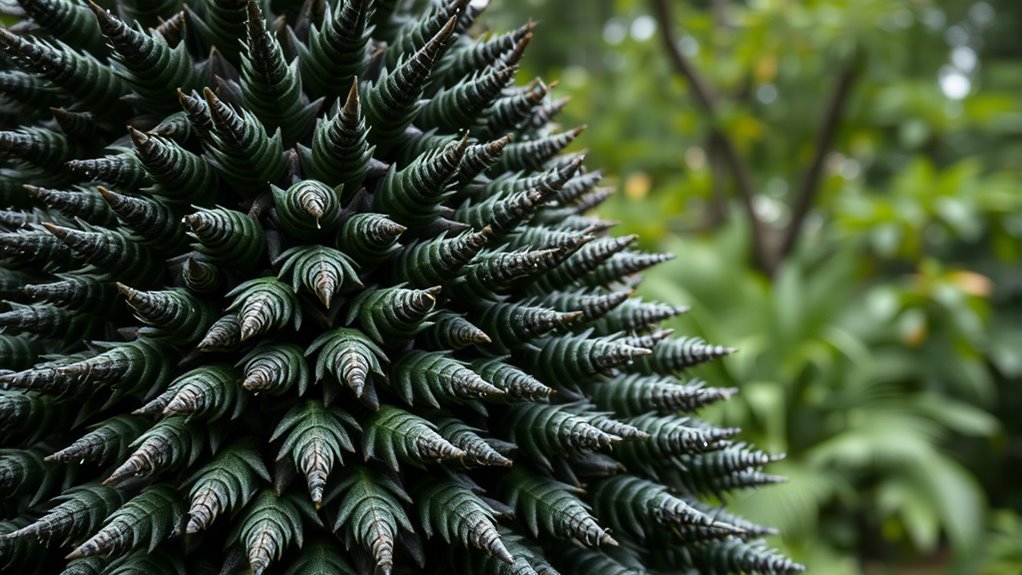

The Monkey Puzzle Tree, once critically endangered due to overharvesting and habitat loss in southern Chile and Argentina, has staged a impressive recovery thanks to global cultivation efforts. Its striking, spiky appearance and resilience allowed it to survive in botanical gardens and private collections worldwide. Conservation initiatives, seed banks, and public awareness helped protect wild populations, showing how human action can reverse extinction threats. Continue exploring to discover how this iconic tree’s comeback inspires conservation worldwide.

Get the little things that make your day delivered free — and shop member deals
- Fast, free delivery on millions of items
- Access to Prime Big Deal Days deals on October 6–7
- Prime Video, Amazon Music and more included
Key Takeaways
- Conservation efforts, including seed banks and botanical gardens, have protected and increased the Monkey Puzzle Tree’s genetic diversity.
- Its resilience and adaptability allowed it to thrive in cultivated settings worldwide, aiding its recovery.
- Public awareness and scientific research promoted conservation initiatives and responsible planting practices.
- Botanical cultivation in parks and private collections helped sustain the species beyond its native habitat.
- The tree’s striking appearance and cultural significance have motivated ongoing efforts to preserve and restore its wild populations.

The Monkey Puzzle Tree, also known as Araucaria araucana, is a striking evergreen that captures your attention with its unique, spiky appearance. Its symmetrical branches stretch out in a distinctive pattern, giving it an almost sculptural presence. You might be surprised to learn that this tree once faced the threat of extinction, yet it’s making a remarkable comeback. Its resilience reflects a story of survival, adaptation, and renewed appreciation.
Originally native to the mountains of southern Chile and Argentina, the Monkey Puzzle Tree’s survival was challenged by overharvesting and habitat loss. Early explorers and settlers prized its durable timber and striking look, which led to extensive logging. As a result, its numbers plummeted in the wild, and it was considered critically endangered by conservationists. Despite this, the tree’s impressive adaptability allowed it to persist in botanical gardens, arboretums, and private collections around the world. Your interest in planting or conserving these trees can help guarantee their future.
Native to Chile and Argentina, the Monkey Puzzle Tree faced near extinction but survives thanks to botanical cultivation and conservation efforts.
Today, conservation efforts have shifted toward protecting wild populations and promoting cultivation. You might notice that many of these trees now thrive in parks and botanical collections, serving as living symbols of resilience. They’re also increasingly popular as ornamental trees in residential landscapes because of their unique form and evergreen foliage. Their ability to withstand cold temperatures and poor soils makes them a practical choice for many gardeners. By planting a Monkey Puzzle Tree, you contribute to its conservation, helping to restore its natural habitat and guarantee it remains part of the landscape for generations.
The comeback of the Monkey Puzzle Tree is also a story of public awareness and scientific research. Conservationists, horticulturists, and local communities have collaborated to protect remaining wild populations. Seed banks and botanical gardens play an essential role in maintaining genetic diversity, which is critical for the species’ long-term survival. Your support—whether through donations, spreading awareness, or planting these trees—can make a difference. The tree’s striking appearance and historical significance make it more than just a botanical curiosity; it’s a symbol of the importance of safeguarding our natural heritage.
In embracing the Monkey Puzzle Tree’s story, you see how resilience and human effort can turn the tide against extinction. Its unique form continues to fascinate and inspire, reminding you of nature’s ability to recover when given a chance. This tree’s comeback demonstrates that even in the face of dire threats, hope and action can help preserve remarkable species. You have the power to be part of that ongoing story, guaranteeing the Monkey Puzzle Tree’s legacy endures.
As an affiliate, we earn on qualifying purchases.
Frequently Asked Questions
Are Monkey Puzzle Trees Toxic to Pets?
Yes, monkey puzzle trees are toxic to pets. You should keep your cats and dogs away from the needles, seeds, and bark, as ingestion can cause vomiting, diarrhea, or more serious issues. If your pet shows symptoms after contact, take them to the vet immediately. It’s best to plant the tree where pets can’t reach it and monitor their interactions with unfamiliar plants to guarantee their safety.
Can Monkey Puzzle Trees Be Grown Indoors?
Did you know that monkey puzzle trees can grow up to 50 feet outdoors? While it’s technically possible to grow one indoors, it’s not practical. You’d need a massive space with high ceilings and lots of sunlight. Plus, their spiky branches can be hazardous in tight indoor spaces. So, if you want a monkey puzzle, consider planting it outside where it can thrive and grow to its full, majestic height.
How Long Does It Take for a Seed to Grow?
Seeds of monkey puzzle trees typically take about 2 to 3 months to germinate, but it can vary depending on conditions. You should keep the soil moist and warm, around 70-75°F (21-24°C), to encourage sprouting. Be patient, as some seeds may take longer. Once they sprout, provide plenty of sunlight and proper watering to help your tree grow strong and healthy over the coming years.
Do Monkey Puzzle Trees Attract Specific Wildlife?
Yes, monkey puzzle trees attract specific wildlife. You’ll notice birds like woodpeckers and parrots feeding on their seeds and using the dense branches for nesting. The tree’s cones provide food for various mammals and birds, while its thick, spiky leaves offer shelter. By planting or observing these trees, you support local ecosystems and help preserve the unique wildlife that depends on them.
What Are the Best Soil Conditions for These Trees?
You should plant monkey puzzle trees in well-draining, slightly acidic to neutral soil with good organic matter. They thrive in loamy soil that retains moisture but doesn’t stay waterlogged. Make certain the soil is rich in nutrients and avoid heavy clay or sandy soils that lack proper drainage. Regularly mulch around the base to help retain moisture and provide stability, encouraging healthy growth and resilience against environmental stresses.
Araucaria araucana ornamental tree
As an affiliate, we earn on qualifying purchases.
As an affiliate, we earn on qualifying purchases.
Conclusion
You might think that a spiky tree like the Monkey Puzzle was doomed, but nature’s resilience surprises us. Some believe its unique adaptations helped it survive past extinction threats, acting like a living fossil. While not entirely proven, this theory sparks curiosity about how nature’s oddities can endure against all odds. So next time you see one, remember it’s more than just a quirky tree — it’s a testament to nature’s unpredictable ability to bounce back.
As an affiliate, we earn on qualifying purchases.
As an affiliate, we earn on qualifying purchases.
NFL season / tailgating Picks
team gear
As an affiliate, we earn on qualifying purchases.