
Seed banks play a vital role in safeguarding plant genetic diversity by storing a wide variety of seeds, including indigenous and rare species. They act as insurance against climate change, habitat loss, and pests, ensuring you can restore or cultivate plants as needed. By preserving different genetic traits, seed banks help protect ecosystems and support future food security. Keep exploring to discover how these efforts shape the future of plant conservation and sustainability.
Key Takeaways
- Seed banks preserve diverse genetic material, ensuring plant species can adapt to changing environmental conditions.
- They serve as critical repositories for rare, native, and indigenous seed varieties with unique traits.
- Long-term storage methods like cryopreservation help maintain seed viability for future reintroduction efforts.
- By safeguarding genetic diversity, seed banks support resilient ecosystems and sustainable agricultural practices.
- They enable the recovery of plant species affected by habitat loss, climate change, and pests, ensuring future food and ecological security.
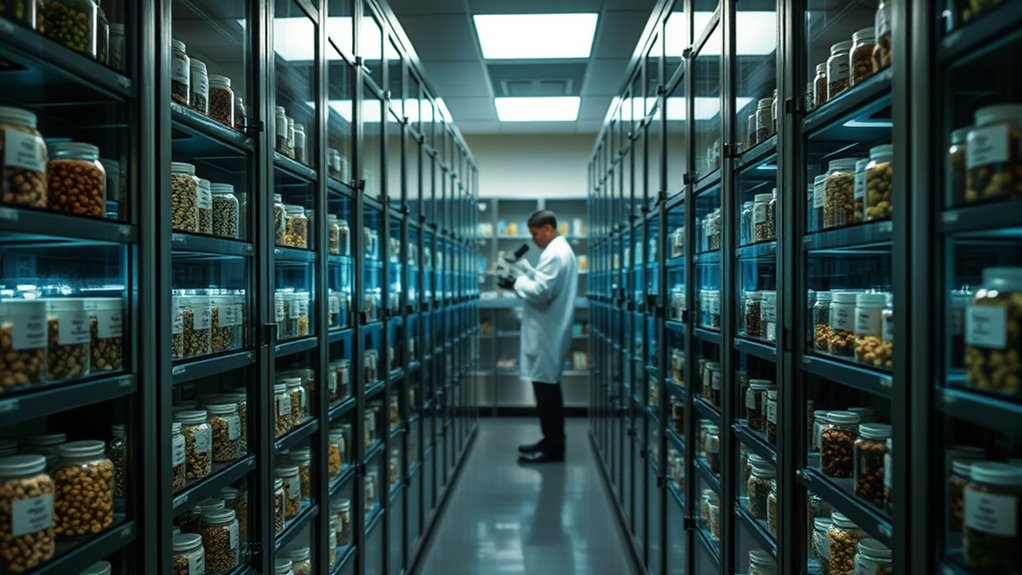
Seed banks play a essential role in preserving genetic diversity by storing a wide variety of plant seeds for future use. This is especially important as climate change, habitat loss, and pests threaten many plant species worldwide. By maintaining extensive collections, seed banks act as insurance policies, guaranteeing that rare and endangered plants can be reintroduced and cultivated when needed. One of the key methods used to conserve seeds long-term is cryopreservation techniques. These advanced methods involve cooling seeds to ultra-low temperatures, effectively putting them into suspended animation. Cryopreservation minimizes metabolic activity, allowing seeds to be stored for decades without losing viability. This technique is particularly valuable for conserving seeds that are difficult to store through conventional methods, such as certain indigenous seed varieties that have unique genetic traits. Indigenous seed varieties often carry valuable adaptations to local environments, resistance to pests, and flavors, making them indispensable for maintaining agricultural diversity and cultural heritage. Preserving these varieties in seed banks helps protect traditional farming practices and supports biodiversity. When it’s time to reintroduce these seeds into the environment or cultivate them for food security, seed banks use carefully controlled germination protocols to guarantee successful growth. The integration of cryopreservation techniques with traditional seed storage methods allows us to safeguard a broader spectrum of plant genetic material. By focusing on indigenous seed varieties, seed banks help maintain the resilience of local ecosystems and promote sustainable agriculture. These varieties often possess traits that aren’t found in commercially bred crops, such as drought tolerance or pest resistance, which could prove essential as environmental conditions continue to change. Additionally, conserving indigenous seeds helps preserve cultural identity, as many communities have relied on these varieties for generations. You might not realize it, but every time you support seed bank initiatives or participate in local seed saving efforts, you’re contributing to this essential conservation work. You’re helping guarantee that future generations have access to a diverse pool of plant genetics, which is fundamental for adapting to unforeseen environmental challenges. The combination of cryopreservation techniques and the preservation of indigenous seed varieties creates a powerful safeguard against the loss of plant biodiversity. This approach ensures that, no matter what the future holds, we have a living library of plant genetic material ready to support food security, ecological stability, and cultural heritage. Advances in seed storage technology continue to enhance our capacity to conserve and utilize plant genetic resources more effectively. In a world facing rapid change, seed banks stand as a proof to our commitment to protecting the natural world and securing a resilient, diverse future for all plant species.

Seed Organizer Storage Box, Green Opaque Light Proof Seed Bank with 60 Transparent Bottles & Labels, Seed Holder Packet Organizer, Seed Vault Container for Homesteaders, Garden Tackle and Bead Sorter
- Light-Proof Green Opaque Design: Keeps seeds safe from light exposure
- Transparent Bottles for Easy Viewing: See seed levels at a glance
- Customizable Labels Included: Write or color-code for organization
As an affiliate, we earn on qualifying purchases.
As an affiliate, we earn on qualifying purchases.
Frequently Asked Questions
How Do Seed Banks Prioritize Which Species to Conserve?
When deciding which species to conserve, you rely on genetic prioritization and conservation criteria. You evaluate factors like endangered status, ecological importance, and genetic uniqueness to determine priorities. By focusing on species at high risk of extinction or those essential for ecosystem health, you guarantee the seed bank maximizes its impact. This strategic approach helps safeguard plant diversity for future generations, aligning with conservation goals and protecting biodiversity effectively.
What Are the Biggest Threats to Seed Bank Longevity?
You should know that the biggest threats to seed bank longevity are genetic erosion and funding challenges. Genetic erosion happens when seed collections aren’t regularly updated or properly stored, causing loss of genetic diversity. Funding challenges limit resources for maintenance and upgrades, risking the preservation efforts. Without sufficient support, seed banks struggle to protect valuable plant genetics for future generations, risking the extinction of many species.
Can Seed Banks Restore Extinct Plant Species?
You wonder if seed banks can restore extinct plant species. While seed banks hold genetic resilience for many plants, restoring extinct species is challenging because they lack living populations to reintroduce. However, with stored genetic material, scientists can explore restoration potential by developing new plants through advanced techniques like cloning or gene editing. This offers hope, but success depends on the quality and diversity of the stored seeds, and some species may still be beyond recovery.
How Do Climate Change Impacts Affect Seed Bank Strategies?
Imagine climate change as a relentless tide threatening to wash away our hopes for plant diversity. You need to develop adaptive strategies that boost climate resilience, like diversifying seed collections and selecting hardy varieties. These strategies act as sturdy anchors, helping seed banks withstand shifting conditions. By staying flexible and proactive, you help guarantee plant species survive and thrive amid changing climates, securing nature’s future for generations to come.
What Ethical Considerations Are Involved in Seed Banking?
When considering the ethical aspects of seed banking, you must address biopiracy concerns and genetic ownership. You’re responsible for ensuring that local communities benefit from their genetic resources and that their rights aren’t exploited. It’s essential to respect indigenous knowledge and prevent unauthorized use of genetic material. By doing so, you promote fair sharing, protect biodiversity, and uphold ethical standards in conserving plant diversity for future generations.

HOME GROWN 55 Variety Survival Seed Vault 28,000+ Heirloom Non-GMO Vegetable Seeds for Planting, High Germination, Emergency Food Supply,Year-Round Garden Starter Kit,Gift for Gardeners
- Complete Garden Variety: 55 heirloom vegetable seeds for diverse planting
- Large Seed Quantity: Over 28,000 non-GMO seeds included
- Wide Crop Selection: Includes popular vegetables like tomato, carrot, and lettuce
As an affiliate, we earn on qualifying purchases.
As an affiliate, we earn on qualifying purchases.
Conclusion
By preserving over 1 million seed samples worldwide, seed banks protect our planet’s future, ensuring plant species survive climate change and habitat loss. Imagine losing 60% of plant genetic diversity—an alarming thought that could threaten food security and ecosystems. By supporting seed banks, you help safeguard this essential diversity, securing a resilient future for generations to come. Your actions can make a difference in preserving the incredible richness of plant life on Earth.

QTFOUND Seed Storage Organizer Box 60 Slots, with 20 Envelopes and Small Tool, Sturdy Seeds Saving Seed Bank Container Kit (Seeds not Included)
- Complete Seed Storage Kit: Includes storage bag, bottles, envelopes, tools, and labels
- Moisture and Light Protection: Prevents moisture and light exposure for seed safety
- Secure Bottle Placement: Bottles embedded in sponge slots to prevent damage
As an affiliate, we earn on qualifying purchases.
As an affiliate, we earn on qualifying purchases.

Sow Right Seeds – Rare Exotic Vegetable Seed Collection for Planting – Non-GMO Heirloom Beets, Broccoli, Cucamelon, Cucumber, Pepper, Basil, Radish, Watermelon, Tomato, and Swiss Chard to Plant
- Variety Pack Includes 10 Seeds: Large packets of diverse vegetables
- Unique and Exotic Vegetable Seeds: Heirloom, non-GMO, rare varieties
- Perfect for Garden Conversations: Great for gifting and sharing
As an affiliate, we earn on qualifying purchases.
As an affiliate, we earn on qualifying purchases.