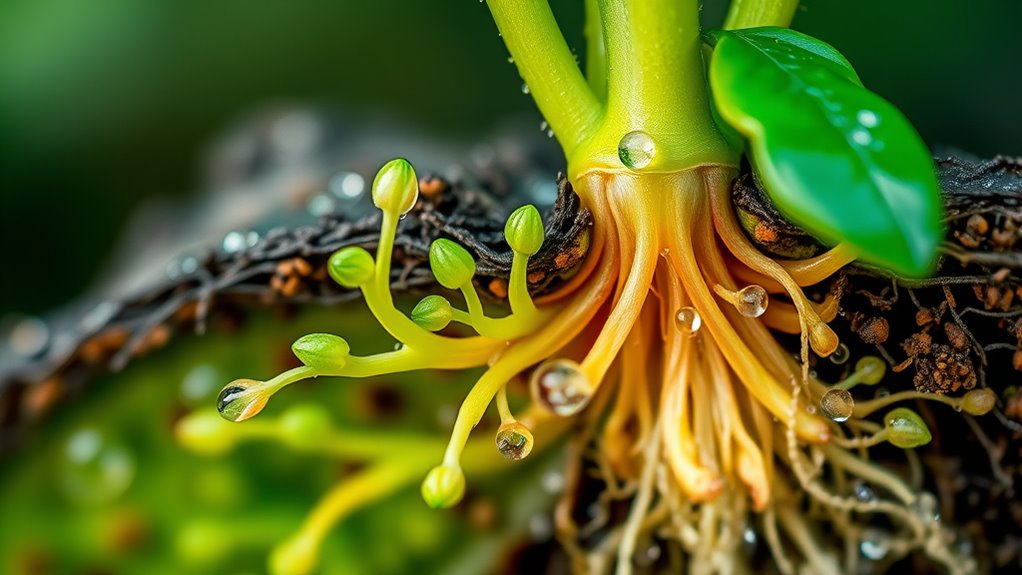

Plant hormones are vital in guiding your plant’s growth and development. Auxin promotes cell elongation and influences flowering, while cytokinins support cell division and flower formation. Other hormones like gibberellins help break seed dormancy, and abscisic acid inhibits germination under unfavorable conditions. These hormones work together in complex networks, responding to environmental cues to guarantee your plant’s survival and proper timing of growth stages. Explore further to uncover how these signals shape plant life.

Get the little things that make your day delivered free with Prime
- Fast, free delivery on millions of items
- Prime Video, Amazon Music and more included
- Member-only deals all year
Key Takeaways
- Auxin promotes cell elongation, root development, and influences flowering and fruit formation.
- Cytokinins stimulate cell division, delay aging, and support shoot and floral development.
- Gibberellins break seed dormancy, promote stem elongation, and enhance flowering.
- Abscisic acid (ABA) inhibits germination, induces dormancy, and helps plants respond to stress.
- Hormones interact in complex networks, balancing growth, development, and environmental responses.
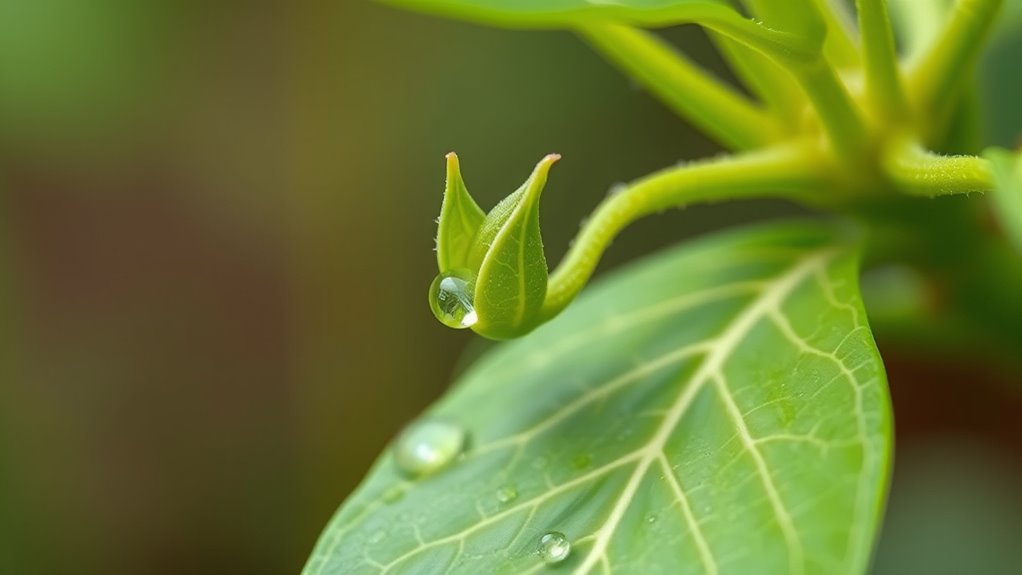
Plants rely on chemical messengers called hormones to coordinate their growth, development, and responses to the environment. These hormones act as signals, helping you understand how plants decide when to grow taller, produce flowers, or develop roots. When it comes to seed germination, hormones like gibberellins play a vital role by breaking seed dormancy and initiating sprouting. They signal to the seed that conditions are right for growth, encouraging the embryo to resume development. This process guarantees that seeds only germinate when environmental factors such as moisture, temperature, and light are suitable, making the timing of germination precise and efficient.
In terms of flowering regulation, plant hormones are equally influential. For example, auxin and cytokinins work together to control flowering timing. Auxin, which is primarily produced in the apical meristem, influences flowering by promoting or inhibiting floral development based on its concentration and distribution. Cytokinins, on the other hand, support cell division and can promote the formation of floral buds. The balance between these hormones determines when a plant shifts from vegetative growth to flowering. If auxin levels are high, flowering might be delayed, allowing the plant to grow more leaves and stems first. Conversely, a rise in cytokinins can accelerate flowering, especially in response to environmental cues like longer daylight hours or warmer temperatures.
You’ll notice that these hormones don’t work in isolation—they form a complex network that fine-tunes plant responses. For example, during seed germination, gibberellins work alongside abscisic acid (ABA), which inhibits germination. The ratio of these hormones signals whether the seed remains dormant or begins to sprout. Similarly, in flowering regulation, the interplay between auxin, cytokinins, and other hormones like ethylene influences floral induction and development. Environmental factors, such as photoperiod and temperature, can alter hormone levels, guaranteeing the plant’s reproductive phase aligns with ideal conditions. Additionally, understanding hormone interactions can help optimize agricultural practices for better crop yields.
Understanding how hormones manage seed germination and flowering regulation gives you insight into the intricate controls plants use to adapt and thrive. Hormones act as internal messengers, synchronizing growth stages with external cues. Whether you’re observing a seed sprouting or a plant blooming, you’re witnessing the result of these chemical signals working behind the scenes. This coordination ensures that plants maximize their reproductive success and survival, illustrating the remarkable complexity of plant hormone regulation.
Frequently Asked Questions
How Do Plant Hormones Interact With Each Other During Growth?
During growth, plant hormones interact through hormone synergy to regulate development effectively. You’ll find auxin and cytokinin working together, balancing cell division and elongation. Auxin promotes root formation, while cytokinin encourages shoot growth. Their interaction ensures proper growth regulation, preventing overgrowth or stunted development. By coordinating these signals, plant hormones create a harmonious response, allowing the plant to adapt and thrive in changing environments.
Can Plant Hormones Be Used to Enhance Crop Yield?
Back in the days of the ancient mariners, you’d be wise to explore how hormone application can boost crop yield. Using genetic modification and precise hormone application, you can stimulate growth, improve resistance, and increase productivity. By manipulating plant hormones, you optimize flowering and fruiting processes, making your crops more resilient and bountiful. This modern approach helps guarantee better harvests, keeping your farm thriving in today’s competitive agricultural landscape.
Are Plant Hormones Effective in Controlling Plant Diseases?
Yes, plant hormones can be effective in controlling plant diseases through hormone therapy. They enhance disease resistance by activating defense mechanisms and strengthening plant immunity. Using hormones like salicylic acid or jasmonates can boost a plant’s natural defenses against pathogens. This targeted approach helps reduce reliance on chemical pesticides, promoting healthier crops and sustainable farming practices. So, hormone therapy offers a promising tool for managing plant diseases effectively.
How Do Environmental Factors Influence Hormone Production?
Environmental stress and nutrient availability greatly influence hormone production, affecting plant growth and adaptation. For example, under drought conditions, plants increase abscisic acid levels by up to 50%, helping conserve water. When nutrients are scarce, cytokinin production drops, slowing growth. You’ll notice that stressors trigger hormonal changes, allowing plants to respond effectively. Understanding this helps you optimize conditions, ensuring healthy development despite environmental challenges.
What Are the Latest Developments in Synthetic Plant Hormone Research?
You’ll find that recent gene editing techniques, like CRISPR, have advanced synthetic hormone research considerably. Researchers are now developing synthetic hormone applications to improve crop yields and stress resilience. These innovations allow precise manipulation of plant growth regulators, leading to more efficient agriculture. The latest developments focus on creating targeted, sustainable solutions, making it easier to optimize plant development and productivity with minimal environmental impact.
Conclusion
Think of plant hormones as a team of tiny managers coordinating growth. When you see a plant reaching toward the sun, it’s thanks to auxin guiding the roots and stems, much like a conductor leading an orchestra. Just as a small spark can ignite a fire, these hormones work together to unveil a plant’s full potential. Understanding their roles helps you appreciate how nature orchestrates life’s growth, one cell at a time, in perfect harmony.
Halloween Picks
halloween
As an affiliate, we earn on qualifying purchases.