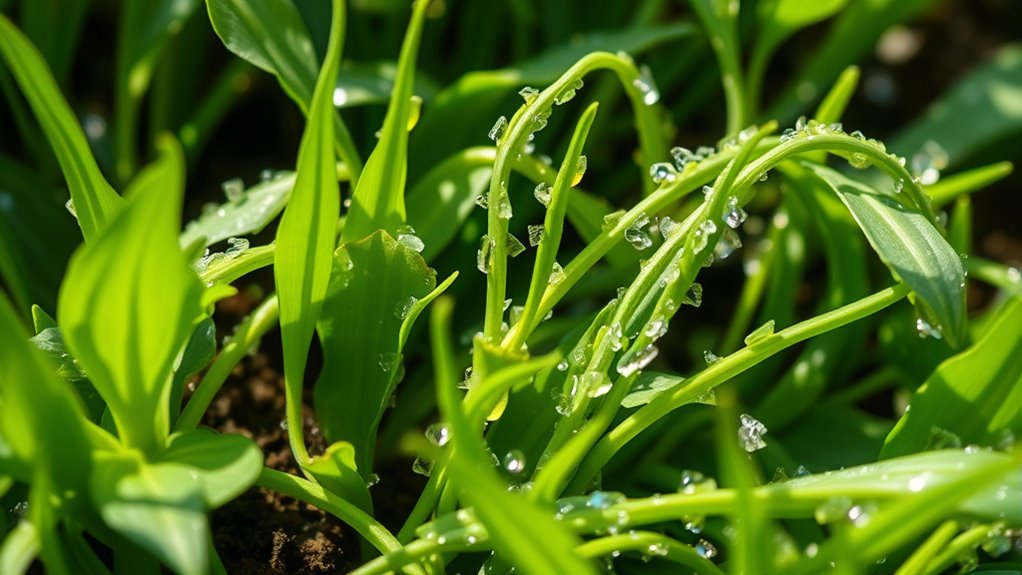

If microplastics build up in soil, they can hinder plant growth by disrupting the soil’s structure and reducing water retention. These tiny particles interfere with microbial activity, slowing down decomposition and nutrient cycling, which plants rely on. They can also carry harmful chemicals and contaminants that damage roots and affect overall health. Continuing below, you’ll discover how these invisible pollutants pose a long-term threat to plant resilience and ecosystem balance.
Key Takeaways
- Microplastics contaminate soil, disrupting microbial activity essential for healthy plant growth.
- They alter soil structure, reducing porosity and water retention, which hampers root development.
- Microplastics carry harmful chemicals and heavy metals that can leach into the soil and affect plants.
- Accumulation of microplastics impairs nutrient cycling, leading to nutrient deficiencies for plants.
- Overall, microplastic pollution weakens plant vitality and can threaten crop safety and ecosystem health.
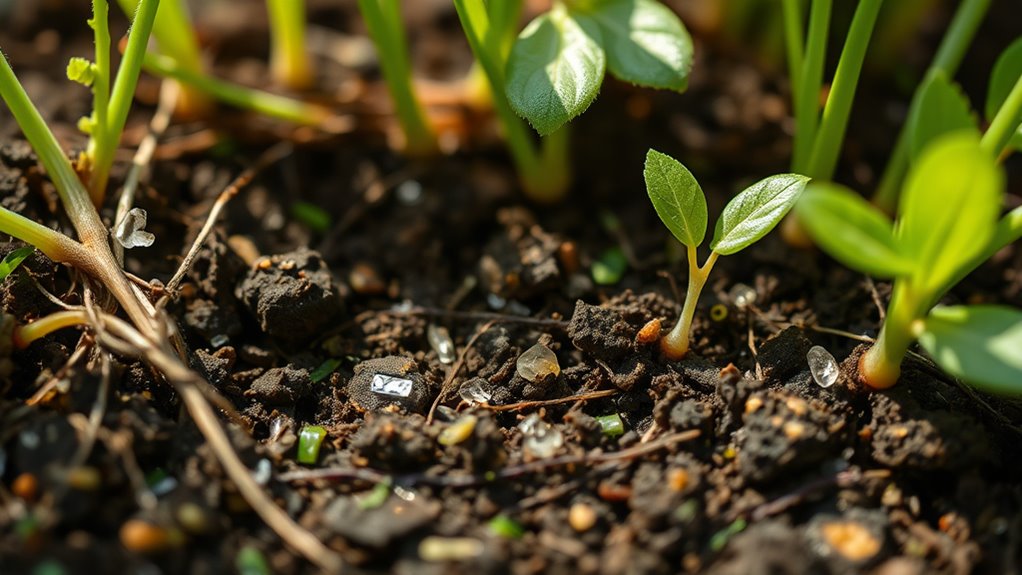
Microplastics, tiny plastic particles less than five millimeters in size, are increasingly found in soils around the world. Their presence raises serious concerns about soil health and plant growth. When microplastics enter the soil, they disrupt natural degradation processes, which are essential for maintaining a healthy ecosystem. Normally, organic matter breaks down through microbial activity, releasing nutrients indispensable for plant development. But microplastics interfere with these processes, slowing down decomposition and altering the soil’s chemical composition. As a result, the soil becomes contaminated with foreign particles that don’t easily break down, leading to long-lasting pollution. This contamination hampers the soil’s ability to support healthy plant roots and affects overall plant vitality.
You might wonder how microplastics get into the soil in the first place. They’re often transported through agricultural runoff, wastewater irrigation, or the breakdown of larger plastic debris. Once in the soil, microplastics can persist for decades because they resist natural degradation processes. Their durability means they accumulate over time, compounding soil contamination. As microplastics settle into the soil matrix, they can physically alter soil structure, reducing porosity and impairing water retention. This impacts root penetration and limits plants’ access to essential nutrients and water, ultimately stunting growth or causing plant stress.
Furthermore, microplastics can act as carriers for harmful chemicals and heavy metals. When these particles are present in soil, they can leach toxic substances that are absorbed by plants or microbes. This not only affects plant health directly but also has potential repercussions up the food chain, impacting animals and humans who consume contaminated crops. The interaction of microplastics with soil microbes can also change microbial diversity and function, which are critical for nutrient cycling and soil fertility. Disrupted microbial communities mean fewer nutrients are made available to plants, further impeding healthy growth.
microplastics soil remediation kit
As an affiliate, we earn on qualifying purchases.
As an affiliate, we earn on qualifying purchases.
Frequently Asked Questions
Can Microplastics Be Safely Removed From Contaminated Soil?
Yes, microplastics can be removed from contaminated soil using bioremediation techniques or chemical soil treatments. You can introduce specific microbes that break down plastics or apply chemicals that help dissolve microplastics. These methods are effective but require careful management to avoid harming soil health. Implementing bioremediation or chemical treatments allows you to reduce microplastic levels, making the soil safer for plant growth and minimizing environmental impact.
Do Microplastics Affect Different Plant Species Equally?
Microplastics are like unpredictable guests, affecting plant species differently. You’ll find that species sensitivity varies, with some plants more resilient, while others suffer from microplastics blocking root absorption. Certain plants absorb more microplastics through roots, impacting growth and health. So, not all plants are affected equally; your choice of species determines how severely microplastics influence their development and overall well-being.
How Long Do Microplastics Persist in the Soil Environment?
Microplastics can persist in the soil environment for decades, depending on degradation rates and soil conditions. You might find that microplastics have high soil retention, especially in compacted or low-oxygen soils, which slows their breakdown. Factors like temperature, microbial activity, and UV exposure influence how long they last. Generally, microplastics degrade very slowly, meaning they remain in the soil for extended periods, continually impacting plant health and soil ecosystems.
Are There Natural Ways to Break Down Microplastics in Soil?
Think of soil as a bustling city where microbes are the tireless workers breaking down microplastics. Natural methods do exist; enhanced soil microbial activity boosts biodegradation potential, gradually transforming plastics into harmless compounds. You can support this process by adding organic matter, encouraging diverse microbial life, and avoiding chemical pollutants. While these natural strategies help, microplastic breakdown remains slow, so continuous effort and healthy soil are key to tackling this invisible pollution.
What Are the Long-Term Ecological Impacts of Microplastics in Soil?
You should be aware that microplastics in soil can harm soil biodiversity and disrupt nutrient cycling over the long term. These tiny particles may reduce the diversity of beneficial microbes, insects, and plants, weakening ecosystem resilience. As a result, soil becomes less fertile, affecting plant growth and agricultural productivity. If microplastics accumulate, they could cause irreversible ecological damage, threatening the health of entire ecosystems and human food sources.
soil microbial health test kit
As an affiliate, we earn on qualifying purchases.
As an affiliate, we earn on qualifying purchases.
Conclusion
So, next time you see plastic plants or wonder about microplastics in soil, ask yourself: are we truly aware of what’s happening beneath our feet? These tiny particles can silently harm plant growth and disrupt ecosystems. By staying informed and making conscious choices, you can help reduce this invisible threat. Isn’t it time we took responsibility for protecting our soil and future? Every small action counts in fighting microplastic pollution.
organic soil nutrient enhancer
As an affiliate, we earn on qualifying purchases.
As an affiliate, we earn on qualifying purchases.
water retention soil amendment
As an affiliate, we earn on qualifying purchases.
As an affiliate, we earn on qualifying purchases.