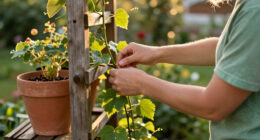
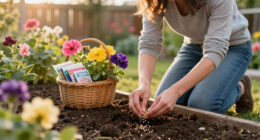
To select the right soil mix for self-watering containers, focus on materials that balance moisture retention with good drainage and aeration. Use lightweight components like peat moss or coconut coir for water retention and add coarse materials such as perlite or coarse sand to improve airflow and prevent waterlogging. Avoid overly dense soils that can suffocate roots. Paying attention to these factors helps ensure healthy plants and efficient watering—continue to explore for more helpful tips.

Get the little things that make your day delivered free with Prime
- Fast, free delivery on millions of items
- Prime Video, Amazon Music and more included
- Member-only deals all year
Key Takeaways
- Select a soil mix that balances moisture retention and drainage to prevent waterlogging and drought stress.
- Incorporate lightweight, moisture-retentive ingredients like peat moss, coconut coir, or compost for consistent watering.
- Add coarse materials such as perlite, vermiculite, or coarse sand to improve aeration and prevent soil compaction.
- Avoid overly dense soils to ensure proper root oxygenation and healthy plant growth.
- Regularly assess and adjust the soil mix to meet specific plant needs and environmental conditions.

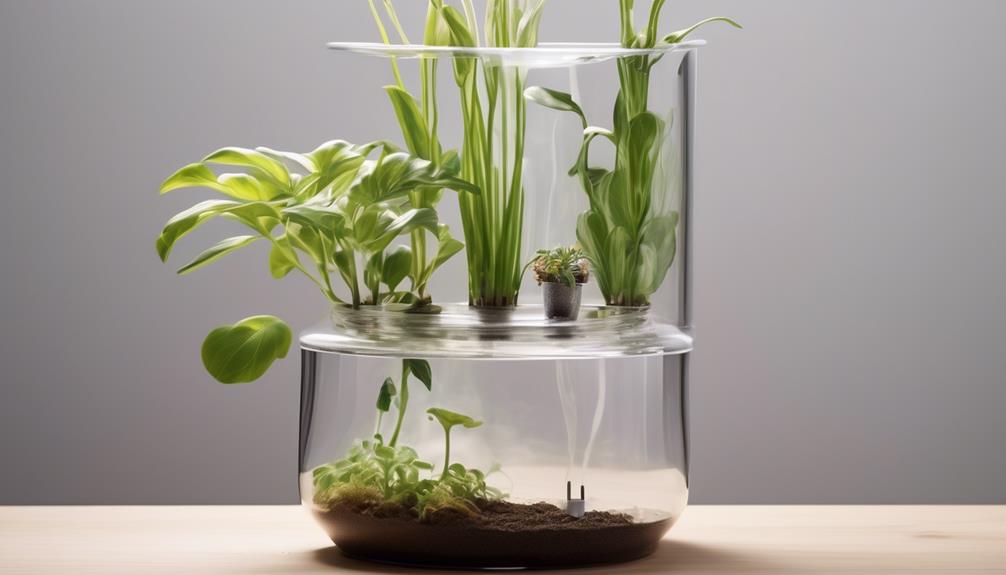
Selecting the right soil mix is essential for guaranteeing your self-watering containers work effectively. When choosing your soil, you need to think about two key factors: water retention and soil aeration. These elements determine how well your plants will grow and how efficiently your container system functions. The goal is to find a balance that keeps the soil moist enough for your plants without becoming waterlogged, while also providing enough air pockets for healthy root development.
Water retention is critical in self-watering systems because it influences how often you need to refill the water reservoir. Using soil that retains too little moisture can cause your plants to suffer from drought stress, especially during hot weather or if you’re away for a few days. On the other hand, soil that holds too much water can drown roots, promote root rot, and reduce oxygen flow. To strike the right balance, look for a mix that includes components like peat moss, coconut coir, or compost, which are excellent at holding moisture without becoming overly saturated. These ingredients help maintain consistent moisture levels, reducing the need for frequent watering and keeping your plants healthy.
Balanced soil retains moisture without waterlogging, supporting healthy roots and reducing watering frequency.
Soil aeration is equally important because roots need oxygen to grow and absorb nutrients effectively. Compact or poorly-draining soil can suffocate roots, leading to weak plants or disease. When selecting soil for your self-watering containers, opt for a blend that incorporates coarse materials such as perlite, vermiculite, or coarse sand. These additions create air pockets within the soil, improving drainage and oxygen flow. Well-aerated soil prevents compaction and ensures that excess water can drain away from the roots, which is especially important in self-watering systems where excess moisture can accumulate if not properly balanced. Additionally, choosing well-draining soil can help prevent waterlogging and support healthy root development.
Combining these considerations, your ideal soil mix should be lightweight, moisture-retentive, and well-draining. It might take some experimentation to find the perfect blend for your specific plants and climate, but starting with a mix that emphasizes both water retention and soil aeration will give you a strong foundation. Remember, the right soil not only supports healthy plant growth but also maximizes the efficiency of your self-watering system. When you prioritize these factors, you’ll enjoy thriving plants with less maintenance and fewer problems related to overwatering or poor root health.
self-watering container soil mix
As an affiliate, we earn on qualifying purchases.
As an affiliate, we earn on qualifying purchases.
Frequently Asked Questions
How Often Should I Replace the Soil in My Self-Watering Containers?
You should replace the soil in your self-watering containers every 1 to 2 years. Follow a regular soil replacement schedule to prevent nutrient depletion and compaction. Watch for signs of soil degradation, like poor drainage, compacted texture, or declining plant health. Replacing the soil helps maintain ideal conditions for your plants, ensuring they stay healthy and grow vigorously. Regularly rejuvenating the soil keeps your self-watering system functioning effectively.
Can I Use Organic Compost as Part of My Soil Mix?
Yes, you can use organic compost as part of your soil mix. It enriches the soil with natural nutrients, promoting healthy plant growth. Organic compost improves soil fertility and retains moisture, which is perfect for self-watering containers. Just make sure to mix it well with other soil components to guarantee proper drainage and aeration. Regularly replenish the compost to maintain soil nutrients and keep your plants thriving.
What Plants Thrive Best in Self-Watering Container Soil?
Certain plants thrive in self-watering container soil because of their plant compatibility and need for consistent soil moisture retention. Vegetables like lettuce, herbs such as basil, and flowers like petunias do well because they enjoy steady moisture levels. You should select plants that prefer moist roots, ensuring your self-watering system maintains ideal soil moisture retention, which helps prevent over- or under-watering and supports healthy growth.
How Does Soil Ph Affect Plant Growth in Self-Watering Systems?
Soil pH greatly affects plant growth in your self-watering system by influencing soil acidity and nutrient availability. If the soil is too acidic or alkaline, plants might struggle to absorb essential nutrients, leading to poor growth. To keep your plants healthy, monitor and adjust the soil pH as needed, ensuring it stays within the ideal range for your specific plants. This helps promote strong growth and vibrant health in your self-watering containers.
Are There Specific Soil Amendments Recommended for Self-Watering Containers?
Imagine giving your plants a gentle hug with the perfect soil amendments. For self-watering containers, you should consider organic options like compost, worm castings, and peat moss, which enrich container soil nutrients naturally. These soil amendment options improve water retention and aeration, ensuring your plants thrive. Regularly supplementing with balanced, slow-release fertilizers can also support healthy growth, making your container garden a lush, vibrant haven.
peat moss coconut coir for plants
As an affiliate, we earn on qualifying purchases.
As an affiliate, we earn on qualifying purchases.
Conclusion
Choosing the right soil mix is like planting the seeds of success in your self-watering container garden. When you pick the perfect blend, you’re setting the foundation for healthy roots and thriving plants. Think of your container as a well-tuned engine—using the right soil guarantees it runs smoothly and efficiently. So, take your time, choose wisely, and watch your garden flourish like a vibrant, blooming symphony in your own backyard.
perlite vermiculite soil amendment
As an affiliate, we earn on qualifying purchases.
As an affiliate, we earn on qualifying purchases.
lightweight well-draining potting soil
As an affiliate, we earn on qualifying purchases.
As an affiliate, we earn on qualifying purchases.
NFL season / tailgating Picks
team gear
As an affiliate, we earn on qualifying purchases.