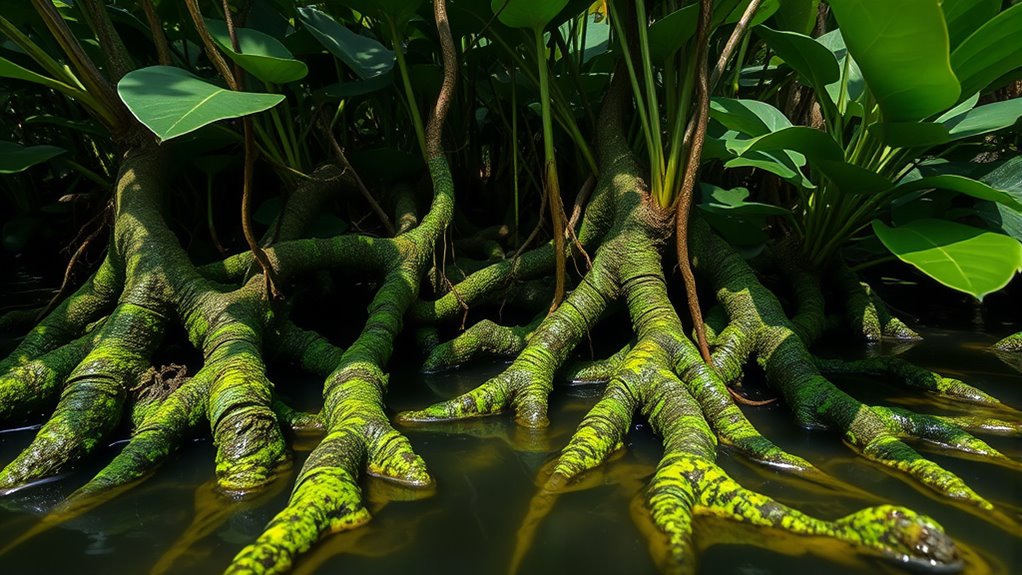

Breathing roots help mangroves and swamp plants get oxygen in waterlogged soils where it’s scarce. These plants grow specialized structures like pneumatophores, which stick out above water or mud for air intake. Tiny pores called lenticels also enable gas exchange directly with the atmosphere. These adaptations keep the roots alive and healthy, supporting the entire ecosystem. To discover more about how these amazing plants survive in harsh environments, keep exploring their fascinating features.
Key Takeaways
- Mangroves and swamp plants develop specialized structures like pneumatophores and adventitious roots to access atmospheric oxygen.
- Tiny pores called lenticels on roots facilitate gas exchange between the plant and the surrounding air.
- These plants’ roots are often spongy or porous, enhancing oxygen absorption in waterlogged or low-oxygen soils.
- Breathing roots rise above water or mud, ensuring direct contact with atmospheric oxygen.
- Their adaptations support soil aeration, microbial activity, and overall ecosystem health in oxygen-poor environments.
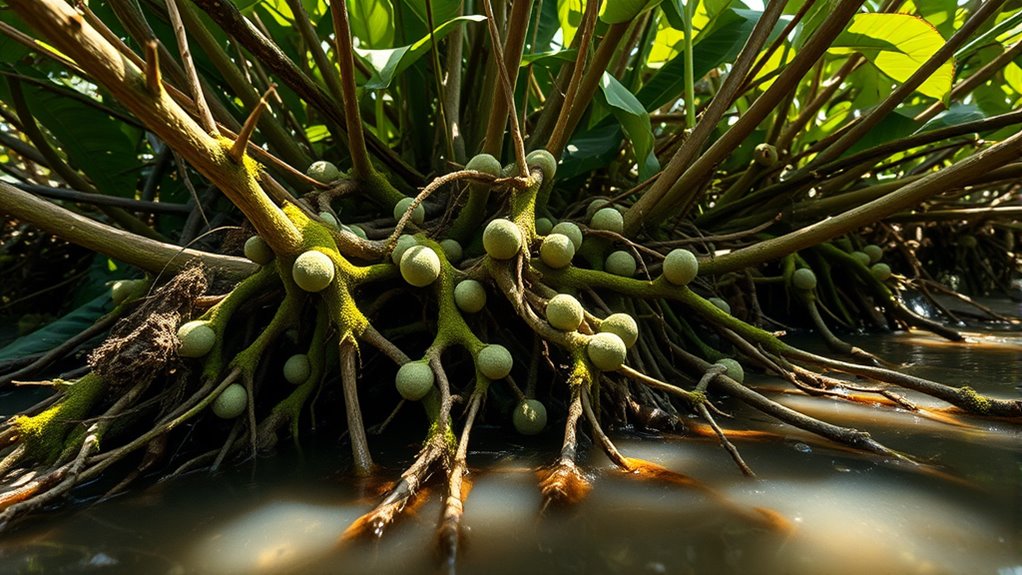
Many plants have developed a remarkable ability to breathe through their roots, especially in oxygen-poor environments. This adaptation is essential for survival in wetlands, swamps, and coastal areas where oxygen levels in the soil are limited. When roots are submerged in waterlogged soils, oxygen can’t easily diffuse through the dense, water-saturated ground. To overcome this challenge, certain plants, like mangroves and swamp species, have evolved specialized structures to facilitate gas exchange. These adaptation strategies not only guarantee their survival but also contribute profoundly to their ecosystems’ ecological significance.
Many plants breathe through roots in oxygen-poor environments, vital for wetland survival and ecosystem health.
In these plants, you’ll notice features such as pneumatophores—vertical, pencil-like protrusions that rise above the water or mud. These structures act as snorkels, allowing oxygen from the atmosphere to reach the submerged roots. When you observe mangroves, you’ll see these breathing roots spreading out like fingers, each one packed with tiny pores called lenticels. These lenticels enable gas exchange, helping the plant roots access oxygen directly from the air. Swamp plants might have similar adaptations but often develop other specialized root systems, such as adventitious roots that grow from the stem or trunk into the waterlogged soil. These roots are often spongy or porous, enhancing oxygen intake.
Your understanding of these adaptation strategies highlights their ecological importance. These breathing roots are more than just survival tools—they play a critical role in maintaining the health of wetland ecosystems. By oxygenating the soil, they support microbial activity, which in turn helps break down organic matter and recycles nutrients. This process sustains the productivity of wetlands, making them rich habitats for diverse wildlife. Additionally, these plants stabilize shorelines and prevent erosion, thanks to their extensive root systems anchored in the soft, muddy substrate. Their ability to thrive in such challenging environments influences the overall stability and resilience of coastal and freshwater ecosystems.
Recognizing the importance of these adaptation strategies allows you to appreciate how plants have evolved to thrive under extreme conditions. It also emphasizes the ecological significance of such features, as they support not only the plants themselves but also the entire habitat they foster. Whether you’re observing mangroves lining tropical coastlines or swamp plants in North American wetlands, you’ll see how their breathing roots serve as essential lifelines. Understanding these mechanisms reminds you of nature’s ingenuity and the importance of conserving these critical ecosystems for future generations.
Frequently Asked Questions
How Do Mangroves Adapt to Saltwater Environments?
You notice that mangroves adapt to saltwater by using salt filtration, which removes excess salt from the water before it reaches their roots. Additionally, their specialized root systems, like pneumatophores, enhance root aeration, allowing oxygen to reach submerged roots. These adaptations help mangroves survive in salty environments, preventing salt buildup and ensuring their roots stay healthy and functional.
What Role Do Mangroves Play in Coastal Ecosystems?
You can see that mangroves play a vital role in coastal ecosystems by providing habitat for diverse species and stabilizing shorelines. They also contribute to mangrove carbon sequestration, helping combat climate change. Additionally, mangroves support coastal habitat restoration efforts, improving resilience against storms and erosion. By protecting these ecosystems, you guarantee healthier environments, richer biodiversity, and enhanced carbon storage, which benefits both local communities and the planet.
How Do Swamp Plants Survive Prolonged Flooding?
You might wonder how swamp plants survive prolonged flooding. They rely on specialized root adaptations like pneumatophores and adventitious roots to access oxygen through aeration mechanisms. These roots extend above water or soil, allowing air to reach submerged tissues. By developing these adaptations, swamp plants efficiently get oxygen despite continuous flooding, helping them thrive in waterlogged environments.
Can Mangroves Help Reduce Coastal Erosion?
Did you know mangroves can reduce coastal erosion by up to 65%? You can see how crucial they are for coastal protection. When you support mangrove conservation, you’re helping stabilize shorelines and prevent land loss. Their dense root systems act like natural barriers, absorbing wave energy and trapping sediments. By safeguarding these ecosystems, you protect communities and preserve biodiversity, making mangroves a powerful tool against erosion.
Are Mangroves Beneficial to Local Wildlife Populations?
Yes, mangroves are highly beneficial to local wildlife populations. By supporting mangrove conservation, you help preserve vital wildlife habitat that sustains numerous species, including fish, birds, and crustaceans. These ecosystems provide food, shelter, and breeding grounds, essential for biodiversity. Protecting mangroves guarantees that the diverse wildlife relying on these habitats thrives, maintaining healthy, balanced ecosystems and supporting local communities that depend on this rich natural resource.
Conclusion
Now that you see how mangroves and swamp plants breathe, you understand their secret survival skills. These remarkable roots rise, reach, and breathe beneath the brackish water, battling the buoyant, breathless barrier. Their silent strength shows nature’s skillful systems, securing their stay in submerged spaces. So, next time you notice these mysterious mangrove masts, remember—they’re masters of moist, muddy mastery, making every breath count in their watery wilderness.