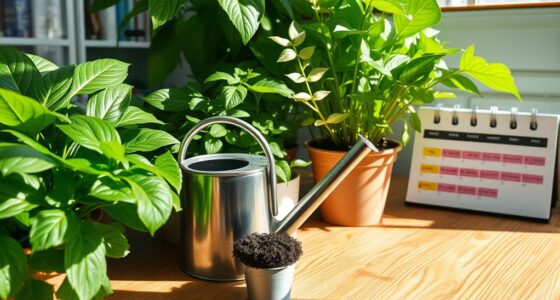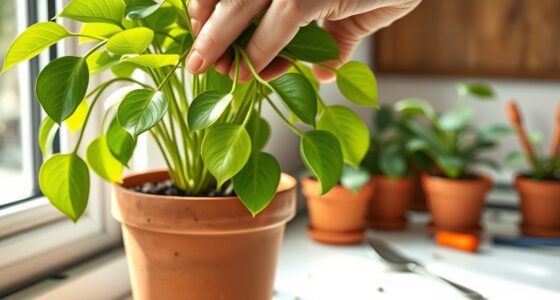

Rotating your houseplants regularly helps guarantee they grow evenly and develop a balanced shape. It promotes consistent light and nutrient distribution while preventing leaning or legginess. Plus, it makes it easier to spot pests and diseases early, keeping your plants healthier. Rotating also encourages strong stems and a lush canopy, boosting overall vitality. Keep in mind that this simple routine offers numerous benefits—stay tuned to discover more tips on caring for your houseplants.
Key Takeaways
- Regularly rotate plants to promote even light exposure and prevent leaning or uneven growth.
- Rotating helps detect pests and diseases early by inspecting all plant sides thoroughly.
- Consistent rotation balances water absorption and soil moisture, supporting healthy root development.
- It encourages a uniform canopy and stronger stems, resulting in more attractive, resilient plants.
- Incorporating rotation into routine care maintains overall plant health and vitality over time.
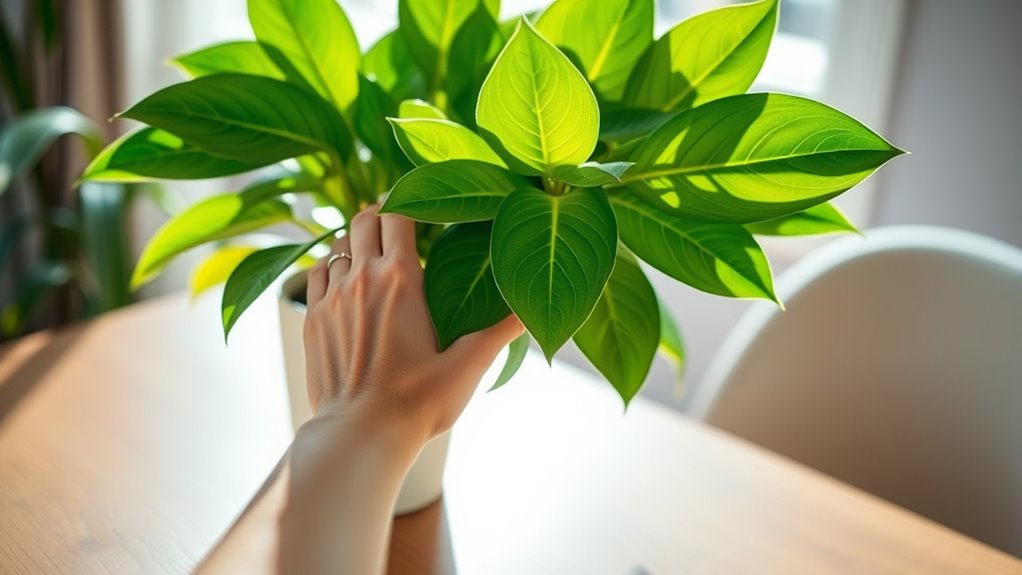
Rotating your houseplants might seem like a small task, but it can make a big difference in their health and appearance. When you turn your plants regularly, you guarantee they grow evenly, preventing them from leaning toward the light source and developing lopsided shapes. It also helps distribute light and nutrients more uniformly, which is crucial for overall plant vitality. An often-overlooked benefit is that consistent rotation allows you to spot potential issues early, like pests or disease, before they spread. This proactive approach is essential for pest prevention, as it gives you a chance to inspect all parts of the plant regularly and catch signs of trouble early.
Regularly rotating your houseplants promotes even growth and helps spot pests early.
In addition to promoting even growth, rotating your houseplants supports a consistent watering schedule. Many plants tend to grow toward the light, which can cause their watering needs to shift over time. For example, if one side gets more sun exposure, it might dry out faster, leading to uneven watering requirements. By rotating your plants, you prevent such disparities and make it easier to maintain a steady watering schedule. This consistency helps prevent overwatering or underwatering, both of which can weaken your plants and make them more susceptible to pests and diseases.
When you think about pest prevention, rotating your houseplants becomes even more important. Pests often hide in the less accessible parts of plants, and a regular inspection during rotation helps you catch infestations early. Moving your plants allows you to examine all sides carefully, removing pests like spider mites, aphids, or mealybugs before they cause significant damage. Keeping a close watch during rotation also encourages good hygiene—removing dead leaves or debris that might harbor pests or fungi. This proactive stance reduces the chances of infestations becoming severe and spreading to other houseplants.
Furthermore, rotating your plants is a simple yet effective way to promote healthy growth. It encourages your plants to develop an even canopy and stronger stems, as they receive light from all angles. This balanced growth results in more attractive, robust plants that are less prone to falling over or becoming leggy. By integrating rotation into your routine, you cultivate a better understanding of your plants’ needs, including watering and pest prevention, ensuring they stay healthy and vibrant for years to come.
In essence, rotating your houseplants isn’t just about aesthetics; it’s a key part of caring for their overall health. It supports a consistent watering schedule, reduces pest risks, and promotes even growth. Making it a regular habit will pay off in healthier, happier plants that thrive in your home.
Frequently Asked Questions
How Often Should I Rotate My Houseplants?
You should rotate your houseplants every week or two to promote healthy plant growth and prevent uneven growth patterns. By doing this, you guarantee all sides receive equal light, which boosts plant health and encourages balanced development. Keep an eye on how your plants respond; if you notice stretching or leaning, increase rotation frequency. Regularly rotating helps your plants stay strong, vibrant, and evenly grown.
Does Rotating Affect Plant Flowering or Blooming?
Yes, rotating your houseplants can influence their flowering and blooming. By changing their position, you guarantee even light exposure, which encourages uniform growth and helps the plant develop symmetrical blooms. Consistent rotation prevents one side from receiving more light, promoting balanced flowering and plant symmetry. As a result, your plant will not only look healthier but also produce more vibrant flowers, enhancing your indoor garden’s overall beauty.
Can Over-Rotation Harm My Plants?
Over-rotation can harm your plants by disrupting their plant health and sunlight exposure. Constantly turning them may cause stress, leading to leaf drop or uneven growth. Think of it like over-tuning an instrument — a little adjustment benefits, but too much throws everything off. Aim for gentle, regular rotations to make certain of even sunlight exposure, helping your plants thrive without risking damage or stress.
Should I Rotate Plants During Specific Seasons?
You should rotate your plants during different seasons to adapt to seasonal light changes and maintain even growth. In winter, when sunlight is weaker, rotate more frequently to guarantee all sides get light. During warmer months, stick to your watering schedules to prevent overwatering or underwatering. Regular rotation helps your plants get balanced light exposure, promoting healthy, symmetrical growth regardless of seasonal variations.
How Do I Know if My Plant Needs More Light After Rotation?
Imagine your fern leaning toward the window after rotation. If after repositioning, it still leans or its leaves look pale or sparse, your plant needs more light exposure. To improve plant positioning, observe its growth pattern and adjust its placement accordingly. Signs like slow growth or pale leaves indicate it requires additional light. Keep monitoring, and optimize your plant’s position to guarantee even, healthy growth.
Conclusion
By simply turning your houseplants each week, you invite even growth and vibrant health. Imagine sunlight pouring in, casting gentle rays across every leaf as you rotate your green friends. With this simple act, you create a dance of light and shadow, ensuring no side is left in the dark. Your plants will flourish, their leaves reaching out like a chorus of life. Keep this rhythm, and watch your indoor garden thrive in perfect harmony.