
Choosing between rainwater harvesting and reverse osmosis depends on your local climate, water quality, and budget. Rainwater harvesting is eco-friendly, cost-effective, and suitable if your area gets consistent rainfall; however, it needs proper filtration to guarantee safety. Reverse osmosis guarantees high-quality drinking water by removing salts, chemicals, and bacteria but requires more energy and maintenance. To make the best decision for your needs, consider your water source and long-term goals, and explore more details ahead.
Key Takeaways
- Rainwater harvesting is eco-friendly and cost-effective, ideal for areas with consistent rainfall and low contamination risks.
- Reverse osmosis provides high-quality, purified drinking water, especially when source water contains chemicals, salts, or pollutants.
- Rainwater requires minimal ongoing maintenance but may need filtration for safety; RO systems need regular filter changes and energy.
- Choosing depends on local climate, water quality, budget constraints, and maintenance capacity for sustainable water supply.
- Combining both methods can optimize water security and quality, leveraging rainwater’s abundance and RO’s purity assurance.
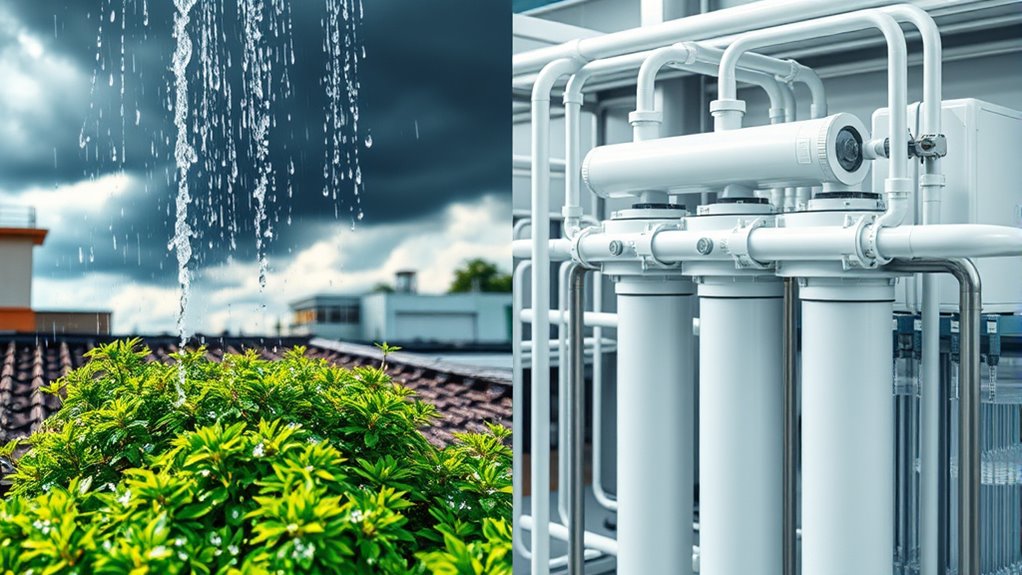
When choosing between rainwater harvesting and reverse osmosis (RO) systems for clean drinking water, it is essential to understand how each method works and their respective benefits. Rainwater harvesting involves collecting rainwater from rooftops or other catchment surfaces, storing it in tanks, and often filtering it before use. This approach taps into an abundant natural resource, especially in areas with consistent rainfall, offering a sustainable and cost-effective water source. You simply need to set up a collection system, which includes gutters, filters, and storage tanks. The water you collect is generally clean but may contain debris, bird droppings, or other contaminants, so proper filtration and treatment are necessary before drinking. Rainwater harvesting is environmentally friendly, reducing dependence on municipal supplies and lowering your water bills over time. Plus, it can be a reliable supplemental source during droughts or water restrictions, especially when your setup is well-maintained. Additionally, implementing proper sanitation measures can further improve water quality and safety.
On the other hand, reverse osmosis is a water purification process that forces water through a semi-permeable membrane, removing many impurities, including salts, bacteria, viruses, and chemicals. When you use an RO system, you start with water from a tap, well, or other source, and the system filters out contaminants, providing you with high-quality drinking water. RO systems are highly effective at producing clean, safe water, often surpassing other filtration methods in purity. They are especially useful if your water source contains dissolved solids or chemical pollutants that are not easily removed by basic filtration. However, RO systems can be more costly to install and maintain, requiring regular filter changes and energy to operate. They also waste some water during the filtration process, which might be a concern in water-scarce areas.
Both methods have their advantages, but your choice depends on your specific circumstances. If you live in an area with consistent rainfall and want a sustainable, eco-friendly water source, rainwater harvesting might be your best bet. It’s relatively low-cost and can supplement your existing water supply effectively. Conversely, if your water source is contaminated or you need guaranteed high-quality drinking water, an RO system provides a reliable solution. Keep in mind that RO systems are more energy-intensive and require ongoing maintenance, so consider your budget and willingness to handle these aspects. Proper water treatment practices can help maximize the benefits of either system and ensure safe, clean drinking water.
Frequently Asked Questions
How Cost-Effective Is Rainwater Harvesting Compared to RO Systems?
Rainwater harvesting is generally more cost-effective than RO systems upfront and over time. You save on ongoing water bills because you’ll rely less on expensive, processed water. Installing a rainwater system requires lower initial investment and minimal maintenance, especially if your area gets sufficient rainfall. While RO offers high purity, its operational costs and waste water make it less economical for long-term use compared to rainwater harvesting.
What Are the Maintenance Requirements for Rainwater Versus RO Systems?
You need to regularly clean and inspect your rainwater harvesting system, including gutters, filters, and storage tanks, to prevent algae, debris, and mosquito breeding. In contrast, RO systems require routine membrane cleaning, filter replacements, and sanitization to guarantee water quality. While rainwater maintenance can be simpler and less costly, RO systems demand more technical upkeep, making them more labor-intensive over time.
Can Rainwater and RO Systems Be Combined Effectively?
Yes, you can combine rainwater and RO systems effectively. By blending the natural, plentiful rainwater with the purified, pristine RO water, you get the best of both worlds—cost-efficient, clean, and sustainable water. You’ll want to set up a seamless system that channels rainwater into a storage tank, then pre-treats it before passing it through the RO filter. Proper planning guarantees balanced, balanced, balanced water quality and efficient operation.
Are There Any Legal Restrictions on Rainwater Collection in Certain Areas?
Yes, there are legal restrictions on rainwater collection in some areas. You might need permits or restrictions depending on your location, especially in states with water rights laws or drought regulations. Check with your local authorities or water agencies before setting up a rainwater harvesting system. Ignoring these rules could lead to fines or other legal issues, so it’s wise to stay informed and compliant.
Which Water Source Offers Better Long-Term Sustainability?
Imagine tending a garden, and rainwater is your gentle, reliable rain that nurtures growth over time. Rainwater offers better long-term sustainability because it’s a free, renewable resource that depends on natural cycles. As you harness rain, you reduce reliance on energy-intensive processes like RO, conserving resources and supporting eco-friendly practices. Over the long haul, rainwater sustains your needs while nurturing the environment’s delicate balance.
Conclusion
Ultimately, choosing between rainwater and RO isn’t just about water; it’s about your future. Think of it as picking the hero of your water story—each has its strengths, but only you can decide which fits your needs best. Will you harness nature’s gift with rainwater or rely on the precision of RO? The choice is yours, but remember: the right source can turn your water worries into a wellspring of confidence. Make it count.