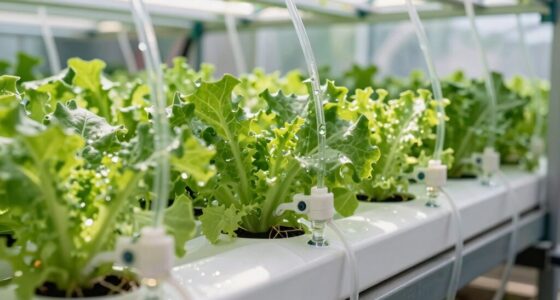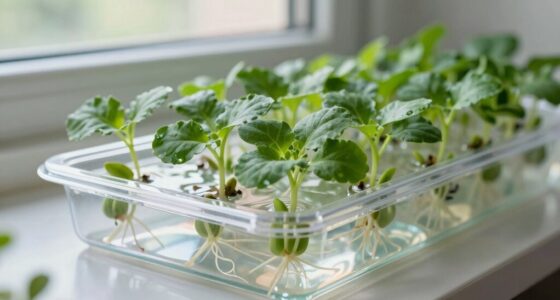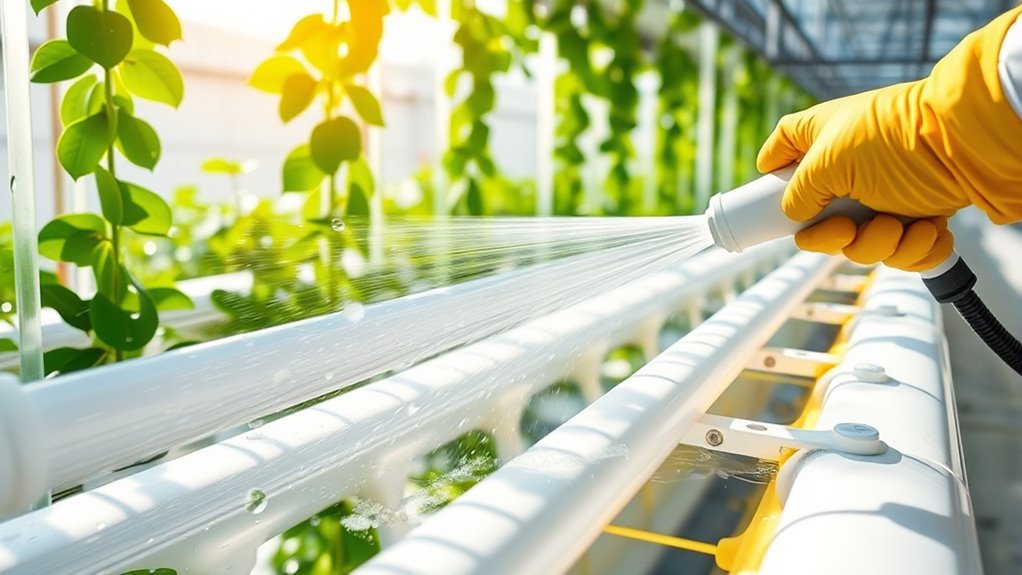

During summer, it’s essential to regularly sterilize your hydroponic equipment to prevent bacterial growth. Start by cleaning all parts, including reservoirs, hoses, and pumps, with safe disinfectants like hydrogen peroxide or specialized cleaners. make sure thorough rinsing to remove residues, and consider using sterilizers to eliminate harmful microorganisms. Maintain proper water circulation and keep temperatures cool with shade or cooling systems. Staying vigilant and proactive helps safeguard your plants—continue to explore more effective sterilization practices.

Get the little things that make your day delivered free — and shop member deals
- Fast, free delivery on millions of items
- Access to Prime Big Deal Days deals on October 6–7
- Prime Video, Amazon Music and more included
Key Takeaways
- Regularly disinfect all system components with hydrogen peroxide or hydroponic-safe cleaners to eliminate bacteria buildup.
- Thoroughly rinse and dry equipment after cleaning to prevent chemical residues and microbial growth.
- Schedule deep cleaning sessions before hot summer months to maintain a sanitized, bacteria-free system.
- Inspect and sanitize pumps, tubing, and nozzles regularly to prevent blockages and biofilm formation.
- Incorporate sterilization methods such as UV treatment or natural sterilizers to maintain water quality and reduce bacterial risks.

Have you considered how the summer heat impacts your system’s cleanliness and efficiency? As temperatures rise, your hydroponic setup faces increased risks of bacterial growth, which can compromise plant health and yield. One of the most critical factors in maintaining a healthy system during hot months is guaranteeing proper water circulation. When water isn’t moving effectively, stagnant pockets develop, creating ideal environments for bacteria and algae to thrive. To prevent this, regularly inspect and clean your pumps and tubing, making sure there are no blockages or leaks that hinder flow. Enhancing water circulation not only keeps the nutrient solution oxygenated but also helps distribute nutrients evenly, promoting robust plant growth.
Proper water circulation prevents stagnation and bacterial growth during hot months.
The nutrient solution itself can become a breeding ground for harmful microorganisms in the summer heat. Warm water speeds up bacterial multiplication, which can lead to biofilm formation on surfaces and within the reservoir. To counter this, you should frequently change or refresh your nutrient solution, especially during prolonged hot spells. Using sterilized or filtered water when mixing your nutrients adds an extra layer of protection. Additionally, consider adding natural or chemical sterilizers designed for hydroponic systems that eliminate bacteria without harming your plants. Maintaining the right pH balance and avoiding nutrient buildup also helps prevent the conditions that favor bacterial growth.
Cleaning your hydroponic equipment thoroughly is essential for summer sterilization. Every component that contacts the nutrient solution—reservoirs, hoses, pumps, and nozzles—must be sanitized regularly. Use a mixture of hydrogen peroxide or a specialized hydroponic cleaning solution to disinfect these parts, ensuring all biofilms and residues are removed. Rinsing thoroughly after cleaning prevents any chemical residue from affecting your plants. It’s also wise to schedule deep cleaning sessions before the hottest months arrive, so your system starts the season in ideal condition. Incorporating efficient maintenance strategies can significantly extend the lifespan of your equipment and ensure optimal performance during peak growing season.
Monitoring your system closely during summer is crucial. Keep an eye on water temperature, making sure it stays within the ideal range for your crops. Elevated temperatures not only promote bacterial growth but can also cause the nutrient solution to degrade faster. Using shade covers or installing cooling systems can help regulate temperature, preserving water quality. Regularly checking for signs of bacterial contamination—such as cloudiness, foul odors, or slimy residues—allows you to act swiftly before problems escalate. By maintaining diligent water circulation, managing nutrient solution quality, and keeping your equipment clean, you can safeguard your hydroponic system from bacterial threats and ensure a thriving, productive summer crop.
hydroponic sterilization disinfectant
As an affiliate, we earn on qualifying purchases.
As an affiliate, we earn on qualifying purchases.
Frequently Asked Questions
How Often Should Hydroponic Equipment Be Sterilized During Summer?
You should clean your hydroponic equipment frequently during summer to prevent bacterial buildup. The cleaning frequency depends on your system’s usage, but generally, it’s best to establish a regular sterilization schedule—at least once a week. During hot, humid months, consider sterilizing more often, especially if you notice algae or disease signs. Staying consistent helps keep your system healthy and guarantees ideal plant growth.
Are There Eco-Friendly Sterilization Options for Hydroponic Systems?
You’re looking for eco-friendly sterilization options for your hydroponic system. Consider using eco-friendly disinfectants and biodegradable solutions that effectively clean without harming the environment. These alternatives often include natural ingredients like vinegar, hydrogen peroxide, or plant-based cleaners. They’re safe for your plants and help prevent bacterial growth while reducing chemical runoff. Regularly sterilizing with these eco-conscious options keeps your system healthy and sustainable without compromising environmental safety.
Can Sterilization Methods Damage Sensitive Hydroponic Components?
You should consider that some sterilization methods can harm sensitive hydroponic components due to incompatibility. For example, harsh chemicals or high heat may damage plastic or electronic parts. Additionally, improper sterilization can leave residue that affects plant health. Always check component compatibility before sterilizing and opt for eco-friendly options that leave minimal residue, ensuring your system stays effective without risking damage.
What Are Signs of Bacterial Contamination in Hydroponic Setups?
Imagine you’re checking your hydroponic system and notice a foul odor lingering, along with visible algae buildup on the surfaces. These are clear signs of bacterial contamination. You might also see cloudy water or slimy residues, which indicate bacterial overgrowth. Regularly inspecting your setup helps catch these signs early, so you can take action to prevent further issues and keep your plants healthy.
Does Water Temperature Affect Sterilization Effectiveness?
Water temperature critically impacts sterilization efficacy in hydroponic systems. If the water is too cold, it may not effectively kill bacteria and pathogens; too hot, and it can damage equipment or roots. You should maintain a suitable temperature range, typically around 140-160°F (60-71°C), to maximize sterilization effectiveness. Proper temperature control ensures bacteria are eliminated without harming your plants or equipment, keeping your system healthy and productive.
As an affiliate, we earn on qualifying purchases.
Conclusion
By regularly sterilizing your hydroponic system, you’re acting as a vigilant gardener, shielding your plants from unseen invaders. Think of your equipment as the foundation of a thriving garden—keep it clean, and your plants will flourish like a lush, vibrant oasis. Don’t let bacteria sneak in like weeds; stay proactive, and your hydroponic oasis will bloom with health and vigor all summer long. Protect your system, and watch your garden thrive!
hydroponic nutrient solution sterilizer
As an affiliate, we earn on qualifying purchases.
As an affiliate, we earn on qualifying purchases.
hydroponic equipment cleaning kit
As an affiliate, we earn on qualifying purchases.
As an affiliate, we earn on qualifying purchases.
NFL season / tailgating Picks
team gear
As an affiliate, we earn on qualifying purchases.