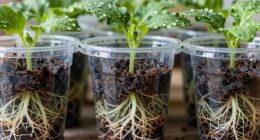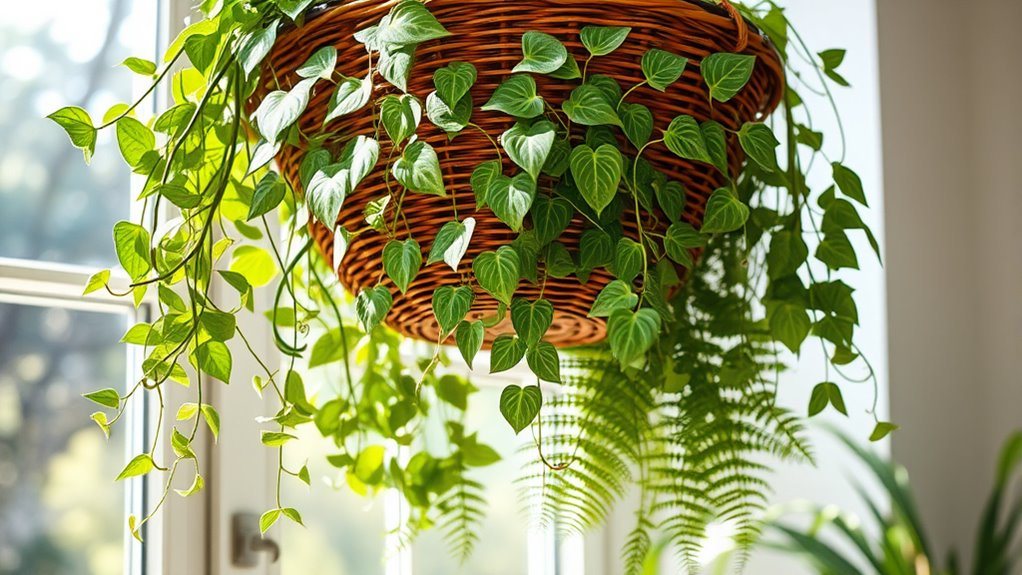
For indoor hanging baskets, popular trailing plants include pothos, string of hearts, and philodendrons, which thrive in bright, indirect light and need watering when the top inch of soil feels dry. Wandering Jew and creeping fig are also excellent choices, tolerating varying light levels and adding lush greenery. Proper care, like monitoring moisture and light, guarantees vibrant foliage. Keep exploring to discover more tips for maintaining beautiful, healthy indoor trailing plants.
Key Takeaways
- Choose resilient plants like pothos and philodendrons that tolerate varying light and watering conditions.
- Opt for plants with lush, cascading foliage such as string of hearts and wandering Jew for visual appeal.
- Ensure plants prefer bright, indirect light, and supplement with grow lights if natural sunlight is limited indoors.
- Select trailing plants with moderate watering needs, checking soil moisture regularly to prevent over- or under-watering.
- Incorporate a mix of textures and leaf colors to create a vibrant, attractive display in hanging baskets.
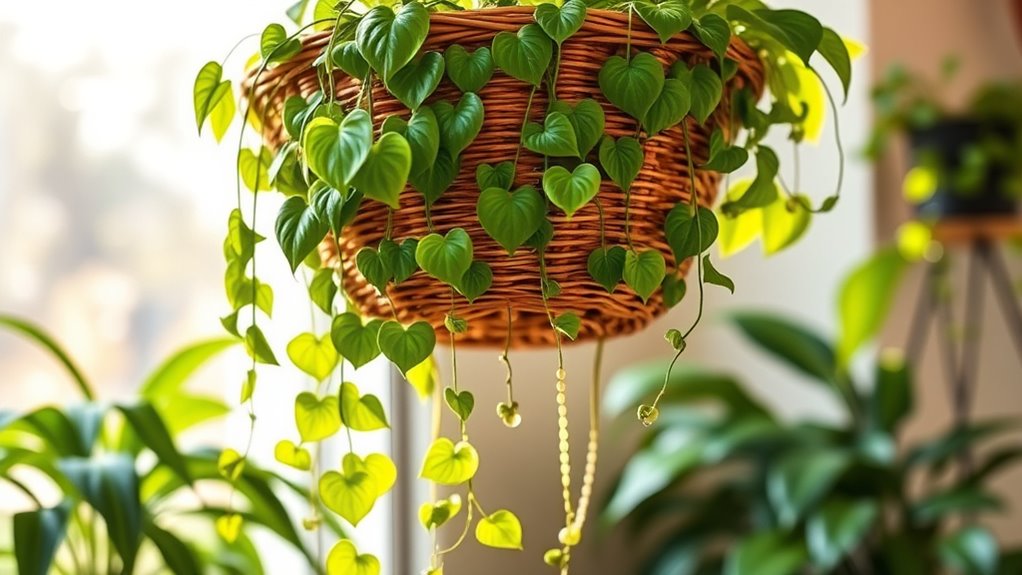
If you want to add vibrant greenery and a touch of elegance to your indoor space, hanging baskets with trailing plants are an excellent choice. These plants can soften the look of a room and bring in a lively, natural vibe. When selecting the right trailing plants, it’s important to understand their watering needs and sunlight requirements. This knowledge guarantees your plants stay healthy and thrive indoors, making your decorating efforts more rewarding.
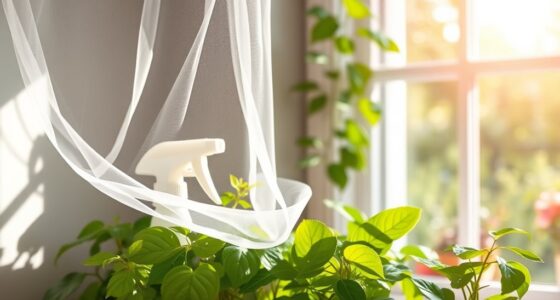
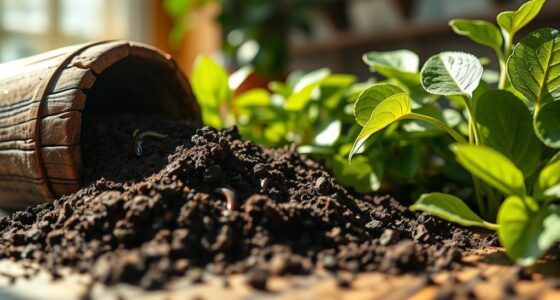
First, consider the watering needs of your trailing plants. Some plants prefer consistently moist soil, while others thrive with less frequent watering. For example, pothos and string of hearts are quite resilient and tolerate some neglect, but they still need regular watering to prevent their soil from drying out completely. On the other hand, plants like the wandering Jew prefer their soil to stay evenly moist but not waterlogged. Overwatering can lead to root rot, so it’s essential to check the soil’s moisture level before watering. Use your finger to gauge the top inch of soil; if it feels dry, it’s time to water. During winter months, indoor plants generally need less water, so adjust your routine accordingly. Proper watering helps maintain healthy foliage and prevents issues like wilting or yellowing leaves.
Check soil moisture regularly; water when the top inch feels dry to keep plants healthy.
Sunlight requirements are equally indispensable. Most trailing plants for indoor hanging baskets thrive in bright, indirect light. For instance, pothos and philodendrons flourish when placed near a sunny window but not in direct sunlight, which can scorch their leaves. If your space receives limited natural light, you can supplement with artificial grow lights to keep your plants happy. Conversely, some trailing plants, such as certain varieties of creeping fig, can tolerate lower light levels and will still maintain their lush appearance. Understanding the specific sunlight needs of each plant ensures they get enough energy for photosynthesis, resulting in vigorous growth and vibrant foliage. Too much direct sunlight might cause leaf burn, while insufficient light can stunt growth and cause leaves to lose their color and vibrancy. Additionally, staying informed about lighting conditions can help you optimize plant health and growth.
Incorporating trailing plants into your indoor decor requires a bit of planning, but once you understand their watering needs and sunlight requirements, caring for them becomes second nature. They can transform a dull corner into a lush, inviting space. Regularly monitor their moisture and light conditions, and you’ll enjoy thriving, beautiful plants that add a touch of nature’s elegance to your home. With the right care routine, your hanging baskets will become focal points that bring life and color to your indoor environment.

Set of 2-10 Inch Hanging Planters for Indoor Plants with Self-Watering Includes Hanging Pots for Plants, Outdoor Hanging Plant Pot with Drainage, and 2 Types of Hanging Baskets Hangers (White, 10inch)
【Self-Watering Hanging Flower Pots with Removable Saucer】The innovative recessed design under each hanging indoor planter maintains optimal water…
As an affiliate, we earn on qualifying purchases.
As an affiliate, we earn on qualifying purchases.
Frequently Asked Questions
How Do I Water Trailing Plants Without Overwatering?
To avoid overwatering your trailing plants, use proper watering techniques by checking soil moisture first. Stick your finger about an inch into the soil; if it feels dry, it’s time to water. You can also monitor soil moisture with a moisture meter for accuracy. Water thoroughly until excess drains out, then let the soil dry slightly before the next watering. This way, you keep your plants healthy without overdoing it.
What Lighting Conditions Are Best for Indoor Trailing Plants?
Think of your indoor space as a sunlit stage where your trailing plants perform best in bright, indirect light. Place them near east or south-facing windows to bask in gentle, filtered sunlight that nurtures their growth without scorching. Keep in mind, consistent indoor lighting is key—avoid placing them in dark corners or direct sunlight, which can burn leaves. Proper plant placement guarantees your plants thrive and cascade beautifully.
How Often Should I Prune My Trailing Indoor Plants?
You should prune your indoor trailing plants every 4 to 6 weeks to maintain healthy growth and prevent legginess. Regular pruning helps with growth maintenance, encouraging fuller, bushier plants. Keep an eye on any dead or yellowing leaves and trim back overgrown stems to promote new growth. By staying consistent with pruning frequency, you’ll keep your plants vibrant and lush, making your hanging baskets a beautiful focal point indoors.
Can Trailing Plants Improve Indoor Air Quality?
Trailing plants can improve indoor air quality through air purification, helping to remove toxins and increase oxygen levels. When selecting plants, choose those known for their air-purifying qualities, like pothos or spider plants. By incorporating these plants into your indoor space, you enhance air quality naturally. Regular watering and proper placement optimize their benefits, making your environment healthier and more inviting.
Are There Pet-Safe Trailing Plants for Indoor Spaces?
Pet-safe plants provide perfect, pet-friendly varieties for your indoor space. You can confidently choose non-toxic options like string of hearts, spider plants, or Boston ferns to keep your pets protected. These tender, tempting trailing plants add lush, lively layers to your living space without risking your furry friends’ health. With these pet-friendly choices, you create a cozy, caring environment where both plants and pets can peacefully coexist.

LOYWREE Small Fake Hanging Plant Artificial Potted Plants for Indoor Outdoor Aesthetic – 39in Realistic Faux Hanging Pothos with Ivy Vine for Shelf Decor in Home Office Gardens Greenery (Black Pot)
Package Includes: 1 Pack artificial hanging plant with black pot. the trailing foliage vine extending up to 39.37"(100cm),…
As an affiliate, we earn on qualifying purchases.
As an affiliate, we earn on qualifying purchases.
Conclusion
Now that you know the best trailing plants for indoor hanging baskets, imagine your space transformed—vibrant greenery cascading effortlessly, adding life and texture. While these plants bring a touch of nature inside, they also require your care and attention. Just like a delicate dance, your nurturing guarantees they flourish, creating a lush oasis in your home. With the right choices and a bit of love, your indoor garden will become a stunning, living artwork.

Live Succulent 4" Variegated String of Hearts, Succulents Plants Live, Succulent Plants Rooted, Hanging House Plant for Home Office Decoration, DIY Projects Party Favor Gift by The Succulent Cult
LICENSED GREENHOUSE GROWN PLANTS: Have confidence in ordering from a CA Licensed greenhouse succulent and cactus Nursery. Succulents…
As an affiliate, we earn on qualifying purchases.
As an affiliate, we earn on qualifying purchases.

Aokrean Plant Grow Light, 48 LEDs Full Spectrum Grow Lights for Indoor Plants, Height Adjustable Small Halo Grow Light with Base, 3 Optional Spectrums, Auto Timer 3/9/12Hrs, 10 Brightness, 3 Pack
NOTE: The product stand needs to be pressed down by the flower pot to be stable. Not wireless…
As an affiliate, we earn on qualifying purchases.
As an affiliate, we earn on qualifying purchases.