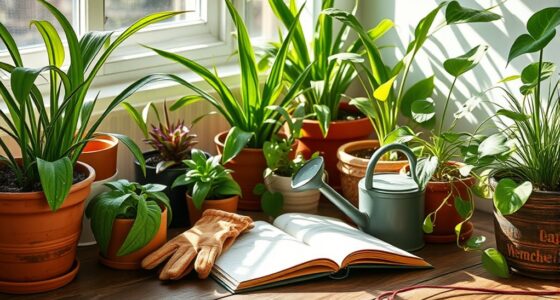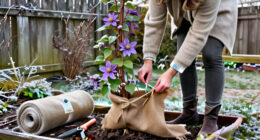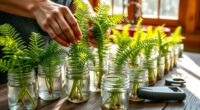
During winter, you should reduce watering frequency and check soil moisture regularly to prevent overwatering, as plants need less water in cooler, darker months. Increase humidity by grouping plants or using a water tray, and consider a humidifier for added comfort. Inspect for pests frequently and wipe leaves clean. Adjust your care routine to address low light and dry air, ensuring your indoor plants stay healthy and vibrant all season long—if you want specific tips, keep exploring further.

Get the little things that make your day delivered free with Prime
- Fast, free delivery on millions of items
- Prime Video, Amazon Music and more included
- Member-only deals all year
Key Takeaways
- Reduce watering frequency and check soil moisture regularly to prevent overwatering and root rot.
- Increase humidity by grouping plants, using water trays, misting, or a humidifier to combat dry indoor air.
- Inspect plants frequently for pests like spider mites and aphids; wipe leaves or apply insecticidal soap if needed.
- Adjust care routines to include proper watering, humidity management, and pest prevention tailored for winter conditions.
- Create a winter oasis by maintaining healthy watering, humidity, and cleaning practices to keep indoor plants thriving.

As winter approaches, indoor plants face new challenges from decreased light, lower temperatures, and dry air. You’ll need to adjust your care routine to help your plants thrive during this season. One of the most important aspects is establishing a proper watering schedule. With less sunlight and cooler temperatures, plants generally require less water because their growth slows down. Overwatering can lead to root rot and other problems, so check your plants’ soil moisture regularly. Stick your finger about an inch into the soil; if it feels dry, it’s time to water. If it’s still moist, hold off. When you do water, do so thoroughly until excess drains out, ensuring even moisture without leaving excess water sitting in the pot. This approach prevents both underwatering and overwatering, keeping your plants healthy through winter.
Reduce watering in winter; check soil moisture and water thoroughly only when soil feels dry.
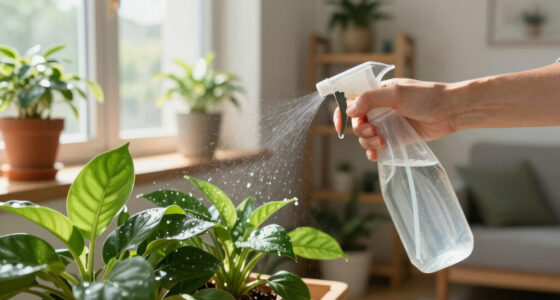
Dry air becomes a significant concern during colder months, especially with heating systems running constantly indoors. The low humidity can cause leaves to brown at the edges, drop prematurely, or develop other stress signs. To combat this, increase humidity around your plants by grouping them together or placing a tray of water nearby, which will evaporate and add moisture to the air. Regular misting can help temporarily, but it’s not a long-term solution. Instead, consider investing in a humidifier if you have many plants or particularly sensitive species. Maintaining adequate humidity reduces stress, making your indoor plants more resilient to winter’s harsher conditions.
Pest prevention is also essential during winter. While you might think pests are less active in colder months, they can still pose a threat, especially in dry, warm environments created by heaters. Keep a close eye on your plants for signs of pests like spider mites, aphids, or scale insects. Regular inspections help catch problems early before they spread. Wipe leaves with a damp cloth or use insecticidal soap if you notice pests, and avoid over-fertilizing, which can weaken plants and make them more vulnerable. Cleanliness helps prevent pest infestations, so remove fallen leaves and debris from the soil surface. Quarantining new plants before introducing them to your collection also helps prevent pests from hitchhiking into your home environment.
In winter, your care routine must adapt to the season’s unique challenges. By adjusting your watering schedule, increasing humidity, and staying vigilant against pests, you’ll give your indoor plants a much-needed boost. With these steps, you’ll help your green companions survive and even flourish during the colder months, turning your home into a lush winter oasis despite the season’s difficulties.
As an affiliate, we earn on qualifying purchases.
Frequently Asked Questions
How Often Should I Prune My Indoor Plants in Winter?
You should prune your indoor plants sparingly in winter, typically every 4 to 6 weeks, focusing on removing dead or yellowing leaves. Pruning frequency depends on the plant’s type and growth rate. During dormancy, avoid heavy pruning, but light trimming can encourage healthy growth. Remember, winter pruning helps maintain plant health and shape without stressing the plant during its dormant period.
Can I Use Artificial Lights Instead of Natural Sunlight?
Think of artificial lights as a nourishing sunbeam for your plants when natural sunlight fades. Yes, you can use grow lights instead of natural sunlight during winter. Set up light timers to mimic the sun’s cycle, providing consistent, gentle illumination. This helps your plants thrive even in low-light conditions, ensuring they stay healthy and vibrant throughout the season. Keep the lights at the right distance for ideal growth.
What Are the Signs of Overwatering During Winter?
You’ll notice overwatering signs during winter as your plant’s leaves turn yellow or brown, and the soil feels consistently soggy. You might also see wilting despite frequent watering. These watering issues can lead to root rot, which damages roots and hampers nutrient uptake. To prevent this, guarantee proper drainage, let the soil dry out slightly between waterings, and avoid overwatering to keep your plant healthy during cold months.
How Do I Prevent Pests in Winter Indoor Plants?
Pest prevention in winter indoor plants is like locking your doors before bed—you want to keep unwelcome guests out. To prevent winter infestations, regularly inspect your plants for tiny pests, avoid overwatering, and keep humidity levels stable. Quarantine new plants and clean leaves gently. Use natural remedies like neem oil if you spot pests early. Staying vigilant helps your plants stay healthy and pest-free all season long.
Should I Fertilize Less During the Winter Months?
Yes, you should fertilize less during the winter months. Your indoor plants’ fertilizer schedule should be adjusted to reduce winter feeding, as their growth slows down due to lower light and dry air. Cutting back on fertilizer prevents overfeeding and root issues. Focus on providing minimal nutrients, maybe once a month or every six weeks, to keep your plants healthy without encouraging unnecessary growth during the dormant season.
As an affiliate, we earn on qualifying purchases.
Conclusion
As winter’s chill settles in, think of your indoor plants as brave little warriors, standing tall against the icy gloom. With a touch of your care—watering wisely, providing gentle light, and embracing their needs—you nurture their resilience and beauty. Remember, your attention is the warm sunlight that keeps them thriving. Together, you create a lush oasis amidst the cold, a living proof to your dedication and love that blooms even in winter’s darkest days.
indoor plant pest control insecticidal soap
As an affiliate, we earn on qualifying purchases.
As an affiliate, we earn on qualifying purchases.
As an affiliate, we earn on qualifying purchases.
Halloween Picks
halloween
As an affiliate, we earn on qualifying purchases.