
To propagate houseplants from cuttings, start by selecting healthy stems with at least one or two nodes. Dip the cut end in rooting hormone if you want to boost success. For water propagation, place the cuttings in a clean glass with nodes submerged and keep in bright, indirect light, changing the water regularly. For soil, plant the cuttings in well-draining soil, provide humidity, and keep the environment warm. Continuing will reveal detailed steps to help you succeed.

Get the little things that make your day delivered free — and shop member deals
- Fast, free delivery on millions of items
- Access to Prime Big Deal Days deals on October 6–7
- Prime Video, Amazon Music and more included
Key Takeaways
- Select healthy parent plant cuttings with at least one or two nodes for successful rooting.
- Use rooting hormones to boost root development before planting or placing in water.
- Choose water or soil propagation methods based on the plant type, maintaining proper humidity and moisture levels.
- Regularly check for root growth, and transplant to soil once roots are a few inches long.
- Provide bright, indirect light and maintain warmth and humidity throughout the rooting process.
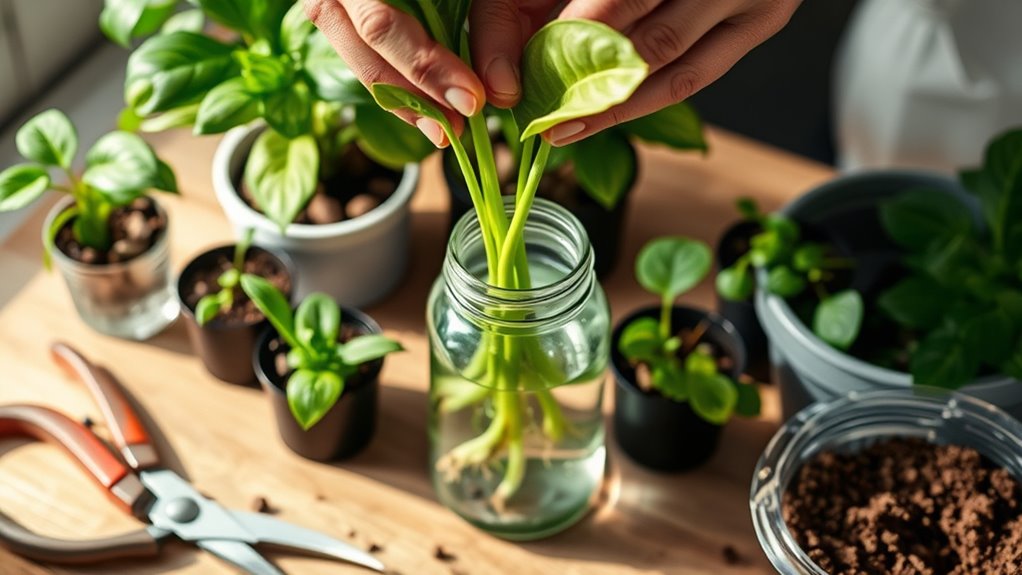
Propagating houseplants from cuttings is a simple and rewarding way to grow new plants without spending extra money. As you start, gather healthy cuttings from the parent plant, ensuring they have at least one or two nodes where roots will develop. To improve your chances of success, you might consider using rooting hormones, which contain plant growth regulators that encourage root formation. Dip the cut end of your cutting into the rooting hormone before planting it in soil or a water medium. While rooting hormones aren’t always necessary, they can accelerate rooting and increase your success rate, especially with plants that tend to be slow to root.
Propagating houseplants from cuttings is easy and cost-effective, especially with rooting hormones to boost success.
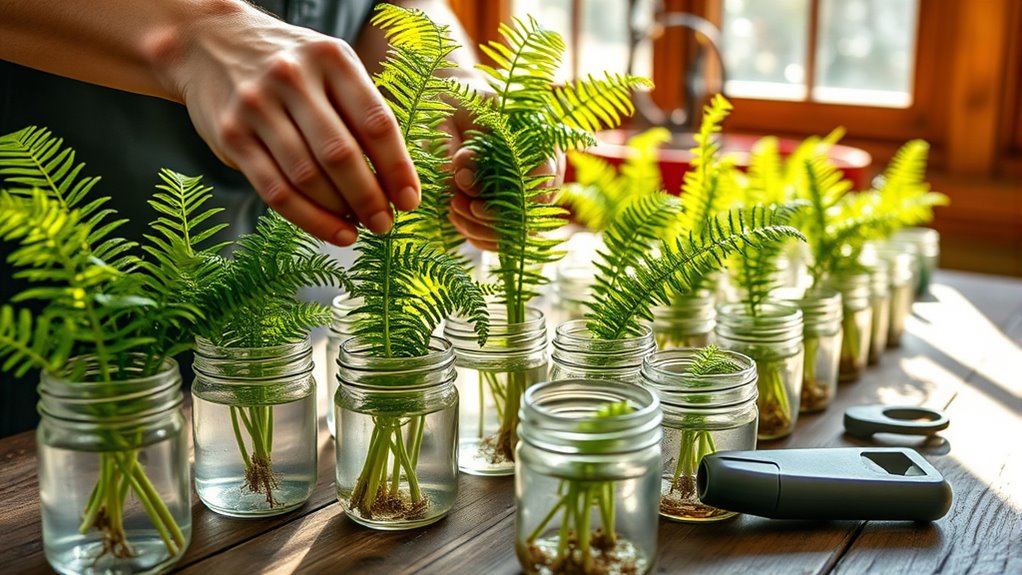
Water propagation is a popular method because it allows you to clearly see root development and monitor progress easily. To do this, place your prepared cuttings into a clean glass of water, making sure the nodes are submerged while the leaves stay above water to prevent rot. Choose a bright, indirect light spot and change the water regularly to keep it fresh and oxygenated. Within a few weeks, you should notice tiny roots emerging from the nodes. Once the roots are a few inches long, you can transplant the cutting into soil, ensuring you handle it gently to avoid damaging the delicate new roots.
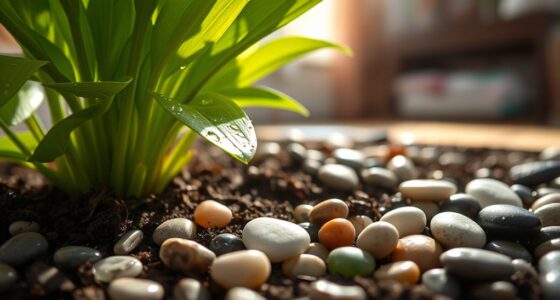
Alternatively, if you prefer soil propagation, fill a pot with well-draining potting mix. Dip your cutting in rooting hormone if you’re using it, then plant the cutting deep enough to cover the nodes where roots will grow. Water the soil lightly to settle it around the cutting, but avoid overwatering, which can cause rot. Keep the soil consistently moist and place the pot in a warm, humid environment with indirect light. Covering the pot with a plastic bag or a clear plastic container can help maintain humidity and promote rooting. After a few weeks, check for root growth by gently tugging the cutting; resistance indicates roots are forming.
Whether you choose water or soil propagation, patience is key. Keep an eye on your cuttings, providing appropriate light, moisture, and humidity, and you’ll soon see new roots developing. Using rooting hormones can give you a head start, but even without them, proper care and attention will help your cuttings thrive. With a little effort and consistency, you’ll expand your houseplant collection and enjoy the satisfaction of growing new plants from your own cuttings.
As an affiliate, we earn on qualifying purchases.
Frequently Asked Questions
Which Houseplants Are Easiest to Propagate From Cuttings?
Succulent propagation is one of the easiest methods for houseplants. You can also try propagating pothos, philodendron, and spider plants from cuttings. Use plant hormone to encourage root growth, and cut just below a node for best results. Keep the cuttings in bright, indirect light and water sparingly. These plants are resilient and forgiving, making them perfect for beginners wanting quick success in propagating houseplants.
How Long Does It Typically Take for Cuttings to Root?
It usually takes about 2 to 8 weeks for cuttings to root, depending on the plant species. To speed up rooting, you should use rooting hormones and keep the soil moist but not soggy. Regularly check soil moisture levels, and make certain the cutting is in a warm, bright spot. Patience is key—you’ll see new roots develop as your cutting establishes itself.
Can I Propagate Multiple Varieties From a Single Cutting?
Think of your cutting as a versatile artist’s palette; you can blend multiple plant varieties if you use the right propagation techniques. While some plants can be combined on a single cutting, most houseplants thrive with dedicated cuttings to maintain plant diversity. Try grafting or layering techniques to mix varieties, but remember, success depends on the species. Experimenting carefully can lead to a vibrant, diverse collection of propagated plants.
What Are Common Mistakes to Avoid During Propagation?
You should avoid overwatering issues, which can cause cuttings to rot, and improper cutting techniques, like using dull tools or not making clean cuts, that can hinder root development. Be gentle when handling plants and guarantee your tools are sharp and sanitized. Also, don’t rush the process—give cuttings enough time to develop roots before transplanting, and keep humidity levels steady to improve your success rate.
How Do I Care for New Cuttings After Planting?
After planting your cuttings, you should monitor their watering schedule closely—keep the soil moist but not soggy. Place them in an area with the right sunlight requirements, typically bright but indirect light. Avoid overwatering, which can cause rot, and make certain they stay warm and protected from drafts. Regularly check for new roots and gently support the plant as it establishes. Consistent care helps your cuttings thrive and grow into healthy plants.
As an affiliate, we earn on qualifying purchases.
Conclusion
So there you have it—your secret weapon to becoming a houseplant wizard. With a little patience and a sharp pair of scissors, you’ll soon be the proud parent of lush, thriving plants. Who knew that snipping a few stems could turn you into a botanical genius? Just remember, if all else fails, blame the plants. After all, they’re the ones growing happily while you’re just trying not to kill them. Happy propagating!
As an affiliate, we earn on qualifying purchases.
well-draining potting soil for houseplants
As an affiliate, we earn on qualifying purchases.
As an affiliate, we earn on qualifying purchases.
NFL season / tailgating Picks
team gear
As an affiliate, we earn on qualifying purchases.