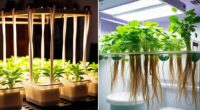
The Kratky method is the simplest hydroponic system that requires no pumps or aerators. You set up a container with nutrient solution, place your plants in support structures like net pots, and let their roots hang into the water. As plants grow, the water level drops, creating an air gap that supplies oxygen naturally. This easy, low-maintenance system is perfect for beginners—stick around to discover how to optimize your setup for healthy plants.
Key Takeaways
- The Kratky method is a passive hydroponic system that requires no pumps or aerators.
- It uses a container with nutrient solution and a support to keep roots in water and oxygenated air.
- Water level decreases as plants grow, creating an air gap that supplies oxygen to roots.
- Regular topping up with nutrient solution is needed, but maintenance is minimal.
- Ideal for beginners, small spaces, and indoor gardening due to its simplicity and low cost.
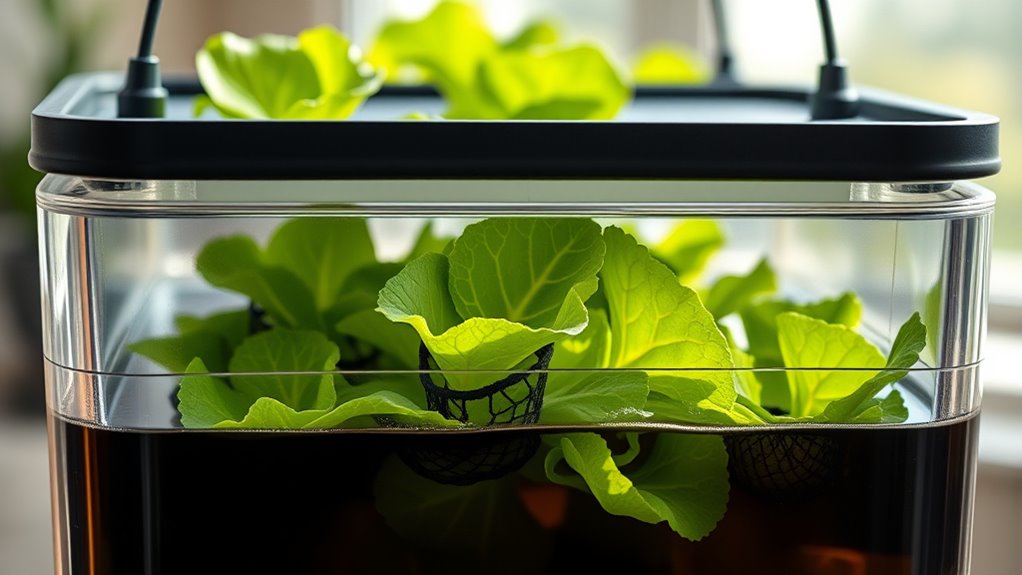
Have you ever wondered how to grow fresh, healthy plants indoors without complex setups or constant maintenance? The Kratky Method makes this possible by offering a simple, effective way to do hydroponics without the need for pumps, aerators, or complicated plumbing. All you need is a container, some nutrient solution, and your plants. This method relies on the natural process of osmosis and gravity to deliver nutrients directly to the roots, making it perfect for beginners or anyone looking for a low-tech gardening solution.
The core idea behind the Kratky Method is straightforward: you fill a container with a nutrient solution tailored to your plant’s needs. As the plant grows, its roots extend downward into this solution, absorbing water and nutrients. Unlike other hydroponic systems that require continuous circulation or aeration, the Kratky system remains static once set up. The key is guaranteeing your plant has proper support so it stays upright and stable as it grows. You can use a simple net pot or any support structure that holds the plant securely above the nutrient solution. This assures the roots are in contact with the water but not submerged completely, facilitating oxygen intake.
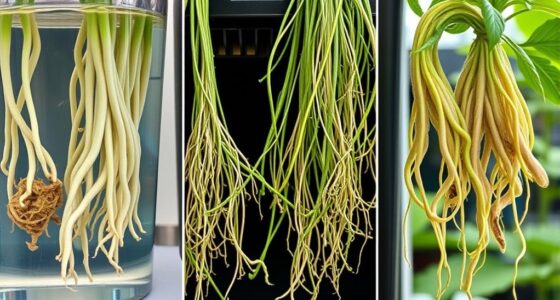
To set up, you fill your container with enough nutrient solution to cover the roots as they develop, but leave some space at the top. The water level will drop gradually as the plant uses the nutrients and water, creating an air gap that allows oxygen to reach the roots. This air gap is indispensable because it prevents root rot and promotes healthy growth. You don’t need to add any pumps or aerators—gravity and natural diffusion do all the work. This makes the Kratky Method not only simple but also highly energy-efficient and cost-effective.
Ensuring your plant has adequate support is essential. As the roots grow longer, they can become tangled or the plant might become top-heavy. Using a support structure or a stake helps keep it upright, preventing damage or tipping over. Regularly check the water level, topping it up with fresh nutrient solution as needed. This simple maintenance keeps your plants happy and healthy, without the hassle of constant attention or complex equipment. Additionally, understanding the nutrient solution composition can significantly impact the growth and health of your plants.
Frequently Asked Questions
Can the Kratky Method Be Used for Root Vegetables?
You can use the Kratky method for root vegetable cultivation, but it’s not ideal. Root vegetables like carrots and radishes need ample space and soil to develop properly. In this method, nutrient absorption rates might be limited since the roots stay submerged without proper aeration. For best results, consider traditional soil planting or aeroponics, which provide better conditions for root vegetables to grow large and healthy.
How Often Should I Check Nutrient Levels in the System?
You should check your nutrient levels regularly, ideally once a week, to make certain your plants stay healthy. During water testing, look for proper pH and nutrient concentration. Keep an eye on the water level and top off as needed to prevent roots from drying out. Consistent nutrient monitoring helps prevent deficiencies and promotes vigorous growth, so make it a routine part of your hydroponic system maintenance.
Is the Kratky Method Suitable for Outdoor Gardening?
Yes, the Kratky method works well outdoors if your soil is compatible and you can manage pests effectively. Since it’s a soil-less system, you avoid soil issues, but you’ll need to safeguard your plants from pests like aphids or beetles. Keep an eye on water levels and nutrient supplies, and guarantee your setup is stable against weather changes. With proper pest management, outdoor Kratky gardening can be very successful.
What Are the Ideal Water Temperatures for Growth?
While water temperature might seem minor, it greatly impacts plant growth. Keep your water between 65-75°F (18-24°C) to foster ideal growth conditions. Too cold, and your plants could slow down; too hot, and roots might rot or struggle to absorb nutrients. Maintaining this balance ensures healthy, vigorous plants. Monitoring and adjusting water temperature regularly allows you to maximize growth potential and prevent common issues associated with temperature fluctuations.
Can Multiple Plant Species Be Grown Together in One Container?
Yes, you can grow multiple plant species together in one container by practicing companion planting and considering container compatibility. Choose plants with similar water and nutrient needs to avoid competition. Guarantee their growth habits don’t overcrowd the container, allowing enough space for roots and airflow. This approach promotes healthy growth, maximizes space, and can improve pest control, making your hydroponic setup more efficient and successful.
Conclusion
Now that you know the Kratky method, you’re ready to give it a try. It’s a simple, no-fuss way to grow your own greens without the hassle of pumps or complicated setups. Just remember, patience is a virtue—your plants will flourish if you give them time and care. With this straightforward approach, you’re all set to reap the rewards of fresh, homegrown produce. So, don’t let this opportunity slip through your fingers—dive in and watch your garden thrive!