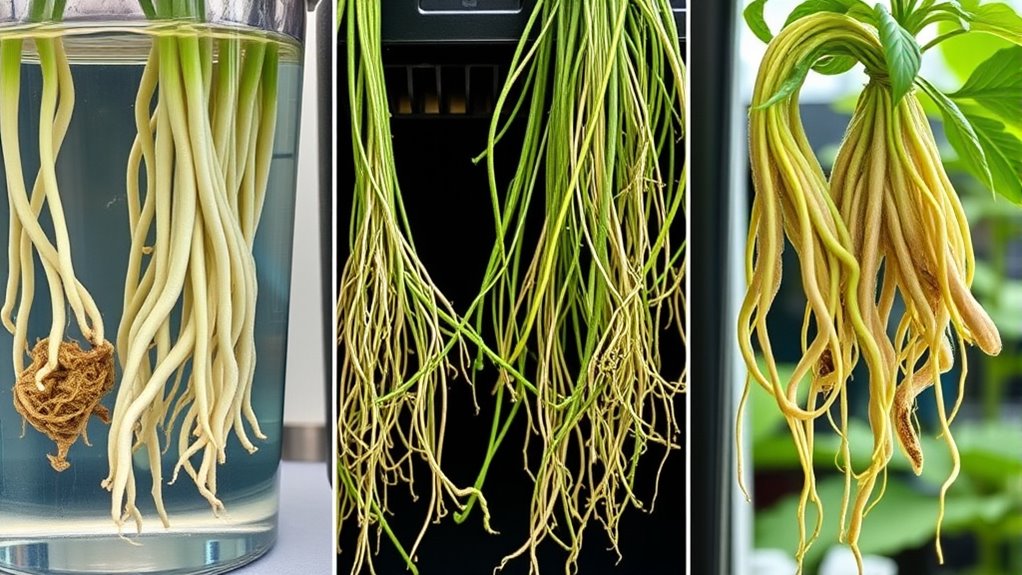

If you’re comparing DWC, NFT, and drip systems for root health, DWC offers roots constant access to oxygen and nutrients in a water reservoir, promoting rapid, healthy growth. NFT supplies roots with a flowing nutrient film and exposure to air but risks drying out if flow stops. Drip systems deliver nutrients directly to roots but can cause overwatering or underwatering if not managed carefully. Keep studying these methods to see which best supports your plants’ roots.

Get the little things that make your day delivered free — and shop member deals
- Fast, free delivery on millions of items
- Access to Prime Big Deal Days deals on October 6–7
- Prime Video, Amazon Music and more included
Key Takeaways
- DWC provides constant oxygenation directly to roots, promoting healthy, vigorous growth and reducing disease risk when properly managed.
- NFT delivers continuous nutrient flow with high oxygen exposure but is sensitive to flow disruptions that can stress roots.
- Drip systems offer precise nutrient control but may risk root dehydration or waterlogging if scheduling isn’t optimal.
- Roots in DWC are fully submerged in aerated water, ensuring consistent oxygen supply, unlike NFT and drip that rely on flow or media.
- Maintaining system cleanliness, flow consistency, and temperature is crucial across all methods to optimize root health and prevent pathogens.
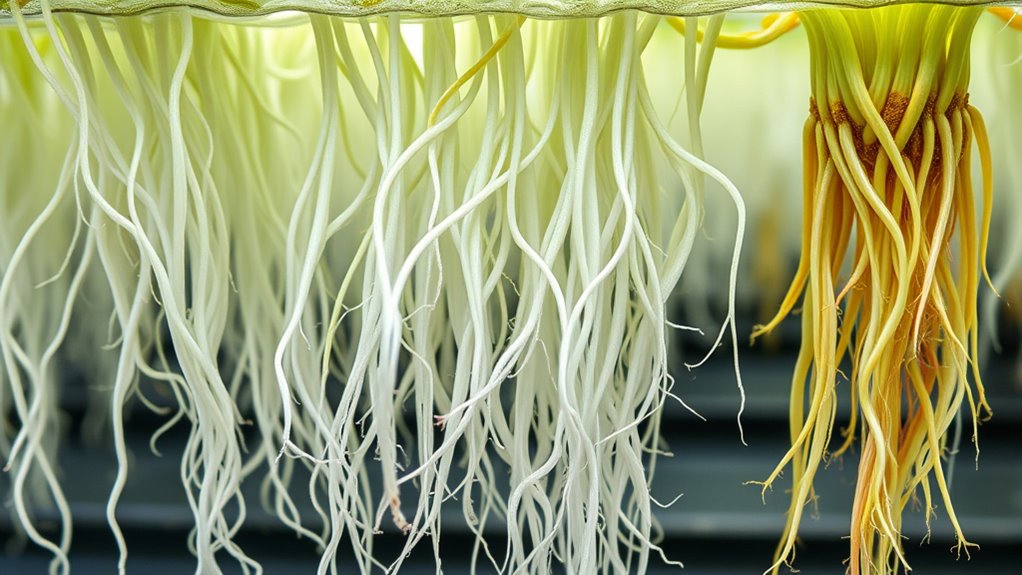
When choosing a hydroponic system, understanding how each method impacts root health is essential. Your plants’ roots are the foundation of healthy growth, nutrient uptake, and overall yield. Different systems provide varying environments for roots, influencing oxygen levels, nutrient delivery, and susceptibility to diseases. By understanding these differences, you can select the best setup for your plants’ needs and avoid common problems like root rot or stunted growth.
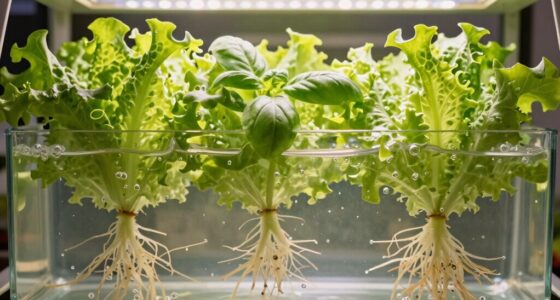
Deep Water Culture (DWC) is known for its simplicity and oxygen-rich environment. In DWC, roots hang directly into a nutrient-rich, aerated water reservoir. This constant access to oxygen promotes rapid growth and keeps roots healthy, as oxygen is critical for respiration and nutrient absorption. However, maintaining optimal oxygen levels is crucial; if aeration drops or the water temperature rises too high, roots can become vulnerable to pathogens like Pythium root rot. Regular monitoring of water temperature and oxygen levels helps prevent these issues, making DWC suitable for growers willing to invest in good aeration and temperature control. Additionally, using oxygenation techniques can further enhance root health in DWC systems.
Deep Water Culture offers an oxygen-rich environment that promotes rapid, healthy root growth with proper aeration and temperature management.
Nutrient Film Technique (NFT) involves a thin film of nutrient solution flowing over the roots, which are supported by a slight incline in channels. This design ensures roots are exposed to oxygen-rich air while receiving a steady supply of nutrients. Because the flow is continuous, roots get fresh nutrients and oxygen at all times, encouraging vigorous growth. However, the thin film of water can dry out if flow stops or becomes inconsistent, risking dehydration and root stress. Additionally, the constantly moving water can increase the risk of root disease spread if pathogens are introduced, so maintaining cleanliness and flow reliability is vital.
Drip systems deliver nutrients directly to the base of each plant through small emitters. This method offers precise control over nutrient delivery but can create a less consistently oxygenated environment for roots. Because roots are often partially in dry media with occasional wetting, they may not receive the same oxygen levels as in DWC or NFT. Overwatering can lead to waterlogged roots, promoting root rot, while underwatering can cause stress and stunted growth. Proper management of watering schedules and ensuring good media drainage are key to maintaining healthy roots in drip systems.
Deep Water Culture (DWC) hydroponic system
As an affiliate, we earn on qualifying purchases.
As an affiliate, we earn on qualifying purchases.
Frequently Asked Questions
Which Hydroponic System Yields the Fastest Plant Growth?
You’ll find that Deep Water Culture (DWC) generally yields the fastest plant growth among hydroponic systems. This method provides plants with constant oxygen and nutrient exposure by suspending roots directly in nutrient-rich water. The continuous supply promotes rapid development and higher yields. However, it requires close monitoring to prevent issues like root rot. If speed is your goal, DWC is often your best choice for quick, healthy growth.
How Do Nutrient Absorption Rates Compare Across DWC, NFT, and Drip?
Think of your roots as sponge brushes soaking up paint. In this case, DWC systems usually deliver nutrients more quickly and efficiently because roots are submerged directly in nutrient-rich water. NFT allows steady flow, so absorption is consistent but slightly slower. Drip systems provide targeted delivery, which can be slower but more controlled. Overall, DWC tends to have the highest absorption rates, giving plants quick access to nutrients.
What Are the Maintenance Requirements for Each Hydroponic System?
You’ll find that DWC requires regular water changes, air stone maintenance, and monitoring of nutrient levels. NFT systems need consistent pump checks, cleaning channels, and preventing clogging. Drip systems demand frequent emitter inspections, adjusting flow rates, and ensuring reservoirs stay clean. Each system needs diligent attention to keep plants healthy; neglecting maintenance can cause nutrient imbalances, clogging, or root diseases, ultimately affecting your crop yields.
Which System Is Most Resistant to Root Disease and Pests?
You’ll find that NFT systems are generally more resistant to root disease and pests because their shallow water flow minimizes stagnant zones where pathogens thrive. DWC systems, with their larger water volume, can sometimes foster disease if not properly maintained. Drip systems, depending on design, can also be vulnerable due to potential clogging and moisture buildup. Regular monitoring and sanitation are vital for all systems to prevent pest and disease issues.
How Do Costs and Scalability Differ Among DWC, NFT, and Drip?
You’ll find that DWC systems typically cost more upfront due to equipment needs but scale well for larger setups, making them suitable if you’re expanding. NFT systems are more affordable and easier to scale, ideal for small to medium operations. Drip systems can be cost-effective for large-scale applications and offer precise water delivery, but initial setup can be pricier depending on the complexity. Your choice depends on your budget and growth plans.
NFT hydroponic nutrient film technique kit
As an affiliate, we earn on qualifying purchases.
As an affiliate, we earn on qualifying purchases.
Conclusion
Just like the hero’s journey, choosing between DWC, NFT, and drip systems depends on your adventure in root health. Each method offers unique strengths, but understanding their science helps you make smarter decisions. Whether you’re steering through the depths of DWC’s oxygen-rich waters or riding the gentle flow of NFT, remember that your roots thrive on the right environment. So, embrace the quest with knowledge as your sword—your plants will thank you as they flourish like a mythic forest.
plant drip irrigation system for hydroponics
As an affiliate, we earn on qualifying purchases.
As an affiliate, we earn on qualifying purchases.
hydroponic root health monitoring tools
As an affiliate, we earn on qualifying purchases.
As an affiliate, we earn on qualifying purchases.
Fall Picks
fall essentials
As an affiliate, we earn on qualifying purchases.