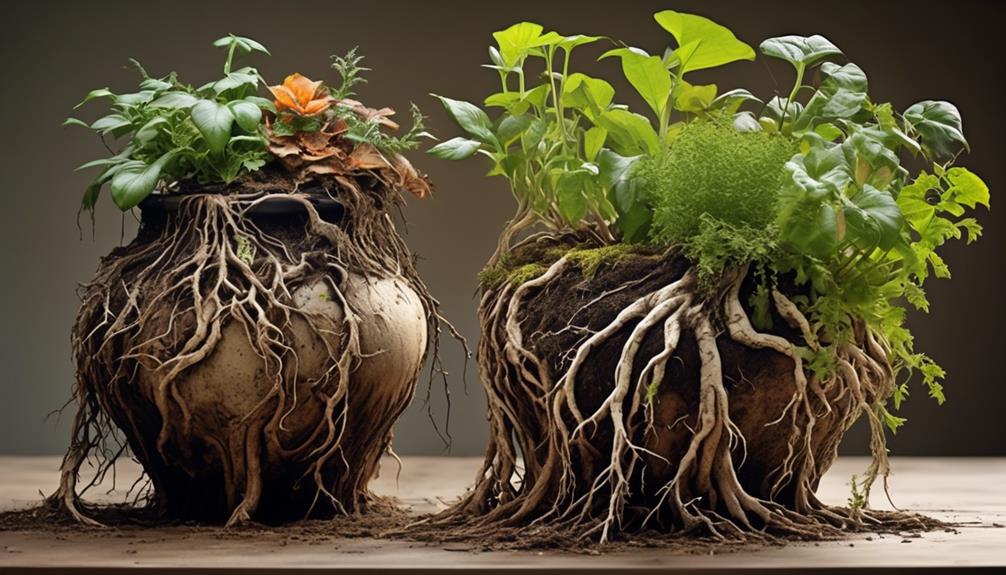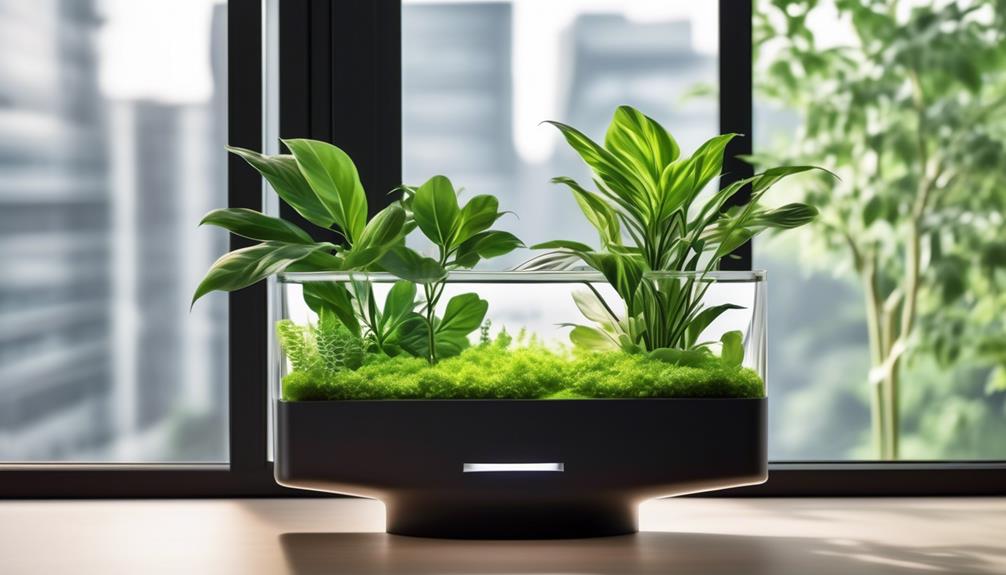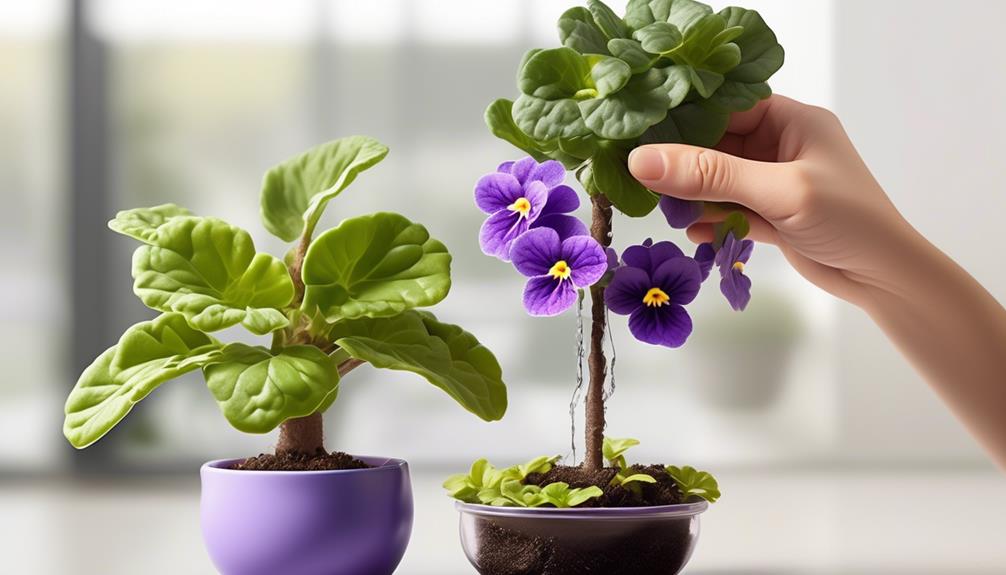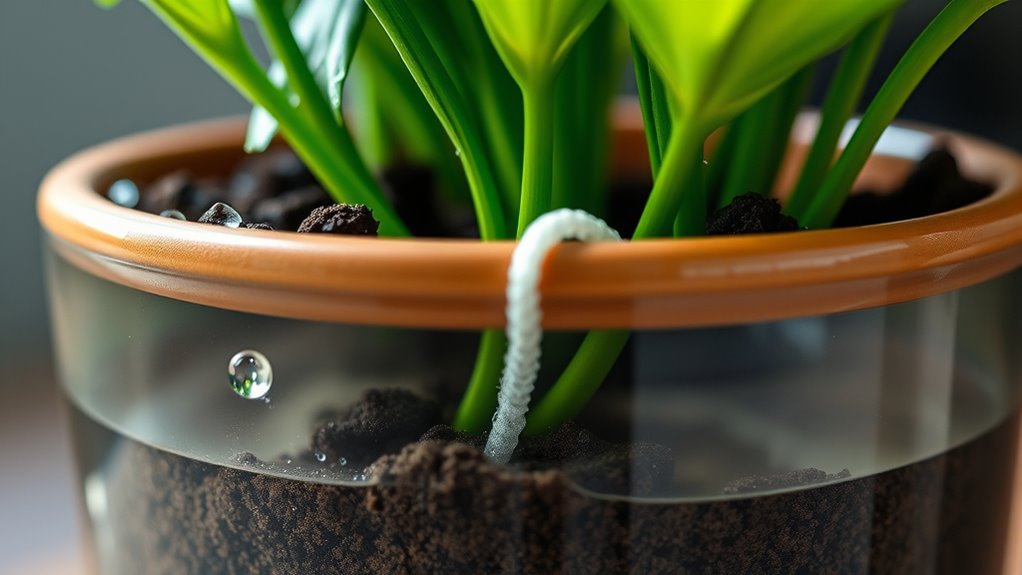
Self-watering pots work by using a reservoir below the plant’s soil, connected through wicks or channels that draw water up via capillary action. As you water the reservoir, it slowly releases moisture into the soil, keeping it consistently moist without overwatering. When the soil dries out, the system automatically supplies more water, maintaining ideal hydration. If you want to discover the details behind this clever system, keep exploring how it all functions.
Key Takeaways
- Self-watering pots have an outer water reservoir that supplies moisture to the soil through capillary action.
- Water moves from the reservoir into the soil via wicks or channels, ensuring consistent hydration.
- The system automatically adjusts watering based on soil moisture, slowing as the soil becomes wetter.
- This process prevents over- and underwatering, promoting healthy root growth and plant health.
- Overall, the pot’s design creates a self-regulating, continuous watering cycle that maintains optimal moisture levels.
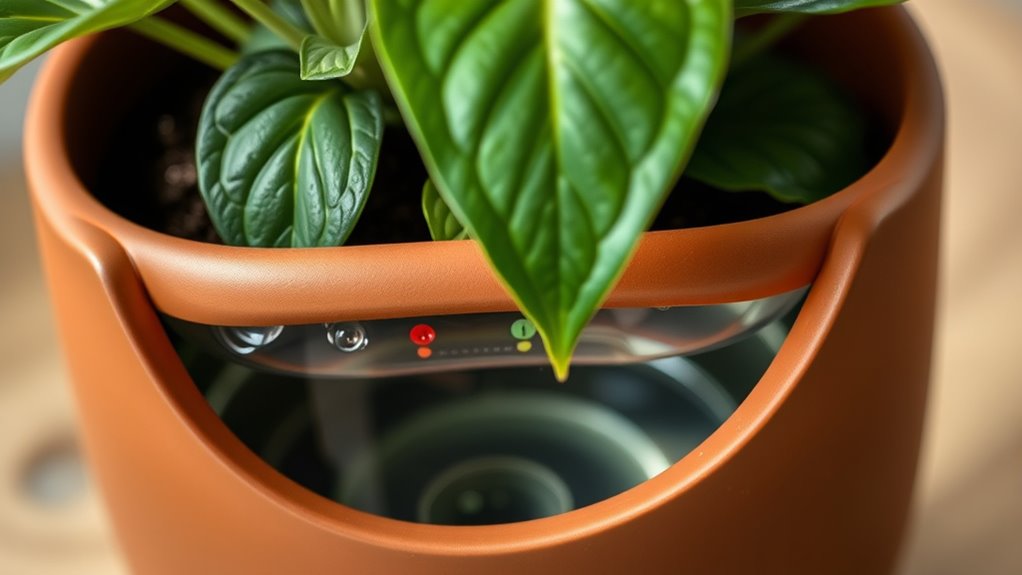
Ever wondered how to keep your plants consistently hydrated without daily watering? Self-watering pots are designed precisely for this purpose, utilizing a clever watering mechanism that guarantees your plants receive the right amount of moisture at all times. The core idea behind these pots is their ability to automate water delivery, reducing the need for your constant attention and making plant care much easier. When you fill the outer reservoir, the water slowly drips into the soil through wicks or channels, maintaining a steady moisture level. This consistent supply helps prevent the common problems of overwatering or underwatering, both of which can negatively impact plant health.
Self-watering pots ensure plants stay hydrated and healthy with minimal effort.
The watering mechanism in self-watering pots is usually straightforward but effective. Most use a reservoir that’s positioned below the planting area, connected via a wicking system or a similar conduit. When the soil begins to dry out, capillary action pulls water from the reservoir into the soil, keeping it moist. As the soil becomes wetter, the flow slows down and eventually stops until the moisture level drops again. This process creates a natural, self-regulating system that adapts to the plant’s needs. Unlike traditional pots, which require daily checking and watering, these systems work quietly in the background, providing a constant environment for your plants.
By maintaining ideal moisture levels, self-watering pots directly contribute to better plant health. Consistent hydration minimizes stress on plants, encouraging stronger roots and healthier foliage. It also reduces the risk of root rot caused by overwatering, which is a common problem in regular pots when excess water lingers in the soil. Additionally, steady moisture levels promote nutrient uptake, leading to more vigorous growth and vibrant leaves. For busy individuals or those new to gardening, these pots serve as a reliable solution, ensuring your plants remain thriving without daily fuss.
Another benefit of the watering mechanism is its ability to conserve water. Since the reservoir supplies only what the plant needs, there’s less waste compared to traditional watering methods. You’ll notice fewer waterings are necessary, saving you time and resources. Furthermore, the self-watering system helps create a stable environment for your plants, making it easier to manage watering schedules, especially during hot or dry seasons. With such a system in place, your plants stay healthier longer, and your gardening experience becomes more enjoyable and less stressful. Additionally, understanding the importance of global entertainment industry and the revenue it generates can inspire you to invest in quality gardening tools and systems, ensuring your plants thrive just like successful businesses thrive financially.

YNNICO Indoor Self Watering Planters with Drainage Holes and Saucers, 8, 7, 6.5, 6, 5.5, 5 Inches, Black, 6 Pots
【Practical Size Combo】-These plastic planters indoor combines with 6 different sizes, 8 inch 7inch 6.5 inch 6 inch...
As an affiliate, we earn on qualifying purchases.
Frequently Asked Questions
Can Self-Watering Pots Prevent Overwatering in All Plant Types?
Self-watering pots can help prevent overwatering for many plant types, but they aren’t foolproof. Your watering consistency and the reservoir capacity matter a lot. If you forget to refill the reservoir or if it’s too small for larger plants, overwatering or underwatering can still happen. It’s best to monitor your plants regularly and choose a pot with an appropriate reservoir size for your specific plant’s needs.
How Often Should I Refill the Water Reservoir?
You should refill the reservoir when it’s nearly empty, which depends on your plant’s watering schedule and the reservoir capacity. Typically, check it every few days, especially during warmer weather or if your plant needs more water. Monitor the soil moisture regularly, and top off the reservoir as needed to keep your plant consistently hydrated without overwatering. This routine guarantees your plant stays healthy and well-watered.
Are Self-Watering Pots Suitable for Outdoor Use?
Yes, self-watering pots are suitable for outdoor use, but you should consider climate conditions and outdoor durability. In harsh weather or freezing temperatures, the reservoir may crack or malfunction, so it’s best to bring them inside or choose models designed for outdoor resilience. For maximum performance, verify vents and materials can withstand sun, rain, and temperature fluctuations, making your self-watering system reliable year-round.
Do Self-Watering Pots Require Special Soil or Fertilizers?
Imagine growing vibrant herbs in your self-watering pot. You don’t need special soil, just well-draining, compatible soil for your plant’s needs. Self-watering pots typically don’t require unique fertilizers; standard plant fertilizers work fine. However, you should monitor fertilizer requirements because overfeeding can cause issues. Using the right soil and fertilizers guarantees your plants thrive without extra hassle, making your gardening experience easier and more successful.
What Are Common Signs That a Self-Watering Pot Isn’t Functioning Properly?
You’ll notice watering issues if your plant shows signs of overwatering or underwatering, like yellowing leaves or wilting. Check for reservoir leaks, which can cause inconsistent watering. If the water level drops too quickly or the plant seems dry despite a full reservoir, it’s a sign the system isn’t functioning properly. Regularly inspect the mechanism and verify there are no cracks or clogs causing these issues.

Fielda 8/10/12 Inch Self Watering Pots for Indoor/Outdoor Plants - Large Plastic Planter with Drainage Holes, Water Level Indicator & Deep Reservoir, Modern Decorative Flower Pots (White)
🌿 【Self-Watering Pots with Water Level Indicator】 Designed for busy plant lovers, our 8/10/12 self-watering pots feature a...
As an affiliate, we earn on qualifying purchases.
Conclusion
Now you see how these pots work like silent guardians, always ready to nurture your plants. They draw from the reservoir as a gentle river, keeping roots moist and healthy, much like a steady heartbeat. With each watering, they whisper quiet reassurance, letting you focus on growth without worry. Just as nature balances life in harmony, your self-watering pot guarantees your plant’s needs are met, turning everyday care into a seamless, reliable rhythm.
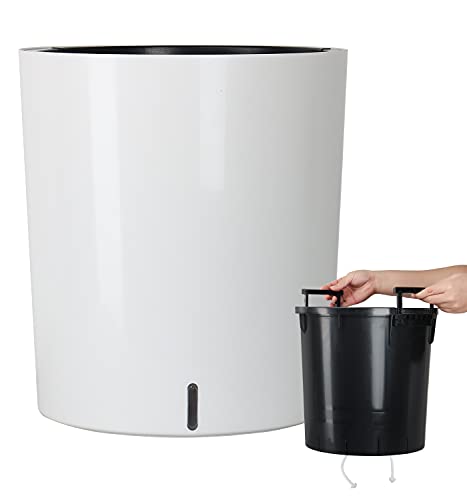
SAROSORA Large Round Self Watering Planter Pot 12.5'' for Home Garden Patio Tall Tree
Designed with two layers inside and outside pot, the outer pot is made of high-polished high-quality PP plastic.
As an affiliate, we earn on qualifying purchases.

Dexceder 15x14 Self Watering Planter with Wheels Indoor Outdoor, Inner Pot Design, Thickened Large Floor Standing Flower Plant Pot with Water Level Indicator (White Matte)
SELF WATERING & NO MORE ROOT ROT - The smart unique sub-irrigation system is one of the most...
As an affiliate, we earn on qualifying purchases.