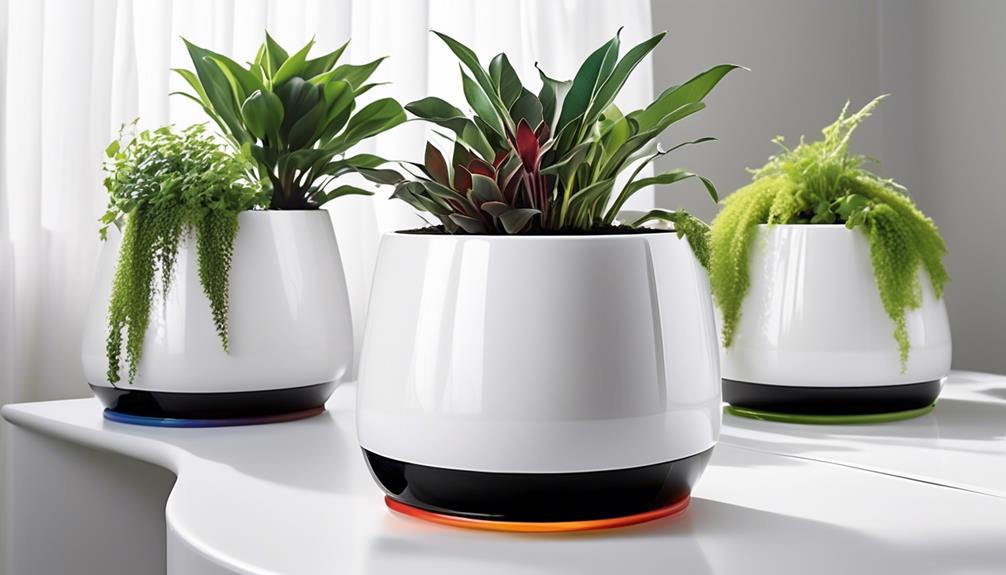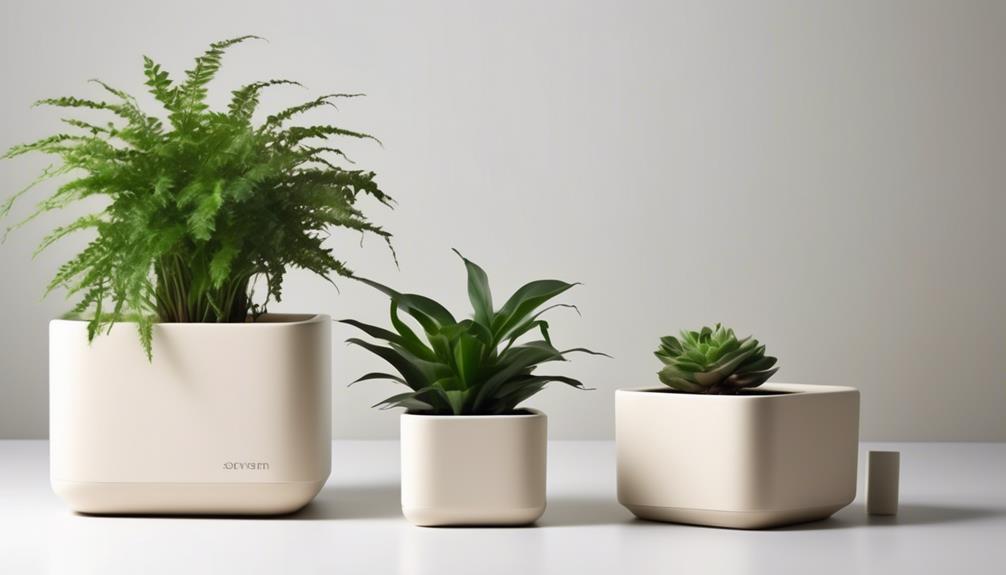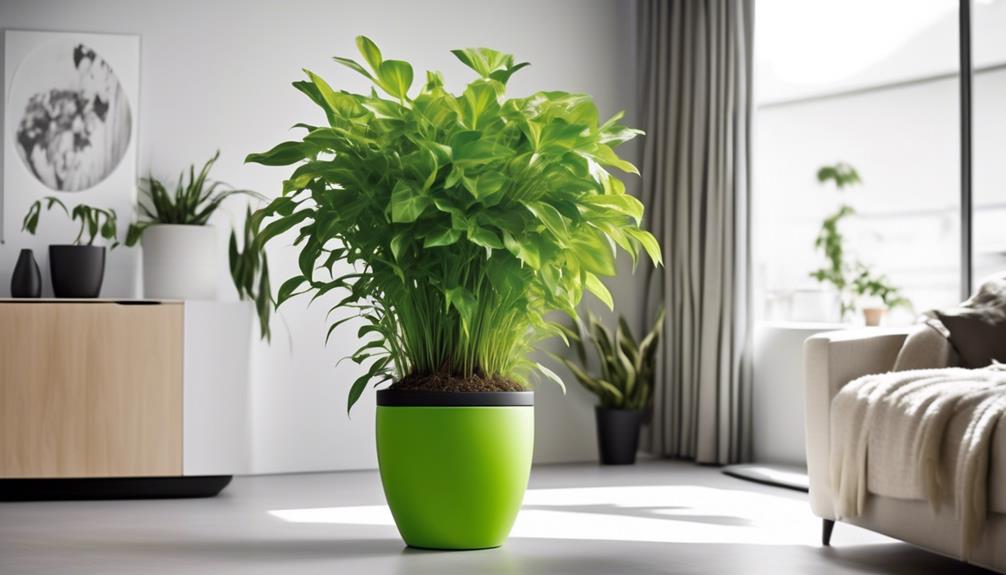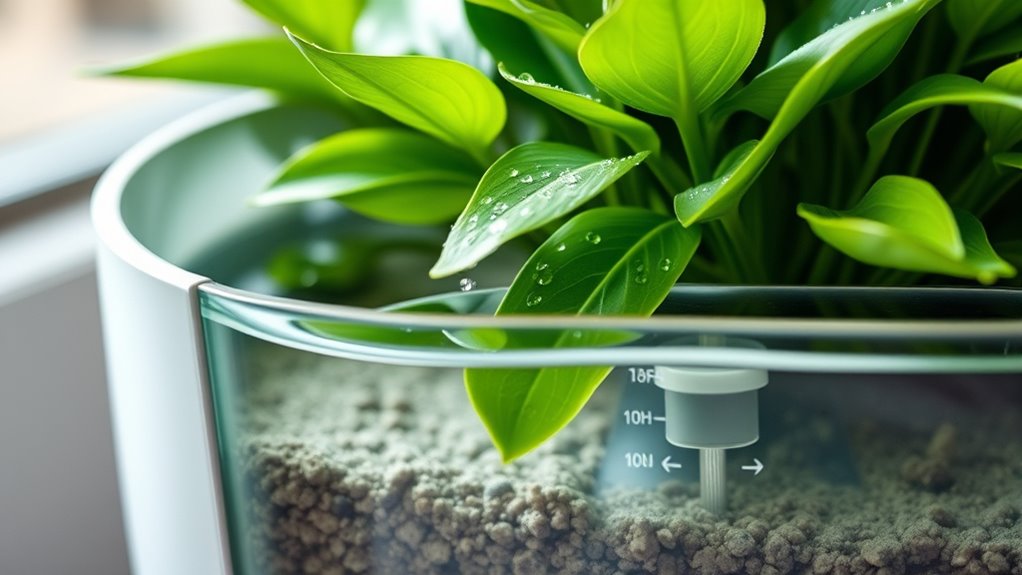

How often you need to refill your self-watering reservoir depends on your plants’ needs, reservoir size, and weather conditions. Usually, leafy greens and flowering plants require refills every few days, while drought-tolerant plants may only need weekly top-ups. Regularly check water levels, especially during hot, dry spells, to prevent your plants from drying out or overwatering. Keeping a close eye helps you maintain a healthy watering schedule—if you want to know more, keep reading!
Key Takeaways
- Monitor water levels regularly, especially during hot or dry weather, to prevent reservoirs from running dry.
- Refill when water drops below the recommended level indicated by level markers or visible water loss.
- Frequency depends on plant type, with leafy greens needing more frequent refills than drought-tolerant plants.
- Check reservoir capacity and adjust refilling schedule accordingly, typically every few days to weekly.
- Refill slowly to avoid air bubbles and ensure even water distribution for healthy plant hydration.

Have you ever wondered how to keep your self-watering plant reservoir properly filled? Maintaining the right watering frequency is key to ensuring your plants stay healthy without overwatering or letting the soil dry out. The first step is understanding your reservoir’s capacity, which varies depending on the size of your container and the type of plant you’re growing. Knowing this helps you plan when to refill so your plant always has enough water. Typically, a larger reservoir means less frequent refills, but it’s essential to check it regularly because other factors can influence water consumption.
To determine how often to refill, start by observing your plant’s watering needs. Some plants require more water than others, especially during their active growing season. For instance, leafy greens or flowering plants tend to drink more, so their reservoir might need refilling every few days. Conversely, succulents or drought-tolerant plants may only need replenishing once a week or even less. Keep in mind that the reservoir’s capacity plays a significant role here. A small reservoir might need daily attention, while a bigger one could last a week or more. Always monitor the water level to avoid running dry, which can stress your plant or lead to uneven watering.
Another useful tip is to check the water level regularly, especially during hot or dry weather when plants tend to use more water. Many self-watering systems come with transparent reservoirs or level indicators, making it easier to see when a refill is needed. If yours doesn’t, it’s a good idea to mark the water levels with a waterproof marker for quick visual checks. When it’s time to refill, do so slowly to prevent splashing or air bubbles that could disrupt the system’s function. Remember, don’t just top off the reservoir; fill it completely to ensure your plant gets a consistent supply of water until the next refill.
Additionally, ensuring your watering system is properly maintained and free of clogs helps to keep water flow consistent, reducing the risk of over- or under-watering. Paying attention to these factors helps you fine-tune your watering schedule. Ultimately, maintaining a regular check on your reservoir’s capacity and adjusting your refill routine accordingly ensures your self-watering system works efficiently. This proactive approach keeps your plants nourished and prevents water stress, making your gardening easier and more successful.
Frequently Asked Questions
How Do I Know When My Reservoir Needs Refilling?
You’ll know your reservoir needs refilling when the water level drops below the marked minimum, indicating it’s time to top it off. Check the reservoir capacity regularly, especially if your plants require frequent watering. Monitoring the watering frequency helps prevent your plants from drying out or overwatering. To avoid guesswork, make it a habit to refill your self-watering reservoir every few days or as needed based on plant demand.
Can Overfilling Damage My Self-Watering System?
Overfilling your self-watering system can cause damage, especially with reservoir evaporation that may lead to overflow. It can also dilute water quality, making your plants susceptible to diseases. To prevent this, only refill to the recommended level and avoid overfilling. Regularly check water levels, and maintain water quality to keep your system functioning properly without risking damage from excess water.
What Is the Ideal Water Level for My Reservoir?
You should keep your reservoir filled to the recommended level, usually about 1-2 inches below the overflow outlet, to maintain proper soil moisture and plant health. Avoid overfilling, as excess water can lead to root rot and other issues. Regularly check the water level, especially during hot weather, to verify your plants stay consistently hydrated without drowning them. Proper water levels keep your plants thriving and healthy.
How Often Should I Check the Water Level?
A stitch in time saves nine, so you should check your reservoir weekly. Regular reservoir maintenance guarantees your plants get consistent watering, preventing over- or under-watering. During each check, observe the water level and top it off as needed, especially during hot or dry periods. Staying attentive helps maintain ideal watering frequency, keeping your plants healthy and thriving without the risk of dehydration or excess moisture.
Are There Signs of My Plants Being Overwatered?
You might notice signs of overwatering, like yellowing leaves, soggy soil, or mold around your plant. If your watering frequency is too high, your plant’s health can suffer, leading to root rot and other issues. To prevent this, check your self-watering reservoir regularly and adjust your watering schedule accordingly. Keep an eye on soil moisture and plant appearance to maintain ideal plant health and avoid overwatering problems.
Conclusion
To keep your plants happily thriving, check and refill your self-watering reservoir regularly—probably once a week, or as needed. Think of it like tending to your trusty steed; a little upkeep keeps everything running smoothly. Don’t let your garden become a ghost town of wilted leaves and drooping stems. With a little routine maintenance, your plants will flourish like a well-oiled machine, and you can enjoy lush greenery without the fuss—just like a true modern-day gardener of yore.