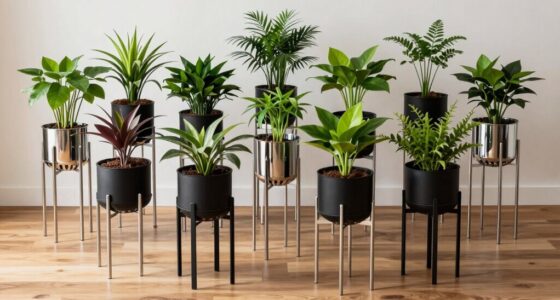
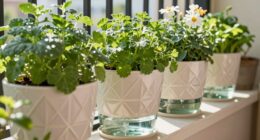
Indoor and outdoor self-watering planters differ mainly in design, materials, and how they handle watering. Indoor models are made to look good and work well in stable environments, using materials like ceramics or plastics. Outdoor planters are tougher, often made from weather-resistant materials like metal or resin, and include larger reservoirs for irregular watering needs. If you’re curious about how to choose the right type for your space, there’s more to explore.
Key Takeaways
- Indoor planters offer consistent watering with smaller reservoirs, while outdoor planters require larger reservoirs due to weather variability.
- Indoor planters are made from aesthetic, lightweight materials like ceramic or plastic, whereas outdoor ones need durable, weather-resistant materials.
- Outdoor self-watering planters must withstand sun, rain, and temperature changes, unlike indoor models unaffected by weather.
- Indoor planters focus on aesthetics and ease of cleaning, while outdoor variants prioritize durability and resistance to environmental elements.
- Watering schedules differ: indoor models provide steady moisture, outdoor planters may need more frequent adjustments due to weather conditions.
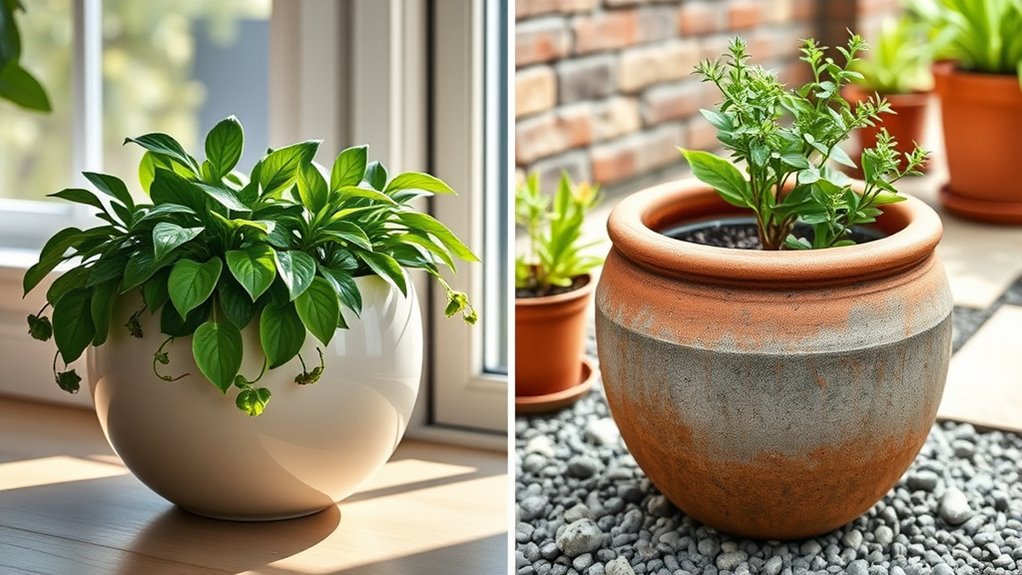
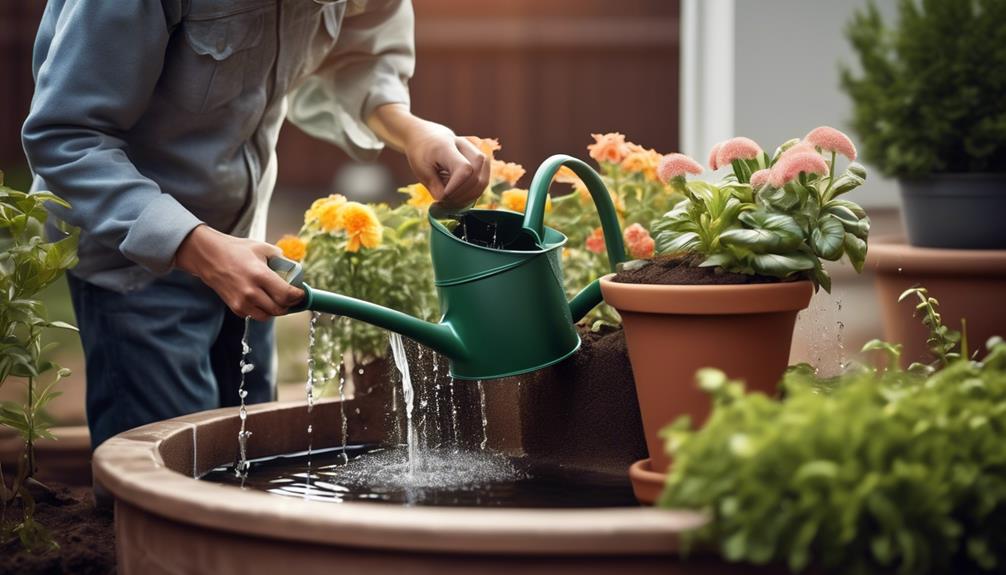
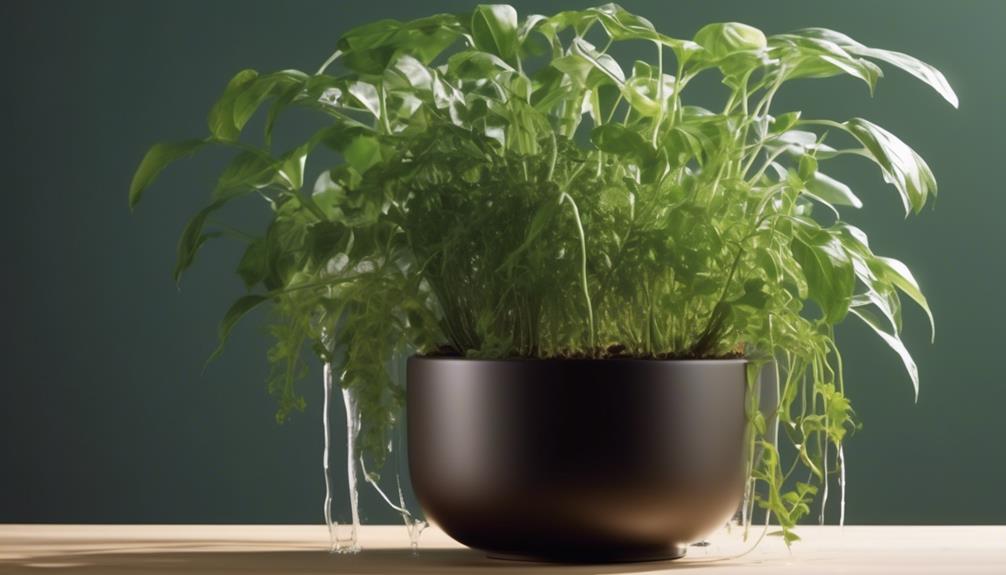
When choosing self-watering planters, understanding the differences between indoor and outdoor options can help you make the right decision for your plants. One of the key factors to think about is how these planters manage watering schedules. Indoor self-watering planters are designed to provide a steady, consistent supply of water, which is vital in environments where evaporation and drying out happen more slowly. They often feature reservoirs that release water gradually, ensuring your plants stay hydrated without overwatering. Outdoor planters, on the other hand, face more variable conditions. They need to accommodate fluctuations in weather, sunlight, and humidity, which can make maintaining a proper watering schedule trickier. Some outdoor models include adjustable features or larger reservoirs to extend watering intervals, but you’ll generally have to check on them more frequently to prevent water loss due to rain or evaporation. Water management is especially important for maintaining healthy plant roots and avoiding issues like root rot or dehydration. Material durability plays a significant role when choosing between indoor and outdoor self-watering planters. Indoor planters are typically made from materials like ceramic, plastic, or resin. These materials are chosen for their aesthetic appeal and ease of cleaning, but they vary in resilience. For example, ceramic planters look great but can crack or chip if dropped, whereas high-quality plastics are more resistant to impact and easier to move around. Outdoor planters need to withstand harsher conditions, so they’re usually constructed from more rugged materials like thick plastic, metal, or composite materials. These withstand exposure to sun, rain, and temperature fluctuations better than indoor-specific materials. If you opt for a plastic outdoor planter, verify it’s UV-resistant to prevent fading or brittleness over time.
As an affiliate, we earn on qualifying purchases.
Frequently Asked Questions
Are Self-Watering Planters Suitable for All Plant Types?
Self-watering planters are suitable for many plant types, but you should consider plant compatibility first. They work well for plants that prefer consistent moisture, reducing your watering frequency. However, some plants, like succulents or cacti, need less water and might not thrive in these planters. Always check your plant’s specific watering needs and adjust the planter’s watering frequency accordingly to keep your plants healthy and happy.
How Often Should I Refill the Water Reservoir?
Water wisely to maintain your plant’s well-being. Typically, you should refill the reservoir every few days, depending on your watering schedule and reservoir capacity. Check the water level regularly to prevent dryness or overfilling. For indoor planters, expect more frequent refills, while outdoor ones may need less. Monitoring moisture levels guarantees your plants flourish without the hassle of constant watering, keeping them healthy and happy.
Do Self-Watering Planters Prevent Overwatering?
Yes, self-watering planters help prevent overwatering by maintaining ideal soil moisture levels. They deliver water gradually, so your plants absorb what they need without sitting in excess moisture that could harm their health. You can monitor soil moisture easily, ensuring your plants stay healthy. This controlled watering system reduces the risk of root rot and other issues caused by overwatering, promoting stronger, healthier growth.
Can Outdoor Self-Watering Planters Withstand Harsh Weather?
Think of outdoor self-watering planters as resilient guardians against nature’s fury. They’re built with weather resistance and durable materials that allow them to withstand harsh conditions like rain, wind, and sun. While they’re tough, your planters still need placement in sheltered spots during extreme weather to prolong their life. Choosing high-quality materials like UV-resistant plastics or treated metals guarantees your planters stay strong and functional through all seasons.
Are Self-Watering Planters Easier to Maintain Than Traditional Pots?
Self-watering planters are generally easier to maintain than traditional pots because they help you achieve watering consistency, reducing the risk of over- or under-watering. This consistent moisture level supports better plant health and minimizes your hands-on effort. You won’t need to water as frequently, and the self-watering system will do most of the work for you, making plant care more straightforward and less time-consuming.
outdoor weather-resistant self-watering planters
As an affiliate, we earn on qualifying purchases.
As an affiliate, we earn on qualifying purchases.
Conclusion
Choosing between indoor and outdoor self-watering planters depends on your space and needs. Remember, a wise gardener once said, “A garden is a mirror of the soul.” Whether you prefer the cozy charm of indoors or the wild beauty outside, self-watering planters make nurturing your plants easier. Like a trusty steed from a bygone era, they’ll serve you well in your quest for a flourishing green oasis—just don’t forget to give them some love and attention.

Nihow Ceramic Self Watering Plant Pot for Indoor Plants, 6 Inch,Cream White
- Self-Watering System: Includes drainage holes and cotton wick
- Large Water Storage: 6×2.5 inch saucer for reusing water
- Ideal Size & Style: Fits various plants with modern design
As an affiliate, we earn on qualifying purchases.
As an affiliate, we earn on qualifying purchases.
UV-resistant outdoor self-watering planters
As an affiliate, we earn on qualifying purchases.
As an affiliate, we earn on qualifying purchases.