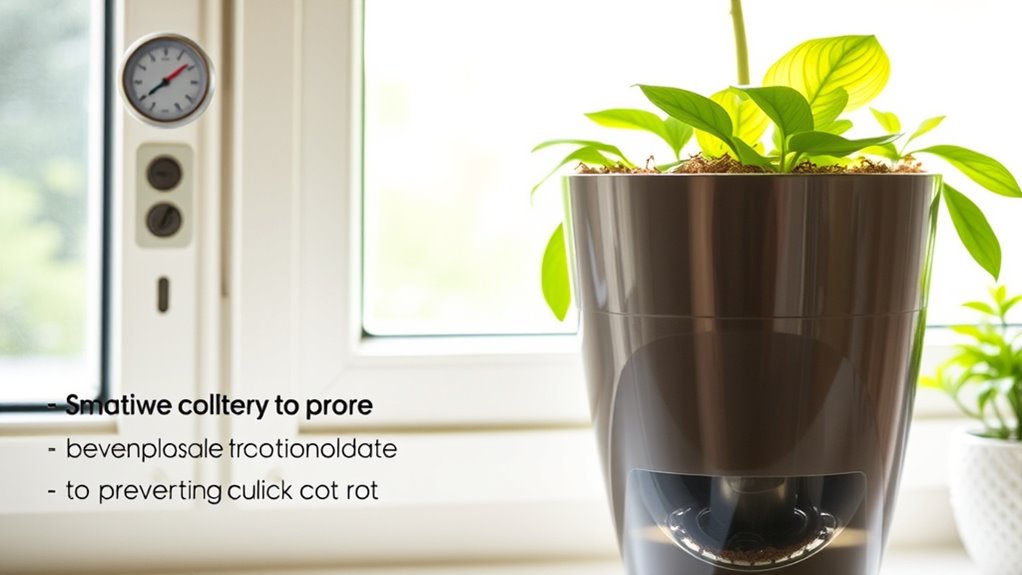
To prevent mold and root rot in self-watering pots, regularly check soil moisture and only water when the top inch feels dry. Use well-draining soil and avoid overfilling the reservoir to prevent excess moisture. Gently loosen the soil surface and incorporate organic amendments like pumice for better drainage. Keep containers clean and promptly remove mold or discolored roots. Continuing with these tips will help you maintain healthy plants and avoid common moisture issues.
Key Takeaways
- Avoid overfilling the reservoir and maintain proper water levels to prevent stagnation and mold growth.
- Use well-draining, aerated soil and gently loosen the surface regularly to improve oxygen flow.
- Ensure the soil surface stays dry by monitoring moisture and removing excess water promptly.
- Keep self-watering pots clean and replace soil if mold or foul odors appear.
- Regularly inspect plants for mold or root issues and remove affected parts immediately.
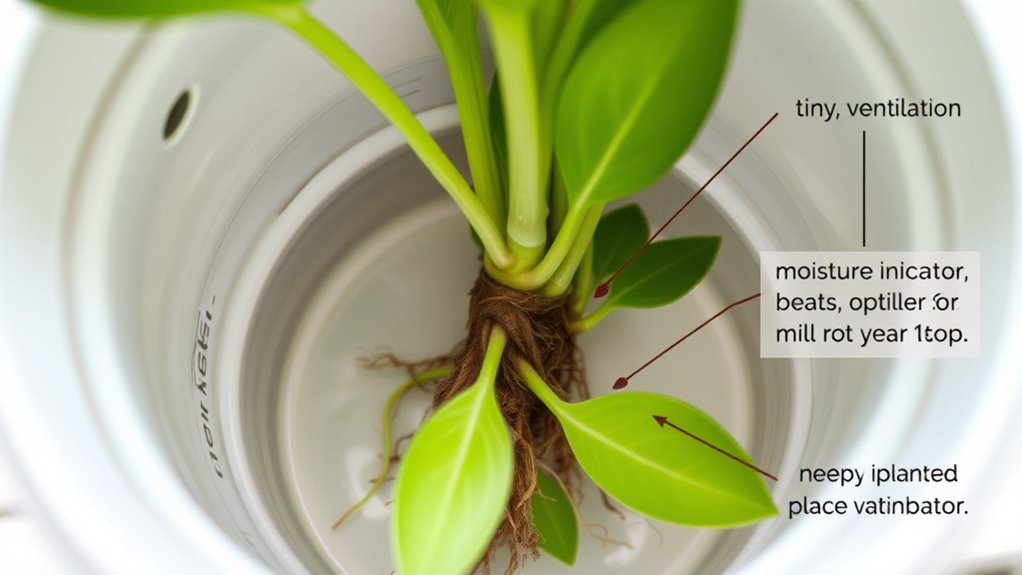
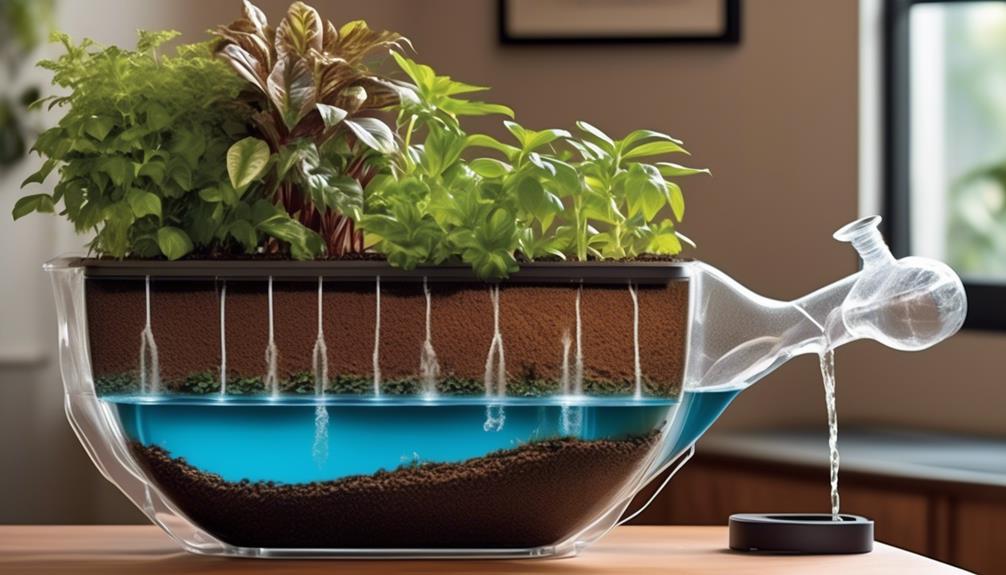
Self-watering pots are convenient, but if you’re not careful, mold and root rot can quickly become problems. These issues often stem from overwatering or poor soil conditions, which create the perfect environment for fungi and bacteria to thrive. To prevent this, paying close attention to watering frequency is essential. Unlike traditional pots, self-watering containers supply water automatically through a reservoir, so it’s tempting to assume your plants are getting just the right amount. However, overwatering can still occur if the reservoir is too full or if you forget to check it regularly. It’s best to water only when the top inch of soil feels dry. This helps to avoid excess moisture that can lead to mold growth and root decay.
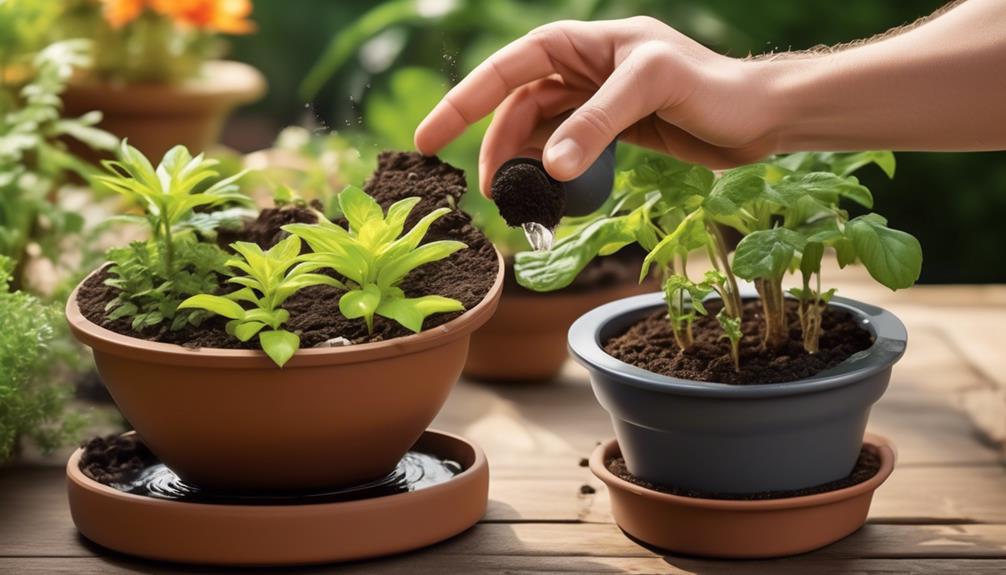
Check your self-watering pots regularly and water only when the top inch of soil feels dry.
In addition to watering habits, soil aeration plays a crucial role in preventing these problems. When soil becomes compacted or stays overly moist, oxygen can’t circulate properly around the roots. This lack of airflow creates a breeding ground for mold and encourages root rot. To improve soil aeration, choose a well-draining soil mix designed for container plants, and gently loosen the soil surface periodically. Avoid packing the soil too tightly when filling your self-watering pot, as dense soil reduces airflow and traps excess moisture. Incorporating organic matter like perlite or pumice can also enhance drainage and oxygen flow, helping to keep the roots healthy and dry. Recognizing the importance of soil health can guide you in maintaining a thriving plant environment.
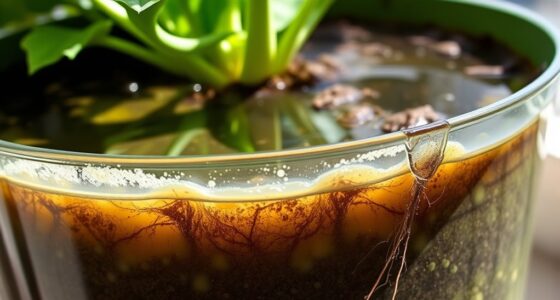
Monitoring your plant’s environment is equally important. Keep an eye on the water level in the reservoir, making sure it doesn’t stay full for extended periods. If you notice mold spots on the soil surface or a foul smell, it’s a sign that moisture levels are too high or that the soil isn’t ventilating properly. In such cases, remove the plant from the pot to inspect the roots, and trim away any soft, discolored tissue. Repotting with fresh, aerated soil can help restore a healthy balance and prevent future issues.
Finally, don’t forget to maintain good hygiene. Clean your self-watering pots regularly, especially if you see mold or mold spores, and avoid overwatering by sticking to a consistent watering routine based on your plant’s needs. Proper watering frequency combined with good soil aeration creates an environment where roots can thrive without succumbing to mold or rot. When you stay attentive and proactive, you’ll enjoy healthy, vibrant plants without the worry of mold or root decay sneaking in.
Frequently Asked Questions
Can Using Distilled Water Prevent Mold Growth?
Using distilled water can help prevent mold growth in your self-watering pots because it lacks minerals and contaminants that promote mold development. When you opt for distilled water, you’re reducing the risk of mold spores thriving in the moist environment. This simple change aids in mold prevention, keeping your plants healthier. Remember, maintaining proper drainage and avoiding overwatering are also key steps to prevent mold and root rot.
How Often Should I Replace the Soil in My Self-Watering Pot?
Like a wise old sage once said, your self-watering pot’s soil needs a gentle refresh every 1 to 2 years. Regular soil maintenance is key; replace it when you notice persistent mold, foul odors, or poor plant growth. Adjust your watering frequency based on plant needs and season changes, preventing excess moisture that fosters mold and root rot. Keeping the soil healthy guarantees your plants thrive, free from unwanted fungi and decay.
Are There Specific Plants More Prone to Root Rot?
Certain plants are more prone to root rot due to their susceptibility and root vulnerability. For example, succulents and cacti, which prefer well-drained soil, often struggle in self-watering pots that retain excess moisture. Conversely, overwatering leafy greens or ferns can also cause issues. To safeguard your plants, monitor moisture levels carefully, choose species suited for self-watering systems, and guarantee proper drainage to minimize root vulnerability.
What Are Natural Remedies for Mold on Pot Surfaces?
For mold on pot surfaces, try natural remedies like a vinegar and water solution or baking soda paste to banish bacteria. Organic antifungal treatments, such as neem oil or tea tree oil diluted with water, work wonders without harsh chemicals. These simple, sustainable solutions scrub away mold, safeguard your plants, and keep your pots pristine. Regularly wiping and drying surfaces also prevents mold from making a comeback.
Does Sunlight Exposure Affect Mold Development in Pots?
Sunlight exposure plays a key role in mold prevention in your pots. When you place your self-watering pots in direct sunlight, it helps keep the soil dry and inhibits mold growth. Make certain they get enough light, but avoid overly damp conditions and excessive moisture, which can promote mold. Proper sunlight exposure not only enhances plant health but also reduces mold development, keeping your pots cleaner and healthier.
Conclusion
To keep your plants thriving, think of your self-watering pot as a delicate ecosystem that needs balance. Regularly check the water level, clean the reservoir, and avoid overwatering—like tending to a gentle garden, not a swamp. With these simple steps, you’ll prevent mold and root rot from taking hold. Keep your plant’s home healthy and vibrant, and watch it flourish like a well-tuned orchestra, harmonious and strong.