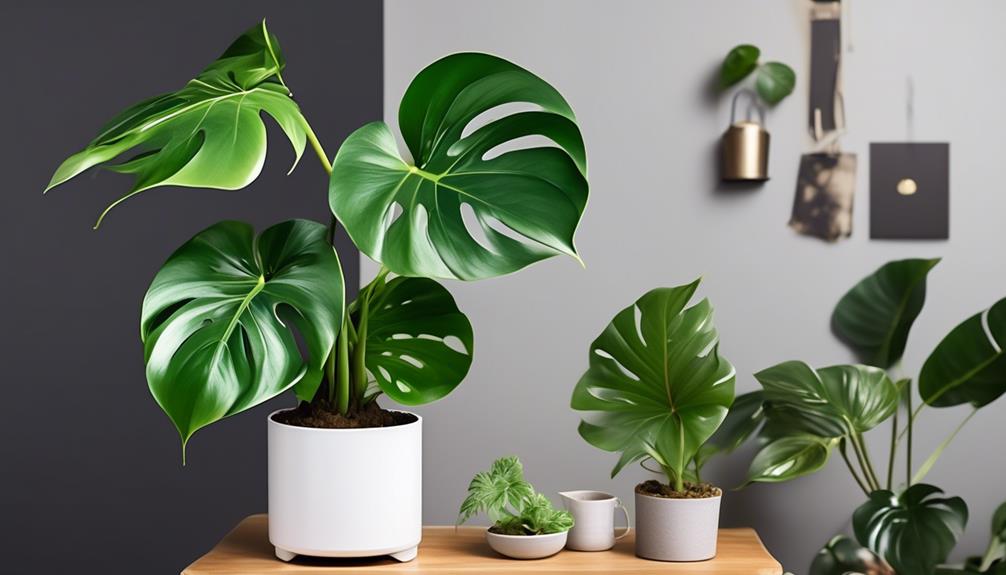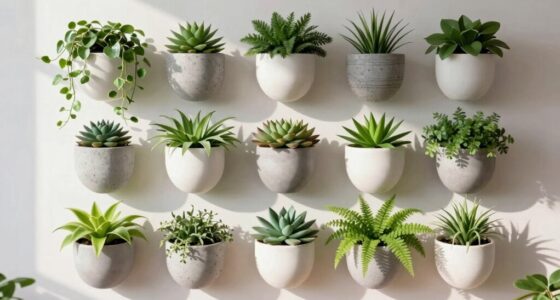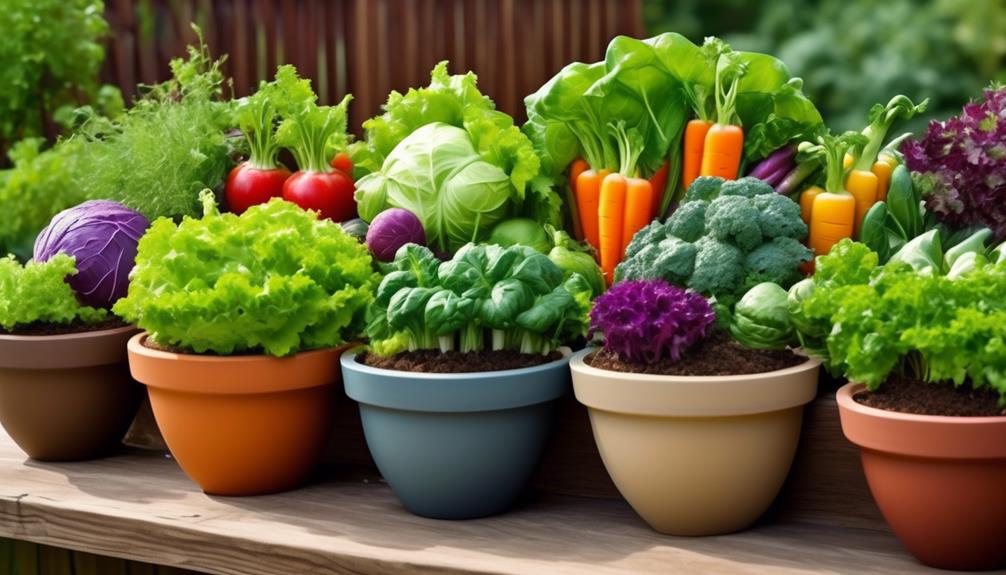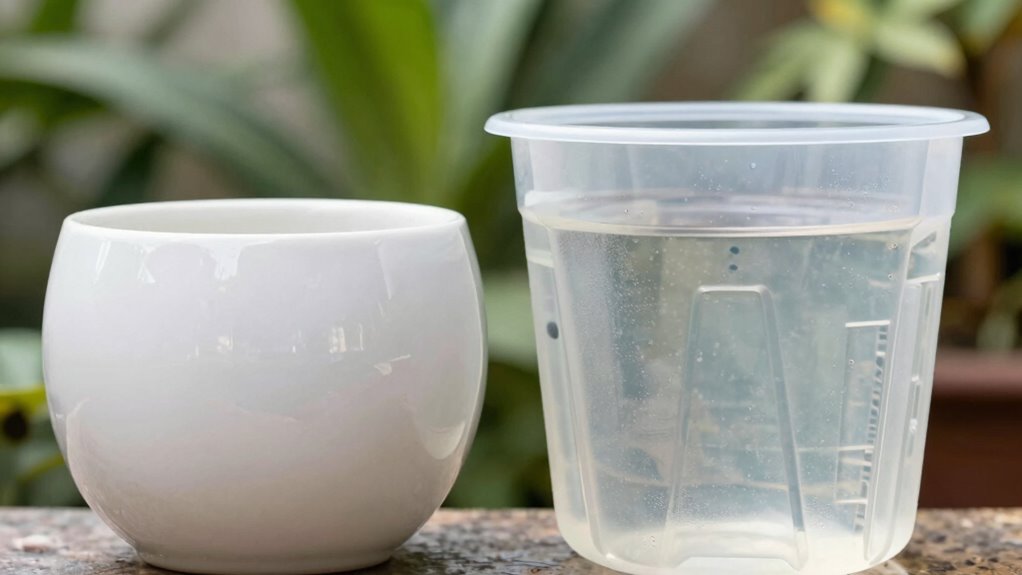
When choosing between ceramic and plastic self-watering pots, consider your aesthetic preference, climate, and maintenance needs. Ceramic offers attractive designs and enhances decor but can crack in freezing temperatures and needs closer moisture monitoring due to its porosity. Plastic is durable, lightweight, and better for outdoor use, though it may fade over time. Both materials have their advantages, and understanding these details can help you pick the best option for your plants and space.

Get the little things that make your day delivered free — and shop member deals
- Fast, free delivery on millions of items
- Access to Prime Big Deal Days deals on October 6–7
- Prime Video, Amazon Music and more included
Key Takeaways
- Consider aesthetic preferences: ceramic offers decorative appeal, while plastic provides a wide range of colors and styles.
- Evaluate climate and outdoor use: plastic is better for outdoor, temperature fluctuations, whereas ceramic is more fragile.
- Assess moisture needs: ceramic’s porosity helps prevent overwatering; plastic retains moisture longer.
- Factor in durability: plastic resists chipping and cracking, making it more impact-resistant and suitable for outdoor environments.
- Think about maintenance and environmental impact: plastic is lightweight and often recyclable, while ceramic requires careful handling and provides a natural look.
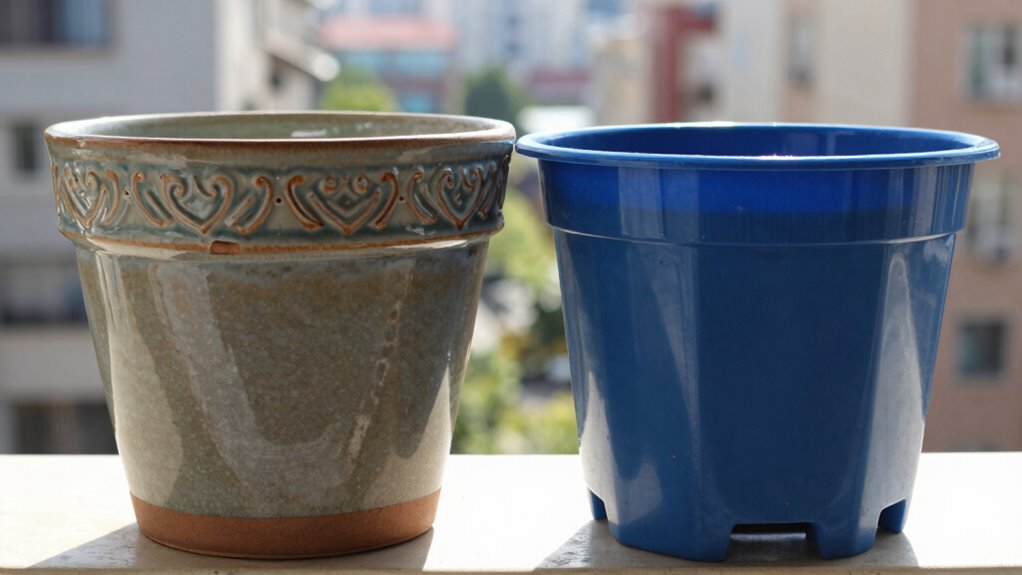
When selecting a self-watering pot for your plants, understanding the differences between ceramic and plastic options can help you make an informed choice. Both materials offer unique benefits and potential drawbacks, especially when it comes to maintaining soil moisture and the pot’s durability. Your decision will depend on your specific needs, your plant’s requirements, and your personal preferences.
Ceramic self-watering pots are known for their aesthetic appeal. They often feature attractive glazes and intricate designs that enhance your indoor or outdoor space. But beyond looks, ceramic pots are porous, which allows excess water to evaporate through the walls. This characteristic helps regulate soil moisture levels, preventing overwatering and root rot. However, this porosity also means ceramic pots can dry out faster, so you need to monitor soil moisture more closely. Ceramic pots are generally quite durable, especially when made with quality clay and properly glazed, but they are more prone to chipping or cracking if dropped or subjected to sudden impacts. If you’re careful, they can last for many years, but they’re less suitable for outdoor use in freezing climates, as the material can crack due to freeze-thaw cycles. Additionally, the porous nature of ceramic affects how water interacts with the soil, so understanding this characteristic helps in choosing the right watering schedule. Proper drainage is also essential to prevent water from accumulating, which can be a challenge with porous ceramics.
Plastic self-watering pots are lightweight, making them easy to move around and ideal for those who like flexibility in their plant arrangements. They typically come in a wide array of colors and styles, allowing you to match your decor effortlessly. Unlike ceramic, plastic is non-porous, which means it retains water longer and maintains soil moisture more consistently. This feature can be beneficial for busy schedules or beginners who want a more forgiving watering schedule. However, because plastic doesn’t breathe, it can sometimes lead to overly moist soil if not monitored properly. When it comes to pot durability, plastic tends to be more resistant to cracking and chipping, especially in outdoor environments. It withstands temperature fluctuations better than ceramic, making it suitable for a range of climates. Nonetheless, plastic can degrade over time, especially if exposed to direct sunlight, which can cause fading and brittleness. Additionally, many plastic pots are made from recyclable materials, making them a more environmentally conscious choice for eco-friendly consumers.
ceramic self-watering plant pots
As an affiliate, we earn on qualifying purchases.
As an affiliate, we earn on qualifying purchases.
Frequently Asked Questions
Are Ceramic or Plastic Pots Better for Outdoor Plants?
For outdoor plants, ceramic pots often enhance plant aesthetics with their elegant look, but plastic pots are more durable against weather elements. If you want a stylish appearance and don’t mind extra care, go for ceramic. However, if you need something lightweight and resistant to cracking or fading, plastic is better. Consider your climate and how much durability you need, balancing aesthetics with material durability for the best choice.
How Do Self-Watering Pots Compare in Cost?
Self-watering pots vary in cost, with plastic options generally being more affordable than ceramic ones. When considering a cost comparison, plastic pots often cost less upfront and are lightweight, making them easier to move. However, ceramic pots tend to be more durable and attractive, which might justify a higher price. Your choice depends on affordability factors like budget, durability, and aesthetics, ensuring you pick the best option for your needs.
Which Material Is More Eco-Friendly?
They say “what’s good for the environment is good for you,” and in this case, ceramic pots are more eco-friendly. Their biodegradability comparison shows they break down naturally, reducing landfill waste. An environmental impact analysis reveals ceramic’s lower chemical leaching and longer lifespan make it a sustainable choice. Plastic pots, although durable, often harm the environment due to non-biodegradable materials. So, choose ceramic for a greener, more eco-conscious gardening option.
Can Ceramic or Plastic Pots Handle Extreme Temperatures?
Ceramic pots generally handle temperature fluctuations better than plastic, thanks to their material durability and higher temperature resilience. They can withstand moderate heat and cold, but extreme temperatures may cause cracking or damage. Plastic pots are less durable in extreme cold or heat, as they can warp or become brittle. If you’re in an area with harsh temperature swings, ceramic offers better resilience, but always consider the specific climate and pot quality.
Do Self-Watering Pots Require Different Watering Schedules?
Yes, self-watering pots often require different watering schedules compared to traditional pots. Because they maintain soil moisture levels automatically, you need to monitor the soil moisture regularly to prevent overwatering or underwatering. Typically, you’ll find that watering frequency decreases since the reservoir supplies water gradually. However, during hot or dry periods, you might need to top up the reservoir more often to keep the soil consistently moist.
plastic self-watering plant containers
As an affiliate, we earn on qualifying purchases.
As an affiliate, we earn on qualifying purchases.
Conclusion
Ultimately, selecting between ceramic and plastic self-watering pots boils down to your style and needs. Think of it as choosing your own trusty steed—each has its charm and quirks. If you crave a timeless, elegant look, ceramic’s your knight in shining armor. For practicality and ease, plastic’s your fast friend. Remember, even in a world of knights and dragons, your plants will thrive best with a pot that suits your lifestyle. Happy gardening!
As an affiliate, we earn on qualifying purchases.
As an affiliate, we earn on qualifying purchases.
NFL season / tailgating Picks
team gear
As an affiliate, we earn on qualifying purchases.