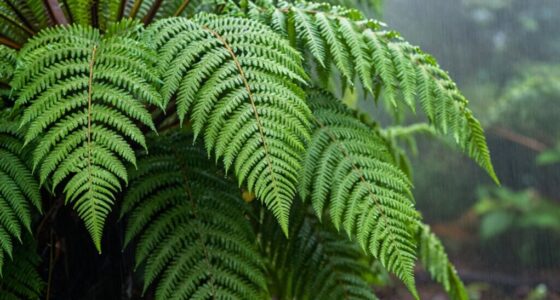
The Wollemi pine, often called the ‘dinosaur’ tree, is a rare and ancient plant rediscovered in 1994 deep within an Australian canyon. It dates back over 200 million years to the Jurassic period, making it a living relic. Conservation efforts have helped protect this biological treasure through reserves, seed banking, and propagation. Its unique appearance and history make it a symbol of hope and resilience—discover how this prehistoric survivor continues to inspire by exploring further.

Get the little things that make your day delivered free with Prime
- Fast, free delivery on millions of items
- Prime Video, Amazon Music and more included
- Member-only deals all year
Key Takeaways
- The Wollemi pine is a rare, ancient tree species discovered in 1994 in Australia, dating back over 200 million years.
- It is often called the “Dinosaur Tree” due to its prehistoric origins from the Jurassic period.
- Conservation efforts include protected reserves, seed banking, and propagation to prevent extinction.
- Its unique appearance features dark, knobby bark and feathery foliage, highlighting its ancient lineage.
- The Wollemi pine symbolizes successful conservation, connecting us to Earth’s prehistoric past and ensuring its survival.

Have you ever heard of a tree thought to be extinct for millions of years? The Wollemi pine fits that description perfectly. Discovered in 1994 deep within a remote canyon in Australia, this ancient tree has captivated scientists and conservationists alike. Its fossil evidence dates back to the Jurassic period, over 200 million years ago, making it a living relic from a time when dinosaurs roamed the Earth. Finding such a rare plant in the wild was like uncovering a secret preserved in stone, offering a glimpse into a prehistoric world. Since its discovery, conservation efforts have taken center stage to guarantee this botanical marvel survives for future generations. The tree’s survival is a testament to the power of conservation efforts. Because it was known only from fossil records, scientists initially believed it was long extinct. When a small population was found in the wild, it sparked global interest and prompted extensive preservation initiatives. These efforts include protected reserves, propagation programs, and seed banking to prevent any potential threats from habitat destruction, disease, or climate change. Thanks to these initiatives, the Wollemi pine has transitioned from a mysterious fossil to a living, breathing symbol of conservation success. Its unique appearance, with dark, knobby bark and feathery foliage, sets it apart from other pines, reinforcing its status as a biological treasure. Its genetic diversity is critical for ensuring the species’ resilience in changing environments. Through ongoing conservation work, scientists aim to maintain genetic diversity and establish sustainable populations. They’ve also worked to educate the public about the importance of preserving such ancient species, emphasizing that the Wollemi pine’s story isn’t just about a rare tree—it’s about safeguarding the planet’s evolutionary history. The tree’s existence demonstrates how fossil evidence can guide conservation priorities, reminding us that what we discover today might be a living link to our planet’s distant past. Protecting this ‘dinosaur’ tree has become a symbol of hope, illustrating that with dedicated effort, even the most endangered species can be brought back from the brink of extinction. Every effort counts in guaranteeing that this ancient survivor continues to thrive, offering future generations a tangible connection to Earth’s prehistoric past.
As an affiliate, we earn on qualifying purchases.
Frequently Asked Questions
Can Wollemi Pines Be Grown Indoors Successfully?
Yes, you can grow Wollemi pines indoors, but it requires careful attention to indoor gardening and plant care tips. Make sure your pine gets plenty of bright, indirect light and maintain high humidity levels. Keep the soil consistently moist but not waterlogged, and avoid drafts. Regularly check for pests, and prune gently to promote healthy growth. With patience and proper care, your indoor Wollemi pine can thrive.
Are Wollemi Pines Suitable for Urban Landscaping?
Yes, you can use Wollemi Pines in urban landscaping. They suit city environments because they mimic their native habitat’s cool, shaded conditions, making them resilient in well-drained soils. Plus, planting them supports conservation efforts, helping protect this rare species from extinction. Just guarantee you provide enough space, proper soil, and protection from extreme weather, so they thrive while adding a unique, prehistoric touch to your landscape.
How Long Does It Take for a Wollemi Pine to Mature?
You’ll be waiting a while before your Wollemi Pine hits full maturity, as its growth rate is pretty slow. Typically, it takes about 15 to 20 years for this ancient marvel to reach a decent size, making patience your best friend. During this maturation timeline, you’ll get to enjoy watching your prehistoric-looking tree develop that rugged, dinosaur-era charm—perfect for those who love a slow-burn gardening adventure.
What Pests or Diseases Threaten Wollemi Pines?
You should watch out for forest pests like beetles and aphids, which can damage your Wollemi pine by feeding on its leaves or bark. Fungal infections, such as root rot or needle blight, also threaten its health, especially in overly wet conditions. Regular inspections, proper watering, and good airflow can help prevent these issues. If you notice pests or signs of disease, act quickly with appropriate treatments to keep your tree healthy.
Is the Wollemi Pine Protected by Law?
You’re in luck—yes, the Wollemi Pine is protected by law. Conservation laws and legal protections safeguard this rare species from threats like poaching and habitat loss. The government recognizes its importance and has designated it as a critically endangered species, ensuring strict regulations are in place. This legal shield helps make sure that future generations can marvel at this ancient marvel, proving that sometimes, a little legal muscle can make all the difference.
As an affiliate, we earn on qualifying purchases.
Conclusion
You stand at the edge of a living prehistoric wonder, a whisper from Earth’s ancient past. The Wollemi pine, once thought lost to time, now breathes anew like a resilient survivor emerging from a deep slumber. Its twisted branches and dark needles are nature’s secret treasures, reminding you that even in a world of change, some miracles stubbornly cling to life. This ancient tree is a timeless declaration to nature’s power to surprise and endure.
As an affiliate, we earn on qualifying purchases.
As an affiliate, we earn on qualifying purchases.
NFL season / tailgating Picks
team gear
As an affiliate, we earn on qualifying purchases.