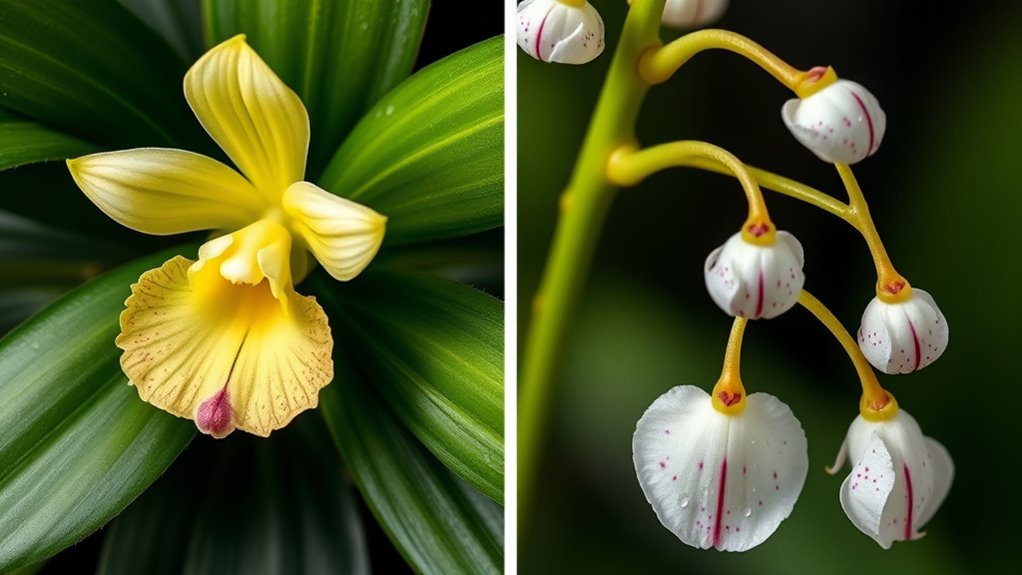

Tahitian vanilla is prized for its rich, floral aroma and consistent quality, thanks to careful cultivation and cloning. Wild vanilla orchids grow naturally in tropical forests, offering greater genetic diversity and more unpredictable flavors influenced by their environment. While Tahitian vanilla dominates commercial markets, wild species showcase nature’s resilience and variety. If you want to uncover how these differences shape vanilla’s flavor and significance, there’s much more to explore beyond the surface.
Key Takeaways
- Tahitian vanilla is a cultivated clone known for its consistent, rich floral and fruity aroma, unlike the variable flavors of wild species.
- Wild vanilla orchids grow naturally in tropical forests with greater genetic diversity and unpredictable flowering and harvest times.
- Tahitian vanilla beans are meticulously harvested and cured for optimal aroma, while wild beans have irregular harvests and less uniform quality.
- The flavor profile of Tahitian vanilla is refined and floral, whereas wild species often have more pungent, earthy, or less predictable tastes.
- Tahitian vanilla dominates commercial markets due to its consistent quality, while wild orchids are mainly of interest to botanists and flavor explorers.

When exploring the world of vanilla orchids, it’s fascinating to compare the highly prized Tahitian variety with its wild counterparts. Tahitian vanilla, renowned for its rich aroma and smooth, floral notes, is cultivated with great care on islands like Tahiti and surrounding Pacific regions. You might think of vanilla as a simple flavor, but the Tahitian orchid’s unique characteristics set it apart from wild species. It’s a highly selective cultivar, often propagated through cloning, ensuring consistency in flavor and quality. This cultivated vanilla is prized for its complex scent profile, which combines fruity, floral, and spicy undertones, making it a favorite among chefs and connoisseurs alike.
Tahitian vanilla is a carefully cultivated, highly aromatic variety with complex fruity, floral, and spicy notes.
In contrast, wild vanilla orchids grow naturally in the tropical forests of Central America, and they differ markedly from their cultivated cousins. These wild species are more diverse genetically, with many varieties existing across different ecosystems. You’ll find them climbing trees or sprawling along forest floors, often in hard-to-reach areas. Unlike the Tahitian vanilla, which is carefully cultivated and harvested, wild orchids grow without human intervention, relying on their natural environment for pollination and survival. Their flavors tend to be more variable and less predictable, influenced heavily by local conditions and the specific species. Some wild varieties produce vanilla beans that are less aromatic or have a different flavor profile altogether, sometimes more pungent or earthy, which can be less appealing in commercial use but treasured by those interested in biodiversity and natural flavors.
The differences between Tahitian and wild vanilla orchids extend beyond flavor. Cultivated Tahitian vanilla is generally harvested when the beans are mature but still green, then cured meticulously to develop their signature aroma. Wild species, on the other hand, often have unpredictable harvest times, and their beans may not always be suitable for commercial extraction. Because of this, Tahitian vanilla dominates the global market, with its consistent quality and flavor profile, while wild varieties tend to be explored more by specialty foragers, botanists, and flavor enthusiasts interested in unique, less conventional vanilla profiles. Additionally, pollination methods differ significantly, with cultivated varieties often requiring manual pollination to ensure successful bean production.
Despite their differences, both types of vanilla orchids play crucial roles in biodiversity and cultural heritage. You can appreciate the cultivated Tahitian vanilla for its consistency and refined aroma, but exploring wild species offers a glimpse into nature’s variety and resilience. Whether you prefer the familiar smoothness of Tahitian vanilla or the wild complexity of untamed orchids, understanding these differences enriches your appreciation for what’s often considered just a simple flavoring.
Top picks for "vanilla orchid never"
Open Amazon search results for this keyword.
As an affiliate, we earn on qualifying purchases.
Frequently Asked Questions
How Long Does It Take for Vanilla Orchids to Bloom?
It takes about two to three years for vanilla orchids to bloom once they’re planted. You need to provide them with the right conditions, like warm temperatures and plenty of sunlight. Keep in mind, the first few flowers might not produce beans, but with patience and proper care, your vanilla plant will start flowering regularly, offering fragrant blooms that eventually develop into the vanilla beans you love.
Are Wild Vanilla Orchids Endangered or Protected Species?
Imagine walking through a lush rainforest and spotting a rare vanilla orchid—chances are, it’s endangered or protected. Wild vanilla orchids face threats like habitat loss and overharvesting, making them vulnerable. According to conservation reports, many wild species are listed as threatened or endangered. You can help by supporting sustainable farming and conservation efforts, ensuring these remarkable orchids continue to thrive and enchant future generations.
Can You Grow Tahitian Vanilla Orchids at Home Easily?
Yes, you can grow Tahitian vanilla orchids at home, but it’s not entirely easy. You’ll need warm temperatures, high humidity, and plenty of indirect sunlight. Providing a sturdy support for the vine to climb is essential. Regular watering and patience are key, as it can take several years for the plant to produce pods. With dedication and proper care, you can successfully cultivate this exotic orchid at home.
What Are the Main Pests Affecting Vanilla Orchid Cultivation?
Did you know that pests like the vanilla fruit fly can cause up to 30% crop loss? You’re most likely to encounter pests such as mealybugs, scale insects, and spider mites. These pests feed on the orchid’s sap, weakening the plant and reducing flowering. Regular inspection, proper sanitation, and organic controls like neem oil can help keep these pests at bay and protect your vanilla orchids effectively.
How Do Climate Differences Impact Vanilla Orchid Growth?
Climate differences markedly impact vanilla orchid growth by affecting flowering, pollination, and overall health. In warm, humid environments, your orchids thrive with abundant flowering, but excessive heat or dryness can cause stress and reduce yield. Cooler or drier climates slow growth and flowering, making it harder for your plants to produce quality vanilla beans. You need to optimize temperature, humidity, and rainfall to guarantee healthy development and maximum harvest.
Conclusion
As you explore the world of vanilla orchids, remember that each species tells its own silent story, like a delicate thread woven into nature’s grand tapestry. The Tahitian variety, with its sultry aroma, dances like a tropical breeze, while the wild species whispers ancient secrets from deep within the jungle. Embrace these orchids as living poetry—each petal a stanza, each scent a verse—reminding you that beauty and mystery bloom in every corner of the natural world.