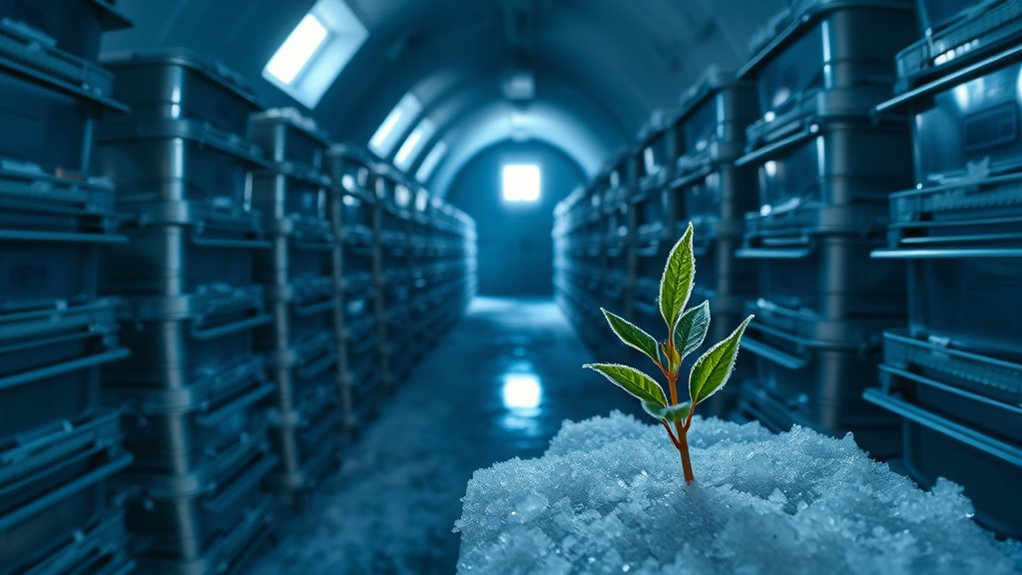
Saving seeds is crucial for protecting plant diversity and ensuring future food security. Inside the Svalbard Global Seed Vault, thousands of seed samples are stored in cool, airtight conditions to keep them viable for years. This vault acts as a backup against natural disasters and climate change, helping preserve rare and heirloom plants. By learning more, you’ll discover how seed conservation supports resilient ecosystems and a sustainable future for all.
Key Takeaways
- The Svalbard Global Seed Vault safeguards millions of seed samples to preserve global plant diversity against disasters and climate change.
- It serves as a backup for seed banks worldwide, ensuring long-term viability of rare and heirloom plant varieties.
- Seeds are carefully dried and stored in cool, airtight conditions to maximize their preservation over time.
- The vault promotes global cooperation in seed saving, supporting biodiversity and resilient agriculture.
- Inside the vault, seeds remain dormant until needed for restoration, research, or replanting efforts.
Have you ever wondered how to conserve the best traits of your favorite plants for future seasons? It’s a question that many gardeners and conservationists ask as they endeavor to maintain healthy, resilient crops and rare plant varieties. Seed preservation is the key to safeguarding the genetic diversity of plants, ensuring that desirable traits—like drought tolerance, pest resistance, or unique flavors—aren’t lost over time. By collecting and storing seeds properly, you can create a living library that protects plant heritage for generations to come. This process isn’t just about saving seeds; it’s about maintaining the rich diversity that makes plant life adaptable and resilient in changing environments. When you focus on genetic diversity, you help prevent monocultures that are vulnerable to disease or climate shifts, strengthening the entire ecosystem. Proper seed conservation also involves implementing space-saving storage techniques to maximize your seed bank’s capacity and accessibility.
Seed preservation safeguards plant diversity and resilience for future generations.
Preserving seeds involves more than just gathering and storing them. You need to understand the right techniques—like drying seeds thoroughly and storing them in cool, airtight conditions—to guarantee they remain viable for years. Proper seed conservation also includes selecting healthy, disease-free specimens, which increases the chances of successful germination later. It’s a careful balance of science and patience, but the rewards are worth it. By maintaining a diverse seed bank, you’re actively contributing to biodiversity, which is crucial for resilient agriculture and conservation efforts.
Take inspiration from places like the Svalbard Global Seed Vault, often called the “Doomsday Vault,” which stores millions of seed samples from around the world. This vault acts as a safeguard, protecting global crop diversity against natural disasters, war, or climate change. While most of us don’t have access to such a high-tech facility, the principle remains the same: creating a backup of plant genetic material ensures that future generations can rebuild and adapt if necessary. Whether you’re saving seeds from your backyard garden or participating in community seed swaps, your efforts contribute to this essential mission of preserving genetic diversity.
In the end, seed conservation is about more than just saving seeds—it’s about securing the future of our food systems and the health of our planet. Every seed you save, store, and share adds to a resilient, diverse genetic pool that can withstand environmental stresses. So, embrace the process, learn the techniques, and recognize the importance of safeguarding genetic diversity through seed preservation. Your small act of seed saving today can help ensure a sustainable, vibrant future for countless plants and the people who rely on them.

Bstrip Indoor Greenhouse with Grow Light, Indoor Greenhouse Cabinet with 6 Pack 90W Grow Lights with Timer, Mini Green House for Indoor Plant, Seed Starter, Seeding, 35.4"x13.8"x70.8"
Indoor Greenhouse with Grow Light - This small greenhouse measures 35.4 inches long x 13.8 inches wide x...
As an affiliate, we earn on qualifying purchases.
Frequently Asked Questions
How Are Seed Samples Selected for Storage?
You participate in the seed selection process by choosing samples that represent the genetic diversity of each species, guaranteeing a broad genetic base. You prioritize rare, endangered, or locally important plants to conserve unique traits. By carefully selecting seeds with diverse genetics, you help maintain resilient crops for future generations. This process ensures the vault stores an extensive collection, safeguarding global plant diversity against threats like climate change and habitat loss.
What Security Measures Protect the Seed Vault?
Your seed vault is protected by state-of-the-art biometric security, making it as secure as Fort Knox. You’ll find multiple layers of protection, including retina scans, fingerprint recognition, and security cameras. In emergencies, strict protocols activate, ensuring the seeds stay safe from threats like natural disasters or theft. These measures create an impenetrable fortress, safeguarding the world’s most precious plant diversity for generations to come.
How Long Can Seeds Remain Viable in Storage?
Seeds can remain viable for decades or even centuries with proper storage, thanks to ideal conditions that promote seed longevity. You can preserve genetic diversity by maintaining these perfect environments, which slow down aging and prevent deterioration. Factors like low temperatures and controlled humidity are essential, allowing you to safeguard rare plants and maintain their genetic traits over long periods, ensuring future generations have access to a broad spectrum of plant life.
Can Seeds Be Retrieved for Planting Outside the Vault?
Yes, seeds can be retrieved for planting outside the vault. The Vault’s accessibility allows authorized personnel to access stored seeds when needed, guaranteeing seed viability. You should understand that retrieval requires proper protocols to maintain seed health. Once extracted, seeds can be sown in suitable environments, helping preserve plant diversity. The vault’s design ensures that seeds remain viable for future use, supporting global conservation efforts and agricultural resilience.
What Is the Environmental Impact of Maintaining the Vault?
Maintaining the vault has a relatively low environmental impact, especially since it operates in a remote Arctic location. It supports biodiversity conservation by safeguarding diverse plant genes, which is vital in combating climate change’s threats. However, energy use for cooling and security contributes to carbon emissions. Overall, the vault’s benefits in preserving global biodiversity outweigh its minimal environmental footprint, helping sustain ecosystems and agricultural resilience worldwide.
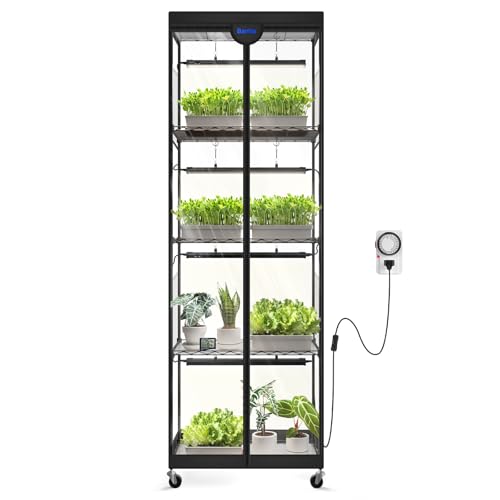
Barrina LP600 Mini Greenhouse with Grow Lights, 5-Tier Plant Stand with 100W TX-S25 1.6FT 5000K Full Spectrum Plant Shelf with Tent, Timer & Thermometer for for Seed Trays Growth, 23.6 x 13.8 x 70.9IN
High PPFD & Individual Control: 1.6FT 5000K full spectrum LED grow lights (CRI 97) deliver high PPFD (431.9...
As an affiliate, we earn on qualifying purchases.
Conclusion
You now see how essential the Svalbard Global Seed Vault is, safeguarding over 1 million seed samples from around the world. Imagine a backup for humanity’s future food supply, just in case. With climate change and other threats growing, this vault acts as a critical insurance policy. By preserving rare plants and indispensable seeds, you’re witnessing a remarkable effort to protect biodiversity and guarantee food security for generations to come.

Abimars Walk-in Greenhouse with Height-Adjustable Shelves, Heavy Duty Green House for Outdoors/Indoors, Heavy-Duty Steel Frame & Thickened PVC Cover, 82"x57"x55.5", Black
Forget flimsy frames and wobbly shelves—Our greenhouses for outdoors use industrial-grade steel support legs, and every shelf is...
As an affiliate, we earn on qualifying purchases.

BACEKOLL Plant Stand Indoor with Grow Lights, 6 Tiered Tall Plant Shelf, 63" Metal Plant Stand for Indoor Plants Multiple, Half-Moon Plant Rack Display Shelf, 2 Pcs Plant Holder for Living Room, Patio
【Plant Stand with Grow Lights】 To support the flourishing growth of indoor plants, we've integrated full-spectrum grow lights...
As an affiliate, we earn on qualifying purchases.