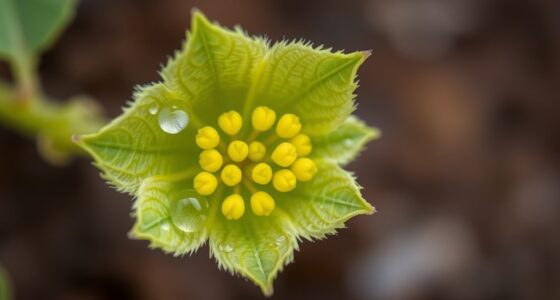
As an aroids aficionado, you’ll want to master the perfect care conditions for rare philodendrons and anthuriums. Keep them in bright, indirect light, and water only when the topsoil feels dry to prevent overwatering. Maintain high humidity by misting or using a humidifier and fertilize during the growing season. Propagation methods like stem cuttings, division, and air layering help expand your collection. Stay curious—the more you explore, the more you’ll uncover about these stunning tropical plants.
Key Takeaways
- Understand optimal care, including lighting, watering, soil, and humidity, to maintain healthy rare philodendrons and anthuriums.
- Identify and propagate rare aroids through stem cuttings, division, or air layering to expand your collection effectively.
- Use well-draining soil and pots with drainage holes to prevent root rot and promote vibrant foliage.
- Mimic tropical conditions with high humidity and indirect light for thriving, colorful rare aroid plants.
- Stay informed about specific species and cultivars to enhance your expertise in collecting and caring for rare philodendrons and anthuriums.
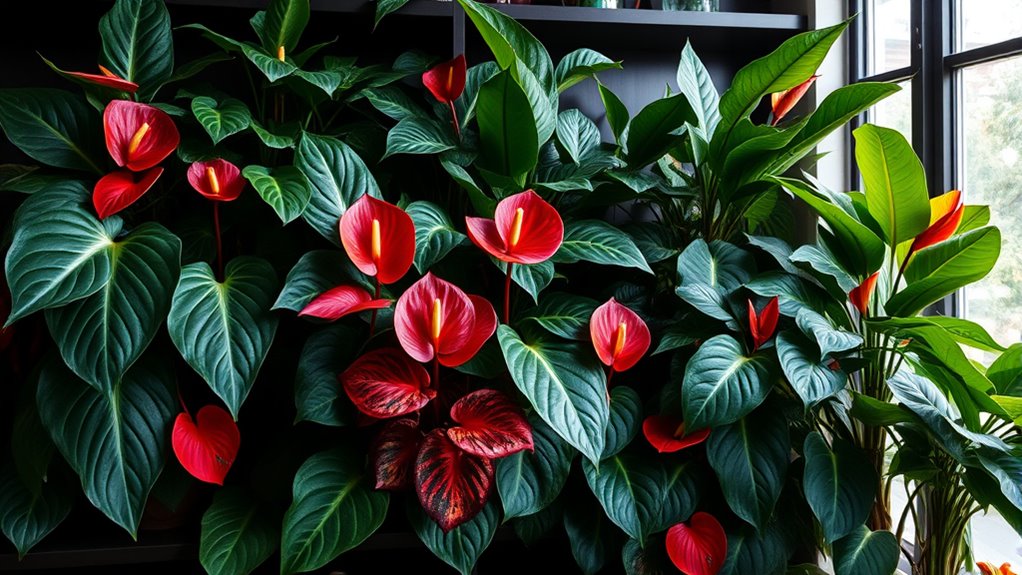
Are you captivated by the lush, vibrant world of aroids? If so, you already know these plants bring striking beauty and a touch of exotic charm to any space. To keep your rare philodendrons and anthuriums thriving, it’s vital to understand their care tips. These plants typically prefer bright, indirect light, so place them near a window with filtered sunlight. Too much direct sun can scorch their leaves, while too little light may stunt growth and dull their colors. Maintain consistent moisture levels, watering when the top inch of soil feels dry, but avoid overwatering, which can lead to root rot. Proper drainage is essential, so use a well-draining soil mix and ensure your pot has drainage holes. Humidity matters too; aroids love a humid environment, so mist the leaves regularly or use a humidifier to mimic their natural tropical habitat. Fertilize during the growing season with a balanced, diluted houseplant fertilizer every 4-6 weeks to promote healthy growth and vibrant foliage.
When it comes to propagation methods, you have several options to expand your collection or share your plants with fellow enthusiasts. The most straightforward method for philodendrons and anthuriums is stem cuttings. Select a healthy stem with at least one node and some leaves, then cut just below the node with clean, sharp scissors. Place the cutting in water or moist soil, ensuring the node is submerged or in contact with the soil. Roots typically develop within a few weeks, after which you can transplant the new plant into its own pot. For more advanced propagation, division works well for mature, clumping varieties. Carefully remove the plant from its pot, gently separate the root ball into sections with a clean knife or hands, making sure each division has roots and foliage. Replant each division in fresh soil and water thoroughly.
Another effective method is air layering, especially for larger plants. Select a healthy stem, make a small incision, and wrap it with moist sphagnum moss. Cover with plastic to retain moisture and wait for roots to form, which usually takes a few months. Once roots are visible, cut below the rooted section and pot it up. Whichever method you choose, patience and attention to detail are key to successful propagation. By mastering these care tips and propagation methods, you’ll cultivate a stunning collection of rare aroids, transforming your space into a lush, tropical sanctuary where these exotic plants flourish.
Frequently Asked Questions
How Do I Identify Rare Philodendron and Anthurium Varieties?
To identify rare philodendron and anthurium varieties, look closely at their leaf patterns and stem characteristics. Unique leaf shapes, colors, or markings often signal rarity. Examine the stems for distinctive textures or colors that set them apart. You might also compare your plant to reputable guides or online resources. Recognizing these subtle differences helps you distinguish rare varieties from common ones, enhancing your collection and plant knowledge.
What Are the Best Practices for Propagating Rare Aroids?
Perfect propagation begins with precise practices. You should start by selecting suitable soil mixing to guarantee proper drainage and nutrients. When propagating rare aroids, use careful watering techniques—water sparingly to prevent rot, but keep roots moist. Patience, proper pruning, and providing bright, indirect light promote growth. With consistent care, your cuttings will flourish, fostering fabulous foliage and forming formidable, flourishing new plants.
How Can I Prevent Pests on Delicate Aroids?
To prevent pests on delicate aroids, you should implement pest prevention strategies like regularly inspecting your plants and keeping leaves clean. Use organic pest control methods, such as neem oil or insecticidal soap, to ward off pests without harming your plants. Quarantining new plants and maintaining proper humidity and airflow also help reduce pest risks. Staying vigilant and proactive keeps your delicate aroids healthy and pest-free.
What Environmental Conditions Do Rare Aroids Need to Thrive?
Think of rare aroids like delicate dancers needing just the right stage. They thrive in bright, indirect light, avoiding direct sun that can scorch their leaves. Maintain high humidity levels, around 60-80%, to mimic their tropical origins. Keep temperatures steady between 65-80°F and guarantee good airflow. By providing these conditions, you’ll help your rare aroids flourish and stay healthy, thriving in their ideal environment.
Where Can I Find Reputable Sources for Purchasing Rare Aroids?
You can find reputable sources for purchasing rare aroids by exploring online plant shops that specialize in exotic and collector-grade plants. Additionally, join collector forums where enthusiasts share trusted vendors and swap tips. These forums often have valuable insights and direct links to reputable sellers, ensuring you get healthy, rare specimens. Always research seller reviews and ask for detailed plant condition info before making a purchase.
Conclusion
As you dive deeper into the world of rare philodendrons and anthuriums, you realize that passion fuels patience, and rarity sparks curiosity. Like a treasure hunt in a lush jungle, each new find excites your senses and challenges your knowledge. In this vibrant rainforest of foliage, you’re both explorer and curator—discovering beauty in the uncommon and finding joy in the journey. The more you learn, the more your collection becomes a living monument to your dedication.