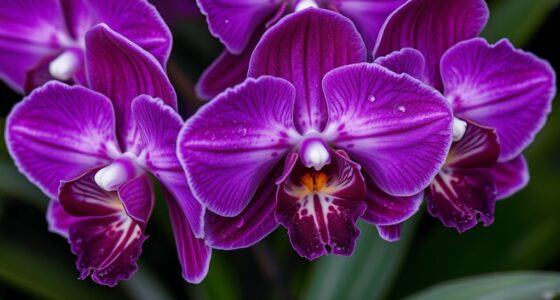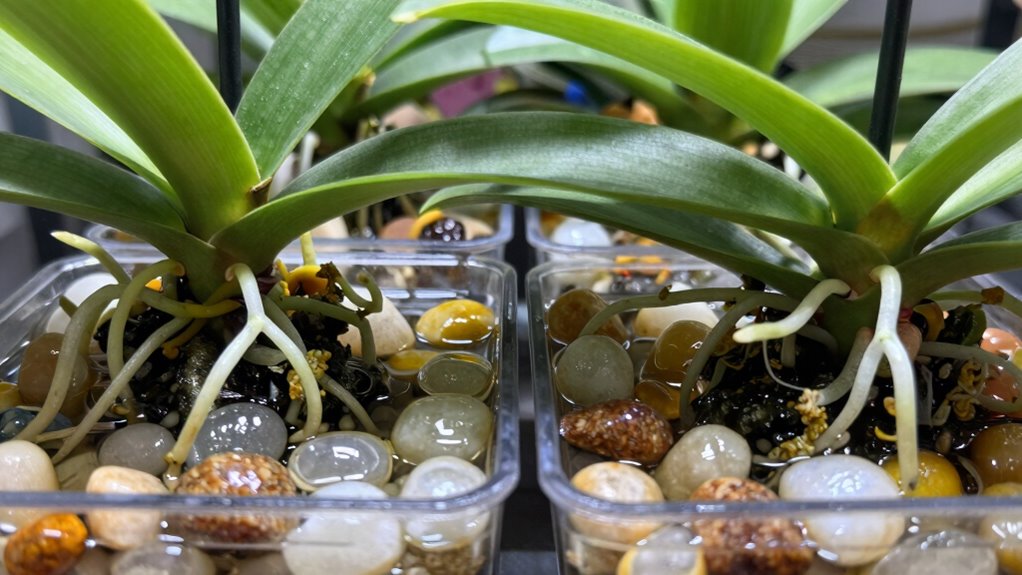

Humidity trays can help you create a local humid environment around your orchids by evaporation from water and gravel, which is especially useful in dry indoor spaces. However, they can’t raise the overall room humidity or replace proper watering and best potting practices. While they support healthy growth, they shouldn’t be your only solution for humidity issues. To discover more about effective orchid care and microclimates, continue exploring the key factors that influence their health.

Get the little things that make your day delivered free — and shop member deals
- Fast, free delivery on millions of items
- Access to Prime Big Deal Days deals on October 6–7
- Prime Video, Amazon Music and more included
Key Takeaways
- Humidity trays increase local moisture around orchids but do not raise overall room humidity.
- They create a humid microclimate by evaporation but cannot fully control dry room conditions.
- Humidity trays cannot prevent issues caused by improper watering, potting mediums, or root rot.
- They are a supplemental tool, not a replacement for proper watering, ventilation, or environmental controls.
- Effective orchid care involves combining humidity trays with appropriate watering, potting, and air circulation.

If you’re growing orchids, you’ve probably noticed that they thrive in humid environments, which can be tricky to maintain indoors. Humidity trays are a popular solution, but it’s important to understand what they can and can’t do for your plants. These trays work by increasing local humidity levels around your orchids, but they don’t actually change the overall room humidity. This means they’re most effective if your indoor environment is already somewhat dry. When using a humidity tray, you should still pay attention to your orchid’s watering frequency and potting mediums, as these factors influence how well your plant absorbs moisture. For example, orchids potted in airy, well-draining mediums like bark or sphagnum moss won’t sit in water, so a humidity tray can help create a more humid microclimate without risking root rot.
A humidity tray can be a useful tool for providing a consistent humid environment, but it’s not a cure-all. It won’t increase humidity in an entire room if the air is very dry; instead, it creates a localized zone of higher humidity. To maximize its effectiveness, you should place the tray near your orchid’s pot, ensuring the pot doesn’t sit directly in water, which could lead to soggy roots and disease. Fill the tray with pebbles or gravel and add water up to just below the top of the stones. As the water evaporates, it creates a humid microclimate around the plant. Keep in mind, though, that the humidity level will fluctuate depending on room temperature and airflow, so occasional adjustments might be needed. Additionally, understanding the impact of technology such as humidity sensors can help monitor and optimize conditions more precisely.
However, humidity trays have their limitations. They can’t replace proper watering practices, especially since overwatering remains a significant risk if you rely solely on these trays. You still need to monitor your watering frequency based on your orchid’s specific needs and potting mediums. For example, orchids in bark require less frequent watering than those in sphagnum moss, which retains more moisture. Relying solely on a humidity tray won’t address issues like inconsistent watering or inappropriate potting mediums. It’s also important to recognize that air circulation plays a crucial role in maintaining healthy orchid roots and preventing disease. Proper ventilation helps to prevent stagnant air and reduce the risk of fungal infections. Humidity trays are a supplemental tool that helps create a more favorable microclimate but don’t solve all humidity-related problems. If your home is very dry, consider combining a humidity tray with other methods, such as using a humidifier or grouping plants together to boost local humidity. Proper humidity management is essential for healthy orchid growth, and humidity trays are just one piece of that puzzle. Additionally, understanding orchid species’ humidity needs can further refine your care practices for optimal growth. The key is understanding that humidity trays support your orchid’s environment, but they don’t replace the need for attentive watering and proper potting mediums.
As an affiliate, we earn on qualifying purchases.
Frequently Asked Questions
Can Humidity Trays Replace Regular Watering for Orchids?
Humidity trays can’t replace regular watering for orchids. They mainly assist with humidity control, creating a more suitable environment. You still need to water your orchids according to their watering frequency needs, usually once a week or when the potting medium dries out. Humidity trays help maintain moisture in the air around your orchids but don’t provide the water roots need for nourishment. Keep watering properly while using trays as supplemental humidity support.
Are Humidity Trays Suitable for All Orchid Types?
Sure, humidity trays are the magic fix for all orchids, right? Not quite. While they help with humidity control, they’re not suitable for all orchid species. Some thrive in drier air, so a humidity tray might just be a nuisance. For tropical orchids like Phalaenopsis or Paphiopedilum, they’re perfect; but for desert orchids like Dendrobium, you’ll want other humidity solutions. Always know your orchid’s needs before relying solely on a tray.
How Often Should I Refill the Water in the Humidity Tray?
You should refill the water in your humidity tray daily or whenever you notice the water level has dropped considerably. This helps maintain a consistent humidity level around your orchids. Keep an eye on water evaporation, especially in warmer or drier environments, to guarantee the tray stays moist enough to boost humidity without overwatering. Regular refills prevent the water from drying out completely, supporting healthier orchid growth.
Do Humidity Trays Prevent Orchid Pests and Diseases?
Humidity trays act like a gentle shield, but they’re not a magic wand for pest prevention or disease control. They help maintain moisture, creating a cozy environment that can reduce stress on your orchids, but pests and diseases still find their way in through other routes. To truly protect your orchids, combine humidity trays with good airflow, proper watering, and regular inspections. They support your efforts but don’t replace all-encompassing plant care.
Can Humidity Trays Cause Overwatering or Root Rot?
Humidity trays can pose risks of overwatering if you’re not careful, potentially leading to root rot. When excess water collects in the tray and stays around the orchid’s roots, it hampers proper airflow and causes root health issues. To avoid these humidity tray risks, make certain you use water sparingly and change it regularly. Proper monitoring keeps your orchids healthy and prevents overwatering from damaging their roots.
As an affiliate, we earn on qualifying purchases.
Conclusion
A humidity tray gently whispers promises of a cozy, misty garden for your orchids, creating a subtle embrace that nurtures their delicate roots. While it can’t turn your space into a rainforest, it offers a tender touch of moisture that encourages healthy blooms. Think of it as a soft, supportive cushion beneath your plants—helping them thrive without overwhelming. With a little care, your orchids will flourish in this gentle, humid haven you provide.
orchid watering and potting supplies
As an affiliate, we earn on qualifying purchases.
As an affiliate, we earn on qualifying purchases.
As an affiliate, we earn on qualifying purchases.
Fall Picks
fall essentials
As an affiliate, we earn on qualifying purchases.